Genghis Khan Retreat
Orkhon Valley
Hotel in Orkhon Valley, Mongolia
 Book with Pearl
The Read
Price
$500–750per night
Why go
Genghis Khan Retreat is the right Orkhon Valley pick if the location itself is the reason for going, not if you need a deep city-hotel amenity stack. Tatler 2025 listed it in Best Hotels Asia-Pacific and named it Best Destination Hotel, so the value question is about season, transfers, and time spent in the valley.
About Genghis Khan Retreat
On a return trip to the Orkhon Valley, the decision changes: recent Asia-Pacific hotel recognition makes the retreat less of a casual add-on and more of a stay to price against the whole itinerary. Genghis Khan Retreat is worth considering when the accommodation needs to be part of the destination rather than a bed before the next transfer.
Choose it for valley time, not an urban amenity checklist
The value case is strongest when each day is built around the surrounding countryside. This is not the pick for travelers whose decision depends on multiple restaurant outlets, spa programming, nightlife, or a full urban service roster; those are capital-city-hotel criteria. It makes more sense for couples or small groups prioritizing a retreat format, slower pacing, and a base outside Ulaanbaatar’s hotel circuit.
Treat the stay as an experience-led booking. Ask for total package cost, transfer plan, meal inclusions, and cancellation terms before committing. If the rate sits near a full-service city luxury hotel, the trade is clear: less urban convenience, more direct access to the Orkhon Valley setting.
Use the season to judge value
The rate-to-experience ratio is strongest when weather and travel logistics let the valley do the work. In shoulder periods, a lower rate can make sense if transfers are reliable and daylight supports the itinerary; in peak travel windows, pay more only if the plan includes enough time on-site to benefit from the location. A rushed stop after a long transfer is harder to justify than a slower base.
For planning around the stay, use Our full Orkhon Valley hotels guide and Our full Orkhon Valley experiences guide. Keep food and drink expectations separate with Our full Orkhon Valley restaurants guide, Our full Orkhon Valley bars guide, and Our full Orkhon Valley wineries guide rather than assuming the hotel will carry the whole trip.
Planning details
- Location
- Orkhon valley, Gangan Orkhon bag, Kharkhorin, Ovorkhangai, Mongolia
- Website
- asaland.mn
- Phone
- +976 9905 0706
The take
The Take
The Vibe
Genghis Khan Retreat presents a design-forward, historically grounded character that reads more like a cultural frame than a conventional camp. The property explicitly roots itself in the Orkhon Valley’s layered past—UNESCO recognition, nomadic heritage and proximity to Kharkhorin—so the feel is as much about context and continuity as it is about comfort. Architecture and materials take cues from the steppe and the ger without resorting to pastiche, yielding a premium wilderness experience that privileges place-making over theatricality. The result is a considered, historically conscious retreat that blends modern hospitality standards with deep local referents.
Best For
This is a destination for travelers who want to lean into landscape and history rather than simply escape them. The retreat is positioned for romantic getaways, wellness-focused stays and group retreats, offering an immersive base from which to explore the Orkhon Valley’s cultural and natural layers. Award recognition as a Best Destination Hotel underscores its appeal to visitors seeking a thoughtfully curated, design-led stay tied to a UNESCO World Heritage context. Guests who prize storytelling, quiet discovery and architecture that responds to place will find it especially rewarding.
Stay Tips
Treat a stay here as part of the travel experience rather than a stopover: the property is embedded in a UNESCO landscape and framed around the valley’s history and material logic. Allow extra nights to absorb the scenery and the cultural context the retreat highlights. Because the hotel is designed as a response to place, plan time for simple, site-focused activities—walking the immediate steppe, visiting nearby historical sites—rather than packing the itinerary with unrelated excursions. Take the property's framing of the landscape as an invitation to slow down and engage with the valley.
Venue details
Ambiance
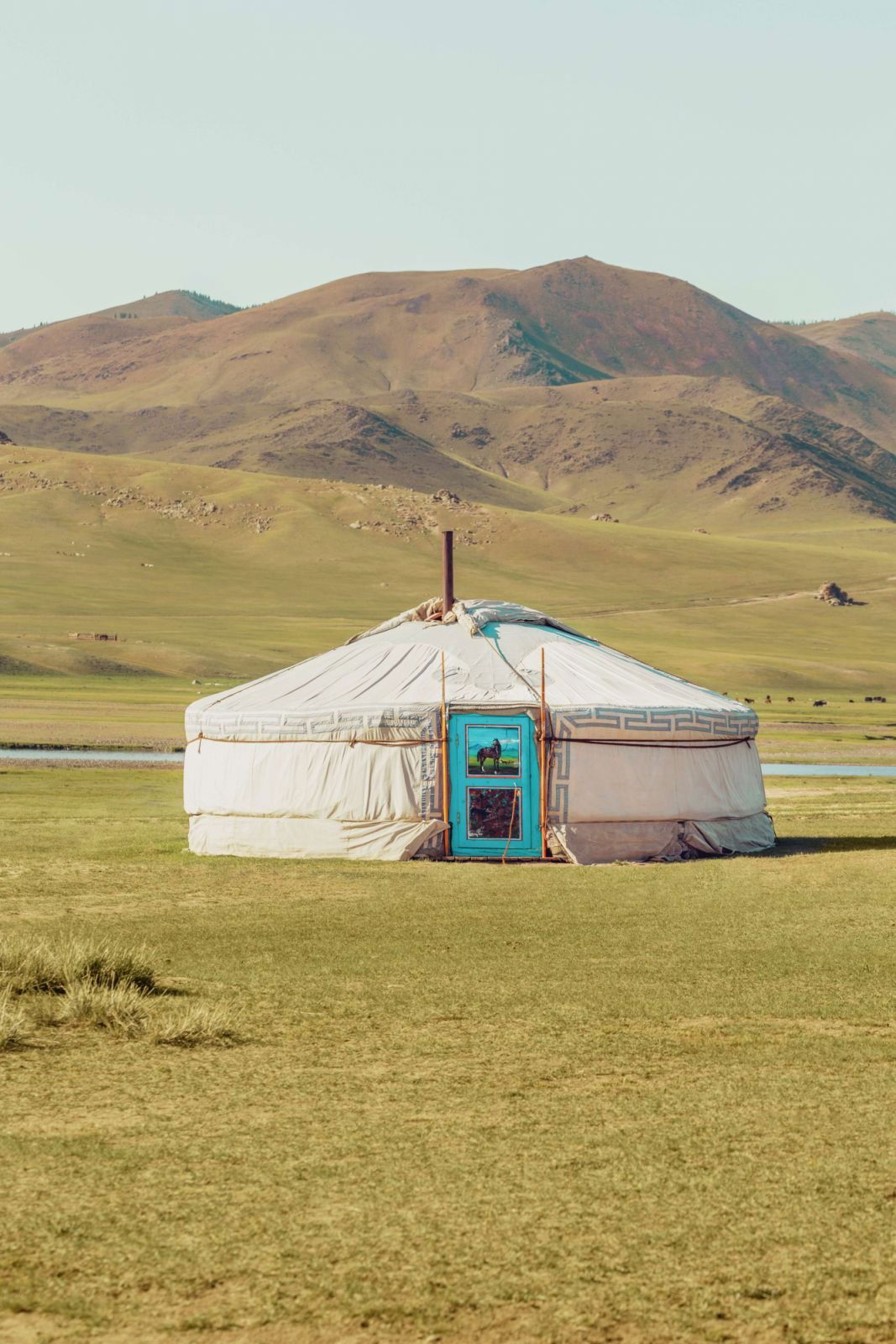
A remote, seasonal luxury camp atmosphere with spacious gers, wood-burning stoves, cashmere bedding, and a strong nomadic feel set against wide-steppe scenery.
Tags
Vibe
Best For
Experience
Amenities
View
About the Stay
- Rooms
- 20
- Property Type
- Eco-lodge
- Property Style
- Luxury Seasonal Tented Camp
- Design Style
- Traditional Mongolian Ger Design with Handcrafted Interiors, Cashmere Bedding, and Rustic Luxury Detailing.
- Breakfast
- Included
- Airport Transfer
- Available
- Spa
- Yes
- Families
- Welcome
- Cancellation
- Moderate
- Opened
- 2015
Know before you go
Know Before You Go
- Getting there
- Orkhon valley, Gangan Orkhon bag, Kharkhorin, Ovorkhangai, Mongolia
Planning details
Location
Orkhon valley, Gangan Orkhon bag, Kharkhorin, Ovorkhangai, Mongolia · Directions
Recognition and awards
Also consider
Also Consider
- The Blue Sky Hotel & Tower, Notable alternative
- Shangri-La Ulaanbaatar, Mongolia, Notable alternative
Hotel context
Valley retreat versus capital-city comfort
Against The Blue Sky Hotel & Tower and Shangri-La Ulaanbaatar, Mongolia, the decision is mainly geographic. Choose the retreat when the Orkhon Valley is the point of the trip and the room needs to support slower days in open space. Pick the Ulaanbaatar options if the trip needs capital-city convenience, tighter transfers, or a city base before flights.
For value, compare live rates by purpose rather than brand polish. If prices sit near The Blue Sky Hotel & Tower, the retreat gives a clearer Mongolia-specific payoff because the setting is the product. If rates approach Shangri-La Ulaanbaatar, Mongolia, pay the premium only when the valley setting matters more than a deeper capital-city service setup.
Booking difficulty is easy here, so it works better for flexible routes than a hard-to-secure lodge. Ambiance is the real divider: the retreat is the quieter destination play, while the two Ulaanbaatar options are safer for business travel, urban dining access, and short stays. Its Tatler 2025 Best Destination Hotel recognition is the strongest reason to treat it as more than a stopover.
Explore Orkhon Valley
Around this place
Discover more on Pearl
Unlock the full Genghis Khan Retreat guide in Pearl, including awards, comparisons, FAQs, planning details, and nearby places.
Compare Genghis Khan Retreat
| Venue | Awards |
|---|---|
| Genghis Khan Retreat | Tatler Best Hotels Asia-Pacific 2025 |
| The Blue Sky Hotel & Tower | No published awards |
| Shangri-La Ulaanbaatar, Mongolia | No published awards |
Key differences to consider before you reserve.
FAQ
Frequently Asked Questions
When is the best time to book Genghis Khan Retreat?
Book once your travel dates are set, especially if the trip depends on Orkhon Valley time rather than city convenience. The Tatler 2025 listing as Best Destination Hotel supports planning ahead for a stay built around the location, not last-minute flexibility.
How does Genghis Khan Retreat compare to nearby hotels?
Choose Genghis Khan Retreat when the goal is a destination stay in Orkhon Valley, not a city hotel with fuller services. Compared with The Blue Sky Hotel & Tower or Shangri-La Ulaanbaatar, Mongolia, this is the more location-led option; those city hotels make more sense if you need urban access.
How is the pool and spa at Genghis Khan Retreat?
Treat the pool and spa as a secondary factor unless they are central to your trip, because the main value here is the Orkhon Valley setting and the Tatler 2025 destination-hotel recognition. If pool time matters more than landscape time, a city hotel like Shangri-La Ulaanbaatar, Mongolia is the safer bet.
Is Genghis Khan Retreat good for business travel?
It is not the first pick for business travel unless the trip is tied to Kharkhorin, Ovorkhangai, or time in Orkhon Valley. A city hotel such as The Blue Sky Hotel & Tower will usually fit meetings, transfers, and schedule changes better.
How is the location of Genghis Khan Retreat?
The location is the main reason to book it: Orkhon valley, Gangan Orkhon bag, Kharkhorin, Ovorkhangai, Mongolia places you in the countryside rather than in a city center. That makes it better for a destination stay than for quick access, and it is the core reason the Tatler 2025 awards matter here.