

Hotel in Niigata, Japan
Satoyama-Jujo
775ptsSatoyama Stewardship Lodging

About Satoyama-Jujo
A 13-room ryokan-hybrid in Minamiuonuma, Niigata, Satoyama-Jujo holds a 2024 Michelin Key and earns a Google rating of 4.5 from 357 reviews. Built within a restored kominka farmhouse, it pairs onsen access with farm-to-table dinners at Sanaburi restaurant, Scandinavian-inflected interiors, and rates from $1,166 per night — making it one of the more architecturally coherent rural retreats in the Japanese Alps.
Where Farmhouse Architecture Meets Alpine Seclusion
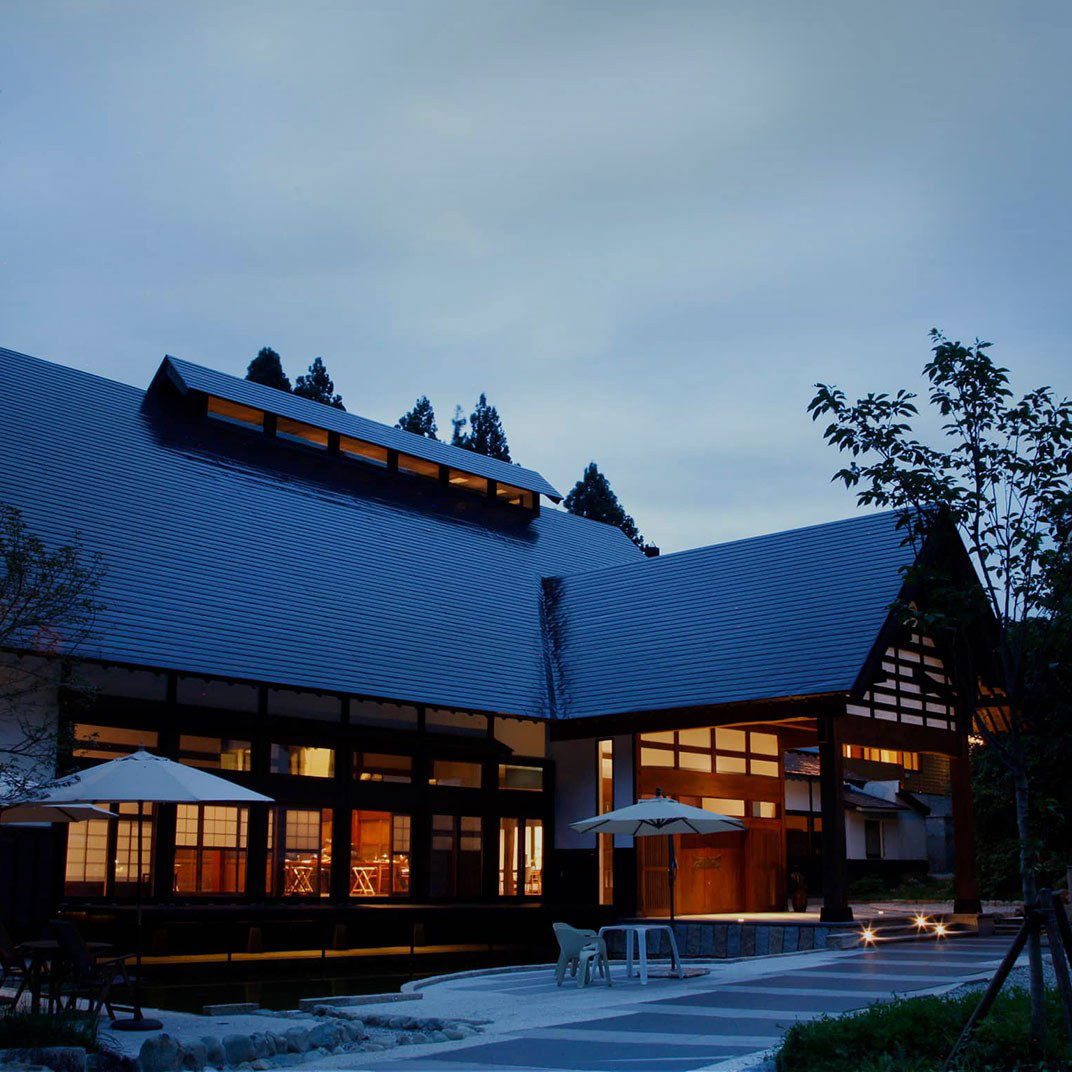
The road into Minamiuonuma passes rice paddies broad enough to feel cinematic, the Japanese Alps rising behind them in tiers. By the time Satoyama-Jujo appears — a restored kominka farmhouse set against that backdrop — the architecture has already framed the experience. The building does not announce itself the way urban luxury hotels do. It sits in the landscape as if it has always been there, which, in a material sense, it largely has.
This matters because the design philosophy at work here is not decorative. The kominka tradition, centuries old in Niigata Prefecture, produced wooden-frame rural homesteads engineered for survival: deep-pitched roofs, dense timber construction, and interior layouts that managed airflow and light through harsh alpine winters. Satoyama-Jujo draws directly from that tradition, and the result is a property whose architectural identity is inseparable from its geography. For a comparison point, [Gora Kadan in Hakone](https://www.enprimeurclub.com/hotels/gora-kadan-hakone-hotel) and [Asaba in Izu](https://www.enprimeurclub.com/hotels/asaba-izu-hotel) each work within established ryokan frameworks; Satoyama-Jujo occupies a slightly different register , part farmhouse restoration, part considered editorial on what Japanese rural hospitality can look like when filtered through a design-conscious eye.
The Interior as Argument
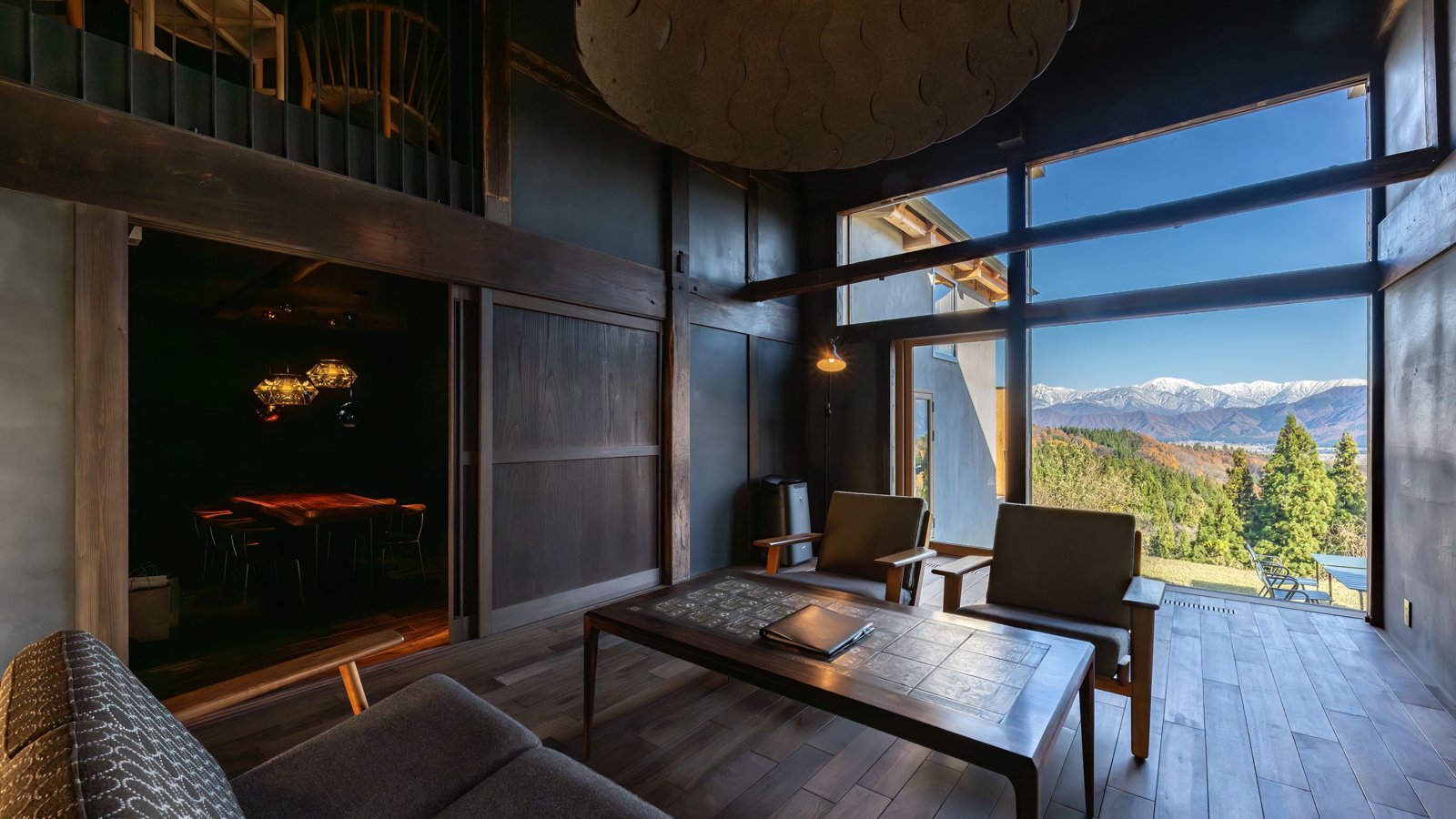
Step into the lobby and the scale announces itself before anything else. The lofted ceiling is crossed by an intricate network of Asian elm beams finished in Japanese lacquer , structural elements left visible not as rustic styling but as evidence of how the building was actually made. The approach is coherent: the original kominka materials are treated as the primary design language, with furnishings introduced as counterpoint rather than replacement.
That counterpoint draws from Scandinavia as much as from Japan. The renovation was overseen by Toru Iwasa, and the synthesis he pursued rests on principles the two traditions share rather than differences that might produce friction: sturdy craftsmanship, a disciplined sense of proportion, space managed for calm rather than for drama. Finn Juhl and Isamu Noguchi pieces appear throughout the property , not as name-dropping but as a coherent extension of the visual argument. Both designers worked in idioms that prioritise material honesty and functional elegance, which aligns precisely with what the kominka frame already does structurally.
Paper lanterns appear throughout, but with the restraint that separates considered use from decorative habit. Against dark timber surfaces, the effect has a half-ritualistic quality that the brighter, more minimal rooms balance out. The mezzanine lounge, formerly the site of the building's silkworm operations, is where the interior reaches its most layered point: history, material, and contemporary hospitality converge in a room where complimentary drinks are served from 7 p.m. onwards.
The guest rooms maintain the washitsu logic , tatami flooring, natural light through large windows, space organised to breathe rather than to impress. The vocabulary is Japanese; the spatial confidence is shared with the Nordic tradition that informed the renovation. Practically, the rooms are fully equipped: flat-screen televisions, reliable wi-fi, and small amenity details like a towel warmer and chilled drinks in the minibar. On arrival, cake and herbal tea are served in Imari porcelain , the choice of vessel is not incidental, connecting the welcome ritual to one of Japan's most significant ceramic traditions.
Thirteen Rooms and the Logic of Restraint
The property holds 13 rooms in total, including two maisonette-style suites. That number is not arbitrary. Rural ryokan and onsen properties in Japan have long understood that scale defines the quality of quiet as much as any design decision does. Properties in this bracket, including [Zaborin in Kutchan](https://www.enprimeurclub.com/hotels/zaborin-hokkaido-hotel) and [ENOWA Yufu in Yufu](https://www.enprimeurclub.com/hotels/enowa-yufu-yufu-hotel), operate on the same logic: limit capacity to preserve the stillness that distinguishes the format from larger resort hotels.
At 13 rooms and rates from $1,166 per night, Satoyama-Jujo sits in a peer tier that includes [Araya Totoan in Kaga](https://www.enprimeurclub.com/hotels/araya-totoan-kaga-hotel), [Bettei Senjuan in Minakami](https://www.enprimeurclub.com/hotels/bettei-senjuan-minakami-hotel), and [Nishimuraya Honkan in Kinosaki-cho](https://www.enprimeurclub.com/hotels/nishimuraya-honkan-kinosaki-cho-hotel) , smaller, architecturally specific properties in regional Japan where the accommodation itself carries editorial weight. The 2024 Michelin Key, awarded as part of the Guide's expanded accommodation recognition programme, places Satoyama-Jujo in assessed company alongside properties like [Amanemu in Mie](https://www.enprimeurclub.com/hotels/amanemu-mie-hotel) and [Benesse House in Naoshima](https://www.enprimeurclub.com/hotels/benesse-house-naoshima-hotel), though each operates in a distinct regional register.
Sanaburi and the Dining Framework
Niigata Prefecture's agricultural identity is built on rice and sake. The prefecture produces some of Japan's most respected sake, a consequence of alpine snowmelt water, cool temperatures, and centuries of brewing knowledge concentrated in towns along the Shinano River corridor. Any serious stay in this region accounts for that heritage, and Sanaburi, the in-house restaurant at Satoyama-Jujo, does exactly that.
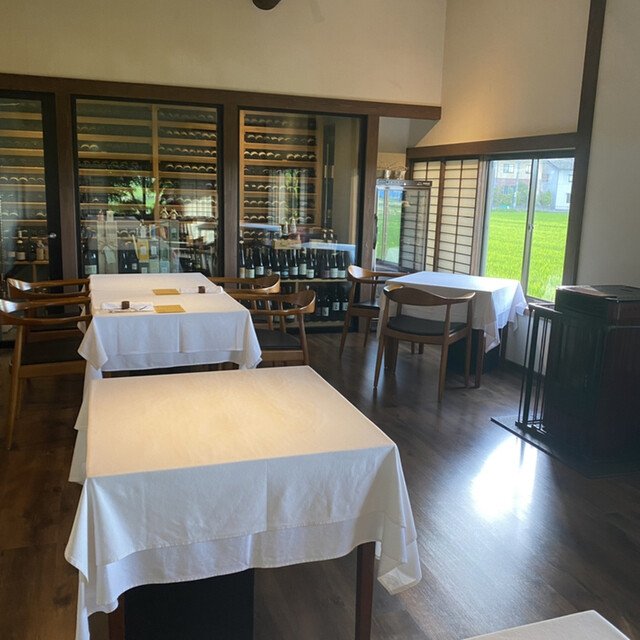
The dinner format is full-course, with wine pairings available. The sourcing is local , foraged ingredients from the surrounding satoyama terrain , but the menu incorporates Sri Lankan and Indian reference points alongside the regional produce, a combination that reads less as fusion and more as a chef working with a broad culinary vocabulary while staying rooted in the immediate landscape. The sake programme here warrants attention; Niigata sake tends toward the tanrei style, clean and dry, which pairs differently from the fuller profiles associated with other Japanese regions. Guests who arrive without a sake background will find this a formative introduction.
For a broader view of what Niigata's dining and hospitality context looks like, [our full Niigata restaurants guide](https://www.enprimeurclub.com/cities/niigata) covers the prefecture's food culture in more depth.
Onsen, Seasonality, and the Satoyama Context
The hot spring spa is not supplementary to the experience , in the logic of rural Japanese hospitality, onsen access is structural. Properties without it occupy a different category entirely. Satoyama-Jujo's thermal facilities are part of a format where a long afternoon soak, dinner at Sanaburi, and an unhurried morning in a tatami room compose the actual rhythm of the stay. The architecture supports that rhythm; nothing in the building pushes against stillness.
Seasonality is worth factoring into planning. Minamiuonuma receives several meters of snow annually, which transforms the landscape considerably from late November through March. That snowfall is part of what defines the satoyama concept the property draws its name from , the managed relationship between human settlement and mountain terrain, across woodlands, rice paddies, wetlands, and pasture. Winter guests arrive in a near-monochrome landscape where the timber and lacquer interiors take on extra warmth; summer and autumn guests find the rice paddies and alpine views at their most expressive. Neither is the wrong time; they are different experiences of the same place.
One operational note: Satoyama-Jujo does not accommodate children under twelve. This is a deliberate format decision that aligns the property with an adult-focused, low-stimulation register , consistent with the architectural and experiential intent. It sits in a different bracket from family-oriented onsen resorts and should be chosen accordingly.
Planning a Stay
Satoyama-Jujo is located at 1209-6 Osawa, Minamiuonuma , a rural address that requires either a rental car or arranged transfer from the nearest Shinkansen stop at Echigo-Yuzawa or Urasa stations. The property's seclusion is not incidental; it is part of the offer. Rates begin at approximately $1,166 per night, which for a 13-room Michelin Key property with full-course dinner and onsen access represents positioning at the higher end of the regional ryokan market but within normal range for this tier nationally. The Google rating of 4.5 across 357 reviews is consistent for a property of this format and scale. The Michelin Key awarded in 2024 adds an assessed credential that places it alongside recognised properties across Japan's broader luxury accommodation tier, including [Fufu Kawaguchiko in Fujikawaguchiko](https://www.enprimeurclub.com/hotels/fufu-kawaguchiko-fujikawaguchiko-hotel), [Fufu Nikko in Nikko](https://www.enprimeurclub.com/hotels/fufu-nikko-nikko-hotel), and [Azumi Setoda in Onomichi](https://www.enprimeurclub.com/hotels/azumi-setoda-onomichi-hotel).
Guests travelling from Tokyo can reach Echigo-Yuzawa in approximately 70 minutes by Shinkansen from Tokyo Station, making a two or three-night stay a practical addition to a broader Japan itinerary. Those building a Japan hotel sequence might also consider [HOTEL THE MITSUI KYOTO in Kyoto](https://www.enprimeurclub.com/hotels/hotel-the-mitsui-kyoto-kyoto-hotel) or [Bvlgari Hotel Tokyo in Tokyo](https://www.enprimeurclub.com/hotels/bvlgari-hotel-tokyo-tokyo-hotel) as urban counterpoints to the rural register Satoyama-Jujo represents.
Frequently Asked Questions
Is Satoyama-Jujo more formal or casual?
The tone sits closer to contemplative than formal. Niigata's rural hospitality tradition, which Satoyama-Jujo draws from directly, prioritises quiet attentiveness over ceremony. The kominka architecture and the modest room count of 13 reinforce that register , this is not a property built around lobby spectacle or organised programming. Full-course dinners at Sanaburi have structure, and the overall experience has considered detail at every point, but the atmosphere reads as composed rather than stiff. Rates from $1,166 and the 2024 Michelin Key confirm its positioning in the premium tier; the mood, however, runs warm.
What is the leading suite at Satoyama-Jujo?
The property includes two maisonette-style suites among its 13 rooms. Specific suite configurations and naming are not confirmed in current venue data, but the two-level format suggests greater spatial volume and privacy than standard rooms, consistent with what the washitsu design approach , tatami flooring, large windows, organised space , produces across the property. At rates beginning around $1,166 per night and with a 2024 Michelin Key, suite bookings here price at a premium within the property's own range. Confirming current suite availability and configuration directly with the property before booking is advisable.
What should I know about Satoyama-Jujo before I go?
Three things that will shape the stay: first, children under twelve are not accommodated, making this explicitly an adults-only retreat. Second, the location in Minamiuonuma is genuinely rural , plan transport from Echigo-Yuzawa or Urasa Shinkansen stations in advance. Third, Niigata's heavy seasonal snowfall means the experience shifts considerably by time of year; winter arrivals find an insular, snow-muffled atmosphere that suits the property's architecture particularly well, while warmer months open up the alpine and rice paddy views that connect the building to its satoyama context. The 2024 Michelin Key and a Google rating of 4.5 from 357 reviewers suggest consistent delivery across seasons.
Recognized By
Related editorial
- Best Fine Dining Restaurants in ParisFrom three-Michelin-star icons to the next generation of Parisian chefs pushing boundaries, these are the restaurants that define fine dining in the world's culinary capital.
- Best Luxury Hotels in RomeFrom rooftop terraces overlooking ancient ruins to Michelin-starred hotel dining, these are the luxury hotels that make Rome unforgettable.
- Best Cocktail Bars in KyotoFrom sleek lounges to hidden speakeasies, Kyoto's cocktail scene blends Japanese precision with global influence in ways you won't find anywhere else.
Save or rate Satoyama-Jujo on Pearl
Keep this venue in your Pearl passport, rate it after you visit, and track it alongside every other place you collect.