
Hotel in Munich, Germany
The Dean (Munich)
150ptsStructured Progression Format
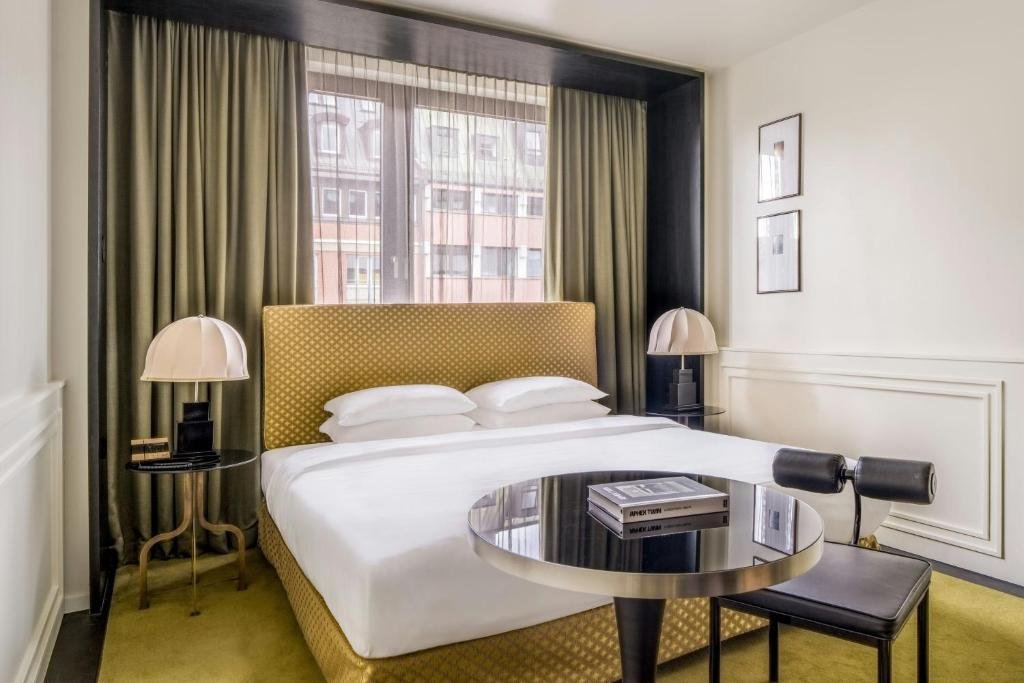
About The Dean (Munich)
The Dean occupies a considered position in Munich's evolving hospitality scene, where the city's appetite for structured, progressive dining increasingly finds expression in format-driven rooms that reward patience over novelty. Without the weight of a single defining credential, it operates in a mid-to-upper tier where atmosphere, sequencing, and room character carry the argument. For travellers already working through our <a href="https://www.enprimeurclub.com/cities/munich">full Munich restaurants guide</a>, it merits attention.
Munich and the Art of the Progression
Germany's third-largest city has spent the better part of a decade resolving a tension that most European capitals resolved earlier: how to hold a strong regional culinary identity while absorbing the influence of a more internationally literate dining public. Munich's answer has generally been additive rather than disruptive. The beer hall stays; the tasting counter arrives next door. The Bavarian roast endures; the multi-course progression with Central European wine pairings earns a following a few streets away. The Dean (Munich) exists inside that productive friction, in a city where the format of a meal often carries as much weight as the food itself.
Munich's premium hospitality addresses have consolidated around a handful of neighbourhoods. Properties like the Mandarin Oriental Munich, the Rocco Forte Charles Hotel, and the Rosewood Munich anchor distinct zones of the city, each drawing a different ratio of business travellers, leisure guests, and design-conscious short-stay visitors. The Dean sits inside this broader hospitality map, in a city where the choice of address signals something about how a guest wants their stay to feel.
Entering the Room
In Munich, the transition from street to dining room has become a deliberate act at the upper end of the market. The most considered venues use the first moments of arrival to set a pace: the tempo at which the evening will unfold, the register in which conversation will happen, the visual distance between the outside world and the table in front of you. The city's stronger openings of the past several years have used materials, light temperature, and spatial compression to communicate before a single word is spoken by front-of-house staff.
The Dean works within that tradition. The physical environment, by the standards of Munich's format-led rooms, is designed to slow the guest down rather than animate them. This is not theatre in the Viennese sense, where the room itself performs. It is, instead, a controlled withdrawal from the pace of the city outside, which in Munich moves at a brisk commercial clip regardless of the season.
The Progression as Argument
Multi-course dining in Munich draws on two distinct traditions that rarely acknowledge each other directly. The first is the Central European tradition of structured hospitality, where a meal is understood as a succession of acts with clear dramatic logic: a sharp opening, a sustained middle, and a resolution that either confirms or complicates what came before. The second is the more recent influence of Nordic and New German cuisine, which introduced restraint, fermentation, and hyper-seasonal produce into a city that had previously prized richness and abundance.
The Dean's format engages both of these currents. A meal sequenced around progression rather than abundance asks the diner to track narrative across courses rather than evaluate each plate in isolation. That is a harder discipline for both kitchen and guest, and Munich's dining public has grown more fluent in it as the decade has progressed. The city's Michelin coverage has expanded, and venues without stars increasingly position themselves in relation to that credentialing system, either by proximity to starred alumni or by deliberate distance from its conventions.
For travellers who want a wider frame of reference beyond Munich, the progression-led format is well established at properties like Hotel Bareiss in Baiersbronn and Althoff Seehotel Überfahrt in Rottach-Egern, both of which operate dining programs that carry significant award weight and provide a useful benchmark for what the format can achieve at its most developed.
Room Character and Guest Configuration
Munich's upper-tier dining rooms have fragmented in recent years between two dominant configurations. The first is the intimate counter or small-table room, where the format enforces close proximity to the kitchen and front-of-house interaction becomes a material part of the experience. The second is the larger, more formally appointed dining room, where the architecture and service choreography carry the experience rather than the kitchen's visibility. The Andaz Munich Schwabinger Tor and the Bayerischer Hof Munich both operate within the larger-room tradition, each with dining propositions that serve guests at a different point of their evening.
The Dean occupies a position closer to the first configuration, where the guest's awareness of other diners and of the kitchen's rhythm shapes the meal's texture. This matters in Munich more than in some other German cities, because the local dining public is more likely to be engaged with the format as format, rather than simply eating through courses without comment.
Where The Dean Sits in the Munich Field
Munich's hospitality market has developed a recognisable tier structure. At the leading, internationally branded properties like the Do & Co Hotel Munich and properties operated by groups with global footprints compete on brand recognition and amenity depth. In the middle, design-led independents and boutique addresses like the Cortiina Hotel and BEYOND by Geisel compete on specificity and local character. The Dean operates in the latter register, where the argument is made through format discipline and room conviction rather than brand equity.
That positioning is consistent with a broader German trend visible at addresses like Hotel de Rome in Berlin and Excelsior Hotel Ernst in Cologne, where the most compelling hospitality propositions in secondary tiers have been those that make a clear argument about what kind of experience they are and are not. The failure mode at this tier is ambiguity: a room that could be many things tends to become nothing in particular.
Planning Your Visit
Munich's dining calendar runs at relatively consistent intensity through the year, with the post-Oktoberfest period in November and the weeks around Christmas and New Year bringing a sharper concentration of visitors and reduced flexibility in reservations at format-led venues. Travellers with specific timing in mind should treat any venue in this tier as requiring advance planning, particularly for groups of four or more. For those pairing a visit to The Dean with a wider stay, the city's leading premium hotels are within reasonable reach of the dining address, and properties like the Rosewood Munich and Mandarin Oriental Munich offer concierge support that is equipped to handle reservations at venues of this type. For those extending into the wider German region, Schloss Elmau Luxury Spa Retreat & Cultural Hideaway in Elmau, Das Kranzbach Hotel & Wellness Retreat in Kranzbach, and Gut Steinbach Hotel Chalets Spa in Reit im Winkl all sit within driving distance and extend the region's hospitality logic into a more retreat-oriented key.
For travellers comparing Munich's dining offer against other high-performing European hospitality cities, the Aman Venice in Venice and properties in the international tier like Aman New York in New York City and The Fifth Avenue Hotel in New York City offer a useful frame for how format-led dining rooms perform inside larger hospitality ecosystems. See our full Munich restaurants guide for a broader map of where The Dean sits relative to the city's wider dining offer.
Frequently Asked Questions
What's the vibe at The Dean (Munich)?
The Dean operates in the quieter, more considered register of Munich's dining scene, where format and room tempo matter as much as the food. The city's mid-to-upper dining tier has moved away from loudly social formats toward spaces that reward sustained attention over the course of a meal. The Dean's atmosphere aligns with that shift, making it a better fit for guests who want a structured evening than those seeking a high-energy room.
Which room offers the leading experience at The Dean (Munich)?
Without confirmed room-by-room data, the more useful guidance is about configuration: at venues in this style and price tier in Munich, tables positioned closest to the kitchen pass or service counter tend to yield the most engaged experience, as front-of-house interaction becomes a more active part of the sequencing. Guests booking for two will generally find the format more legible than larger groups, where the pacing of service across a table can become uneven.
What's The Dean (Munich) leading at?
The Dean's strongest argument is in the progression format itself: a meal structured as a narrative sequence rather than a collection of individual dishes. Munich's dining public has grown significantly more fluent in reading this format over the past decade, and venues that commit to it clearly rather than hedging toward a hybrid a la carte structure tend to deliver a more coherent experience. That commitment to sequencing is where The Dean makes its case in a competitive city field.
Is The Dean (Munich) reservation-only?
Walk-in availability at format-led venues in Munich's upper-mid tier is limited in practice, even where it is not formally prohibited. The city's concentration of business travel and international leisure visitors means that rooms at this level fill in advance, particularly Thursday through Saturday. Contacting the venue directly or booking through a hotel concierge at one of Munich's premium properties is the more reliable approach.
How does The Dean (Munich) compare to Munich's Michelin-recognised dining rooms?
Munich carries a meaningful Michelin presence, with the city's starred addresses setting a reference point for what progression-led dining achieves at its most technically developed. The Dean operates without confirmed award credentials in the current record, which places it in a tier that competes on room character and format conviction rather than critical certification. For guests calibrating expectations, the relevant peer set is Munich's serious but non-starred mid-to-upper dining rooms rather than the city's Michelin-decorated counters.
Related editorial
- Best Fine Dining Restaurants in ParisFrom three-Michelin-star icons to the next generation of Parisian chefs pushing boundaries, these are the restaurants that define fine dining in the world's culinary capital.
- Best Luxury Hotels in RomeFrom rooftop terraces overlooking ancient ruins to Michelin-starred hotel dining, these are the luxury hotels that make Rome unforgettable.
- Best Cocktail Bars in KyotoFrom sleek lounges to hidden speakeasies, Kyoto's cocktail scene blends Japanese precision with global influence in ways you won't find anywhere else.
Save or rate The Dean (Munich) on Pearl
Keep this venue in your Pearl passport, rate it after you visit, and track it alongside every other place you collect.