
Hotel in Mérida, Mexico
Rosas & Xocolate
150ptsCacao-Threaded Romance

About Rosas & Xocolate
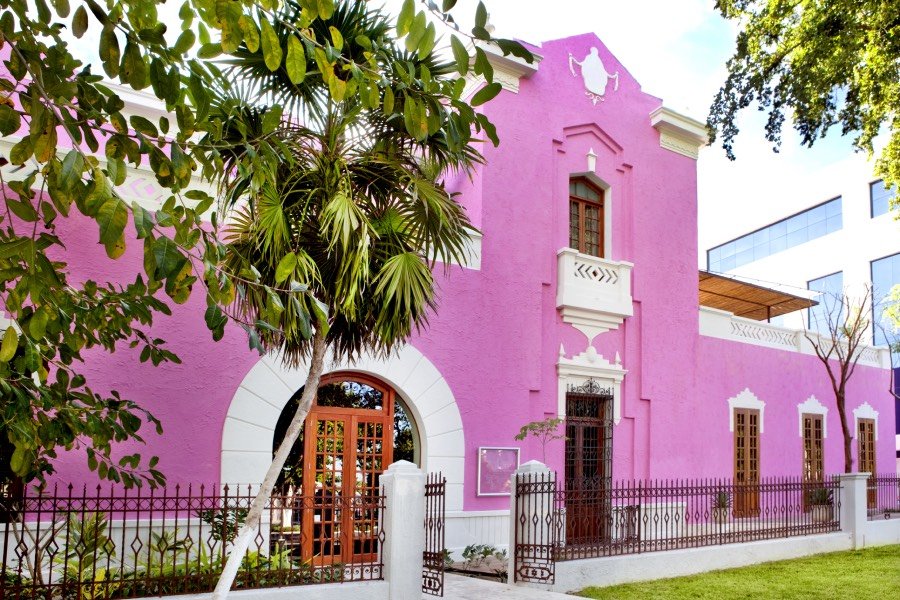
On Paseo de Montejo, Mérida's grandest colonial boulevard, Rosas & Xocolate occupies a pair of restored early-20th-century mansions and positions itself squarely at the romance end of the Yucatán hotel market. The property draws guests who want the city's Mayan and colonial history as a backdrop rather than a day-trip footnote, with dining and atmosphere calibrated accordingly.
Paseo de Montejo and the Case for Staying on the Boulevard
Mérida's hotel market divides roughly into two camps: properties buried in the Centro Histórico's denser colonial grid, and those that front Paseo de Montejo, the wide, tree-lined avenue that the city's henequen-era aristocracy built in deliberate imitation of Parisian boulevards. Rosas & Xocolate sits in the second camp, at Paseo de Montejo 480, where the address alone signals a particular kind of stay. The mansions lining this stretch were built in the early twentieth century when Yucatán's sisal wealth was at its height, and the architecture carries that confidence — high ceilings, ornate facades, generous proportions. For guests arriving from Mexico City or international connections through Mérida's Manuel Crescencio Rejón International Airport, the boulevard sets an immediate tone that the Centro's narrower streets, however charming, do not quite replicate. For a broader map of where Rosas & Xocolate sits within the city's wider hospitality offer, see our full Mérida restaurants guide.
Romance as a Design Brief, Not a Marketing Tag
Yucatán's premium hotel tier has expanded considerably in the past decade, with properties ranging from converted haciendas on the city's outskirts to boutique urban addresses in restored colonial buildings. Within that field, Rosas & Xocolate occupies a specific niche: it is designed, deliberately and without apology, for guests who treat romance as a primary travel criterion rather than an incidental bonus. That means the design language, the food and drink programme, and the pace of the property all point in the same direction. The pink-and-chocolate colour palette that gives the hotel its name is not accidental — it establishes an aesthetic register that runs through the physical spaces and into the culinary identity.
This positioning places Rosas & Xocolate in a different competitive conversation from, say, Chablé Yucatán in Merida, which leans toward wellness and hacienda grandeur, or the beach-facing romance properties further along Mexico's coasts , properties like Maroma in Riviera Maya or Hotel Esencia in Tulum, where the sea does significant atmospheric work. In Mérida, the setting is urban and historical, and the hotel has to generate its own intimacy from architecture and programming rather than from a beachfront view.
The Dining Programme: Chocolate as a Through-Line
The editorial angle that matters most at Rosas & Xocolate is its food and drink identity, specifically how the property uses cacao , a crop with deep Mayan roots in the Yucatán Peninsula , as a culinary through-line rather than a novelty gimmick. Cacao has been cultivated and traded across Mesoamerica for millennia; it was a Mayan luxury commodity long before European contact, and Yucatán's food culture carries that history into contemporary kitchens through dishes and drinks that treat chocolate as an ingredient with as much savory application as sweet.
A hotel that names itself partly after chocolate and positions itself in a city with that culinary inheritance is making a commitment. The dining programme at Rosas & Xocolate takes its cue from that commitment, anchoring the food identity in local Yucatecan tradition while aligning presentation and atmosphere with the romance-first brief. This is a pattern visible in Mexico's better boutique hotel dining more broadly: properties like Casa de Sierra Nevada, A Belmond Hotel, in San Miguel de Allende and Casa Antonieta in Oaxaca City both frame their restaurant programmes around regional culinary identity rather than generic international menus, recognising that guests choosing a destination hotel in a culturally specific Mexican city are often there precisely because of that specificity.
Yucatecan cuisine itself is worth understanding as a distinct tradition rather than a regional variant of Mexican cooking. It draws on Mayan agricultural foundations, Spanish colonial layering, and Lebanese immigrant influence , a combination that produces dishes like cochinita pibil, sopa de lima, and papadzules that appear nowhere else in Mexican gastronomy with the same character. A dining programme rooted in this tradition gives guests access to something they cannot approximate at home, which is a more durable sell than polished international cuisine at a comparable price point.
Placing Rosas & Xocolate in Mexico's Premium Boutique Tier
Mexico's premium boutique hotel market has matured significantly, and Rosas & Xocolate competes in a field that now includes properties with considerable international recognition. On the Pacific coast, One&Only; Mandarina in Riviera Nayarit and Four Seasons Resort Punta Mita set a high bar for amenity-led luxury. In Los Cabos, Las Ventanas al Paraíso, A Rosewood Resort, Montage Los Cabos, and Zadun, A Ritz-Carlton Reserve compete on scale and branded prestige. Rosas & Xocolate's argument is different: it offers urban cultural immersion in one of Mexico's most architecturally coherent colonial cities, with a romance-led atmosphere that the beach-resort tier cannot replicate. The closest analogues are probably the smaller urban boutique properties in Mexico City's Polanco neighbourhood, such as Casa Polanco, or character-led properties in historically rich towns like Hotel Demetria in Guadalajara.
Guests who want seclusion over urban engagement might also consider Xinalani in Quimixto or Las Alamandas in Costalegre, both of which trade the city entirely for remote natural settings. The choice between those options and Rosas & Xocolate depends on whether the guest wants Mérida's streets, markets, and archaeological proximity , the city sits less than two hours from Chichén Itzá and Uxmal , as an active part of the experience.
Planning Your Stay
Mérida runs hot for most of the year, with November through February offering the most manageable temperatures for walking the city and the boulevard. That window also coincides with peak cultural programming, including festivals and events tied to the city's deep calendar of Mayan and colonial commemorations. Booking well in advance for that period is advisable. The hotel's address on Paseo de Montejo places it within walking distance of the city's principal museums and the main market district, though taxis and ride-share apps cover the city efficiently for longer distances. Guests arriving by air land at Manuel Crescencio Rejón International Airport, which handles direct flights from several major Mexican hubs and select US gateways. For those building a broader Mexican itinerary, Hotel Sevilla offers a point of comparison within Mérida's own market.
Frequently Asked Questions
- What room should I choose at Rosas & Xocolate?
- The property occupies restored early-20th-century mansions on Paseo de Montejo, so rooms vary considerably in character depending on their position within the original architecture. Given that the hotel is built around a romance-first brief, rooms with direct access to courtyard or garden spaces tend to deliver the atmosphere most aligned with that positioning. The price tier reflects a premium boutique property in Mérida's upper segment, so the gap between room categories is worth examining at booking.
- What is the standout thing about Rosas & Xocolate?
- The combination of address and identity is the clearest differentiator. A restored mansion on Paseo de Montejo, in a city with Mayan roots and colonial architecture of genuine age, gives the hotel a context that purpose-built resort properties cannot manufacture. The cacao-led culinary identity adds a further layer of specificity that connects to Yucatán's pre-colonial history rather than a generic luxury food programme.
- Can I walk in to Rosas & Xocolate?
- For dining, boutique hotels in this segment in Mérida generally accommodate walk-in guests at the bar or restaurant when space allows, but the romance-first positioning and limited scale of the property mean that demand from in-house guests can fill capacity quickly, particularly in peak season from November through February. Contacting the hotel directly before arriving is the practical approach.
- What is Rosas & Xocolate a good pick for?
- It fits guests who want Mérida's colonial and Mayan context as the primary setting for a stay, with romance-led atmosphere and a culinary identity rooted in Yucatecan tradition. It is less suited to guests whose priority is beach access, resort-scale amenity, or the branded prestige of a large international chain. The Paseo de Montejo address makes it a strong base for exploring the city on foot and for day-trip access to the peninsula's archaeological sites.
- How does the chocolate theme connect to the wider Yucatán food tradition?
- Cacao has been central to Mayan food culture in the Yucatán Peninsula for thousands of years, used in ceremonial drinks and as a trade currency long before its adoption by European palates. A hotel dining programme that anchors part of its identity in chocolate is drawing on a culinary lineage with genuine regional depth, not importing a trend. For guests interested in understanding Yucatecan cuisine as a historically layered tradition, that connection gives the food programme a coherence that generic luxury menus do not offer.
Recognized By

Related editorial
- Best Fine Dining Restaurants in ParisFrom three-Michelin-star icons to the next generation of Parisian chefs pushing boundaries, these are the restaurants that define fine dining in the world's culinary capital.
- Best Luxury Hotels in RomeFrom rooftop terraces overlooking ancient ruins to Michelin-starred hotel dining, these are the luxury hotels that make Rome unforgettable.
- Best Cocktail Bars in KyotoFrom sleek lounges to hidden speakeasies, Kyoto's cocktail scene blends Japanese precision with global influence in ways you won't find anywhere else.
Save or rate Rosas & Xocolate on Pearl
Keep this venue in your Pearl passport, rate it after you visit, and track it alongside every other place you collect.