
Kamba Ngaga Lodge
Mbomo
Hotel in Mbomo, Republic of the Congo
 Book with Pearl
The Read
Research-Outpost Conservation Lodge
Why go
Choose Kamba Ngaga Lodge if the trip is built around remote Congo Basin access, quiet, and a nature-led stay rather than city convenience. Business travelers who need predictable urban services should cross-shop Radisson Blu M'Bamou Palace Hotel or Hilton Kinshasa instead, while leisure guests get the clearer value here.
About Kamba Ngaga Lodge
Is Kamba Ngaga Lodge worth considering in Mbomo? Consider it if the venue itself and its Mbomo setting are the reason for your trip, and confirm practical details directly before booking. Kamba Ngaga Lodge is recognized in Fodor's Most Incredible Hotels in the World (2026), which gives it a clear point of distinction.
If your trip depends on specific details, compare your plan with Radisson Blu M'Bamou Palace Hotel or Hilton Kinshasa as alternatives to research directly. Those comparisons are useful for travelers deciding whether Kamba Ngaga Lodge is the right fit for a specific itinerary.
Lodge appeal
Use Kamba Ngaga Lodge as a Mbomo lodging option where the main appeal is the property's lodge identity and Fodor's 2026 recognition. Do not assume specific amenities, dining formats, room categories, transport arrangements, or family facilities. For broader planning, confirm any trip-specific needs directly before booking.
When the timing matters
Treat timing and logistics as questions to confirm before committing. Ask the property directly about current access, availability, meals, activities, and any guest requirements. If you are comparing Kamba Ngaga Lodge with other options, keep the focus on details that each venue can confirm directly.
Planning details
- Location
- District de Mokeko, Sangha, N/A, Congo
- Website
- kambaafrica.com/lodges/ngaga-lodge
The take
The Take
The Vibe
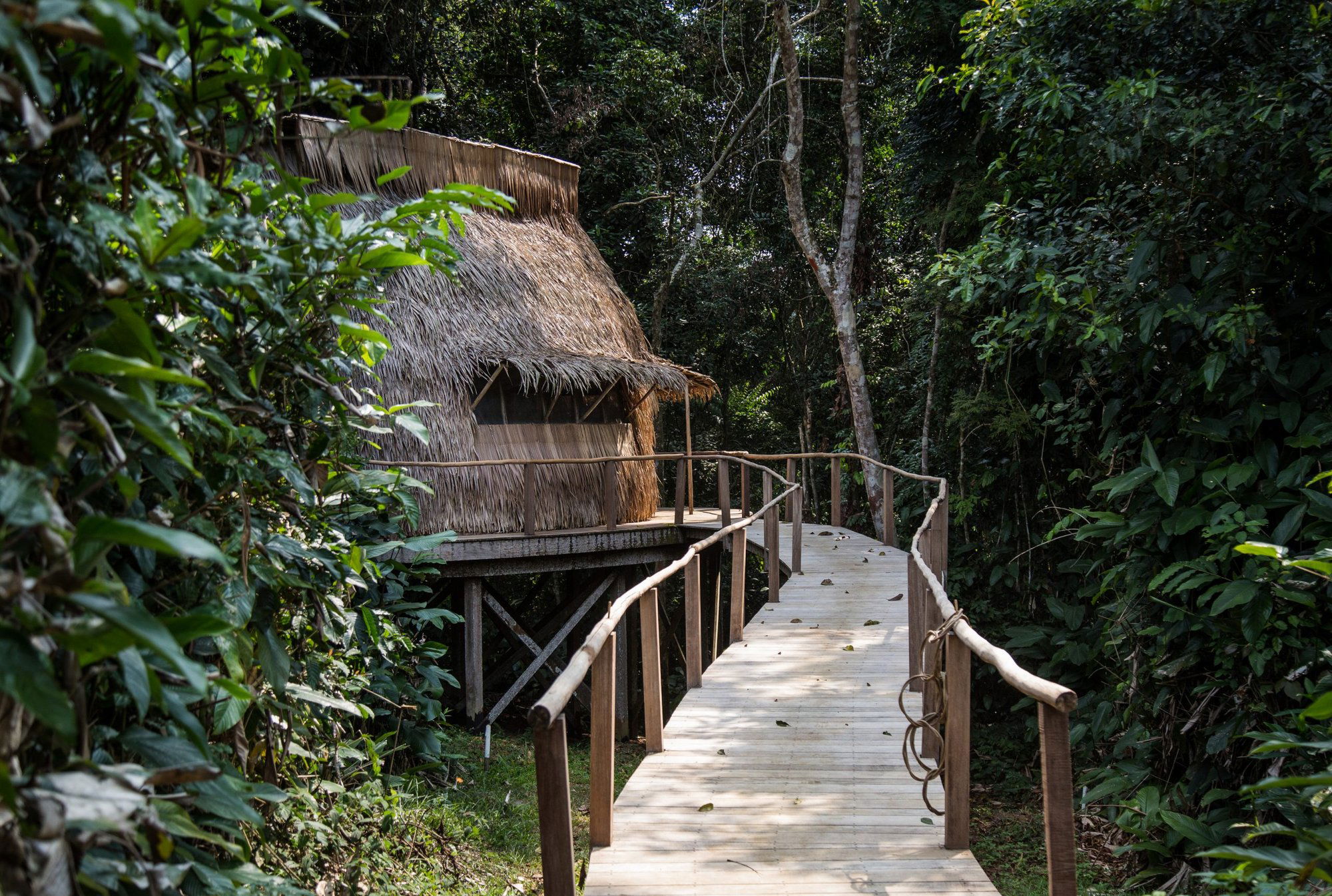
Kamba Ngaga Lodge reads like a studied act of restraint: architecture that bends to the forest rather than announcing itself. The buildings sit low and unobtrusive, using a muted material palette and a functional, spare vocabulary that feels more like an observational outpost than a resort. The editorial tone of the property favors ecological access and scientific humility over theatrics, so guests experience the Congo Basin with minimal visual interruption. The effect is quietly purposeful — intimate and unadorned, designed to foreground wildlife and landscape rather than polished hospitality gestures.
Best For
Ngaga is aimed at travellers who prize immersion over creature comforts. It suits people who want direct access to one of the largest intact tropical rainforests on Earth, and those who come for focused observation of habitat and wildlife rather than resort‑style leisure. The lodge’s restrained design and outpost posture appeal to nature researchers, serious birders and wildlife watchers, couples or small groups seeking an uninterrupted wilderness experience, and anyone prepared to treat the stay as an expedition into working forest rather than a conventional holiday.
Stay Tips
Expect a remote, intentionally low‑key experience: arrival is described as an "abrupt entry" into the working forest, and the property prioritises observation and access over amenity. Pack with minimal‑luxury, expedition thinking in mind — gear for humid rainforest conditions and activities focused on wildlife viewing. Reservations should be made with the understanding that the lodge operates as an ecological outpost; guests who value design restraint and direct contact with the forest will find its posture deliberate and coherent, while those seeking extensive resort facilities should consider alternatives.
Venue details
Ambiance
Serene forest immersion with natural sounds of birds, monkeys, and insects; open-air decks and thatch-roofed bungalows foster deep connection to pristine wilderness.
Tags
Vibe
Best For
Experience
Amenities
About the Stay
- Rooms
- 6
- Property Type
- Eco-lodge
- Property Style
- Rustic Treehouse Style Eco Lodge
- Design Style
- Natural Local Materials with Thatch Roofs and Wraparound Decks
- Breakfast
- Included
- Airport Transfer
- Available
Know before you go
Know Before You Go
- Getting there
- District de Mokeko, Sangha, N/A, Congo
Planning details
Location
District de Mokeko, Sangha, N/A, Congo · Directions
Recognition and awards

Also consider
Also Consider
- Radisson Blu M'Bamou Palace Hotel, Notable alternative
- Hilton Kinshasa, Notable alternative
Hotel context
How it compares for Congo-based hotel decisions
Radisson Blu M'Bamou Palace Hotel is the safer choice for travelers who need an urban base, business infrastructure, and easier city logistics. Kamba Ngaga Lodge is the better call when ambiance matters more than convenience: the experience is shaped by remoteness and setting, not by hotel-district efficiency.
Hilton Kinshasa also makes more sense for work trips, especially when meetings, transport, and predictable services drive the decision. Kamba Ngaga Lodge is more compelling for a special-occasion stay or nature-focused itinerary, but it is not the value pick if the guest mainly needs a polished place to sleep between appointments.
Booking difficulty is listed as easy, which helps if the trip is flexible. The bigger decision is fit: choose the city hotels for practical reliability, and choose Kamba Ngaga Lodge when the lodge setting is the main reason to travel.
Explore Mbomo
Around this place
Discover more on Pearl
Unlock the full Kamba Ngaga Lodge guide in Pearl, including awards, comparisons, FAQs, planning details, and nearby places.
Compare Kamba Ngaga Lodge
| Venue | Location | Awards |
|---|---|---|
| Kamba Ngaga Lodge | Mbomo | 100 Most Incredible Hotels in the World · 2026 |
| Radisson Blu M’Bamou Palace Hotel | Brazzaville | No published awards |
| Hilton Kinshasa | Kinshasa | No published awards |
How Kamba Ngaga Lodge Mbomo compares with similar nearby venues.
FAQ
Frequently Asked Questions
How is the location of Kamba Ngaga Lodge?
Kamba Ngaga Lodge is in Mbomo. No more specific address or neighborhood detail is provided, so confirm arrival logistics directly with the property before traveling.
Which room category is best at Kamba Ngaga Lodge?
Room categories are not provided. Choose only after confirming current room types, access, occupancy, and booking conditions through the venue's official channels.
Do loyalty programs work at Kamba Ngaga Lodge?
Loyalty-program details are not provided for Kamba Ngaga Lodge. If earning or redeeming points is important, confirm directly with any hotel you are considering, including Hilton Kinshasa.