
Hotel in Madrid, Spain
The Westin Palace Madrid
800ptsBelle Époque Civic Grandeur


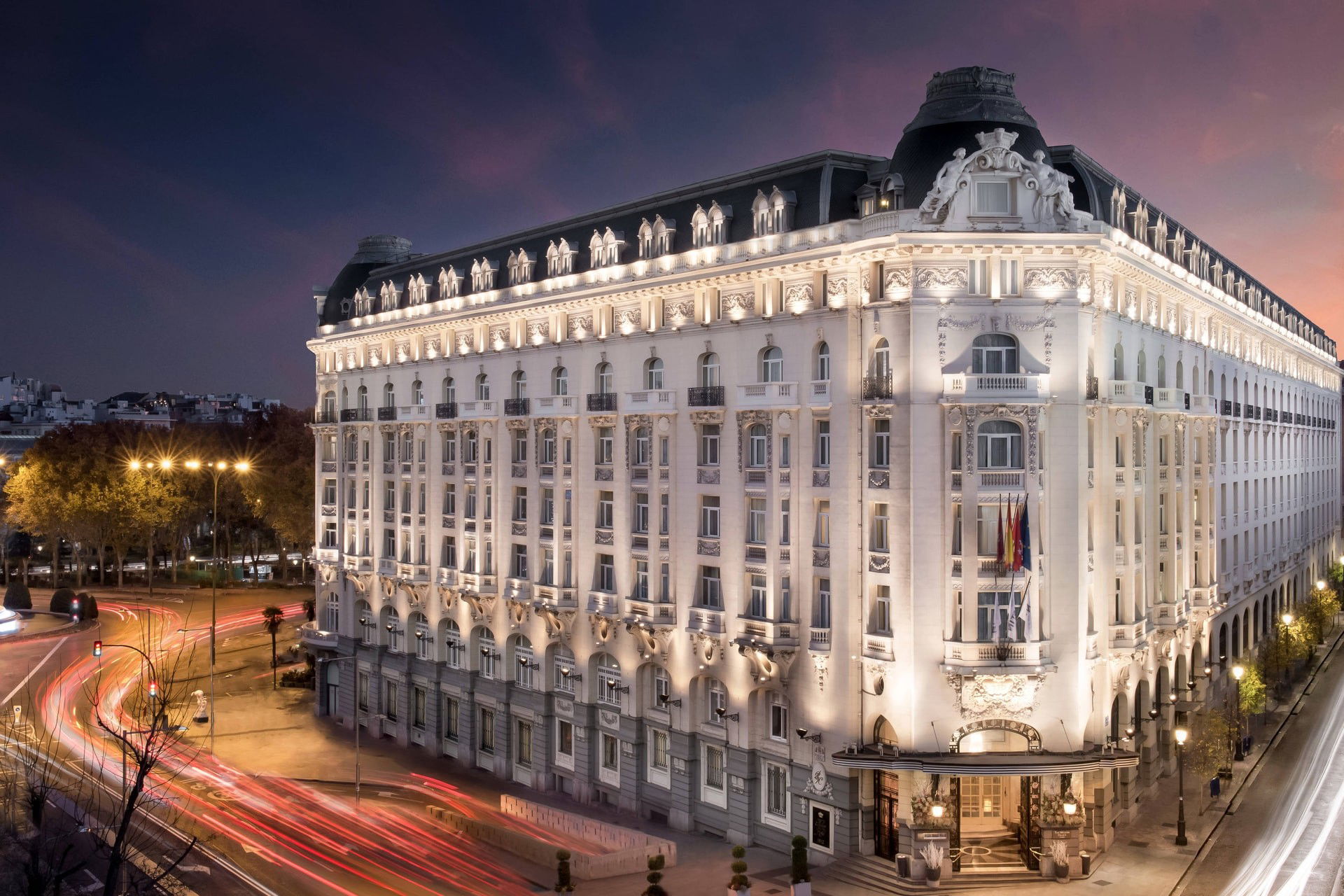
About The Westin Palace Madrid
Open since 1912 and awarded a Michelin Key in 2024, The Westin Palace Madrid occupies a prime position steps from the Prado, where its original Belle Époque stained-glass dome still crowns the reception. Across 466 rooms, the property balances period architecture with modern infrastructure, including soundproof windows and Bang & Olufsen audio systems. Rates from $564 per night position it firmly within Madrid's grand-hotel tier.
The Grand-Hotel Tradition in a City Built for It
Madrid's relationship with grand hotels runs deeper than tourism. The city was constructed as a seat of centralised power, and the hospitality infrastructure that grew around the court and the ministries reflected that purpose: large-scale, formal, built to impress visiting dignitaries and accommodate the aristocracy in transit. That tradition produced a particular hotel type — palatial in scale, rooted in ceremony — that still defines the upper tier of the city's accommodation market. The Westin Palace Madrid, open since 1912 and awarded a Michelin Key in 2024, belongs unambiguously to that lineage. It sits steps from the Prado, on Pl. de las Cortes 7, at an address that feels less like a postcode and more like a declaration of intent.
Within Madrid's current grand-hotel peer set , which includes the Mandarin Oriental Ritz, Madrid, the Four Seasons Hotel Madrid, and the Rosewood Villa Magna , the Palace occupies the old-guard position. It is not chasing the contemporary design credentials of newer arrivals. It is, instead, something rarer: a building with a continuous identity across more than a century, recently restored but not reinvented.
What the Regulars Come Back For
Loyal guests of grand old hotels rarely return for the thread count alone. At properties like this one, the draw is a sense of spatial authority , rooms that feel proportioned for living rather than sleeping, public spaces that reward lingering. The Palace's original stained-glass dome above the reception is the defining architectural gesture: a fixed point that has oriented arrivals since 1912 and remains, after restoration, exactly where it should be. For guests who have stayed multiple times, it functions as a landmark within the building itself, a signal that something of the original structure was worth preserving and has been.
The regulars here are also returning to a location that requires no explanation. The Prado is within walking distance. So are the Reina Sofía and the Thyssen-Bornemisza, which together give the Golden Triangle of Art its name. The Congreso de los Diputados sits nearby. These are not amenities the hotel provides , they are the reason the hotel exists where it does, and experienced Madrid visitors understand that proximity to the museum corridor on the Paseo del Arte carries practical value that no amount of in-house programming can replicate.
The property also carries historical weight that accumulates with repeat visits. Salvador Dalí, Luis Buñuel, and Federico García Lorca were among the figures who gathered here. That kind of documented association shapes how a building feels to those who know it, even if the connection exists only as atmosphere. For a certain type of traveller, that context matters and compounds with each stay.
The Architecture of a Return Visit
Across 466 rooms, the Palace manages the tension between period presentation and contemporary function with reasonable success. Guest rooms are soundproofed , useful given the central location , and fitted with Bang & Olufsen audio systems, a detail that places them in a specific technology era but reflects the broader approach: contemporary infrastructure dressed in Belle Époque clothing. Bathrooms are described as spacious and efficient, which in a hotel of this age is not a given. Data ports and business and conference services extend the property's utility beyond leisure stays, which likely explains its consistent occupancy across different traveller types.
Two restaurants and a hotel bar complete the on-property offering. The bar, in particular, functions as a practical staging point for Madrid's late-starting nightlife, which runs on a schedule that confounds visitors expecting evening activity before 10pm. For guests staying multiple nights, the bar becomes a rhythm-setter: somewhere to calibrate before heading into the city, or to return to when the night has gone long enough.
For those building an itinerary around the property's location, the full Madrid restaurants guide covers the wider dining and hospitality picture in the Centro and surrounding neighbourhoods.
Where It Sits in Madrid's Broader Market
The Michelin Key awarded in 2024 places the Palace within a recognised framework for hotel quality, distinct from the restaurant star system but meaningful as a marker of hospitality standards. It aligns the property with a tier of European grand hotels that have maintained relevance through restoration rather than reinvention. Rates from $564 per night reflect that positioning, sitting above the mid-market but below the most aggressively priced newer luxury entrants in the city.
For context on what that positioning looks like in practice: hotels in Madrid's grand tier now split between those that have undergone comprehensive design-led renovations aimed at a younger luxury market, and those that have preserved a more formal, ceremony-driven character. The Palace sits firmly in the second group. Guests arriving at the CoolRooms Palacio de Atocha or the Gran Hotel Inglés will find a different register entirely , smaller, design-forward, pitched at a different sensibility. The Palace does not compete on those terms and does not attempt to.
Further up the formality scale, the Gran Meliá Palacio de los Duques offers a comparable palatial footprint with a stronger contemporary styling. Smaller alternatives in the city , including Hotel Unico Madrid , provide a more contained experience at a different scale. The Palace's 466 rooms make it one of the larger properties in the city's upper tier, which affects the character of a stay: this is not an intimate property, and it does not try to feel like one.
Planning a Stay
The hotel's address in the Centro district , Pl. de las Cortes 7 , places it within easy reach of Madrid's major cultural institutions and within the city's central transport network. For guests arriving from elsewhere in Spain, the Akelarre in San Sebastián and the Abadía Retuerta LeDomaine in Teruel represent strong regional complements if the stay forms part of a broader Spanish itinerary. For those extending to the islands, Hotel Can Cera in Palma, La Residencia, A Belmond Hotel, Mallorca, and Cap Rocat in Cala Blava all operate in comparable territory. Beyond Spain, comparable grand-hotel formats appear at Aman Venice, Aman New York, and The Fifth Avenue Hotel in New York City.
Given the hotel's scale and its consistent draw among both leisure and business travellers, booking ahead by several weeks is advisable for peak season stays, particularly during major events in the Spanish capital. The property's conference and business services also mean it operates at higher occupancy around ministerial and institutional calendars, which do not always align with traditional high-season periods.
Frequently Asked Questions
- What is The Westin Palace Madrid known for?
- The Palace is the address most associated with Madrid's Belle Époque grand-hotel tradition, having operated continuously since 1912. Its original stained-glass dome remains in place above the reception, and the property earned a Michelin Key in 2024. Rates begin at $564 per night across 466 rooms, and the location steps from the Prado is among the most central in the city's upper accommodation tier.
- What room should I choose at The Westin Palace Madrid?
- Given the Michelin Key recognition (2024) and the property's Belle Époque character, rooms with views that reflect the hotel's civic surroundings tend to reinforce the sense of place that repeat guests cite. The soundproofing and Bang & Olufsen audio systems are consistent across the property, so room selection is more about floor level and aspect than variation in technical specification. Rates from $564 provide a baseline; the property's style runs formal throughout.
- How far ahead should I plan for The Westin Palace Madrid?
- As a 466-room property in central Madrid, the Palace has more flexibility than smaller luxury hotels in the city, but demand runs consistently high given its location near the Prado and its dual appeal to leisure and business travellers. Several weeks of lead time is advisable during peak cultural seasons; institutional and governmental calendars in the capital can also affect availability outside traditional tourist periods. Booking directly or through a premium travel platform generally yields clearer rate transparency.
- Is The Westin Palace Madrid better for first-timers or repeat visitors?
- The property rewards both, but differently. First-time visitors benefit most from the location, the architectural set-piece of the dome, and the direct access to the Prado and surrounding museums. Repeat visitors tend to settle into the hotel's rhythms , the bar before dinner, the late return , and engage more with the documented cultural history of the building. The Michelin Key and the $564 entry rate place it in a tier where both types of guest expect high baseline standards, and the property broadly delivers them.
- Did any notable cultural figures actually stay or gather at The Westin Palace Madrid?
- Yes, and the record here is documented rather than anecdotal. Salvador Dalí, Luis Buñuel, and Federico García Lorca are among the Spanish cultural figures associated with the hotel during the early-to-mid twentieth century. For guests interested in Madrid's intellectual history, that layer of association is part of what distinguishes the Palace from newer luxury entrants in the city, none of which carry comparable provenance in the Spanish cultural record.
Recognized By


Related editorial
- Best Fine Dining Restaurants in ParisFrom three-Michelin-star icons to the next generation of Parisian chefs pushing boundaries, these are the restaurants that define fine dining in the world's culinary capital.
- Best Luxury Hotels in RomeFrom rooftop terraces overlooking ancient ruins to Michelin-starred hotel dining, these are the luxury hotels that make Rome unforgettable.
- Best Cocktail Bars in KyotoFrom sleek lounges to hidden speakeasies, Kyoto's cocktail scene blends Japanese precision with global influence in ways you won't find anywhere else.
Save or rate The Westin Palace Madrid on Pearl
Keep this venue in your Pearl passport, rate it after you visit, and track it alongside every other place you collect.