
Hotel in Madrid, Spain
Mercer Madrid
150ptsPlant-Forward Restraint

About Mercer Madrid
Occupying a refined address in Madrid's Retiro district, Mercer Madrid operates at the intersection of architectural character and green gastronomy, earning a Star Wine List distinction for 2026. The restaurant sits within the quieter, culture-dense corridor near the Prado and Retiro Park, placing it in a different register from the city's more theatrical fine-dining rooms.
Where Retiro's Quiet Streets Meet a Different Kind of Fine Dining
Madrid's fine-dining scene divides, broadly, into two camps: the grand-hotel dining rooms that cluster around the Paseo del Prado and Castellana, and the smaller, more architecturally deliberate restaurants that trade on restraint rather than spectacle. Mercer Madrid, on Calle de Ruiz de Alarcón in the Retiro district, belongs to the second group. The address itself signals something: a narrow street running parallel to the Prado, close enough to the museum quarter to draw an internationally literate crowd, but removed from the main-boulevard noise that surrounds properties like the Mandarin Oriental Ritz, Madrid or the Four Seasons Hotel Madrid.
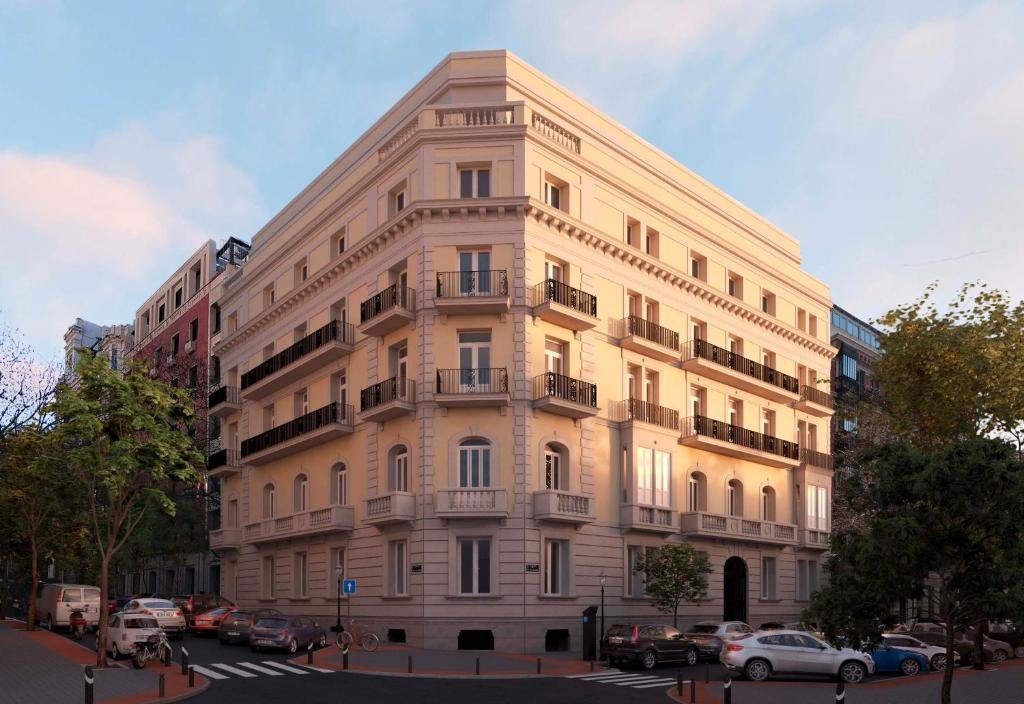
Arriving on foot from the Retiro Park side, the transition is immediate. The residential and institutional calm of the neighbourhood, the stone facades, the measured scale of the buildings, all of it sets an expectation before you step inside. This is not accidental. Properties that choose to operate in this corridor rather than on the Paseo de la Castellana are making a deliberate statement about tone.
The Architecture of Restraint
Madrid has a long tradition of repurposing aristocratic and bourgeois buildings for hospitality, and the Retiro district offers some of the city's most coherent surviving stock of late-nineteenth and early-twentieth-century architecture. Fine-dining rooms embedded in these structures tend to carry the building's logic into their interiors: high ceilings, considered proportions, materials that reference the original construction. The effect is a kind of earned seriousness that newer purpose-built restaurants rarely achieve.
Mercer Madrid occupies a space within this architectural tradition. Where larger-footprint luxury hotels in the city, such as the Rosewood Villa Magna or the Gran Meliá Palacio de los Duques, wrap their restaurants in the infrastructure of a full hotel operation, smaller dining venues in this district depend more directly on the built environment to do the atmospheric heavy lifting. The result tends to be quieter, more focused, and more dependent on the quality of what arrives at the table.
That spatial discipline connects directly to Mercer Madrid's positioning as a green gastronomy kitchen. Cooking that foregrounds plant-forward techniques and seasonal sourcing benefits from rooms that do not compete with the food for attention. The sightlines are horizontal, the materials tend toward the warm and natural, and the overall impression is of a space that expects the diner to concentrate.
Green Gastronomy in a City That Still Runs on Meat
Madrid's reputation as a meat-forward city is not unfounded: the cocido madrileño, the roast suckling pig brought in from Segovia, the offal traditions of the old market culture, these are real and persistent. Fine-dining rooms that position around plant-based or sustainability-led cooking are operating against a strong default, and that positioning carries its own editorial statement. It places Mercer Madrid in a small peer group nationally, alongside kitchens at properties like Abadía Retuerta LeDomaine in Teruel or Pepe Vieira Restaurant & Hotel in Poio, both of which have built serious reputations around sustainability-led cooking in unconventional Spanish settings.
The category of green gastronomy in Spain has matured considerably since the early-2010s moment when plant-forward cooking was still mainly associated with Catalonia. Madrid has been slower to develop this tier, which means the venues that commit to it now occupy a less crowded space, but also carry more responsibility to demonstrate that the commitment is substantive rather than positioning.
The Wine Programme and Its Recognition
In 2026, Mercer Madrid received a Star Wine List distinction, placing its cellar and wine programme in a recognised tier of quality among European fine-dining rooms. Star Wine List evaluates lists on depth, breadth, and the coherence of the selection relative to the kitchen's direction. For a restaurant framing itself around green gastronomy, the wine list alignment matters: a programme weighted toward organic, biodynamic, or natural producers would reinforce the kitchen's philosophy, while a more conventional list would sit in tension with it.
Spain's wine geography gives a kitchen in this position considerable material to work with. The country's recognised producing regions, from Rioja and Ribera del Duero to Priorat, Galicia's Rías Baixas, and the emerging producers of the Canary Islands, include a significant and growing cohort of low-intervention growers. A wine list built for this room has ample domestic material to draw from before reaching internationally, and the Star Wine List recognition suggests the curation is considered enough to merit independent attention. For context on how wine programmes operate alongside similarly serious Spanish hospitality, the lists at Atrio Restaurante Hotel in Cáceres and Terra Dominicata in Escaladei offer useful reference points.
Where Mercer Madrid Sits in the Madrid Dining Field
Madrid's premium dining tier has become more differentiated over the past decade. The large-hotel dining rooms, which include the restaurants attached to properties like the Gran Hotel Inglés and CoolRooms Palacio de Atocha, operate with different resource bases and audience expectations than standalone fine-dining rooms. Mercer Madrid operates closer to the standalone model, with a specialist culinary identity rather than a broad-hospitality one.
Within the Retiro and Jerónimos corridor specifically, the concentration of museums, embassies, and historically significant buildings draws a diner who tends to be internationally experienced and less interested in dining spectacle. That audience rewards subtlety, which is precisely what a green gastronomy kitchen in a carefully preserved architectural space is positioned to deliver. For those building a broader Madrid stay around similar values, options at the Hotel Unico Madrid or Hotel Rector carry a comparable sense of deliberate restraint.
Further afield in Spain, the model of serious cooking in architecturally significant or sensitively designed spaces is well-established: Akelarre in San Sebastián, Cap Rocat in Cala Blava, and Mas de Torrent Hotel & Spa in Torrent all demonstrate how space and cooking reinforce each other when the design decision is made early and held consistently.
Planning a Visit
Mercer Madrid is located at Calle de Ruiz de Alarcón, 5, in the Retiro district, a few minutes' walk from the Banco de España metro station and within comfortable distance of the Prado and Reina Sofía. The surrounding neighbourhood moves at a slower pace than the Gran Vía or Chueca, which makes it well-suited to an unhurried dinner rather than a quick lunch. Given the restaurant's position in the fine-dining category with a Star Wine List distinction, booking ahead is advisable, particularly for weekend evenings when the Retiro museum circuit draws visitors who extend their afternoon into dinner. For a broader view of where Mercer Madrid sits within the city's dining geography, the EP Club Madrid restaurants guide maps the full field across neighbourhoods and price tiers.
Frequently Asked Questions
- Is Mercer Madrid more low-key or high-energy?
- The Retiro address and green gastronomy positioning both point toward the quieter end of Madrid's fine-dining register. This is a room built for conversation and concentration rather than social theatre. Diners looking for the higher-energy rooms attached to major international hotel brands will find those at properties on the Paseo de la Castellana; Mercer Madrid operates on a different frequency. The Star Wine List recognition signals a programme serious enough to reward attention, which suits a lower-key format.
- Which room offers the leading experience at Mercer Madrid?
- Specific room configurations are not publicly detailed in available records. What the combination of the Retiro building stock, the green gastronomy kitchen direction, and the Star Wine List distinction suggests is that the dining room itself is the primary draw, with the wine programme as a significant secondary element. For visitors whose priority is the wine list, arriving with enough time to engage with it properly, rather than treating it as a backdrop to a quick meal, will yield the most from the experience.
- What should I know about Mercer Madrid before I go?
- The kitchen operates within the green gastronomy category, which in a Madrid context means a deliberate departure from the city's conventional fine-dining defaults. The Star Wine List distinction for 2026 is the clearest external validation on record. The Retiro address places it outside the main hotel-dining cluster, so plan travel accordingly. Booking in advance is sensible for a restaurant at this level, and the neighbourhood rewards arriving early to walk the area around Calle de Ruiz de Alarcón before sitting down.
Recognized By

Similar venues by awards
Related editorial
- Best Fine Dining Restaurants in ParisFrom three-Michelin-star icons to the next generation of Parisian chefs pushing boundaries, these are the restaurants that define fine dining in the world's culinary capital.
- Best Luxury Hotels in RomeFrom rooftop terraces overlooking ancient ruins to Michelin-starred hotel dining, these are the luxury hotels that make Rome unforgettable.
- Best Cocktail Bars in KyotoFrom sleek lounges to hidden speakeasies, Kyoto's cocktail scene blends Japanese precision with global influence in ways you won't find anywhere else.
Save or rate Mercer Madrid on Pearl
Keep this venue in your Pearl passport, rate it after you visit, and track it alongside every other place you collect.