
Bussaco Palace Hotel
Luso
Hotel in Luso, Portugal
 Book with Pearl
The Read
Price
$200–300per night
Why go
Bussaco Palace Hotel is the Luso choice for a celebration stay built around setting rather than city convenience. Book it when the hotel itself is the point of the trip; choose a more urban peer if dining access, meetings, or late-night options matter more.
About Bussaco Palace Hotel
For a Luso stay, Bussaco Palace Hotel is in Luso, offers a smart casual dress code, and holds World Luxury Hotel Awards 2025 recognition as both a WLHA Global Winner and a WLHA Continent Winner. Specific public-facing details such as room categories, dining format, wellness facilities, prices, and service schedules should be checked directly with the hotel before booking.
That makes the decision direct but narrow. Choose Bussaco Palace Hotel if the hotel itself is the focus of the trip and the confirmed recognition matters to you. If the plan depends on a particular room type, meal, amenity, or schedule, verify those details with the property rather than relying on assumptions.
Choose the room for the occasion, not just the rate
Room selection is a key value decision. For a celebration or special stay, compare the available categories directly with the hotel or booking channel and choose the one that best fits the purpose of the trip. For a quick overnight, the simplest available option may be enough if the main goal is to stay at Bussaco Palace Hotel in Luso.
Do not assume that the lowest rate is automatically the best value, and do not assume that a higher category includes any specific view, layout, or extra service unless it is confirmed at booking. To plan, use the Luso location, smart-casual dress code, and 2025 World Luxury Hotel Awards recognition as the stable facts, then confirm the practical details for your dates.
Better for hotel-focused stays than tightly specified itineraries
Bussaco Palace Hotel can make sense when the stay is built around the property itself. It is less direct when the trip depends on details such as a particular dining schedule, wellness amenity, room feature, or transport plan. Those items may matter, but should be confirmed with the hotel.
Dining and amenity specifics are not detailed enough to build the decision around them. Treat those areas as points to verify before arrival. The safer bet is to book for the Luso location, the smart-casual dress code, and the World Luxury Hotel Awards 2025 recognition, then check current hotel information for anything that could affect the stay.
For broader planning, compare current information from Bussaco Palace Hotel with other options in Luso and the surrounding region before committing to a stay.
Quick reference: choose this for a Luso stay where the hotel itself and its confirmed 2025 World Luxury Hotel Awards recognition are central to the decision.
Planning details
- Location
- Mata do Bussaco, 3050-261 Luso, Portugal
- Website
- almeidahotels.pt/pt/hotel-coimbra-portugal?partner=8087utm_source%3Dgoogle&utm=
- Phone
- +351 231 937 970
The take
The Take
The Vibe
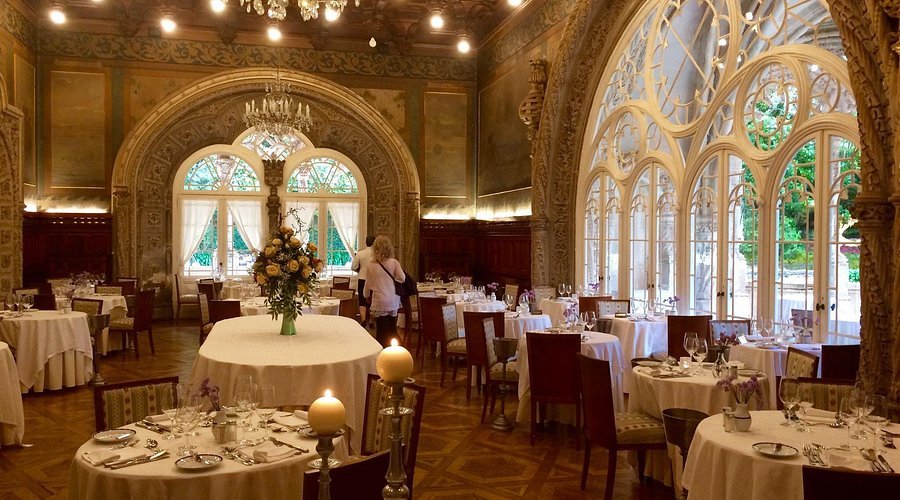
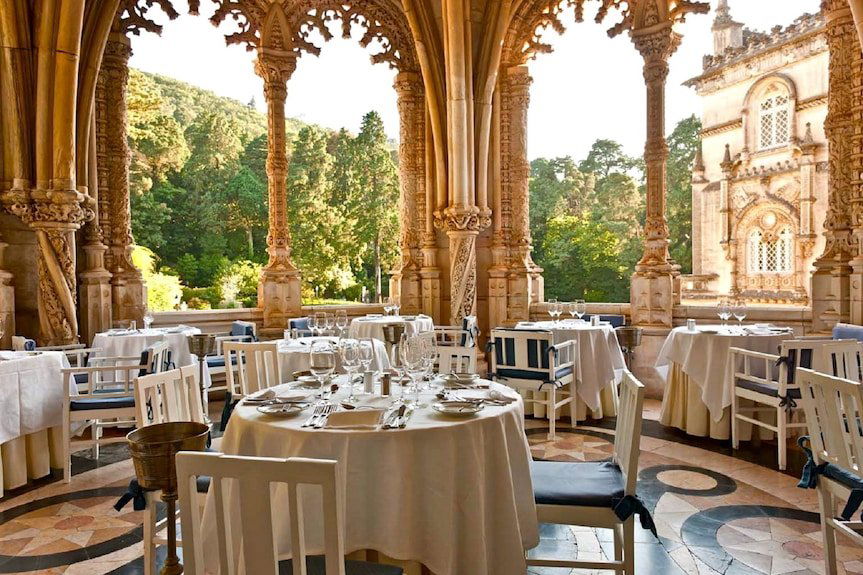
Bussaco Palace reads as architecture first and hotel second: a theatrical Manueline-Gothic composition that arrives dramatically through a walled forest. The setting—cedar and Himalayan pine canopies, turrets, carved armillary spheres and dense ornamental stonework—gives the place a scenic, serene presence that feels deliberately removed from urban life. Interiors and façades convey a crafted historicism that rewards slow looking; the building’s provenance as a royal hunting lodge and the involvement of a stage designer mean the experience often feels staged, grand and intimate at once. It is a destination for travelers who prize heritage and atmosphere above city conveniences.
Best For
This is a stay for people seeking an immersive, non-urban luxury experience: couples on romantic getaways, honeymooners and travelers marking special occasions who want drama and seclusion. It also appeals to history and architecture enthusiasts curious about Manueline revival and late nineteenth-century design. Because the palace is set inside the Mata do Buçaco and explicitly lacks urban adjacency, it suits guests prepared to travel to a forested estate rather than those looking for downtown access or nightlife. The hotel’s awards and palace scale make it a natural choice for milestone stays.
Venue details
Ambiance
Regal and historic atmosphere with period furniture, antiques, fine paintings, and tiled frescos; tranquil forest setting with cozy lounge areas and elegant dining spaces.
Tags
Vibe
Best For
Experience
Amenities
View
Accessibility
About the Stay
- Rooms
- 60
- Check-in
- 15:00
- Check-out
- 12:00
- Property Type
- Palace hotel
- Property Style
- Historic Royal Palace Hotel Retaining Early 20th Century Charm in a National Forest Setting
- Design Style
- Neo Manueline Gothic with Mahogany Furniture, Azulejo Tiles, Antiques, and Period Decorations
- Breakfast
- Included
- Cancellation
- Moderate
Know before you go
Know Before You Go
- Getting there
- Mata do Bussaco, 3050-261 Luso, Portugal
Planning details
Location
Mata do Bussaco, 3050-261 Luso, Portugal · Directions
almeidahotels.pt/pt/hotel-coimbra-portugal?partner=8087utm_source%3Dgoogle&utm=
Recognition and awards
Also consider
If this is not the right fit
Choose Quinta das Lágrimas if the priority is a romantic historic stay with easier Coimbra access. Choose MS Collection Aveiro - Palacete Valdemouro if Aveiro access and a tighter city itinerary matter more than the Luso setting.
Hotel context
How it compares in and around Luso
Choose Curia Palace Hotel if you want a similarly historic-feeling stay with a less destination-driven setup. Bussaco Palace Hotel is the stronger pick when the occasion needs more ceremony; Curia Palace Hotel is easier to justify when value and a calmer itinerary matter more than making the hotel the centerpiece.
Sapientia Boutique Hotel and Quinta das Lágrimas make more sense for travelers who want Coimbra access and a broader city rhythm. Sapientia Boutique Hotel is the practical cross-shop for a boutique city stay, while Quinta das Lágrimas is the closer comparison for a romantic historic property. Pick Bussaco Palace Hotel when Luso's forested address is part of the appeal.
For Aveiro-side alternatives, Montebelo Vista Alegre Ílhavo Hotel and MS Collection Aveiro - Palacete Valdemouro are better fits for travelers prioritizing regional mobility and a more contemporary hotel rhythm. Bussaco Palace Hotel is the more occasion-led choice; the Aveiro peers are easier to fold into a multi-stop Portugal itinerary.
Explore Luso
Around this place
Discover more on Pearl
Unlock the full Bussaco Palace Hotel guide in Pearl, including awards, comparisons, FAQs, planning details, and nearby places.
Compare Bussaco Palace Hotel
| Venue | Location | Awards |
|---|---|---|
| Bussaco Palace Hotel | Luso | World Luxury Hotel Awards 2025 |
| Curia Palace Hotel | Anadia | No published awards |
| Sapientia Boutique Hotel | Coimbra | No published awards |
| Quinta das Lágrimas | Coimbra | Small Luxury Hotels Member 2025 |
| Montebelo Vista Alegre Ílhavo Hotel | Ilhavo | No published awards |
| MS Collection Aveiro - Palacete Valdemouro | Aveiro | 2026 Michelin 1 Key2025 Michelin 1 KeySmall Luxury Hotels Member 2025 |



How Bussaco Palace Hotel Luso compares with similar nearby venues.
FAQ
Frequently Asked Questions
When is the best time to book Bussaco Palace Hotel?
Book according to your travel dates and confirm availability directly with the hotel or your booking channel. Bussaco Palace Hotel is in Luso, has a smart-casual dress code, and holds World Luxury Hotel Awards 2025 recognition as a WLHA Global Winner and WLHA Continent Winner. If the stay is for a fixed celebration date, checking earlier is the safer approach.
How does Bussaco Palace Hotel compare to regional hotels?
Choose Bussaco Palace Hotel if you specifically want to stay at this Luso hotel and value its confirmed 2025 World Luxury Hotel Awards recognition. Curia Palace Hotel, Quinta das Lágrimas, MS Collection Aveiro - Palacete Valdemouro, Montebelo Vista Alegre Ílhavo Hotel, and Sapientia Boutique Hotel are regional alternatives to compare, but verify each property's location, style, amenities, and current rates before deciding.
Do loyalty programs work at Bussaco Palace Hotel?
Loyalty-program details are not available. Plan the stay around the hotel's key facts: it is in Luso, the dress code is smart casual, and it has World Luxury Hotel Awards 2025 recognition. If loyalty benefits are important, confirm eligibility and booking conditions directly before reserving.
Is Bussaco Palace Hotel good for business travel?
It can be considered for business travel if Luso is the right location for the trip, but business-specific facilities or services are not listed. Confirm practical needs such as meeting arrangements, work space, transport, and timing directly with the hotel before booking.
How is the pool and spa at Bussaco Palace Hotel?
Pool or spa details are not available. If wellness facilities are important to the stay, check directly with Bussaco Palace Hotel for current information before booking, or compare amenities with another regional hotel such as Montebelo Vista Alegre Ílhavo Hotel.