
Hotel in London, United Kingdom
Zetter Bloomsbury
150Pearl PointsGeorgian-Frame Character Hotel
About Zetter Bloomsbury
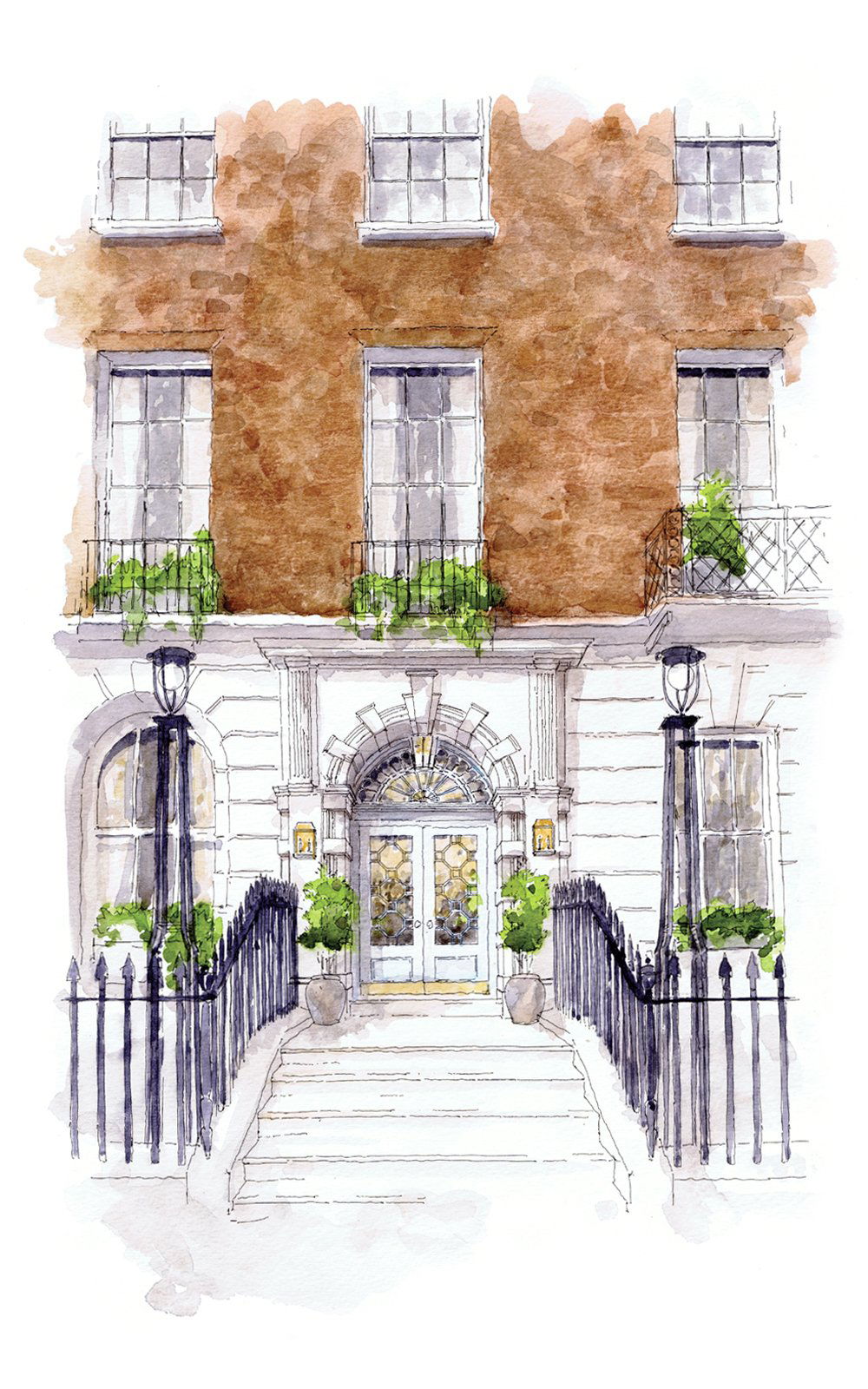
Zetter Bloomsbury occupies one of London's most characterful literary neighbourhoods, where Georgian townhouse architecture and independent bookshops define the streetscape. The hotel sits within the design-led, character-property tier that has grown as a genuine alternative to Mayfair's grand-hotel tradition. Guests choose it for neighbourhood texture and considered interiors rather than ballroom scale.
A Neighbourhood That Sets the Terms
Bloomsbury does not perform for visitors the way Mayfair or Knightsbridge does. Its Georgian squares are quiet by London standards, the streets are scaled for walking, and the British Museum draws a different crowd than the luxury retail corridors to the west. For a hotel to work here, it has to earn its place within that grain rather than import a formula from elsewhere. The Zetter Bloomsbury, positioned in the design-led independent tier of London hospitality, reads the neighbourhood correctly: the property trades on texture, accumulated character, and the specific atmosphere that Bloomsbury's literary and academic history has deposited across its streets over two centuries.
That positioning matters when you compare it against London's other considered-interiors properties. NoMad London brought its New York programme to a Covent Garden courthouse and tilted toward spectacle. Claridge's, The Connaught, and The Savoy occupy a separate tier entirely, with the institutional weight and room rates to match. Zetter Bloomsbury belongs to a smaller cohort of London properties where the editorial logic of the interiors and the identity of the surrounding streets are the primary value proposition. In that peer set, it competes closer to 11 Cadogan Gardens than to the grand Mayfair addresses.
The Atmosphere as Architecture
Approaching Bloomsbury on foot from Russell Square or along Theobald's Road, the shift from the city's commercial pulse to something more residential and textured is immediate. The neighbourhood's Georgian terraces carry a particular quality of light in the afternoons, the stone facades drawing warmth from low sun in a way that glass towers simply cannot. Within this setting, the Zetter Bloomsbury's interiors are designed to amplify rather than contrast the surrounding character. The property operates at a smaller scale than the grand hotel tier, which means that the common spaces feel inhabited rather than curated for effect.
That distinction between inhabited and curated is worth holding onto. At properties like Raffles London at The OWO or The Emory, the interiors are precise, controlled, and calibrated for a particular kind of luxury legibility. The trade-off is a certain remove, a sense that everything has been arranged rather than accumulated. Bloomsbury's lower-key design-led properties work differently: the layering of materials, objects, and references creates spaces that reward lingering. The sensory register is quieter but not less considered.
Bloomsbury's Place in London's Hotel Tier Structure
London's premium hotel market has consolidated heavily around a handful of postcodes: Mayfair, Knightsbridge, Belgravia, and the Strand corridor. Bloomsbury sits outside those zones, which is both a constraint and a specific kind of advantage. Guests staying here are closer to the British Museum, the UCL campus, and the dense network of independent bookshops and specialist food businesses that stretch toward Exmouth Market and Clerkenwell. For a certain traveller, that proximity is the point.
The design-led independent tier in London has grown as a meaningful alternative to the grand-hotel tradition, partly because a generation of travellers has come to associate personality with smaller-footprint properties. 1 Hotel Mayfair built on sustainability credentials; Lime Wood in Lyndhurst positioned around the New Forest and a specific kind of domestic ease. Zetter Bloomsbury's version of that logic is neighbourhood immersion: the value is partly in what surrounds the building. Guests who want to spend evenings in the same postcodes as Virginia Woolf's working life and mornings at the British Museum are not looking for a Mayfair formula, and this property does not offer one.
That said, the Bloomsbury address places guests within reasonable reach of central London in all directions. The area's tube connections and the walkability toward Covent Garden, Holborn, and Farringdon mean the neighbourhood's quieter residential character does not translate into isolation.
Comparing the Character-Property Cohort
Across the UK, the design-led character property model has produced some of the country's most discussed hotel openings of the past decade. Estelle Manor in North Leigh, The Newt in Somerset, and Gleneagles in Auchterarder all operate on the principle that a property's identity should emerge from its specific place and programme, not from a brand template applied from outside. In urban settings, that same principle gets harder to execute because the external environment is less controllable. Zetter Bloomsbury's version of the formula relies on choosing the right neighbourhood, which it has done: Bloomsbury's intellectual and literary associations are deeply embedded, which means the property can borrow from that ambient identity without manufacturing it.
Internationally, the equivalent positioning appears at properties like Badrutt's Palace Hotel in St. Moritz and Hôtel de Paris Monte-Carlo, where the property and the neighbourhood have reinforced each other's identity over decades. The scale and heritage of those operations is different, but the underlying logic, that place and hotel should be mutually legible, applies equally to a Georgian townhouse conversion in WC1.
Planning Your Stay
Bloomsbury's Georgian architecture sets the physical frame for the neighbourhood's calendar: the area is comfortable year-round, with the quieter winter months offering the British Museum and surrounding institutions without summer-season crowds. The neighbourhood's independent food and drink scene along Lamb's Conduit Street and the streets toward Exmouth Market gives guests options beyond the hotel itself. For those travelling further into the UK, the Zetter Bloomsbury's central London position provides a sensible base, with easy reach to departures from St Pancras and Euston for properties including Crossbasket Castle in High Blantyre, The Rutland in Edinburgh, Hotel du Vin at One Devonshire Gardens in Glasgow, and Farlam Hall Hotel in the Lake District. Booking directly through the hotel's own channels typically provides the most flexibility on room selection and cancellation terms, a general principle that applies across the design-led independent tier. For a full view of London's hotel and dining options, see our full London guide.
Frequently Asked Questions
- Which room offers the leading experience at Zetter Bloomsbury?
- Without specific room-category data confirmed from the property, we cannot point to a single room type with confidence. As a general principle in Georgian townhouse conversions, upper-floor rooms with views over the square or rooftops tend to have more architectural character than ground-floor rooms facing internal courtyards. Consulting the hotel directly at booking will give you the clearest picture of current availability and room positioning.
- What is the defining thing about Zetter Bloomsbury?
- The property's defining quality is its neighbourhood fit: Bloomsbury's literary and academic character is deeply embedded, and a design-led hotel at this scale absorbs that ambient identity in a way that larger branded properties cannot. Guests are choosing the postcode as much as the hotel itself.
- What is the leading way to book Zetter Bloomsbury?
- Booking directly through the hotel's own channels is generally advisable for design-led independent properties, as it typically gives guests more direct access to room-selection conversations and cancellation flexibility. Third-party platforms can offer rate comparisons but often carry more restrictive terms.
- Who is Zetter Bloomsbury leading for?
- If you want a central London base with genuine neighbourhood character, easy access to the British Museum and Bloomsbury's bookshop and food scenes, and a smaller-footprint property that does not replicate the grand-hotel formula of Mayfair or Knightsbridge, Zetter Bloomsbury fits that brief. It is less suited to travellers whose primary requirement is extensive on-site amenity or proximity to West End retail.
- What should I know before visiting Zetter Bloomsbury?
- Bloomsbury is a quieter residential and academic neighbourhood, which is an asset for some guests and a limitation for others. The area's connection to central London is good, but guests expecting the immediate proximity to luxury retail and grand-hotel services found further west should factor that into their choice. The neighbourhood's independent restaurant and bar scene along Lamb's Conduit Street rewards exploration on foot.
- How does Zetter Bloomsbury compare with other independent design-led hotels in central London?
- Zetter Bloomsbury occupies the design-led independent tier rather than the grand-hotel bracket occupied by Claridge's or The Connaught. Within its own cohort, the property's distinguishing factor is Bloomsbury's specific literary and cultural identity, which gives it a neighbourhood narrative that purely commercial addresses cannot replicate. Guests who have previously stayed at properties like 11 Cadogan Gardens or NoMad London will recognise the design-led independent logic, even if the atmosphere and neighbourhood character differ significantly.
Location
London, United Kingdom
Explore London
Save or rate Zetter Bloomsbury on Pearl
Keep this venue in your Pearl passport, rate it after you visit, and track it alongside every other place you collect.