

Tswalu Kalahari
Kalahari Reserve, Kuruman
Hotel in Kuruman, South Africa
 Book with Pearl
The Read
Desert-Scale Exclusivity
Why go
Tswalu Kalahari is worth shortlisting if the trip is built around a remote Kalahari lodge rather than a quick safari add-on near Kuruman. Its Robb Report 2025 and Virtuoso 2026 recognition support the premium, but room choice should be practical: pay more only when the category improves privacy, views, or group fit.
About Tswalu Kalahari
Tswalu Kalahari is a Kuruman venue with a smart-casual dress code and two notable points of recognition: Robb Report The 50 Greatest Luxury Hotels on Earth #43 in 2025 and Virtuoso Luxury Hotel Partner status for 2026.
Confirm current rates, inclusions, room options, access details, dining arrangements, and any special requirements directly before committing.
Choose this for luxury-hotel recognition
The strongest reason to consider Tswalu Kalahari is its recognition. Its inclusion in Robb Report The 50 Greatest Luxury Hotels on Earth #43 in 2025 and its Virtuoso Luxury Hotel Partner status for 2026 place it in a notable luxury-hotel context.
That recognition does not by itself guarantee specific amenities, activities, menu details, or pricing. Use the accolades as one signal, then check the practical details that matter for your trip before booking.
First-timers should optimize the stay, not overbuild the itinerary
For a first visit, avoid building plans around assumptions. Confirm room layouts, transfer arrangements, meal formats, activity schedules, and on-site facilities before you go.
Dining should also be checked carefully. Confirm the cuisine, chef, restaurant concept, bar program, lunch service, take-out, delivery, allergy accommodation, or dietary policy directly before making plans.
Who should cross-shop before committing
Cross-shop if you need confirmed practical details before choosing a stay. Other options to consider include !Xaus Lodge, Rhulani Safari Lodge, Thaba Tshwene Game Lodge, The Royal Madikwe Luxury Safari Villas, and Villa Maria Guest Lodge, along with other accommodation and dining options where appropriate.
Tswalu Kalahari is easiest to justify when its luxury recognition and Kuruman setting match what you want. If price, access, specific room type, dining format, or family logistics are the deciding factors, confirm those details directly before treating it as the right fit.
Planning details
- Location
- Farm Korannaberg 296, Kuruman, 8460
- Website
- tswalu.com
- Phone
- +27537819331
The take
The Take
The Vibe
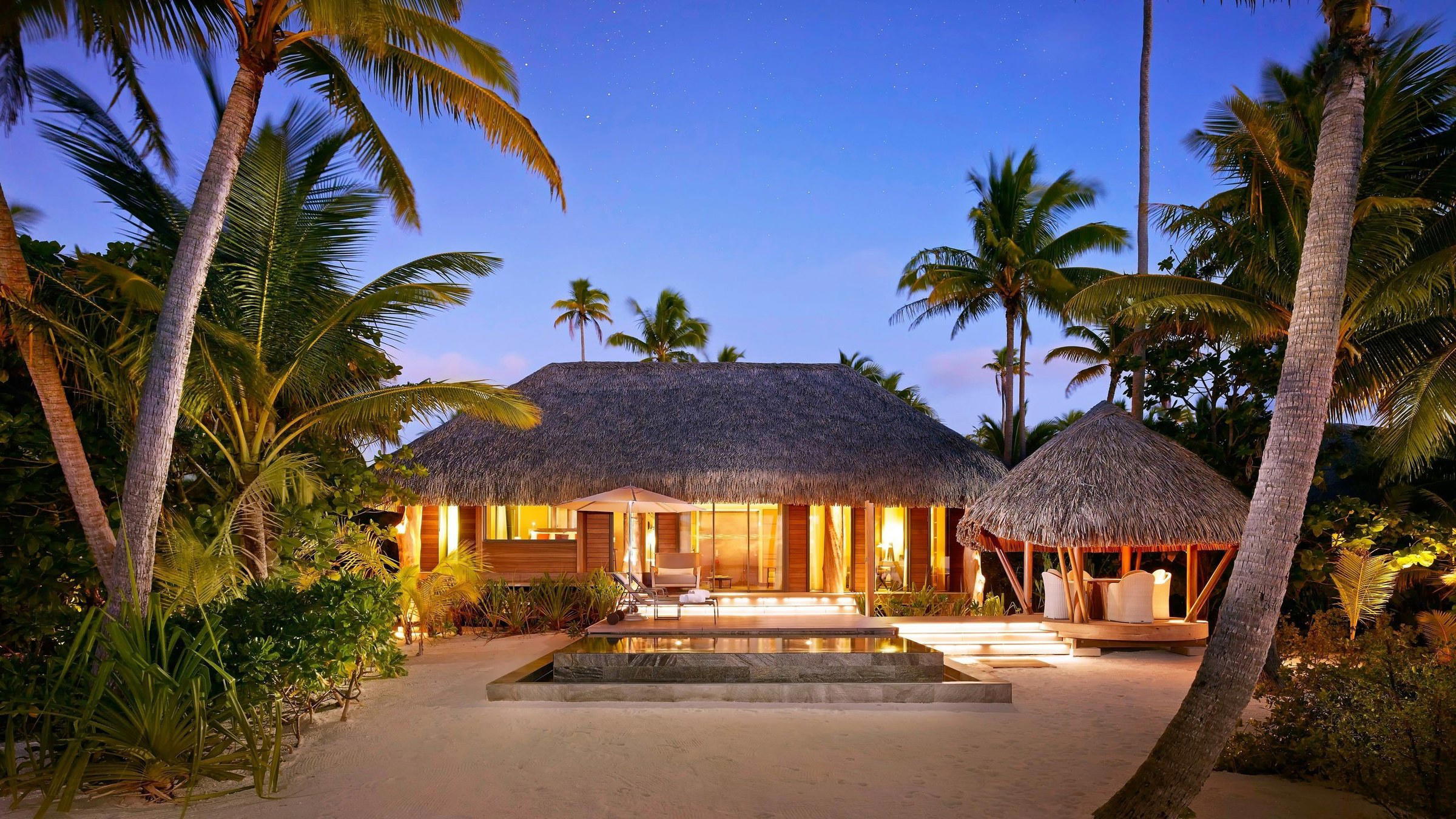
Tswalu Kalahari champions restraint: architecture retreats so the landscape becomes the principal dramatic element. Low structures, thatch roofs and materials chosen to dissolve into the red dunes emphasize scale and silence rather than theatrical hospitality. The lodges read as discreet outposts on a vast 280,000-acre reserve, and that deliberate spareness informs every encounter—from morning light shifting across dune systems to the feeling of wide horizons at eye level. The design yields a calm, modern sensibility that foregrounds nature and solitude; guests experience the reserve as a composed, serene environment rather than a designed spectacle.
Best For
Tswalu is best for travelers who prize privacy, space and immersive nature over busy resort theatrics. The reserve’s strict cap on guests and the availability of an exclusive-use property make it ideal for intimate getaways, private family groups and wellbeing retreats that benefit from quiet and isolation. It also suits solo travelers seeking deep solitude and close contact with a distinctive semi‑arid landscape. Because the architecture intentionally steps back, most experiences center on the outdoors—wildlife viewing, wide vistas and long, unhurried days—rather than built amenities or bustling public spaces.
Stay Tips
Book well in advance and consider your preferred level of privacy: Tarkuni is offered as an exclusive‑use option while Loapi provides tented homes for direct contact with the terrain. Availability is constrained by the reserve’s maximum of roughly 30 guests across three camps, so reservations for specific accommodations or dates should be secured early. Expect restrained architecture and a focus on landscape access rather than visible lobby theatrics; prioritize rooms or homes that face the dunes or mountains if uninterrupted vistas and solitude are your priority.
Venue details
Ambiance
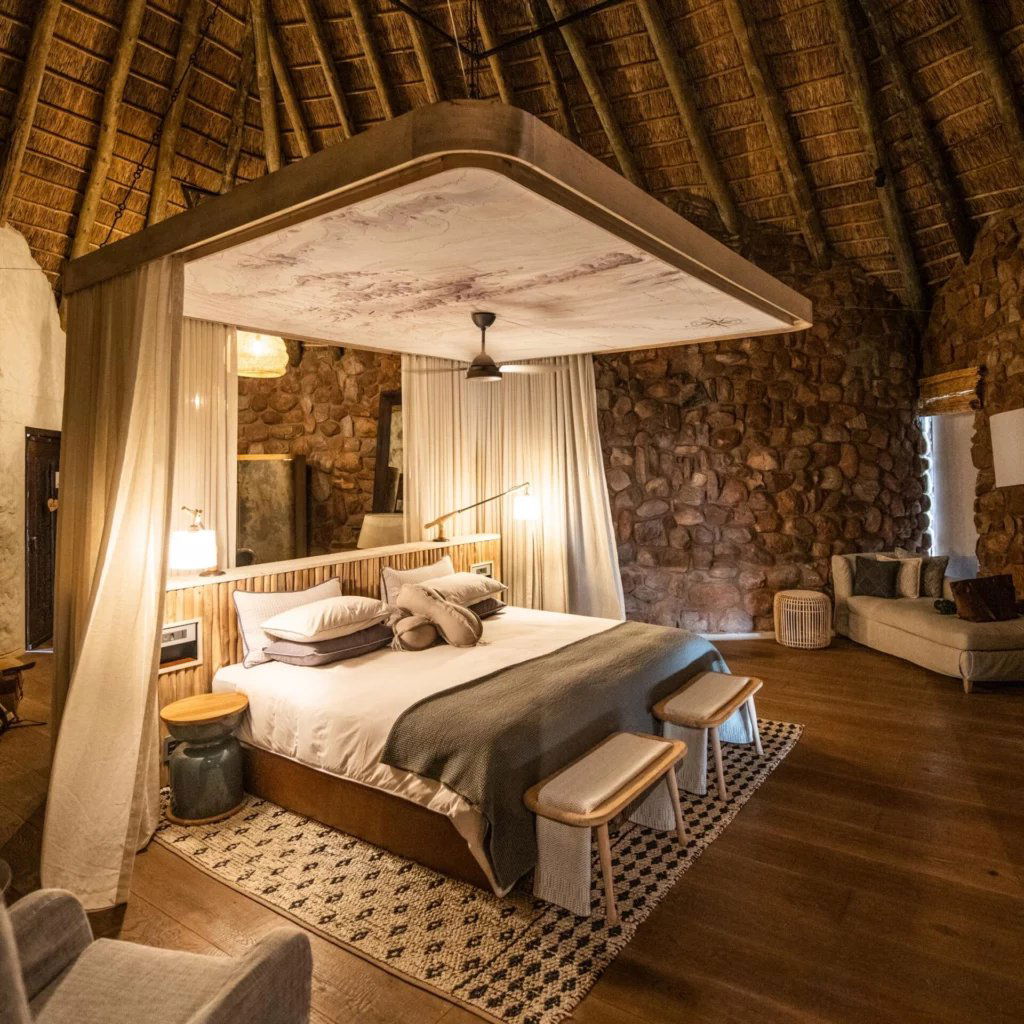
Peaceful and tranquil with natural reed ceilings, neutral tones, fireplaces, and open views of the Kalahari wilderness under star-filled skies.
Tags
Vibe
Best For
Experience
Amenities
View
Accessibility
About the Stay
- Rooms
- 10
- Check-in
- 14:00
- Check-out
- 10:00
- Property Type
- Eco-lodge
- Property Style
- Rustic African Village Style Luxury Lodge
- Design Style
- Authentic Thatched Roof Bungalows with Natural Materials and Artistic Kalahari Inspired Decor
- Breakfast
- Included
- Airport Transfer
- Available
- Pool
- Yes
- Spa
- Yes
- Families
- Welcome
Know before you go
Know Before You Go
- Getting there
- Farm Korannaberg 296, Kuruman, 8460
Planning details
Location
Recognition and awards


Also consider
Also Consider
- !Xaus Lodge, Notable alternative
- Thaba Tshwene Game Lodge, Notable alternative
- Villa Maria Guest Lodge, Notable alternative
- Rhulani Safari Lodge, Notable alternative
- The Royal Madikwe Luxury Safari Villas, Notable alternative
Hotel context
How it compares in the Kuruman safari set
!Xaus Lodge is the closest cross-shop for travelers focused on a Kalahari setting, but Tswalu Kalahari is the more convincing splurge if luxury recognition and a highly private feel matter. Choose!Xaus Lodge when the priority is a more restrained spend or a different desert-lodge character; choose Tswalu when the accommodation itself is a major part of the trip.
Thaba Tshwene Game Lodge and Villa Maria Guest Lodge are better cross-shops for travelers who want simpler logistics or a less destination-led stay. Tswalu is not the value play; it is the book for guests who want the lodge experience to justify a dedicated detour, backed by Robb Report The 50 Greatest Luxury Hotels on Earth #43 in 2025 and Virtuoso Luxury Hotel Partner recognition for 2026.
Rhulani Safari Lodge and The Royal Madikwe Luxury Safari Villas make more sense if the trip is already oriented around Madikwe-style safari planning. Tswalu is the stronger call for travelers who want a quieter Kalahari mood and are willing to commit to the location; the Madikwe options are safer if, group villas, or more familiar safari routing matter more.
Explore Kuruman
Around this place
Discover more on Pearl
Unlock the full Tswalu Kalahari guide in Pearl, including awards, comparisons, FAQs, planning details, and nearby places.
Compare Tswalu Kalahari
| Venue | Location | Awards |
|---|---|---|
| Tswalu Kalahari | Kuruman | 2026 Virtuoso Luxury Hotel Collection2025 Robb Report The 50 Greatest Luxury Hotels on Earth · #43 |
| !Xaus Lodge | Dawid Kruiper | No published awards |
| Thaba Tshwene Game Lodge | Hartbeestfontein | No published awards |
| Villa Maria Guest Lodge | Klerksdorp | No published awards |
| Rhulani Safari Lodge | North West Province | No published awards |
| The Royal Madikwe Luxury Safari Villas | Madikwe | 2026 La Liste Top Hotels |

How Tswalu Kalahari Kuruman compares with similar nearby venues.
FAQ
Frequently Asked Questions
Is Tswalu Kalahari family-friendly?
Families should confirm sleeping arrangements, age policies, dining arrangements, and any child-related services directly before booking.
How is the location of Tswalu Kalahari?
When is the best time to book Tswalu Kalahari?
If your dates are fixed, confirm availability and terms directly; the Robb Report and Virtuoso recognition indicate a luxury-hotel profile, but they do not determine booking lead times.
How does Tswalu Kalahari compare to other hotels or lodges?
Choose Tswalu Kalahari if its Kuruman setting and luxury recognition are the main draw. For comparison, consider !Xaus Lodge, Rhulani Safari Lodge, Thaba Tshwene Game Lodge, The Royal Madikwe Luxury Safari Villas, and Villa Maria Guest Lodge, while confirming each property's location, style, and current offering directly.
Which room category is best at Tswalu Kalahari?
The safest approach is to ask the property which category best fits your group size, privacy needs, and budget before booking.
How is the dining at Tswalu Kalahari?
Confirm the cuisine, chef, restaurant concept, meal format, bar program, and dietary policy directly rather than treating them as assumed features.