
Hotel in Kochi, India
The Postcard Mandalay Hall
150ptsHeritage Address, Editorial Restraint

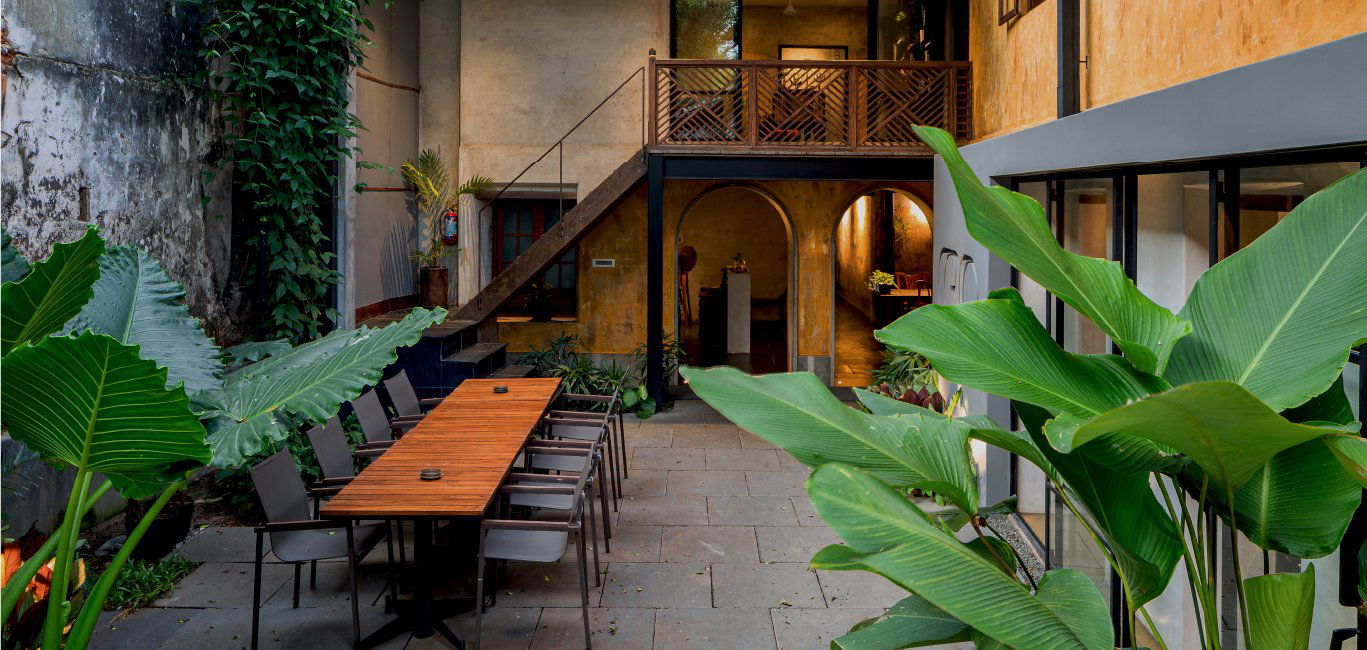
About The Postcard Mandalay Hall
Positioned in Jew Town, Mattancherry's most architecturally layered quarter, The Postcard Mandalay Hall is Kochi's 2025 World Travel Awards winner for India's Leading Design Hotel. The property sits within the Postcard Hotels group's approach to heritage-led design, placing it at the smaller, more considered end of Kerala's premium accommodation spectrum — far from the large resort formats that dominate the state's coastline.
Jew Town's Design Argument
Mattancherry is where Kochi's architectural palimpsest is most legible. Synagogue Lane, the narrow corridor leading to the 16th-century Paradesi Synagogue, runs through one of South Asia's most concentrated intersections of Dutch colonial, Jewish mercantile, and Malabar vernacular building traditions. Hotels that operate here are not simply choosing a neighbourhood; they are choosing a position inside a living conservation area where the physical fabric of the building is, itself, the primary credential. The Postcard Mandalay Hall occupies that position, at VI/193 Synagogue Lane, and its 2025 World Travel Awards recognition as India's Leading Design Hotel is a signal that the design argument it makes has been validated at a national level — not just within Kerala's heritage accommodation niche.
That award category is worth reading carefully. India's Leading Design Hotel, as assessed by the World Travel Awards, sits in a field that includes properties across one of the most architecturally heterogeneous countries in the world. Winning it from a Jew Town address, rather than from a Rajasthan fort or a Mumbai sea-facing tower, positions The Postcard Mandalay Hall inside a specific and increasingly competitive conversation: the one about what happens when design-led hospitality takes on a genuinely historic built environment rather than constructing a pastiche of one.
The Postcard Group's Positioning Logic
Postcard Hotels, the group behind this property, operates across a small portfolio of heritage and design-led sites in India. The group's approach, consistent across its addresses, is to work with existing architectural material rather than standardise it under a brand visual identity. That philosophy places Postcard in a different competitive tier from large international flags — the comparison set is closer to boutique heritage operators like those behind Haveli Dharampura in Delhi or Chapslee in Shimla, where the building precedes the brand. It is a model that requires restraint from the operator and rewards guests who are reading architecture as well as thread counts.
Within Kerala's premium hotel market, the Postcard Mandalay Hall occupies a narrow band. The state's luxury segment is dominated by backwater resort formats, large Ayurvedic retreat campuses, and international flags attached to business districts. A small, design-specific property in a dense urban conservation area is a different proposition entirely. For guests comparing properties across India's design-led heritage tier, the peer set extends well beyond the state: Alila Fort Bishangarh in Manoharpur and Amanbagh in Ajabgarh both operate at the intersection of historic fabric and contemporary hospitality design, and they represent roughly the same value system, if not the same price point or scale.
What Synagogue Lane Delivers That No Resort Campus Can
The physical context of the address does substantial editorial work for the property. Walking Synagogue Lane on a weekday morning means passing antique dealers whose stock spills onto the street, the smell of spice warehouses that have occupied the same buildings for generations, and the quiet administrative activity around the Paradesi Synagogue compound. This is not a curated heritage experience packaged for visitors; it is a functioning, inhabited neighbourhood that happens to carry several centuries of layered trade history in its walls.
For a hotel that has won a design award, that context matters more than any interior choice made by the operator. The design conversation at the Postcard Mandalay Hall begins before the guest crosses the threshold. The building type in Jew Town tends toward narrow-fronted, deep-plan structures with internal courtyards, influenced by both Dutch colonial planning and the spatial logic of Jewish merchant housing. Interventions that preserve those proportions while meeting contemporary hospitality expectations are architecturally more demanding than constructing a purpose-built luxury property from scratch. The World Travel Awards recognition suggests those demands have been met at a standard that holds nationally.
For a broader sense of the Kochi hotel and dining scene, the EP Club Kochi guide maps the city's premium options by neighbourhood and category.
Where It Sits in the India Design-Hotel Conversation
The 2025 award places The Postcard Mandalay Hall in a national conversation that includes properties operating at very different scales and price points. The Leela Palace Jaipur and The Leela Palace New Delhi represent the large-format palatial end of India's design hotel spectrum, where scale and grandeur are themselves part of the design statement. The Taj Mahal Palace in Mumbai sits in the historically significant urban landmark tier. The Postcard Mandalay Hall is doing something different: operating at smaller scale, in a denser and more textured urban context, where the design work is about integration rather than statement.
That distinction matters for the traveller choosing between these categories. Guests drawn to Aman-i-Khas in Ranthambore or Ananda in the Himalayas for their conceptual clarity and setting specificity are likely the same readers who find the Synagogue Lane address compelling precisely because the setting cannot be replicated elsewhere. Jew Town is the setting. The building is the setting. The hotel is the layer on leading of those.
Internationally, the sensibility connects to properties like Aman Venice, where an important historic building becomes the medium for a hospitality experience rather than the backdrop for one. The comparison is tonal rather than literal, but it points toward the design ambition at work.
Planning a Stay
The Postcard Mandalay Hall is in Mattancherry, a neighbourhood most efficiently reached from Kochi's Fort Kochi ferry terminal or by road from Ernakulam. The Jew Town area is walkable for antique browsing, synagogue visits, and the spice market circuit, but distances to other parts of the city, including the newer commercial districts, require auto-rickshaws or taxis. Booking is most reliably handled through the Postcard Hotels group's central reservation channels or established travel agencies specialising in India's heritage hotel tier. The World Travel Awards recognition as India's Leading Design Hotel for 2025 means forward demand from design-focused travellers is likely to tighten availability, particularly around Kerala's cooler, drier season from October through February, when Kochi draws the most international visitors. That seasonal pressure is consistent with patterns at comparable heritage properties across India, from Suján Jawai in Pali to Anantya By The Lake in Kaliyal, where the premium months book earliest.
Guests comparing the broader India design-hotel field in other regions should also consider Baale Resort Goa for the western coastal alternative, or Garner Kutch Gujarat for a comparable emphasis on regional architectural specificity. Neither occupies the same urban conservation context, which is precisely the reason the Mattancherry address carries the weight it does.
Frequently Asked Questions
Is The Postcard Mandalay Hall more formal or casual?
The property sits at the informal end of India's premium design hotel spectrum , closer in tone to a carefully curated boutique than to the ceremony-heavy service style of palace hotels like The Oberoi Amarvilas in Agra. Its Jew Town location, inside a busy working neighbourhood, shapes that atmosphere directly. Guests should expect attentive, considered service without the formal ritual that defines India's grande dame properties.
What room category do guests prefer at The Postcard Mandalay Hall?
Without detailed room-tier data available, the most consistent guidance from the property's design-led positioning is to prioritise rooms that retain the most original architectural fabric , internal courtyard-facing categories in heritage Jew Town buildings typically deliver the strongest spatial experience, and that logic applies here. The 2025 World Travel Awards recognition for design suggests that architectural character is distributed across the property rather than concentrated in a single premium tier.
What's the main draw of The Postcard Mandalay Hall?
The address and the award together answer this. Synagogue Lane in Mattancherry is one of the most architecturally layered streets in South Asia, and the World Travel Awards' 2025 designation as India's Leading Design Hotel confirms that the property uses that context well. For guests whose primary interest is design, heritage fabric, and neighbourhood immersion rather than resort amenities or palatial scale, this is among the most specific and coherent offers in Kerala. The EP Club Kochi guide covers the broader city context for those planning around the hotel.
How hard is it to get in to The Postcard Mandalay Hall?
National award recognition typically accelerates booking pressure at small-capacity heritage properties. The Postcard Mandalay Hall's Jew Town location already placed it in a niche that attracts design-focused international travellers; the 2025 World Travel Awards win will extend awareness further. Kerala's October-to-February high season is the period of tightest availability across the state's premium properties. Booking well in advance of that window is the reliable approach. Contact Postcard Hotels' central channels directly, as third-party availability often lags behind what the operator holds.
Recognized By

Related editorial
- Best Fine Dining Restaurants in ParisFrom three-Michelin-star icons to the next generation of Parisian chefs pushing boundaries, these are the restaurants that define fine dining in the world's culinary capital.
- Best Luxury Hotels in RomeFrom rooftop terraces overlooking ancient ruins to Michelin-starred hotel dining, these are the luxury hotels that make Rome unforgettable.
- Best Cocktail Bars in KyotoFrom sleek lounges to hidden speakeasies, Kyoto's cocktail scene blends Japanese precision with global influence in ways you won't find anywhere else.
Save or rate The Postcard Mandalay Hall on Pearl
Keep this venue in your Pearl passport, rate it after you visit, and track it alongside every other place you collect.