
Hotel in Kervignac, France
Domaine de Locguénolé & Spa
300Pearl PointsBreton Waterside Terroir


About Domaine de Locguénolé & Spa
An 18th-century Breton mansion on the Blavet estuary, Domaine de Locguénolé & Spa sits within the Relais & Châteaux network and earns a 4.7/5 Google rating across 545 reviews. Rates from US$253 per night position it as an accessible entry point into waterside château stays in southern Brittany, with Breton terroir cuisine and spa facilities rounding out a property built around the rhythms of the coast.
Where the Blavet Meets the Stone: Approaching Locguénolé
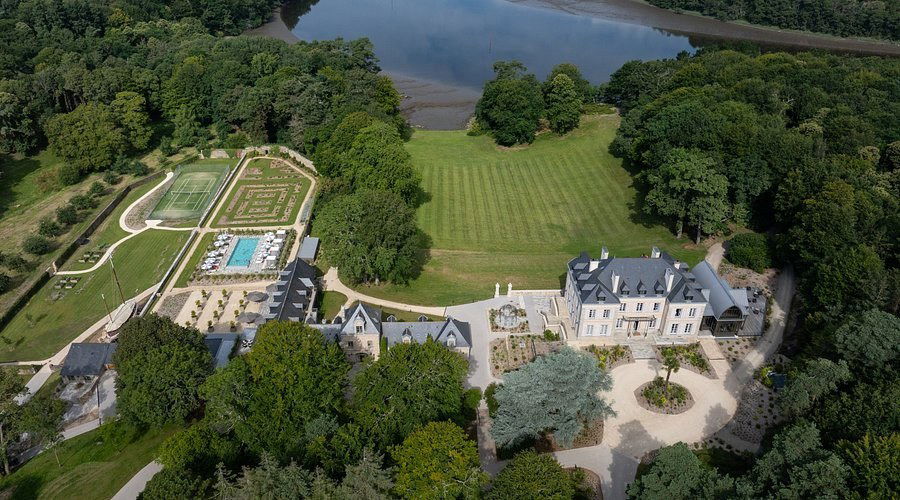
Southern Brittany's hotel offer splits between functional coastal accommodation and a smaller tier of historic-property stays where the architecture does as much work as the service. Domaine de Locguénolé & Spa is a 4-star hotel in Kervignac, Brittany, with 44 rooms and rates from US$180 per night. It sits firmly in the latter category. The property occupies an 18th-century mansion on the Blavet estuary near Kervignac, and the approach along Route de Port Louis, through grounds that slope toward the water, establishes the register before you reach the front door. This is a landscape shaped by Atlantic weather and centuries of Breton landholding, the stone speaks to both.
Within France's broader château-hotel scene, properties of this age and setting tend to follow one of two paths: heavy restoration that reads as theme-park historicism, or a quieter stewardship that lets the original fabric carry the weight. Locguénolé's position in the Relais & Châteaux portfolio signals the latter disposition. The estate's estuary-facing position gives the mansion a relationship with its natural setting that purpose-built resort properties cannot replicate. For context, Relais & Châteaux members like Domaine Les Crayères in Reims and Castelbrac in Dinard share this orientation toward buildings where the structure itself is the primary editorial statement.
The 18th-Century Fabric: Reading the Architecture
18th-century Breton manor architecture carries a distinct character that sets it apart from Loire Valley châteaux or Provençal bastides. The construction grammar here tends toward granite rather than limestone, with proportions shaped by the Atlantic climate: steeply pitched roofs, deep-set windows, and a solidity designed to absorb coastal weather rather than perform in it. At Locguénolé, the mansion's waterside orientation means the building operates in dialogue with tidal light, the Blavet estuary shifts between silver and grey depending on cloud and season, and the fenestration of an 18th-century house of this type was typically designed to bring that exterior movement inside.
This places the property in an architectural conversation quite different from the sun-exposed terroir of, say, La Bastide de Gordes or the cliff-face theatrics of Château de la Chèvre d'Or in Èze. Breton château stays trade spectacle for atmosphere, the drama is meteorological and tidal, not panoramic in the Mediterranean sense. Guests who arrive expecting Riviera light will find something more austere and, for the right traveller, more interesting. Properties such as Château du Grand-Lucé in the Loire occupy a comparable architectural register, though the climate and terroir there read differently again.
Breton Terroir on the Table
Brittany gives a kitchen more to work with than most French regions. The coastline between Lorient and Auray, within easy reach of Kervignac, produces oysters, langoustines, and a range of shellfish that define northern French restaurant cooking at its least compromised. The property's positioning around Breton terroir aligns it with a regional food culture that needs no editorial amplification: the ingredients carry their own argument.
This is worth framing against the broader French château-hotel food offer. At properties like Château Lafaurie-Peyraguey in the Sauternes, the table's identity is inseparable from the surrounding vineyards. At Les Sources de Caudalie in Bordeaux, the wine-country setting structures the whole hospitality proposition. At Locguénolé, the organizing principle is maritime: tidal rhythms, coastal producers, and a Breton culinary tradition that runs from crêperies to the white-tablecloth counter without apology for either end of that spectrum.
Family-Friendly Without Compromise
For families, the property's setting carries specific weight. It signals that the property has made physical and programmatic decisions, room configurations, grounds access, dining flexibility, that accommodate children without dismantling the experience for adults traveling without them. This is a harder balance to strike than it sounds, and the properties that manage it tend to do so because their setting does the work: extensive grounds, waterside access, and spatial generosity absorb the energy of younger guests in ways that compact urban properties cannot.
Locguénolé's estuary position and its historic estate grounds make this designation credible. The contrast with, say, the adult-focused formality of Hotel Du Cap-Eden-Roc in Cap d'Antibes or the design-led minimalism of Casadelmar in Porto-Vecchio is instructive: Locguénolé positions itself as a property where multi-generational travel works, which meaningfully broadens its audience without cheapening the offer for other guests.
Planning Your Stay
Rates begin from US$253 per night, which places Domaine de Locguénolé & Spa at an accessible point within the Relais & Châteaux network, considerably below the pricing tier occupied by urban properties such as Cheval Blanc Paris or Aman New York. For southern Brittany, where the tourist season concentrates around July and August and the shoulder seasons (May, June, September) offer the leading ratio of weather to availability, booking ahead remains advisable. The property sits near Kervignac, roughly 10 kilometres from Lorient and within day-trip range of the Gulf of Morbihan, one of Brittany's most-visited inland seas. The property's address is Route de Port Louis, Le Hingair, 56700 Kervignac.
How It Sits in the Wider French Country-House Tier
France's country-house hotel offer is deep, and the properties that sustain relevance across decades tend to do so because their physical setting is genuinely irreplaceable. The Blavet estuary is not a backdrop that can be constructed elsewhere. This positions Locguénolé differently from properties whose identity rests primarily on interior design or culinary credentials alone. Against Relais & Châteaux peers in the south of France, such as Baumanière Les Baux-de-Provence or La Réserve Ramatuelle, the contrast in register is significant: Locguénolé trades on granite, tidal light, and Breton particularity rather than Provençal warmth or Riviera spectacle. That is not a lesser proposition. It is a different one, and for travellers whose France extends north of the Loire, it fills a specific gap in the premium waterside-stay category with genuine architectural credentials behind it.
Location
Route de Port Louis, Le Hingair, 56700 Kervignac
Kervignac, France
Recognized By


Explore Kervignac
Save or rate Domaine de Locguénolé & Spa on Pearl
Keep this venue in your Pearl passport, rate it after you visit, and track it alongside every other place you collect.
Around this place
Restaurants in Kervignac
- L'Inattendu - Domaine de LocguénoléKervignacL'Inattendu holds a 2025 Michelin star on the Domaine de Locguénolé estate in rural Brittany, with MOF-credentialed chef Yann Maget cooking creative French menus built around estate-grown produce and local Breton ingredients. Dinner only, Tuesday to Saturday, at €€€€ pricing. Book ahead, the narrow service window makes this one of the harder tables to time correctly in the region.
- Chai l'amère KoletteKervignacA Michelin Plate restaurant in 2025 operating at the €€ price range, Chai l'amère Kolette delivers market-driven modern cooking from a kitchen visible to the dining room. With a 4.5 Google rating across 364 reviews and easy booking, it is the most credentialed restaurant in Kervignac for the spend. Worth the detour if you are between Hennebont and Port-Louis.
Critically similar venues
- Restaurant David ToutainParisRestaurant David Toutain holds 2 Michelin Stars and a Green Star in Paris's 7th arrondissement, with a nature-driven surprise tasting menu and a wine list that includes accessible price points by two-star standards. Ranked #92 in Opinionated About Dining's Top Restaurants in Europe (2025). Book six to eight weeks out minimum; this is a near-impossible reservation at peak periods.
- Gravetye ManorEast GrinsteadGravetye Manor is a Michelin-starred country-house restaurant in West Sussex, set within 35 acres of historic gardens. At ££££ pricing with a Google rating of 4.8 from 800+ reviews and a La Liste score of 78 points, it is one of southern England's most complete special-occasion dining destinations. Book at least six to eight weeks ahead for weekend tables; midweek lunch is the most accessible option.
- Christopher CoutanceauLa RochelleChristopher Coutanceau holds three Michelin stars and a 97-point La Liste ranking, making it the most credentialed restaurant in La Rochelle and one of France's top seafood addresses. At €€€€ with near-impossible availability, it demands advance planning, aim for two to three months out. For serious food travelers, it is the booking to build your La Rochelle trip around.
- La Table de Xavier MathieuJoucasLa Table de Xavier Mathieu holds a Michelin star (reconfirmed 2025) inside a centuries-old Luberon bastide, with cooking anchored in Provençal terroir and a genuine focus on vegetables from the region. At €€€€, it is the most credentialled dining option in Joucas. Book three to six weeks out for summer evenings; Friday or Saturday lunch is the easier entry point.
- Maison DecoretVichyMaison Decoret holds a 2024 Michelin star and a Relais & Châteaux 4.6/5 rating in a Napoleon III mansion in UNESCO-listed Vichy. Jacques Decoret's seasonally driven, locally sourced cooking makes this the strongest fine-dining case in the Auvergne region. Open Thursday to Sunday only, so book well ahead.
Related editorial
- Four Seasons' Tokyo to Seoul Package: Worth Booking?Four Seasons just packaged Asia's most popular dual-city trip with hotel credits, airport transfers, and two award-winning properties. Here's whether it's worth it.
- Obaya Lounge High Tea at Four Seasons Riyadh: Worth It?Four Seasons Riyadh launches a Kingdom Centre-inspired High Tea at Obaya Lounge — SAR 365, daily through August 2026.
- La Terrazza at Castille Paris Returns This SummerCastille Paris reopens its hidden Italian courtyard for summer 2026 with a Bollinger partnership and a Northern Italian aperitivo menu. Here's why it belongs on your Paris shortlist.