
Split Apple Retreat
Kaiteriteri
Hotel in Kaiteriteri, New Zealand
 Book with Pearl
The Read
Headland Immersion
Why go
Split Apple Retreat is worth considering if the goal is a quiet Kaiteriteri retreat with coastal scenery and a slower schedule. It is less convincing as a high-efficiency business hotel, but the 2026 La Liste Top Hotels score gives it a credible luxury signal for travelers comparing New Zealand lodge-style stays.
About Split Apple Retreat
Split Apple Retreat is a Kaiteriteri venue with a La Liste Top Hotels recognition for 2026, listed at 91.5 points. Beyond its recognition and location, specific details such as facilities, dining format, room categories, service style, pricing, and operating details should be checked directly before booking.
A work-trip fit only if the trip can slow down
For business travel, treat Split Apple Retreat as a Kaiteriteri stay to evaluate carefully against the practical needs of the trip. The information available supports its recognition as a hotel, but it does not confirm details such as meeting facilities, transport convenience, dining flexibility, or loyalty-program benefits.
If the trip depends on a precise schedule, compare the confirmed details directly with other options before committing. If the priority is simply staying in Kaiteriteri at a recognized property, Split Apple Retreat belongs on the shortlist.
Use it as a retreat, not a city hotel substitute
Split Apple Retreat is best considered on the strength of its Kaiteriteri location and its La Liste Top Hotels (2026) score of 91.5 points. For broader planning, compare it with other named hotel options such as Carnmore Chateau Marlborough, Hapuku Lodge + Tree Houses, Ohtel Wellington, The Marlborough Boutique Hotel & Vineyard, and Wharekauhau Country Estate, while checking each property's current details directly.
Planning details
- Location
- 195 Tokongawa Drive, Kaiteriteri 7197
- Website
- splitapple.com
- Phone
- +64 3 527 8377
The take
The Take
The Vibe
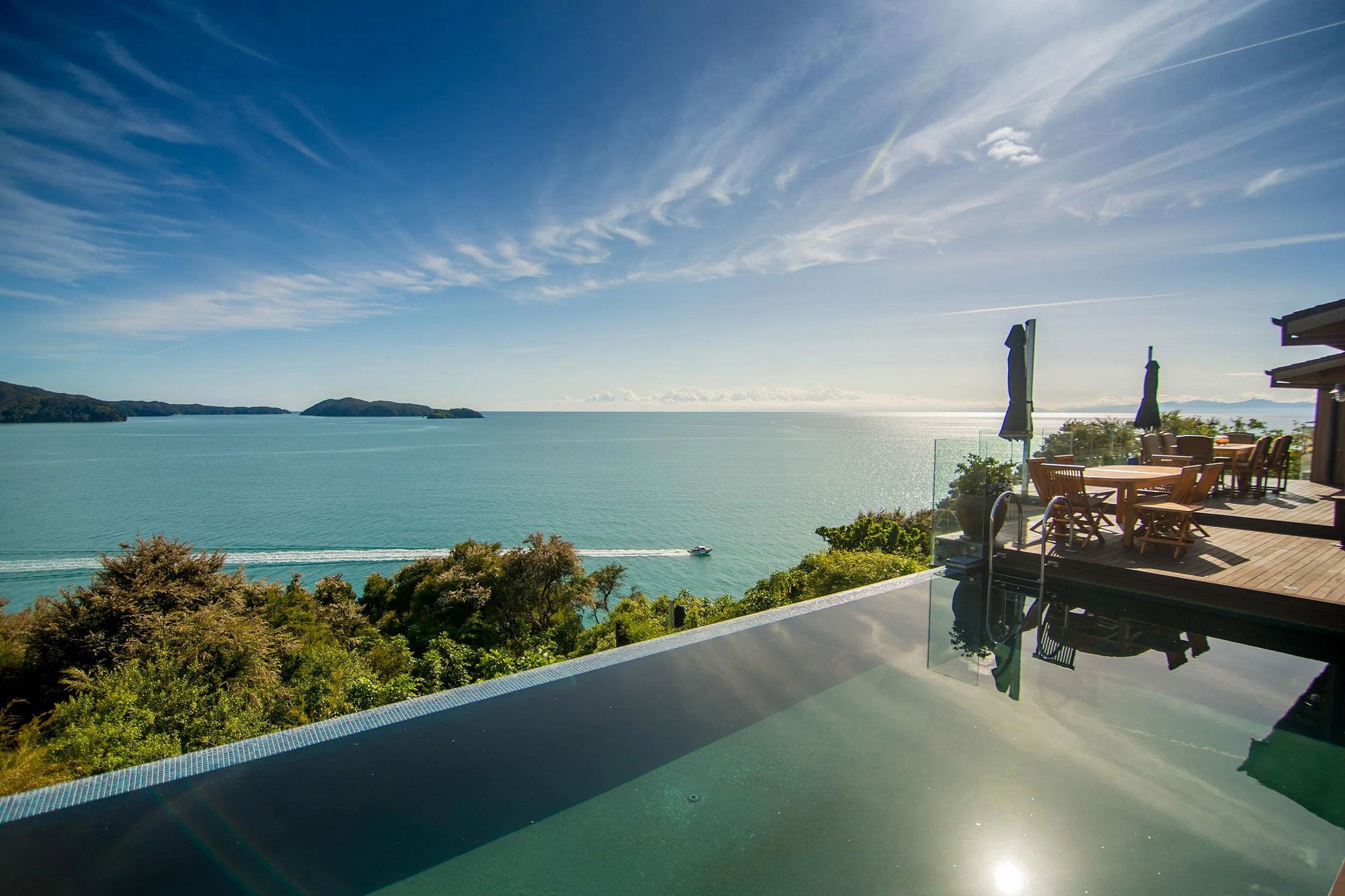
Split Apple Retreat reads as a quietly sophisticated coastal lodge that lets the landscape set the tone. Perched on a granite headland above Kaiteriteri and named for an offshore split boulder, the property’s architecture is described as integrated into the rock rather than imposed upon it. That site-specific gesture creates an intimate, serene sense of place: rooms and public spaces are conceived to recede into the terrain and frame the bay, so guests feel settled into the coastline rather than transported to a generic luxury template.
Best For
This is a lodge for travelers who prioritize landscape and design: couples seeking an intimate, scenic escape, honeymooners and small parties after a quiet weekend retreat will find it especially resonant. The writing situates the property within New Zealand’s small-capacity, owner-operated luxury tier, so it’s well suited to guests looking for exclusivity, privacy and a close relationship to coastal nature rather than high-volume resort amenities. It’s also a natural pick for anyone visiting Abel Tasman National Park who wants accommodation that responds to the setting.
Venue details
Ambiance
Serene and joyful sanctuary with sweeping sea views, impeccably decorated rooms featuring private decks and gardens, soft lighting in a home-like setting fostering tranquility and warmth.
Tags
Vibe
Best For
Experience
Amenities
View
About the Stay
- Rooms
- 3
- Property Style
- Intimate Luxury Lodge Nestled in Abel Tasman National Park with Low Key Sophistication.
- Design Style
- Impeccably Decorated with Oriental Artwork, Featuring Spacious Suites, Private Decks, and Serene Gardens.
Know before you go
Know Before You Go
- Getting there
- 195 Tokongawa Drive, Kaiteriteri 7197
Planning details
Location
Recognition and awards

Also consider
Also Consider
- The Marlborough Boutique Hotel & Vineyard, Notable alternative
- Carnmore Chateau Marlborough, Notable alternative
- Ohtel Wellington, Notable alternative
- Hapuku Lodge + Tree Houses, Notable alternative
- Wharekauhau Country Estate, Notable alternative
Hotel context
How it compares with New Zealand lodge peers
Choose Split Apple Retreat for a quieter Kaiteriteri base near Abel Tasman rather than a classic vineyard or city-hotel stay. The Marlborough Boutique Hotel & Vineyard is the more obvious pick for wine-country pacing, while Carnmore Chateau Marlborough should suit travelers who want easier, more conventional hotel logistics.
For a work trip, Ohtel Wellington is the safer choice if meetings, city access, and tighter schedules matter. Split Apple Retreat is better for adding recovery time before or after work, with easier booking and a stronger retreat feel than a city stay.
If the comparison is experience quality, Hapuku Lodge + Tree Houses and Wharekauhau Country Estate read as bigger destination-lodge commitments. Split Apple Retreat is the leaner choice: less about a broad resort program, more about privacy, setting, and a calmer Kaiteriteri stop.
Explore Kaiteriteri
Around this place
Discover more on Pearl
Unlock the full Split Apple Retreat guide in Pearl, including awards, comparisons, FAQs, planning details, and nearby places.
Compare Split Apple Retreat
| Venue | Location | Awards |
|---|---|---|
| Split Apple Retreat | Kaiteriteri | 2026 La Liste Top Hotels |
| The Marlborough Boutique Hotel & Vineyard | Rapaura | 2026 La Liste Top Hotels2025 Michelin Selected Hotels |
| Carnmore Chateau Marlborough | Blenheim | No published awards |
| Ohtel Wellington | Wellington | No published awards |
| Hapuku Lodge + Tree Houses | Kaikoura | 2026 Mr & Mrs Smith Luxury Hotels2026 Cuisine New Zealand Good Food Guide2026 La Liste Top Hotels2025 Michelin Selected Hotels |
| Wharekauhau Country Estate | Featherston | 2026 Virtuoso Luxury Hotel Collection2026 Relais Chateaux Hotels2026 La Liste Top Hotels2025 Michelin 2 Keys2025 Relais Chateaux Award |





How Split Apple Retreat Kaiteriteri compares with similar nearby venues.
FAQ
Frequently Asked Questions
When is the best time to book Split Apple Retreat?
Book once your Kaiteriteri travel dates are clear. Split Apple Retreat has a La Liste Top Hotels (2026) recognition of 91.5 points, but specific availability patterns and seasonal booking pressure should be checked directly with the property.
How does Split Apple Retreat compare to other hotels?
Choose Split Apple Retreat if you specifically want to consider a recognized Kaiteriteri stay. For comparison, check current details for Carnmore Chateau Marlborough, Hapuku Lodge + Tree Houses, Ohtel Wellington, The Marlborough Boutique Hotel & Vineyard, and Wharekauhau Country Estate directly, since facilities, location fit, and service details vary by property.
Are pool or spa details confirmed at Split Apple Retreat?
Do loyalty programs work at Split Apple Retreat?
Loyalty-program participation, points earning, or chain-style status benefits are not listed for Split Apple Retreat. If loyalty benefits matter, confirm directly before booking and compare with other hotel options.
How is the dining at Split Apple Retreat?
The dining format, cuisine, menus, meal periods, or restaurant details are not listed for Split Apple Retreat. The La Liste Top Hotels (2026) score of 91.5 points supports the broader hotel recognition, but dining specifics should be checked directly.
Which room category is best at Split Apple Retreat?
Room categories or suite details are not listed for Split Apple Retreat. Choose only after reviewing Split Apple Retreat's current room information directly and matching it to your trip needs.