
Hotel in Joucas, France
Le Phébus & Spa - Villa des Anges
150Pearl PointsProvençal Stonehouse Calm

About Le Phébus & Spa - Villa des Anges
A historic stone farmhouse on the Luberon hills between Gordes and Roussillon, Le Phébus & Spa - Villa des Anges reads Provence through architecture, garden cooking, and a spa tied to lavender country. Its draw is the way the house, kitchen garden, panoramic pool, and regional table form a single rural-hospitality argument rather than a resort checklist.
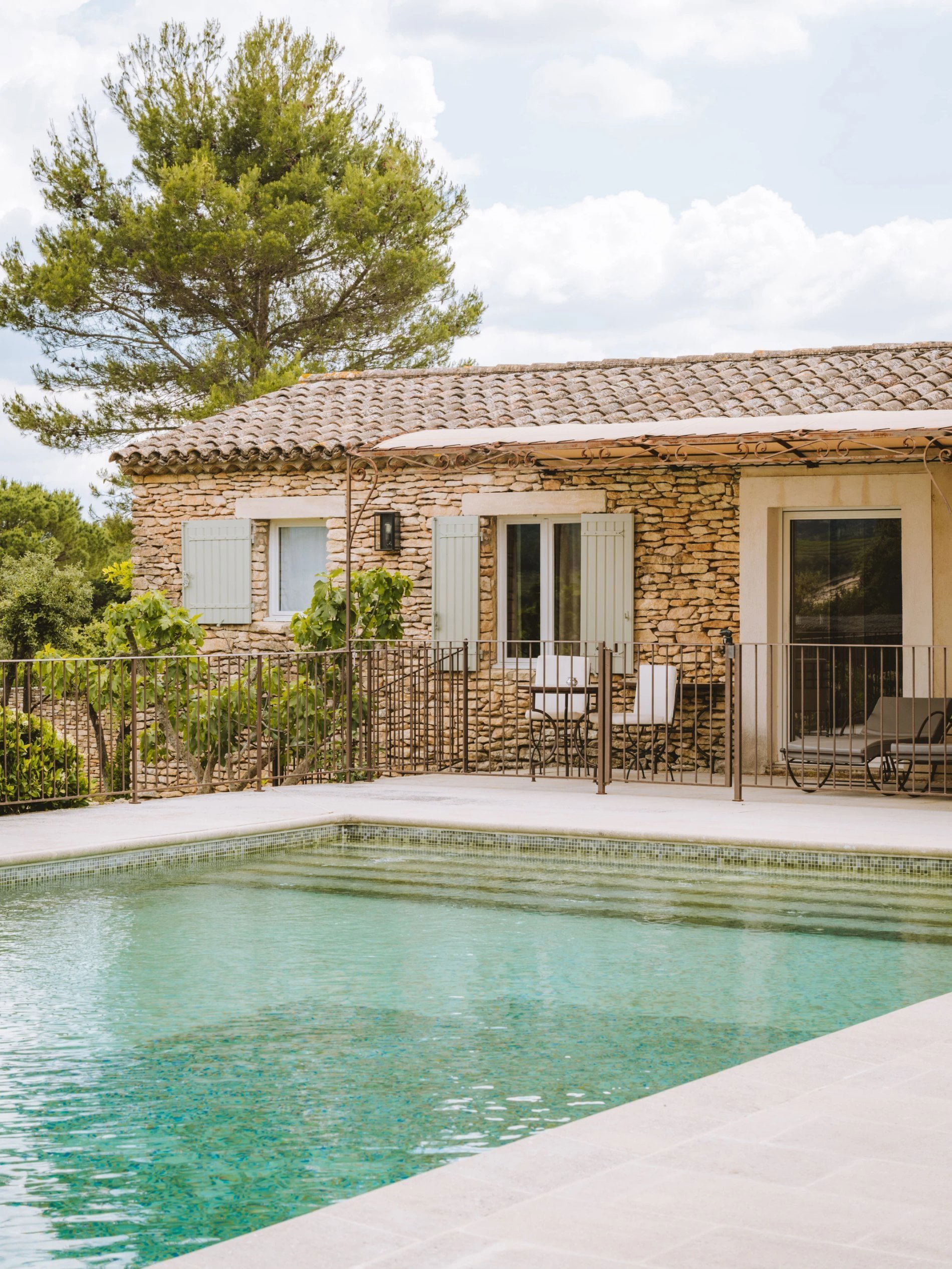
Approaching the Luberon hills around Joucas, the Provençal palette becomes architectural before decorative: pale stone, ocher roof tiles, pines, olive trees, and the hard blue of a swimming pool against dry light. This is the register in which Le Phébus operates. The property occupies a historic site with origins linked to the Knights of the Order of Malta, but the point is not medieval theater. Here, age carries weight when built into walls, terraces, shade, and the rhythm of meals.
Joucas sits in a quieter Luberon lane than nearby Gordes and Roussillon, the villages that draw much regional attention. That position matters. The strongest country hotels here do not compete by scale; they compete by translating local material culture into rooms, gardens, dining, and spa rituals. In that frame, Le Phébus & Spa - Villa des Anges belongs with hill-country addresses such as Le Mas des Herbes Blanches, Les Bories & Spa, Coquillade Provence, and Airelles Gordes, La Bastide, where the question is less resort spectacle than how much Provence survives contact with luxury hospitality.
Stone, ocher, pine, and pool: design as Provençal grammar
The building’s farmhouse vocabulary gives the hotel authority. Light-colored walls and ocher tiles are not styling tricks in the Luberon; they are local grammar, shaped by heat, quarry stone, and the mineral tones around Roussillon. The better design move is restraint. A stone farmhouse on this site needs no imposed theme, because the surrounding hills supply the visual order: olives, pines, lavender fields, garden plots, and the sharp contrast between sunlit masonry and shaded interiors.
That proportion separates the Luberon from louder Riviera luxury. Provence can be overproduced when every surface is forced to announce rusticity. Here, the stronger reading is cumulative: historic fabric, agricultural references, garden dining, and a pool as both amenity and color field. For travelers comparing rural France, this differs from city hotels such as 25hours Terminus Nord in Paris, Académie in Lyon, 5 Terres - MGallery in Strasbourg, or 5 Terres Hôtel & Spa in Barr, where urban setting or Alsatian masonry sets the mood. Joucas asks for slower reading: building, garden, and hillside do much of the work.
The kitchen garden gives the restaurant its center of gravity
Provençal hotel dining often struggles between polished destination cooking and the simpler authority of regional produce. The restaurant makes its case through Chef Xavier Mathieu’s use of local ingredients, including vegetables cultivated on site. The Table du Jardinier, set directly in the kitchen garden, is the clearest expression. Dishes such as vegetable pesto and basil-and-garlic soup point to a tradition where herbs, oil, alliums, and peak-season vegetables carry the meal rather than imported luxury cues.
This is where the property’s hospitality logic becomes persuasive. The kitchen garden is not decorative; it links architecture to plate. In Provence, that link has cultural weight. The region’s cooking has long been tied to what survives sun, limestone soil, and mistral conditions: olives, herbs, courgettes, tomatoes, garlic, beans, and sheep or goat dairy in the broader countryside. A garden table turns those references into format and gives the restaurant a sharper identity than a generic fine-dining room could manage in a village hotel.
For broader planning around Joucas, category boundaries matter. The area’s dining, lodging, cellar, bar, and activity choices are best read together rather than separately, since meals, village walks, vineyard drives, and hotel terraces structure the day as one circuit. EP Club’s local coverage separates those threads in Our full Joucas restaurants guide, Our full Joucas hotels guide, Our full Joucas bars guide, Our full Joucas wineries guide, and Our full Joucas experiences guide.
A Luberon stay for travelers who read place through materials
The spa reinforces the same localism through treatments and massages using essential oils from surrounding lavender fields. That detail matters because wellness stays tied to place rather than importing a placeless resort script. Lavender is one of Provence’s strongest visual and agricultural markers, and its use here is more credible when paired with the stone farmhouse, kitchen garden, and regional cooking. The result is continuity: field, wall, garden, table, treatment room.
Travelers choosing among French country hotels should be precise. Coastal-facing properties such as 70 Hectares & l'Océan - Fontenille Collection in Seignosse speak to Atlantic air and surf-side land; Corsican addresses such as A MANDRIA DI MURTOLI in Sartène, A Piattatella in Monticello, A Pignata in Levie, and A Speranza in Bonifacio draw on island terrain. Monastic conversions such as Abbaye de la Bussière in La Bussière-sur-Ouche, Abbaye de La Celle in La Celle, and Abbaye Des Vaux de Cernay in Cernay-la-ville work through religious architecture and enclosed grounds. Mountain properties such as 48° Nord in Breitenbach and Airelles Val d'Isère in Val-d'Isère lean into altitude. Le Phébus belongs to a different grammar: Luberon stone, ocher villages, garden produce, and lavender country.
That suits travelers who value setting as much as service choreography. The address, 508 Route de Murs, places the hotel in Joucas rather than inside the heavier footfall of Gordes. The advantage is a more composed Luberon base, with Roussillon and Gordes close enough to shape the itinerary without defining every hour. For readers comparing farther-flung hotel cultures, the contrast is instructive: Airelles Saint-Tropez Château de la Messardière in Saint-Tropez speaks to Riviera scale, Airelles Gordes, La Bastide in French Riviera to village-palace drama,!Xaus Lodge in Dawid Kruiper to desert remoteness,.Here Baa Atoll Maldives in Baa Atoll to island seclusion, and "Róże i Zen" Apartamenty. Pokoje Gościnne in Torun to small-city lodging. Joucas is quieter, more mineral, and more dependent on the relationship between house and hillside.
Location
508 Route de Murs
Joucas, France
Recognized By

Explore Joucas
Save or rate Le Phébus & Spa - Villa des Anges on Pearl
Keep this venue in your Pearl passport, rate it after you visit, and track it alongside every other place you collect.