

Suryagarh
Amar Sagar, Jaisalmer
Hotel in Jaisalmer, India
 Book with Pearl
The Read
Desert Fortress Hospitality
Why go
Book Suryagarh if the priority is a polished Jaisalmer base with more privacy and scale than a city-center stay. It is a better fit for executive trips, hosted groups, and slower Rajasthan itineraries than for travelers who only need a quick overnight near the busiest sightseeing areas.
About Suryagarh
Suryagarh is a Jaisalmer venue with a smart-casual dress code and 2025 membership in Small Luxury Hotels of the World and Preferred Hotels.
For travelers comparing options, the safest way to use Suryagarh in planning is as a Jaisalmer venue to check directly before booking. Confirm the details that matter for your trip, arrival timing, room requirements, meals, transfers, and any event or work needs, with the venue or your booking channel.
A Jaisalmer venue to plan carefully
Suryagarh can be considered when Jaisalmer is central to the itinerary. Key planning signals are its smart-casual dress code and its 2025 memberships in Small Luxury Hotels of the World and Preferred Hotels.
Do not rely on assumptions about what a booking includes. If the trip involves senior guests, group logistics, business needs, or a tight Rajasthan route, confirm the practical details directly before treating Suryagarh as the anchor.
Use it as a Jaisalmer option, then cross-shop by trip style
If Jaisalmer itself is the focus, Suryagarh belongs on the shortlist alongside other Jaisalmer options such as SUJÁN The Serai, Jaisalmer and Mharo Khet. For travelers considering a wider Rajasthan itinerary, Narendra Bhawan Bikaner, RAAS Jodhpur, and Umaid Bhawan Palace may also be relevant comparison points.
The safest recommendation is to consider Suryagarh when you want a Jaisalmer venue and the membership affiliations matter to your booking decision. For anything more specific, including dining, facilities, transfers, business support, or leisure amenities, check the latest details directly before committing.
Planning details
- Location
- Suryagarh Hotel, Ram Kund, Jaisalmer, Kishan Ghat, Rajasthan 345001
- Website
- suryagarhcollection.com/suryagarh
- Phone
- +91 78271 51151
The take
The Take
The Vibe
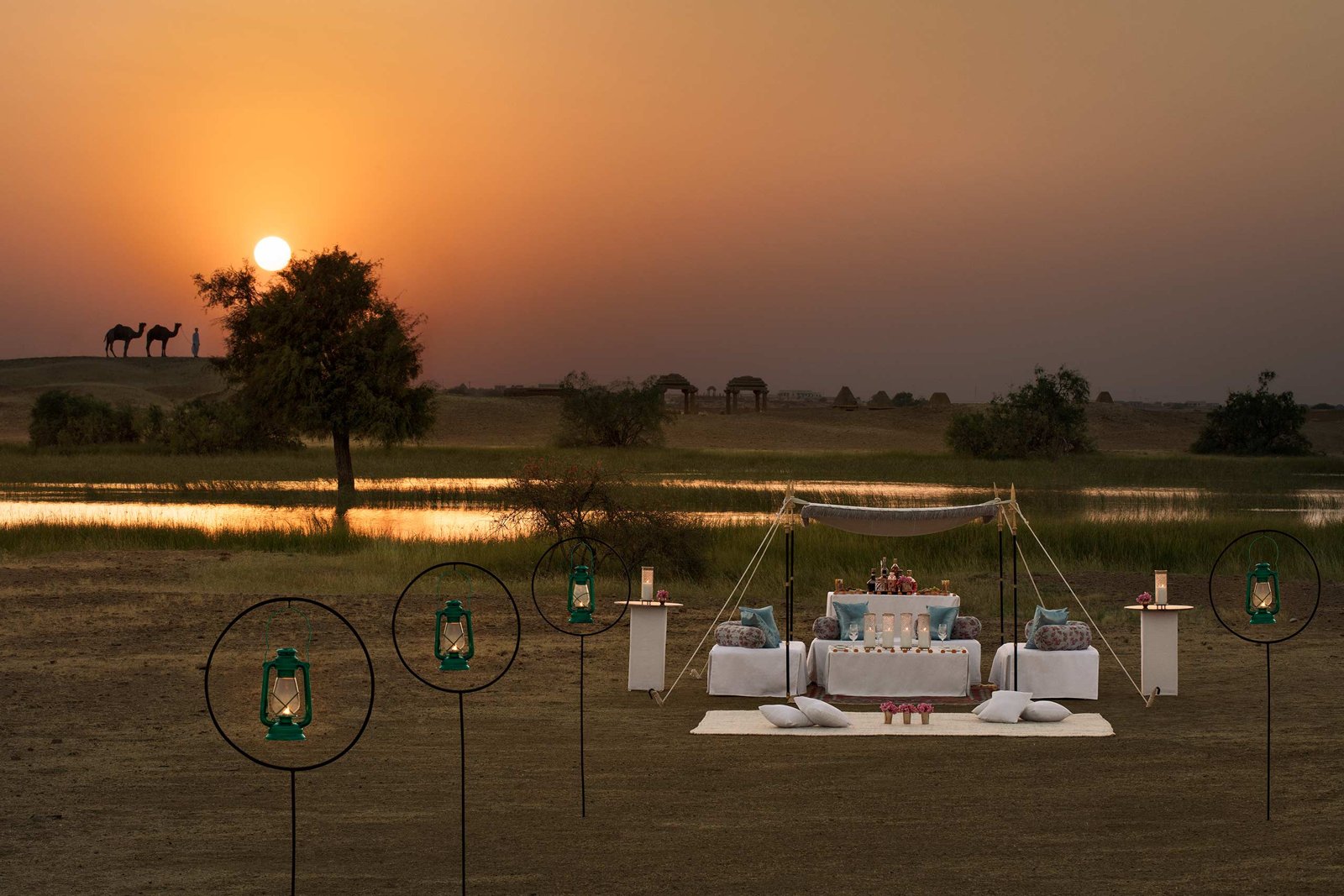
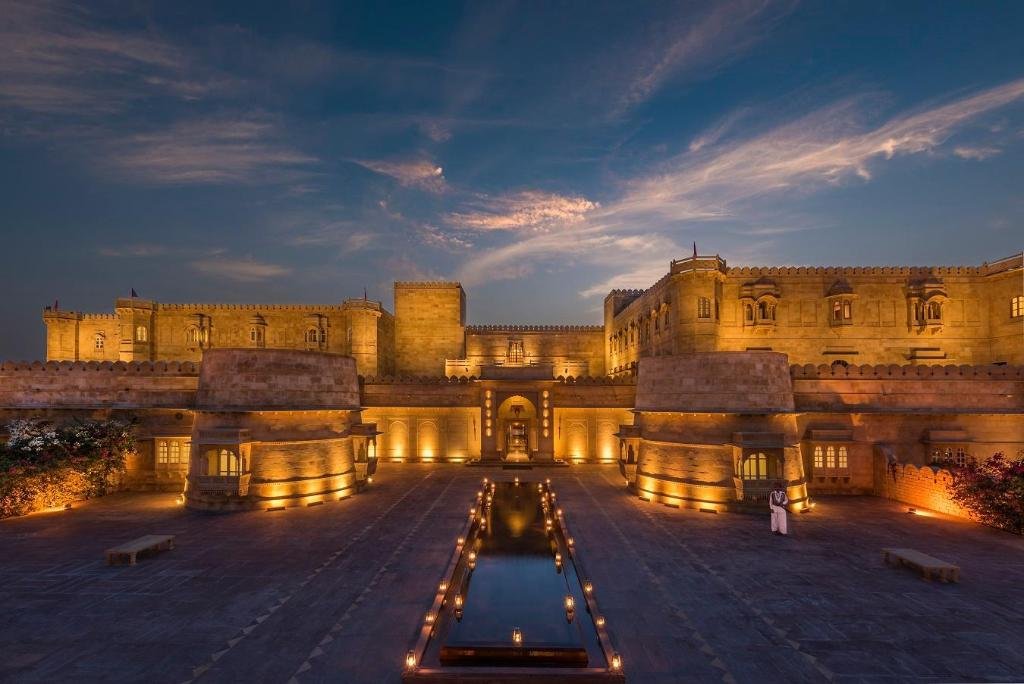
Suryagarh reads like a considered architectural argument rather than a pastiche. The hotel’s massing, built from the same golden sandstone that defines Jaisalmer, references the defensive geometries of medieval Rajput fortresses and emphasizes scale and materiality over applied ornament. That disciplined approach gives the property a historic, timeless presence: facades that dissolve into the dunes at dusk, heavy volumes that catch desert light, and interiors that follow from the structure rather than contradict it. Expect a measured, heritage-driven atmosphere where architecture is the principal storyteller and the setting — the Thar Desert and its light — is an active participant.
Best For
Suryagarh is best suited to travellers seeking an architecture-forward luxury stay set against the Thar Desert. The property works particularly well for intimate celebrations and slow, contemplative escapes — honeymooners, anniversary trips and couples looking for a romantic getaway will appreciate the drama of sandstone at sunset. Its emphasis on regional authenticity and scale also appeals to guests interested in cultural context and design. The setting and considered building language make it a good match for wellness retreats or quiet, restorative stays where the landscape and architecture shape the experience.
Stay Tips
Plan timing around the light: the description highlights the hour before sunset as the moment when the sandstone shifts toward amber and deep gold, so schedule arrivals or late-afternoon activities to coincide with golden hour. Ask the hotel about vantage points or rooms that look toward the dunes to experience that visual effect firsthand. For photography or simply soaking in the atmosphere, allow time on-site during dusk rather than only daytime; the desert light materially changes the appearance of the façades and the way the hotel reads against the landscape.
Venue details
Ambiance
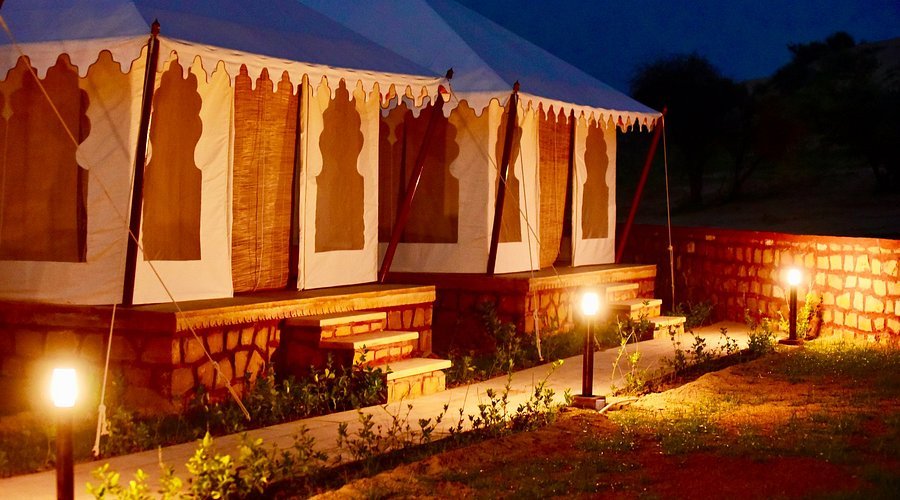
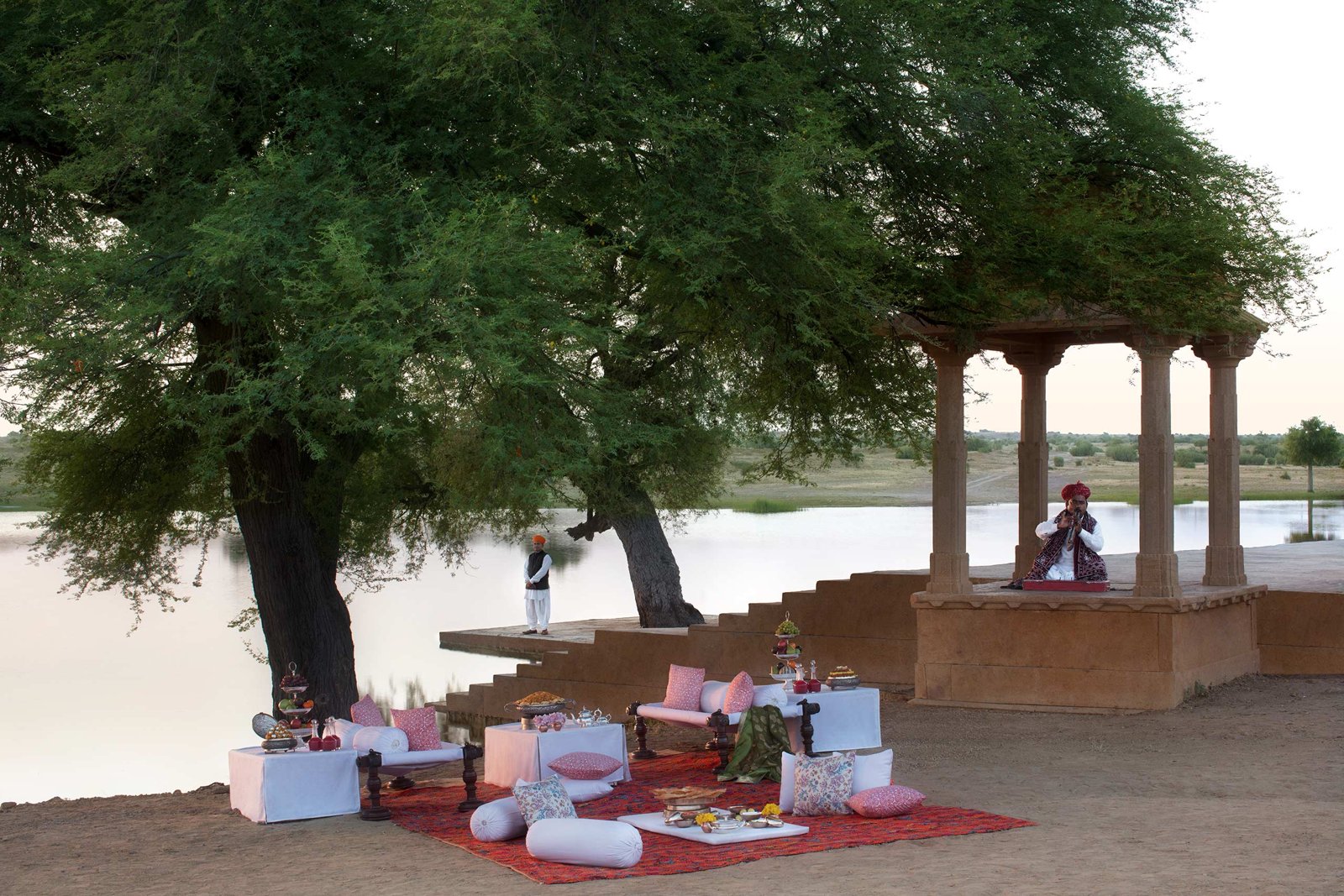
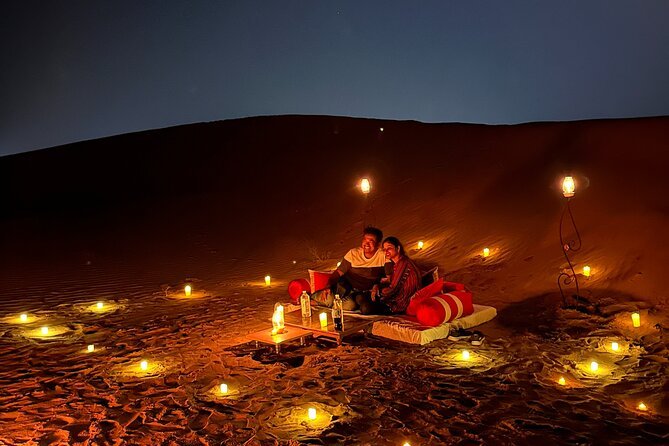
Regal and enchanting with warm lantern lighting, elegant decor, and a serene, relaxing atmosphere praised for its cultural immersion and attention to detail.
Tags
Vibe
Best For
Experience
Amenities
View
Accessibility
About the Stay
- Rooms
- 72
- Property Type
- Heritage hotel
- Property Style
- Heritage Palace Style Resort with Modern Luxury
- Design Style
- Rajasthani Traditional Architecture Featuring Latticework, Intricate Carvings, and Scalloped Windows
- Breakfast
- Included
- Airport Transfer
- Available
- Pool
- Yes
- Spa
- Yes
- Pets
- Allowed
- Families
- Welcome
Know before you go
Know Before You Go
- Getting there
- Suryagarh Hotel, Ram Kund, Jaisalmer, Kishan Ghat, Rajasthan 345001
Planning details
Location
Suryagarh Hotel, Ram Kund, Jaisalmer, Kishan Ghat, Rajasthan 345001 · Directions
Recognition and awards

Also consider
Also Consider
- SUJÁN The Serai, Jaisalmer, Notable alternative
- Mharo Khet, Notable alternative
- RAAS Jodhpur, Notable alternative
- Umaid Bhawan Palace, Notable alternative
- Narendra Bhawan Bikaner, Notable alternative
Hotel context
How It Compares
Suryagarh is the Jaisalmer pick for travelers who want a full hotel experience with strong sense of place and easier booking. SUJÁN The Serai, Jaisalmer is the sharper cross-shop if the trip should feel more like a dedicated desert escape, while Mharo Khet is better for a quieter, more food-and-land-led stay.
If the itinerary can move beyond Jaisalmer, RAAS Jodhpur is the more urban Rajasthan choice, Umaid Bhawan Palace is the palace-scale splurge, and Narendra Bhawan Bikaner is worth considering for a more design-led Bikaner stay. For value for money, Suryagarh works when Jaisalmer is non-negotiable; if the destination is flexible, compare the overall route before committing.
For business travel, Suryagarh has the advantage of being easier to position as both accommodation and hosting backdrop. SUJÁN The Serai is stronger for leisure immersion, RAAS Jodhpur for city access, and Umaid Bhawan Palace for high-ceremony occasions.
Explore Jaisalmer
Around this place
Discover more on Pearl
Unlock the full Suryagarh guide in Pearl, including awards, comparisons, FAQs, planning details, and nearby places.
Compare Suryagarh
| Venue | Location | Awards |
|---|---|---|
| Suryagarh | Jaisalmer | Small Luxury Hotels Member 2025Preferred Hotels Member 2025 |
| SUJÁN The Serai, Jaisalmer | Chandan | 2026 Michelin Guide New Hotels2026 Relais Chateaux Hotels2026 Michelin 1 Key2025 Michelin Selected Hotels2025 Relais Chateaux Award |
| Mharo Khet | Jodhpur | No published awards |
| RAAS Jodhpur | Jodhpur | No published awards |
| Umaid Bhawan Palace | Jodhpur | No published awards |
| Narendra Bhawan Bikaner | Bikaner | 2026 Mr & Mrs Smith Luxury Hotels2026 La Liste Top Hotels2026 Michelin 1 Key2025 Michelin 1 Key2025 Conde Nast Hotels Gold ListSmall Luxury Hotels Member 2025 |






How Suryagarh Jaisalmer compares with similar nearby venues.
FAQ
Frequently Asked Questions
Do loyalty programs work at Suryagarh?
Suryagarh is a 2025 Small Luxury Hotels of the World Member and a 2025 Preferred Hotels Member. For specific points, benefits, or booking-channel terms, check the relevant program or booking source before reserving.
How is the dining at Suryagarh?
Ask Suryagarh directly about dining format, cuisine, dishes, hours, and pricing before planning a meal around it.
How is the pool and spa at Suryagarh?
Is Suryagarh good for business travel?
Suryagarh may be considered for a Jaisalmer itinerary. Business travelers should confirm meeting facilities, work amenities, transfers, and event support before choosing it as a base.