
Hotel in Hamburg, Germany
Garner Hamburg East
150ptsIndustrial East Repositioned
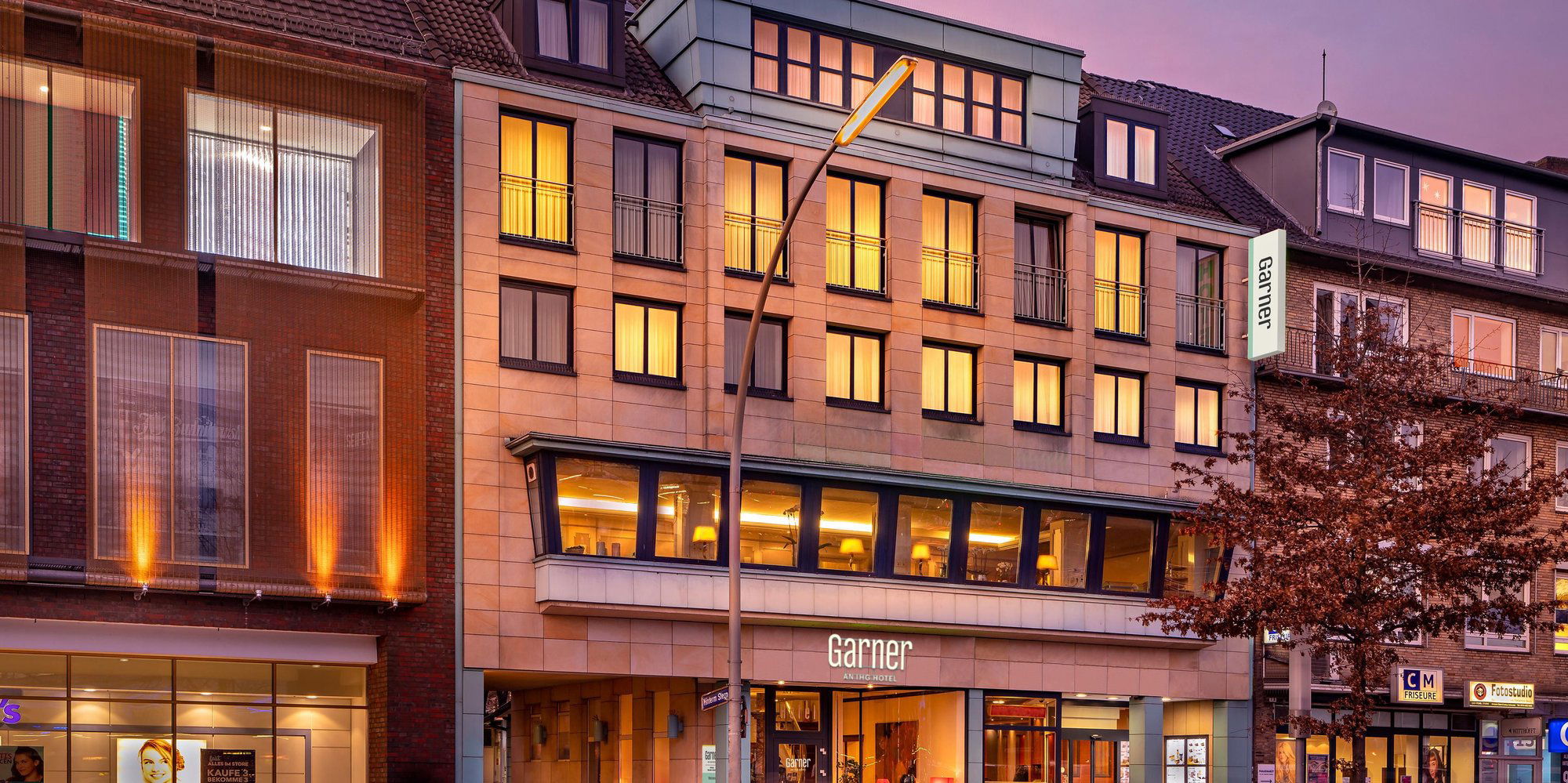
About Garner Hamburg East
Garner Hamburg East occupies a position in Hamburg's evolving east-side hospitality scene, where converted industrial spaces and design-forward properties have gradually displaced the city's older hotel corridors. The property draws on the neighbourhood's warehouse-era architecture while operating within a tier of mid-to-premium accommodation that has expanded significantly across Hamburg's eastern districts over the past decade. For context on how it fits the broader Hamburg picture, see our full city guide.
Hamburg's East Side and the Architecture of Reinvention
Hamburg's eastern districts have undergone a sustained architectural renegotiation over the past two decades. Warehouses that once served the Elbe's freight trade have been reinterpreted as hotels, creative studios, and mixed-use addresses, and the hospitality properties that have emerged from this process tend to wear their industrial inheritance deliberately — exposed concrete, steel-framed windows, double-height volumes that retain the proportional memory of the original structures. Garner Hamburg East sits inside this broader pattern, in a part of the city where the design conversation between old fabric and new programme is more active than in Hamburg's established hotel corridors around the Alster or the Elbe waterfront.
This matters as context because it shapes what a stay here actually feels like. Hamburg's western and central luxury tier — anchored by properties such as Fairmont Hotel Vier Jahreszeiten, The Fontenay, and Hotel Louis C. Jacob , operates in a register of classical grandeur, lakeside or riverine setting, and accumulated institutional prestige. The east offers a different proposition: architecture as argument, where the space itself carries the editorial weight rather than ceremony or heritage branding.
Design Signals in Hamburg's Industrial Belt
Across Hamburg's design-led east-side properties, the most considered spaces tend to be those where the architectural intervention is restrained enough to let the original structure breathe. The conversion approach that characterises this neighbourhood type generally favours material honesty , brick left bare, timber aged in place, circulation routes that acknowledge rather than obscure the building's logistical past. Gastwerk Hotel Hamburg, for instance, made its name precisely by treating a former gasworks as architectural asset rather than obstacle, and that precedent set a tone for how east Hamburg hospitality is experienced and assessed.
Properties in this category tend to attract guests who are travelling for reasons beyond the hotel itself , creative industry visitors, design-sector professionals, and travellers who read spatial quality as a proxy for the broader standard of a stay. The common areas in this type of building often function as the strongest design statement: double-height lobbies, raw material finishes, and lighting schemes calibrated to the industrial scale of the original envelope. Rooms, by contrast, can feel more contained , the architectural drama typically concentrates at the entry sequence and public floors.
Hamburg's east side has also developed a distinct food and bar culture around these converted properties. east Hamburg, one of the district's earlier design hotels, demonstrated that a strong architectural identity could carry a hospitality offer that went beyond accommodation into restaurant and bar programming. The lesson was absorbed widely: design-led east-side properties now tend to treat their ground-floor F&B; as an extension of the spatial argument, rather than a functional amenity bolted on as an afterthought.
Where Garner Hamburg East Sits in the Hamburg Tier Structure
Hamburg's hotel market divides along several axes: neighbourhood, heritage versus design, and the degree to which a property is integrated into the city's cultural and business infrastructure. The east side occupies a distinct position , it is neither the corporate-adjacent centre nor the traditional luxury lakefront, but a zone where design credentials and neighbourhood energy carry more weight than institutional pedigree.
Within Hamburg's broader accommodation offer, the east-side design tier competes less with the grand-hotel category , represented by Grand Elysée Hamburg or Apotheke an der Elbphilharmonie , and more with a cohort of mid-to-premium independent and lifestyle-branded properties where the spatial experience is the primary differentiator. Conrad Hamburg operates in a different register again, as a contemporary business-and-leisure hybrid with strong Elbe positioning. Garner Hamburg East's peer set is shaped by the east-side geography as much as by price point.
For travellers calibrating Hamburg options against other German destinations, the design-led east-side category has rough equivalents in other cities: the converted-industrial hotel tier seen in Berlin's Mitte-adjacent neighbourhoods (where Hotel de Rome occupies a neighbouring but distinct prestige band) or the wine-country boutique register of Hotel Ketschauer Hof in Deidesheim. The comparison is not direct, but it illustrates the general market logic: design-as-differentiator, with heritage used selectively rather than comprehensively.
Planning a Stay: Practical Orientation
Hamburg's east side is leading reached by S-Bahn from Hamburg Hauptbahnhof, with the journey to the Rothenburgsort or Hammerbrook areas running under ten minutes. The neighbourhood is less walkable to Hamburg's core cultural institutions than central or Alster-adjacent properties, which means guests who prioritise proximity to the Elbphilharmonie or the Alsterarkaden shopping corridor may find the geometry slightly inconvenient. The trade-off is access to a denser concentration of independent dining, craft brewing, and creative-sector venues that have colonised the eastern warehouse belt over the past decade.
Booking patterns for east-side Hamburg properties tend to be less compressed than for waterfront or Alster luxury hotels, where demand from repeat international visitors and corporate travellers tightens availability significantly during trade fair and cultural event seasons , Hamburg's Reeperbahn Festival in September and the major trade fairs at Hamburg Messe being the most acute pressure points. Travellers with flexibility on dates will generally find better availability in January and February, when Hamburg's grey-sky season keeps leisure demand relatively thin.
For a fuller picture of where Garner Hamburg East sits within Hamburg's hospitality offer, our full Hamburg restaurants and hotels guide maps the city's key properties and dining addresses across all neighbourhoods and price tiers. Those extending their German itinerary beyond Hamburg will find relevant context in properties such as Excelsior Hotel Ernst in Cologne, Breidenbacher Hof in Düsseldorf, Bülow Palais in Dresden, and, for those heading to Bavaria, Schloss Elmau or Althoff Seehotel Überfahrt. Coastal options on the North Sea side are anchored by BUDERSAND Hotel in Hörnum on Sylt. Further afield, the Black Forest belt includes Hotel Bareiss in Baiersbronn and Der Öschberghof in Donaueschingen. For international comparison points, Aman New York and The Fifth Avenue Hotel represent the North American design-luxury tier, while Aman Venice demonstrates how adaptive reuse of historic fabric operates at its most capital-intensive European register.
Frequently Asked Questions
- Which room or area offers the leading experience at Garner Hamburg East?
- In east-side Hamburg design properties generally, the public areas and entry sequence carry the strongest architectural statement, with upper-floor rooms offering the most separation from street-level activity. Without verified room-specific data for Garner Hamburg East, the most reliable approach is to request a room briefing directly at booking , design-led properties in this tier typically have marked variation between floor levels and orientations.
- What makes Garner Hamburg East worth visiting as a Hamburg base?
- Hamburg's east side offers a distinct neighbourhood character that the city's Alster and Elbe-facing luxury corridor does not replicate , a denser, more locally-oriented mix of independent food, creative venues, and converted industrial architecture. For travellers who read spatial quality and neighbourhood energy as meaningful signals of a stay's overall calibre, the eastern design-hotel tier provides a credible alternative to the more established luxury geography of the city's west and centre.
- What is the leading way to book Garner Hamburg East?
- As specific booking data for Garner Hamburg East is not confirmed in our records, we recommend checking the property directly via its official website or through a premium booking channel that can verify current availability and rate structure. Hamburg's east-side properties generally see softer demand outside trade fair and festival windows, making direct approaches during off-peak periods more likely to yield flexibility on room selection and rate.
- Is Garner Hamburg East better suited to first-time Hamburg visitors or those returning to the city?
- First-time Hamburg visitors who prioritise proximity to the Elbphilharmonie, the Alster, or the central harbour may find the east-side location adds logistical friction. Returning visitors with Hamburg's core geography already mapped, or those travelling specifically for the east side's creative and independent dining culture, are better positioned to extract full value from the neighbourhood setting.
- How does Garner Hamburg East compare to other design-focused hotels in Hamburg's eastern districts?
- Hamburg's east-side design hotel category is relatively small compared to the city's established central and waterfront tiers, which means individual properties within it tend to be assessed more on spatial quality and neighbourhood integration than on amenity breadth or brand recognition. Properties such as Gastwerk Hotel Hamburg and east Hamburg have set the category's reference points over the past decade; Garner Hamburg East operates within that established frame, with its specific differentiating factors leading verified through direct engagement with the property.
Related editorial
- Best Fine Dining Restaurants in ParisFrom three-Michelin-star icons to the next generation of Parisian chefs pushing boundaries, these are the restaurants that define fine dining in the world's culinary capital.
- Best Luxury Hotels in RomeFrom rooftop terraces overlooking ancient ruins to Michelin-starred hotel dining, these are the luxury hotels that make Rome unforgettable.
- Best Cocktail Bars in KyotoFrom sleek lounges to hidden speakeasies, Kyoto's cocktail scene blends Japanese precision with global influence in ways you won't find anywhere else.
Save or rate Garner Hamburg East on Pearl
Keep this venue in your Pearl passport, rate it after you visit, and track it alongside every other place you collect.