
Hotel in Hamburg, Germany
Fairmont Hotel Vier Jahreszeiten
1,420ptsAlster Lakefront Grand Hotel





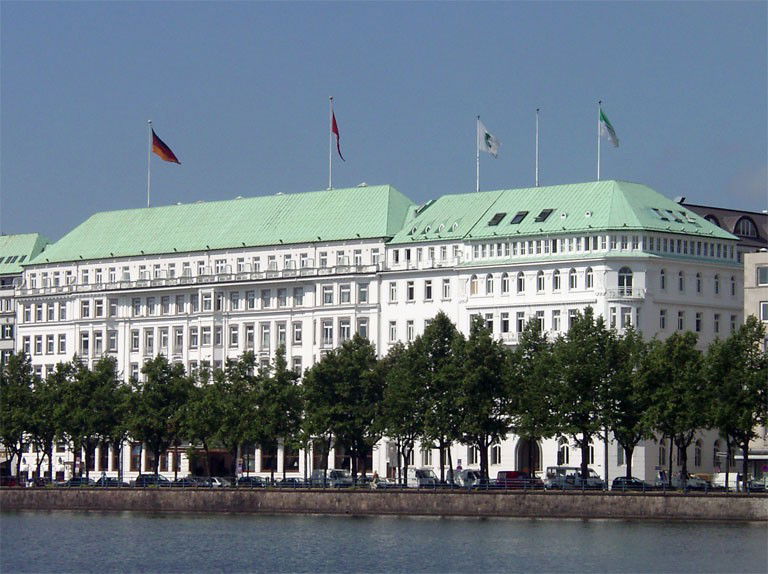
About Fairmont Hotel Vier Jahreszeiten
Open since 1897 on the shores of Hamburg's Inner Alster Lake, Fairmont Hotel Vier Jahreszeiten holds a 99-point rating from La Liste (2026) and three Michelin Keys, with 156 rooms spanning six distinct design schemes and dining anchored by three-Michelin-star Restaurant Haerlin. The spa, lakefront balconies, and a local-dominant dining room make it the reference point for grand hotel stays in northern Germany.
Hamburg's Grand Hotel Tradition, Anchored on the Alster
Germany's grand hotel tier follows a recognisable pattern: properties that predate the 20th century, positioned on prime urban water frontage, operating across multiple dining formats and attracting a predominantly local clientele who treat them less as tourist landmarks and more as civic institutions. Fairmont Hotel Vier Jahreszeiten, open since 1897 on Neuer Jungfernstieg at the edge of the Binnenalster, sits squarely in that category. Its La Liste Leading Hotels score of 99 points (2026) and Michelin Three Keys recognition (2024) place it in a peer group that includes properties like Excelsior Hotel Ernst in Cologne and Hotel de Rome in Berlin, where institutional weight and address credibility matter as much as thread counts.
Within Hamburg itself, the competitive set is more spread out than it might appear. The Fontenay represents the newer, design-forward end of the city's luxury hotel market. Hotel Louis C. Jacob offers a more intimate, wine-country-adjacent character on the Elbe. Grand Elysée Hamburg competes on scale and conference capacity. Vier Jahreszeiten occupies a different position: a historic grand hotel that has managed a full renovation of all five floors and 156 rooms without dissolving its 19th-century character into something generic.
The Physical Environment: Water, Light, and What a Balcony Can Do
The Binnenalster is not incidental to the hotel's appeal. It is structural. The Inner Alster Lake sits at the centre of Hamburg's premium commercial and residential district, and the rooms facing it on the upper floors benefit from an aspect that most urban hotels in Germany cannot replicate. A handful of fifth-floor rooms include balconies generous enough for outdoor seating in summer, a detail that moves the stay from comfortable to genuinely memorable for guests who time their visit correctly. Hamburg's summer months, when days extend well past 9pm and the Alster fills with sailing dinghies and canoes, are when that lakefront orientation pays off most directly.
Inside, the post-renovation design applied six distinct colour schemes across the 156 rooms and suites, using combinations of gold, kiwi green, powder blue, carmine, and light purple against creamy base tones. No two floors share the same layout or apportionment, and the stated aim was that no individual unit would feel like a repetition of another. That level of specification in a 156-key property is more common among boutique hotels than among grand hotel brands. For comparison, properties like Schloss Elmau Luxury Spa Retreat and Cultural Hideaway in Elmau and Das Kranzbach Hotel and Wellness Retreat in Kranzbach use setting and differentiated room categories to achieve similar variety across larger footprints.
Wellness and Recovery: What the Hotel Offers Beyond the Room
The wellness infrastructure at Vier Jahreszeiten fits the grand hotel model rather than the dedicated spa-retreat model. The property has a spa and a fitness centre, though it does not position itself primarily as a wellness destination in the way that Althoff Seehotel Überfahrt in Rottach-Egern, Der Öschberghof in Donaueschingen, or Gut Steinbach Hotel Chalets Spa in Reit im Winkl do. For guests travelling specifically to access deep wellness programming, those properties offer a more concentrated proposition.
What Vier Jahreszeiten does offer is the kind of recovery environment that a city hotel can realistically provide: a well-equipped fitness centre, spa access, and the particular restorative effect of a room with a lake view and a balcony. The Binnenalster itself functions as an outdoor wellness amenity in a way that is specific to Hamburg. The Alster promenade that runs along the waterfront is one of the more pleasant routes for an early morning run in any northern European city, with the lake and the skyline providing an orientation that makes the effort feel less effortful. Guests staying on the lake-facing side of the hotel have that route immediately accessible.
For visitors whose primary interest is spa depth rather than city atmosphere, the Hamburg waterfront hotel scene presents a genuine trade-off. BUDERSAND Hotel in Hörnum and Hotel Bareiss in Baiersbronn both operate purpose-built wellness programmes at a scale and depth that an urban grand hotel cannot match. Vier Jahreszeiten's pitch is not spa immersion; it is the totality of a stay in one of Germany's most commercially and culturally dense cities, delivered from a building that has been doing exactly that since the late 19th century.
Dining at the Hotel: A Four-Format Programme
The dining at Vier Jahreszeiten runs across four distinct formats, which is more breadth than most European grand hotels sustain at comparable quality. Restaurant Haerlin holds three Michelin stars, placing it among the most decorated kitchens in northern Germany and anchoring the hotel's culinary credibility at the leading of the local fine dining hierarchy. The Jahreszeiten Grill operates in an Art Déco room with a broader, more accessible menu. Café Condi and the Condi Lounge provide a warmer, more casual register. NIKKEI NINE offers Japanese-Peruvian cuisine, a format that has expanded significantly across European luxury hotels in the past decade but remains relatively scarce in Hamburg specifically.
The dining rooms at Vier Jahreszeiten draw a local clientele, not merely hotel guests passing through. That detail matters for how the food programme functions: it signals that the kitchens are operating to a standard that Hamburg residents return to on their own accounts, rather than relying on the captive audience of overnight stays. At the three-Michelin-star level, that local validation is the norm rather than the exception, but it extends to the Grill and the bar formats as well. The Jahreszeiten Bar, often cited as the smallest in Hamburg, operates at a specificity that attracts regulars rather than passing guests. Rooms at the hotel are available from approximately $429 per night.
Conference and Event Infrastructure
Hotel operates five event locations across 600 square metres of conference space, a figure that places it in direct competition with properties like Conrad Hamburg for corporate and MICE business. The Congress Center Hamburg is within close proximity, which makes the hotel a practical base for delegates attending major events in the city without requiring them to sacrifice the quality of accommodation they would expect at a property of this standing. The combination of a Michelin-starred dining programme, a grand hotel setting, and substantial meeting infrastructure is less common than it might appear: properties that execute all three at comparable levels represent a narrow tier in any city.
Placing It in the Broader Hamburg Hotel Scene
Hamburg's hotel market at the upper end has diversified in the past two decades. east Hamburg, Gastwerk Hotel Hamburg, and Apotheke an der Elbphilharmonie represent the design-led, neighbourhood-rooted end of that market, while Garner Hamburg East occupies a different price and positioning tier altogether. Vier Jahreszeiten sits apart from all of them, not because it is newer or more experimental, but because it is the one Hamburg property with a traceable institutional history that extends back to the 1890s and a dining programme anchored by a three-Michelin-star kitchen. For context on how this fits into Germany's broader luxury hotel picture, see also Breidenbacher Hof Düsseldorf, Bülow Palais in Dresden, and Esplanade Saarbrücken, each of which occupies a similar grand hotel tier in their respective cities.
For international context, the grand hotel model that Vier Jahreszeiten represents has parallels in properties like Aman Venice, Aman New York, and The Fifth Avenue Hotel in New York City, all of which operate where address legacy and institutional credibility carry as much weight as the product itself. Hotel Ketschauer Hof in Deidesheim offers an interesting regional counterpoint: smaller, wine-focused, and set in a very different landscape, but similarly committed to a specific culinary identity at its core.
For a broader orientation to where Vier Jahreszeiten sits within Hamburg's wider dining and hospitality scene, see our full Hamburg restaurants guide.
Planning a Stay
The hotel sits on Neuer Jungfernstieg 9-14 in Hamburg's Neustadt district, within walking distance of the main shopping streets, the Kunsthalle museum, and the rail connections at Hamburg Hauptbahnhof. Rooms start at around $429 per night, which positions the property at the upper end of the Hamburg market but below the pricing of comparable grand hotel properties in London or Paris at equivalent award levels. Guests specifically interested in the Haerlin restaurant should book that separately and in advance; a three-Michelin-star kitchen in a city of Hamburg's size does not hold tables for walk-ins. The fifth-floor lake-facing rooms with balconies are worth requesting at booking for summer visits.
Frequently Asked Questions
What is the signature room at Fairmont Hotel Vier Jahreszeiten?
The hotel completed a full renovation of all five floors, producing 156 rooms and suites across six distinct colour schemes, with no two floors sharing the same layout. The most sought-after rooms are the fifth-floor lake-facing units with generous balconies overlooking the Binnenalster, available from approximately $429 per night. The property's La Liste 99-point score (2026) and Michelin Three Keys recognition (2024) are anchored partly in the quality of these room categories.
Why do people go to Fairmont Hotel Vier Jahreszeiten?
Combination of an Inner Alster Lake address, a three-Michelin-star restaurant (Haerlin), and an institutional history dating to 1897 draws both international visitors and Hamburg locals who use the dining rooms and bar on their own accounts. The La Liste Leading Hotels 99-point rating (2026) reflects a consistent level of service and product delivery that positions the hotel at the leading of the Hamburg market. Room rates from approximately $429 per night make it accessible relative to comparably awarded properties in other major European cities.
Do they take walk-ins at Fairmont Hotel Vier Jahreszeiten?
For the hotel itself, availability depends on the season. Hamburg's summer months and major congress periods at the nearby Congress Center fill rooms quickly at a property of this standing. Restaurant Haerlin, which holds three Michelin stars, requires advance reservations; walk-in access at that level is not realistic in practice. The Jahreszeiten Grill, Café Condi, and the Jahreszeiten Bar operate on different demand curves and may accommodate walk-ins more readily, particularly outside peak evening hours. Contact the hotel directly for current availability.
Who tends to like Fairmont Hotel Vier Jahreszeiten most?
The hotel's dining rooms are notably local-heavy, which suggests that Hamburg residents with the means to eat at three-Michelin-star level treat it as part of their regular circuit rather than a tourist destination. International travellers who prioritise address prestige, a proven fine dining programme, and Alster Lake access over design novelty tend to find the proposition direct. The conference infrastructure and proximity to the Congress Center Hamburg make it a practical choice for senior business travellers who want to avoid separating their accommodation quality from their meeting requirements.
What makes the dining programme at Fairmont Hotel Vier Jahreszeiten different from other Hamburg luxury hotels?
Few Hamburg hotels operate a four-format dining programme that includes a three-Michelin-star kitchen alongside an Art Déco grill, a casual café, and a Japanese-Peruvian restaurant. Restaurant Haerlin's three Michelin stars place it in a category shared by only a handful of kitchens in all of northern Germany, and the NIKKEI NINE format remains relatively rare in the city. That breadth across formats and price points means the hotel's food programme functions as a genuine destination rather than an amenity primarily serving overnight guests.
Recognized By


Related editorial
- Best Fine Dining Restaurants in ParisFrom three-Michelin-star icons to the next generation of Parisian chefs pushing boundaries, these are the restaurants that define fine dining in the world's culinary capital.
- Best Luxury Hotels in RomeFrom rooftop terraces overlooking ancient ruins to Michelin-starred hotel dining, these are the luxury hotels that make Rome unforgettable.
- Best Cocktail Bars in KyotoFrom sleek lounges to hidden speakeasies, Kyoto's cocktail scene blends Japanese precision with global influence in ways you won't find anywhere else.
Save or rate Fairmont Hotel Vier Jahreszeiten on Pearl
Keep this venue in your Pearl passport, rate it after you visit, and track it alongside every other place you collect.