
Hotel Puntagrande
Frontera, El Hierro
Hotel in El Hierro, Spain
 Book with Pearl
The Read
Atlantic Lava Rock Refuge
Price
$100–200per night
Why go
Hotel Puntagrande is a better call for a quiet El Hierro reset than a conventional business hotel. The Michelin 1 Key recognition gives it a clear quality signal, but the island setting and hard booking profile mean it suits flexible, high-intent stays rather than rushed work trips.
About Hotel Puntagrande
Hotel Puntagrande is a hotel in El Hierro with a Michelin 1 Key recognition for 2025. It is a premium stay to consider for travelers who specifically want to be on El Hierro rather than a hotel chosen for a documented list of amenities, services, or business-travel features.
Avoid assuming details such as dining format, wellness facilities, room count, service style, or location beyond El Hierro. Treat the Michelin 1 Key as the clearest quality signal, then confirm any practical requirements directly before committing to the stay.
Worth considering for El Hierro, with details to confirm before booking
For planning, keep the hotel anchored to El Hierro and build the rest of the itinerary around confirmed travel needs. If the trip depends on specific facilities, dining arrangements, accessibility needs, or work logistics, verify those points directly rather than relying on assumptions.
Use Hotel Puntagrande as a candidate for an El Hierro stay, then compare the practical fit against your dates and route. For broader planning, use our full El Hierro hotels guide, then cross-check dining through our full El Hierro restaurants guide.
Planning details
- Location
- Calle las Puntas, 38911 Frontera, Santa Cruz de Tenerife
- Website
- hotelpuntagrande.com
- Phone
- +34 611 28 59 83
The take
The Take
The Vibe
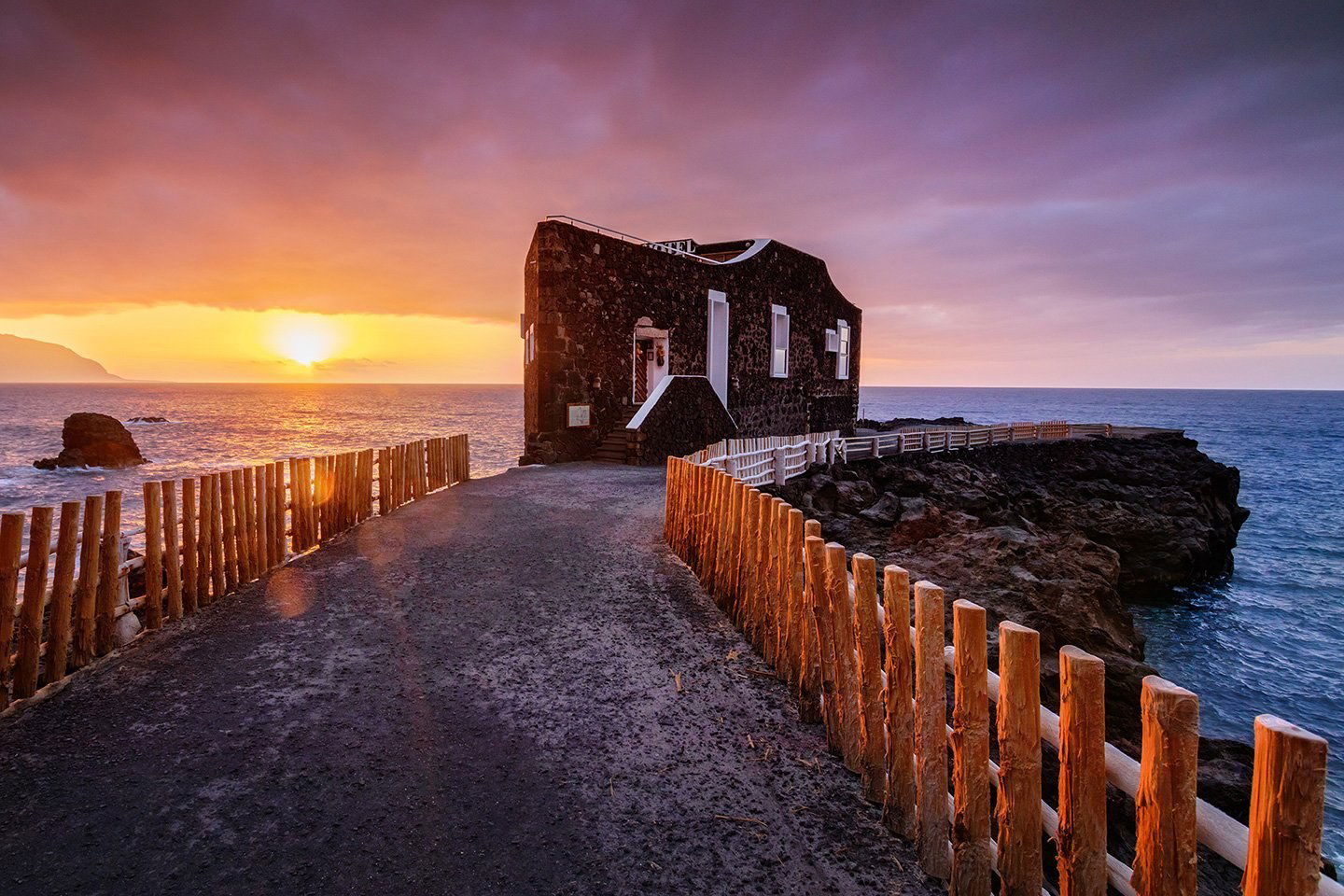
Hotel Puntagrande reads like a piece of the island itself: a rough-cut lava-stone structure pressed against a promontory with the Atlantic breaking on three sides. Its layers of interventions are legible rather than erased—original timbers and protected 19th-century fabric shape rooms and circulation. The property deliberately exposes guests to the elements rather than insulating them from them; spray reaches the walls and the sea's sound moves through the stone. The result is a historic, elemental stay that feels intimately of place—rugged, quietly dramatic and deeply connected to El Hierro's coastal geology and cultural history.
Best For
This is a hotel for travelers who prize solitude, history and raw oceanfront drama. Couples seeking a romantic getaway, honeymooners and visitors marking anniversaries find the intimacy of the old stone house and the Atlantic-exposed setting especially resonant. Its remoteness and lack of resort trappings also suit a short weekend escape for guests wanting to trade busy tourist corridors for a quieter, more elemental seaside experience. Expect a stay defined by landscape and architecture rather than busy amenities or entertainment.
Stay Tips
Expect direct Atlantic exposure: the description emphasizes wind, spray reaching the walls and a building that does not insulate guests from the sea. Pack windproof layers and waterproof outerwear and be prepared for vigorous ocean conditions and the sounds and scents that come with them. Also account for logistics tied to El Hierro's remoteness—travel planning and timing matter when visiting a small, sparsely populated island. Finally, note that the hotel is a protected cultural site, so anticipate historically informed rooms and interventions rather than modern, heavily altered spaces.
Venue details
Ambiance
Cozy, ship-like interiors with local wood, lava stone, cheerful blue and white palette, and the sound of Atlantic waves; warm lighting in the wood-lined lounge bar.
Tags
Vibe
Best For
Experience
Amenities
View
Accessibility
About the Stay
- Rooms
- 5
- Check-in
- 15:00
- Check-out
- 11:00
- Property Type
- Boutique hotel
- Property Style
- Maritime Inspired Boutique on Volcanic Cliffs Blending History and Luxury.
- Design Style
- Nautical with Driftwood Accents, Local Wood, Lava Stone, Blue White Palette, and Unique Features Like Porthole Tables.
- Breakfast
- Included
Know before you go
Know Before You Go
- Getting there
- Calle las Puntas, 38911 Frontera, Santa Cruz de Tenerife
Planning details
Location
Calle las Puntas, 38911 Frontera, Santa Cruz de Tenerife · Directions
Recognition and awards
Also consider
Also Consider
- Hotel Hacienda de Abajo, Notable alternative
- RedLevel at Gran Meliá Palacio de Isora - Adults only, Notable alternative
- The Ritz-Carlton Tenerife, Abama, Notable alternative
- The Ritz-Carlton Tenerife, Abama, Notable alternative
- Las Terrazas de Abama Suites, Notable alternative
Hotel context
How it compares on El Hierro and nearby islands
Choose Hotel Puntagrande for the quieter, smaller-feeling El Hierro stay. Hotel Hacienda de Abajo is the stronger cross-shop if the priority is a more heritage-led hotel experience on La Palma rather than a sea-edge retreat on El Hierro.
For easier resort logistics, Tenerife wins. RedLevel at Gran Meliá Palacio de Isora - Adults only is the more practical adults-only option if service infrastructure matters. The Ritz-Carlton Tenerife, Abama is the safer pick for a polished resort stay with broader facilities, while Las Terrazas de Abama Suites makes more sense for longer stays or travelers who want extra space.
The tradeoff is simple: Hotel Puntagrande is the moodier, harder-to-slot choice; the Tenerife peers are more convenient and likely easier to build a business-adjacent itinerary around. Book Puntagrande when atmosphere beats logistics.
Explore El Hierro
Around this place
Discover more on Pearl
Unlock the full Hotel Puntagrande guide in Pearl, including awards, comparisons, FAQs, planning details, and nearby places.
Compare Hotel Puntagrande
| Venue | Location | Awards |
|---|---|---|
| Hotel Puntagrande | El Hierro | 2026 Michelin 1 Key2025 Michelin 1 KeyMichelin 1 Key 2025 |
| Hotel Hacienda de Abajo | Villa y Puerto de Tazacorte | Preferred Hotels L.V.X. Collection 2025 |
| RedLevel at Gran Meliá Palacio de Isora - Adults only | Guía de Isora | 2026 La Liste Top Hotels |
| The Ritz-Carlton Tenerife, Abama | Guía de Isora | 2026 Forbes 4-Star2026 Virtuoso Luxury Hotel Collection2026 La Liste Top HotelsWorld Luxury Hotel Awards 20252025 Michelin Selected Hotels2025 Forbes 4-Star |
| The Ritz-Carlton Tenerife, Abama | Tenerife | 2026 Forbes 4-Star2026 Virtuoso Luxury Hotel Collection2026 La Liste Top HotelsWorld Luxury Hotel Awards 20252025 Michelin Selected Hotels2025 Forbes 4-Star |
| Las Terrazas de Abama Suites | Guía de Isora | No published awards |







How Hotel Puntagrande El Hierro compares with similar nearby venues.
FAQ
Frequently Asked Questions
How is the dining at Hotel Puntagrande?
The Michelin 1 Key recognition in 2025 applies to the hotel stay, not necessarily a specific dining format or restaurant-led reason to book. Confirm meal options directly and plan other El Hierro dining separately if needed.
How is the pool and spa at Hotel Puntagrande?
Do loyalty programs work at Hotel Puntagrande?
Loyalty-program participation is not listed. Treat any loyalty benefit as something to verify directly, and compare the booking on the basis of your El Hierro dates and the Michelin 1 Key recognition for 2025.
When is the best time to book Hotel Puntagrande?
Booking patterns or seasonal availability are not listed. If your El Hierro dates are fixed, confirm availability directly and book once the stay details meet your needs.