

Hotel in Dierhagen, Germany
Strandhotel Fischland
500Pearl PointsBaltic Wellness Base

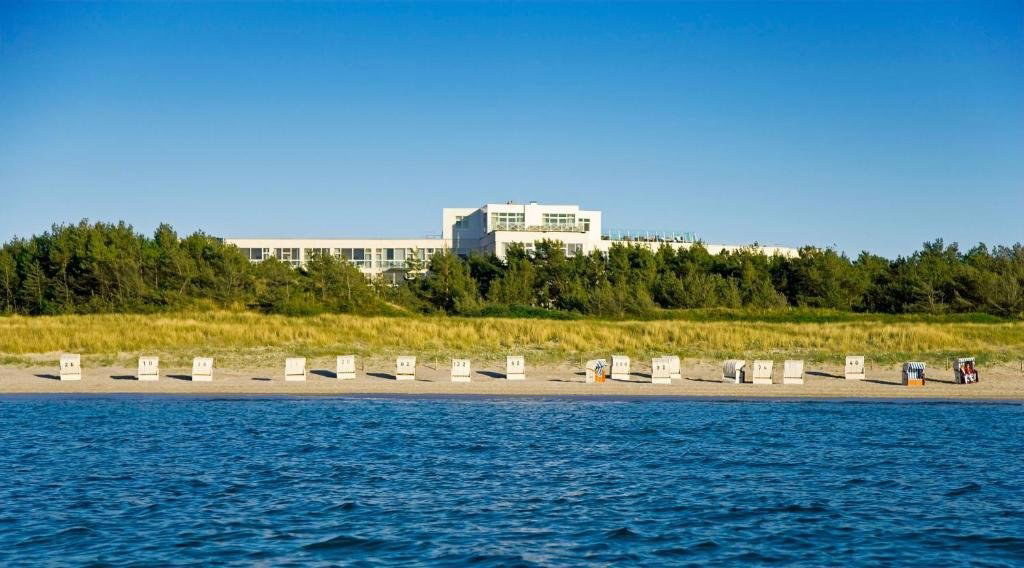
About Strandhotel Fischland
On Germany's Baltic coast, the Strandhotel Fischland in Dierhagen offers 65 contemporary rooms priced from around $208 per night, with a wellness-led identity that makes it a practical and comfortable base for the Fischland-Darß-Zingst peninsula. Three distinct dining formats, a capacious spa, a programme of water and land-based activities give it range beyond a standard seaside hotel.
Where the Baltic Meets Contemporary Comfort
Germany's Baltic coastline operates on a different register than the Mediterranean. The light is softer, the pace slower, the water rarely invites extended swimming. Strandhotel Fischland is a five-star hotel in Dierhagen on the Fischland-Darß-Zingst peninsula, with one Michelin Key and rates from about $140 per night. What it does offer is a particular quality of northern stillness, wide skies, wind-bent pines, a coastal character that has drawn Germans seeking proper retreat for well over a century. The Fischland-Darß-Zingst peninsula, a narrow spit of land jutting into the Baltic, sits at the quieter end of that tradition. Dierhagen, the village where Strandhotel Fischland stands on Ernst-Moritz-Arndt-Straße 6, is not a resort town in the conventional sense. There are no promenades lined with chain restaurants, no festival crowds. The appeal is structural: sea on both sides, a national park at the peninsula's core, a built environment that has resisted the overdevelopment that has reshaped other parts of the German coast.
Against that backdrop, the Strandhotel Fischland reads as a deliberate counter-offer to the rusticated guesthouses and smaller family-run hotels that have historically dominated the area. With 65 rooms and rates from approximately $208 per night, it occupies a mid-to-upper tier for this stretch of coast, priced above the region's budget accommodation but positioned as a full-service property rather than a luxury outlier. That positioning shapes everything about the experience, from the design choices to the dining programme.
Design That Earns Its Setting
The hotel's aesthetic sits firmly in contemporary northern European hospitality design: clean lines, materials that gesture toward the coastal environment, interiors that read as modern without pushing into avant-garde territory. This is a deliberate choice. Hotels on protected coastlines, much of the Darß falls within national park boundaries, face both planning constraints and cultural expectations. Guests arriving here are not seeking the dissonance of an aggressively architectural statement; they want a space that organises their experience of the landscape without competing with it. The rooms achieve that balance. They are handsome and well-appointed, with contemporary fittings, but the design vocabulary is restrained rather than expressive. For comparison, properties like Weissenhaus Private Nature Luxury Resort in Weissenhaus push further into the high-design, estate-scale format on the same stretch of German coastline. The Strandhotel Fischland is a different proposition: more accessible in price and tone, more focused on function and comfort than on architectural theatre.
Germany's spa-hotel category has expanded considerably over the past decade, with properties competing on facility scale and treatment programmes as much as on rooms or food. The wellness offer at Strandhotel Fischland follows that broader pattern. The spa is capacious by the standards of a 65-room hotel, the activity programme extends from indoor options to outdoor pursuits and water-based activities, a sensible emphasis given the location. On Germany's Baltic coast, the rationale for a strong indoor wellness infrastructure is obvious: even in summer, the weather does not always cooperate, a property that depends entirely on sunshine for its appeal has a short viable season. The Strandhotel Fischland's format hedges against that by making the spa and activities programme the primary draw, with the beach as a complementary asset rather than the sole one. Properties like Das Kranzbach Hotel and Wellness Retreat in Kranzbach and Luisenhöhe in Horben take a similar approach in their respective inland settings, anchoring the guest experience in wellness infrastructure that functions independently of outdoor conditions.
Three Dining Formats, One Property
The dining structure across the hotel spans three distinct formats, which is a meaningful decision for a 65-room property and signals an attempt to serve different guest moods rather than a single dining concept. The Ostseelounge operates at the fine-dining end of the spectrum, while the Marktplatz offers a more casual register, the Spa-bistro functions as the lightest option, presumably oriented toward guests moving between treatments and activities. This tiered approach is common among German wellness-resort hotels, where guests often spend multiple nights and need dining options that flex across occasions. The risk in a three-format structure is inconsistency, when a property divides its kitchen effort across multiple concepts, the casual options sometimes suffer. What the format does well, structurally, is give guests genuine choice without requiring them to leave the property, which suits the peninsula's relatively limited external dining scene.
For a broader German itinerary, Strandhotel Fischland sits in a different register from urban flagship hotels such as the Fairmont Hotel Vier Jahreszeiten in Hamburg or Mandarin Oriental Munich. A more apt coastal comparison is BUDERSAND Hotel in Hörnum on Sylt, where the format similarly combines a seaside setting with spa infrastructure.
Planning Your Stay
The Baltic coast season runs broadly from late spring through September, with July and August the most active months and the clearest rationale for beach access. Shoulder season visits in May, June, or September offer fewer crowds and often better rates, the spa infrastructure means the property functions well even when the weather turns. At around $208 per night, the hotel sits at a price point where booking ahead is sensible rather than critical during peak summer weeks, though the peninsula's limited accommodation stock means availability can tighten faster than guests expect. Guests arriving by car will find Dierhagen accessible from Rostock in under an hour. For those comparing wellness-led German coastal hotels across a broader search, properties on the North Sea coast such as Landhaus Stricker on Sylt offer a useful reference point for how the two coasts differ in character and clientele. Further afield, Villa Contessa in Bad Saarow represents the lakeside-wellness variant in eastern Germany. International travellers extending beyond Germany might consider Aman Venice, The Fifth Avenue Hotel in New York City, or Aman New York as reference points for how the luxury-wellness category scales differently in major urban markets. Additional German options worth noting for contrast include Der Öschberghof in Donaueschingen, Gut Steinbach Hotel Chalets Spa in Reit im Winkl, Breidenbacher Hof in Düsseldorf, Excelsior Hotel Ernst in Cologne, Esplanade Saarbrücken, LA MAISON in Saarlouis, and Hotel Ketschauer Hof in Deidesheim.
Location
Ernst-Moritz-Arndt-Straße 6, 18347 Dierhagen
Dierhagen, Germany
Recognized By

Explore Dierhagen
Save or rate Strandhotel Fischland on Pearl
Keep this venue in your Pearl passport, rate it after you visit, and track it alongside every other place you collect.