

HUBERTUS Mountain Refugio Allgäu
Balderschwang
Hotel in Balderschwang, Germany
 Book with Pearl
The Read
Ski-to-Door Slow Food Retreat
Why go
Book HUBERTUS Mountain Refugio Allgäu for a quiet, design-led Allgäu escape with serious hotel credentials: Michelin awarded it 1 Key in 2025, and it is a Small Luxury Hotels of the World member. It is a stronger fit for couples and celebration stays than for travelers who want a large resort format.
About HUBERTUS Mountain Refugio Allgäu
HUBERTUS Mountain Refugio Allgäu is a hotel in Balderschwang. The profile is intentionally concise: the property is recognized with a Michelin 1 Key in 2025 and is listed as a Small Luxury Hotels of the World member in 2025. Those two points are the reliable anchors and they frame the hotel primarily through third-party recognition rather than through a detailed inventory of amenities or on-site experiences.
In practical terms, that means the page can help identify HUBERTUS Mountain Refugio Allgäu as a relevant name to investigate, but it should not be read as confirmation of what is currently offered during a particular stay. Readers comparing broader options can consider other hotels and dining in the area, then verify current details directly before booking.
Choose it for a 2025 recognition profile in Balderschwang
The clearest confirmed reason to consider HUBERTUS Mountain Refugio Allgäu is its 2025 recognition profile: Michelin awarded it 1 Key, and Small Luxury Hotels of the World lists it as a member. That combination is enough to put it on a shortlist for travelers specifically looking at recognized stays in Balderschwang, especially when the first filter is external validation rather than a long checklist of facilities. It also gives the property a defined place in comparison research, while still leaving practical details to confirm directly before booking.
For comparison planning, consider HUBERTUS Mountain Refugio Allgäu alongside DAS.HOCHGRAT, Genießer - & Romantikhotel DAS SCHIFF, Hotel Alpenkönig, and Sonnenalp Resort, or compare it more generally with other hotels and dining options in the region. The most useful approach is to treat these names as a starting set, then check current availability, inclusions, and any property-specific details directly before making a final decision.
Planning details
- Location
- Dorf 5, 87538 Balderschwang
- Website
- hotel-hubertus.de
- Phone
- +49 8328 9200
The take
The Take
The Vibe
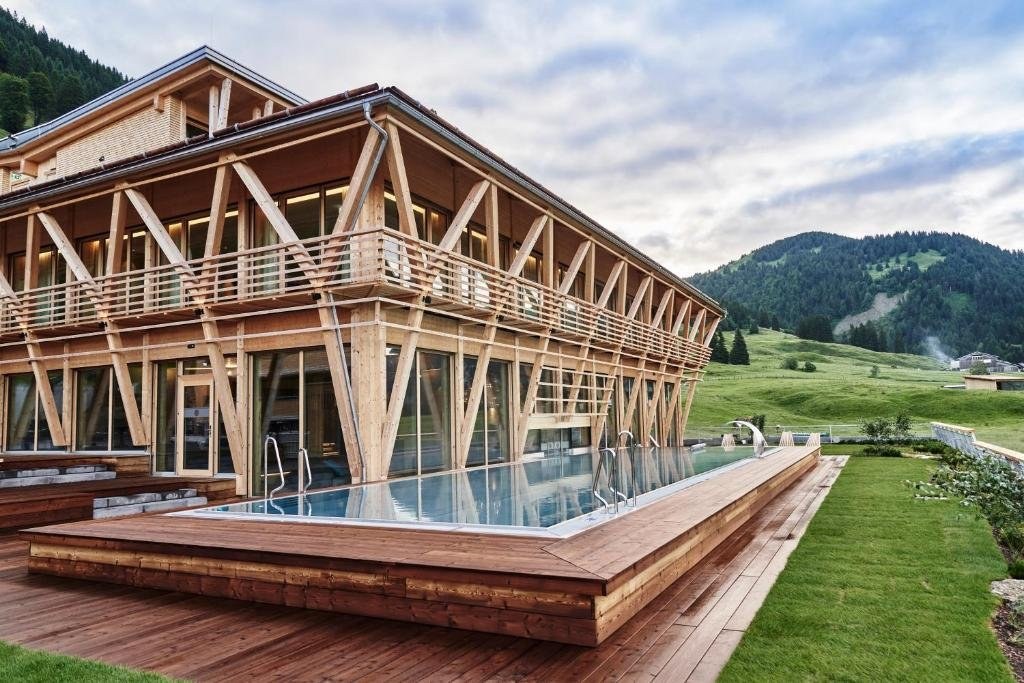
HUBERTUS Mountain Refugio Allgäu presents a serene, sophisticated alpine character that positions the mountains as the primary design element. Architecture and interiors favor solid local timber, restrained detailing and low visual noise, so the lodge feels considered rather than ornamental. The building’s integration with the terrain is literal — the cable car adjoins the property and slopes open from the door — so guests experience the ridgeline and peaks as active parts of the stay. Remoteness and a lack of through-traffic keep public spaces hushed and the outdoor terraces and trails privately scaled.
Best For
This property suits guests who prioritize outdoor access and quiet mountain time. Skiers and winter-sport visitors benefit from immediate slope access and an adjoining cable car; hikers and tobogganers find uncrowded trails and easy approaches from the terrace. The remoteness and small-village setting make it a strong choice for couples or small groups seeking privacy and a concentrated alpine escape rather than a bustling resort experience. The lodge’s design and scale support an elevated but unpretentious stay focused on terrain and activity.
Stay Tips
Plan arrivals around mountain access: the cable car station adjoins the property and the Balderschwang ski area literally opens from the door, so pack gear for on‑site transitions between lodging and slopes. The terrace and nearby trails provide immediate walking access without a car, which is useful for short outings and toboggan runs a short drive away. Expect quieter slopes and fewer crowds than larger Bavarian resorts; bring appropriate footwear and layered outerwear for alpine weather and check local transport or cable car schedules when finalizing logistics.
Venue details
Ambiance
Quiet, contemporary-classic alpine atmosphere with minimalist, light-filled interiors, natural materials, warm colors, and a strong sense of calm and privacy.
Tags
Vibe
Best For
Experience
Amenities
View
Accessibility
About the Stay
- Rooms
- 66
- Check-in
- 15:00
- Check-out
- 11:00
- Property Style
- Contemporary Alpine Wellness Hotel with a Chalet Chic, Design Forward Renovation and Strong Sustainability Emphasis.
- Design Style
- Minimalist Alpine Design with Modern Country Style Elements, Regional Natural Materials, and Contemporary Classic Mountain Lodge Character.
Know before you go
Know Before You Go
- Getting there
- Dorf 5, 87538 Balderschwang
Planning details
Location
Recognition and awards

Also consider
Also Consider
- Genießer - & Romantikhotel DAS SCHIFF, Notable alternative
- Genießer - & Romantikhotel DAS SCHIFF, Notable alternative
- Sonnenalp Resort, Notable alternative
- DAS.HOCHGRAT, Notable alternative
- Hotel Alpenkönig, Notable alternative
Hotel context
How It Compares
Among the listed Allgäu-area options, Genießer - & Romantikhotel DAS SCHIFF is the more natural cross-shop if the trip is built around a romantic hotel format. HUBERTUS Mountain Refugio Allgäu is the better call when the stay needs a quieter mountain-refuge feel with a stronger recognition signal, given its Michelin 1 Key and Small Luxury Hotels of the World membership.
Sonnenalp Resort is the safer pick for travelers who want a fuller resort-style stay and more of an all-day property feel. Choose HUBERTUS instead for a smaller-feeling, more design-led special occasion where ambiance matters more than scale.
DAS.HOCHGRAT and Hotel Alpenkönig are useful alternates if availability is tight or the brief is a simpler alpine base. If the stay is meant to feel like the main event, HUBERTUS is the stronger splurge; if the room is mainly a place to sleep between outdoor plans, start with those alternatives.
Explore Balderschwang
Around this place
Discover more on Pearl
Unlock the full HUBERTUS Mountain Refugio Allgäu guide in Pearl, including awards, comparisons, FAQs, planning details, and nearby places.
Compare HUBERTUS Mountain Refugio Allgäu
| Venue | Location | Awards |
|---|---|---|
| HUBERTUS Mountain Refugio Allgäu | Balderschwang | 2026 Michelin 1 KeyMichelin 1 Key 20252025 Michelin 1 KeySmall Luxury Hotels Member 2025 |
| Genießer - & Romantikhotel DAS SCHIFF | Hittisau | 2026 Michelin 1 KeyMichelin 1 Key 20252025 Michelin 1 Key |
| Genießer - & Romantikhotel DAS SCHIFF | Vorarlberg | 2026 Michelin 1 KeyMichelin 1 Key 20252025 Michelin 1 Key |
| Sonnenalp Resort | Ofterschwang | 2026 La Liste Top Hotels2026 Michelin 2 Keys2025 Michelin 2 Keys2024 Michelin 2 Keys |
| DAS.HOCHGRAT | Oberstaufen | 2025 Michelin 1 Key |
| Hotel Alpenkönig | Oberstaufen | 2026 Michelin 1 Key2025 Michelin 1 Key |



How HUBERTUS Mountain Refugio Allgäu compares with similar nearby venues.
FAQ
Frequently Asked Questions
What is check-in like at HUBERTUS Mountain Refugio Allgäu?
The property is in Balderschwang and has Michelin 1 Key recognition for 2025, but arrival procedures should be confirmed directly with the hotel.
Do loyalty programs work at HUBERTUS Mountain Refugio Allgäu?
The affiliation signal is Small Luxury Hotels of the World membership in 2025. If earning, redeeming, or receiving program benefits matters to your booking, confirm the current terms directly before reserving.
How is the pool and spa at HUBERTUS Mountain Refugio Allgäu?
The data confirms Michelin 1 Key recognition and Small Luxury Hotels of the World membership, but it does not specify pool or spa details. If those facilities are important, check the hotel's current information before you commit.
When is the best time to book HUBERTUS Mountain Refugio Allgäu?
If your dates are fixed, contact the hotel or booking channel directly for current availability in Balderschwang.
How does HUBERTUS Mountain Refugio Allgäu compare to other hotels?
Use the confirmed recognition profile as the starting point: HUBERTUS Mountain Refugio Allgäu has a Michelin 1 Key in 2025 and Small Luxury Hotels of the World membership in 2025. For comparison, look at DAS.HOCHGRAT, Genießer - & Romantikhotel DAS SCHIFF, Hotel Alpenkönig, and Sonnenalp Resort, then verify the current amenities and booking terms that matter to your trip.
How is the dining at HUBERTUS Mountain Refugio Allgäu?
Do not book on the assumption of a particular dining experience without checking the hotel's official channels first.