
Scheiblhofer THE RESORT
Andau
Hotel in Andau, Austria
 Book with Pearl
The Read
Pannonian Vineyard Retreat
Why go
Book Scheiblhofer THE RESORT for a planned wine-country occasion in Andau, especially if the stay itself is the point of the trip. Its Michelin 1 Key recognition in 2025 gives it a credible hotel-quality signal, but hard booking difficulty means it is better for advance planners than spontaneous overnights.
About Scheiblhofer THE RESORT
For a stay in Andau, Scheiblhofer THE RESORT holds a Michelin 1 Key (2025). That makes it a notable option for travelers evaluating hotels in Andau, especially those who value Michelin-recognised hotels.
A resort stay to plan before booking
The best fit is a traveler choosing Andau deliberately and wanting a stay where smart casual dress is appropriate. Before booking, confirm any details that will shape the trip, including dining format, amenity list, service style, pricing, and room categories, directly with Scheiblhofer THE RESORT.
The Michelin distinction is meaningful: a Michelin 1 Key in 2025 identifies Scheiblhofer THE RESORT as a hotel recognised by Michelin for the stay experience. That does not automatically make it the right choice for every traveler. If the priority is a different type of base, compare it with options such as Grand Hotel River Park, a Luxury Collection Hotel, Bratislava, Marrol's Boutique Hotel, Arcadia Boutique Hotel, or Roset Hotel & Residence. If the priority is staying in Andau, Scheiblhofer THE RESORT is the relevant option to evaluate.
Book it for Andau; cross-shop other hotels for itinerary fit
Treat this as a stay to plan with care, especially if the trip is tied to a date or occasion. Decide what matters most, including room categories, pricing, facilities, and dining specifics, then confirm those points directly with the hotel before committing.
For another comparison, Taubenkobel may be useful to consider, while options such as Grand Hotel River Park, a Luxury Collection Hotel, Bratislava, Marrol's Boutique Hotel, Arcadia Boutique Hotel, and Roset Hotel & Residence may solve a different kind of trip. Those comparisons help clarify the choice: Scheiblhofer THE RESORT is an Andau hotel with a Michelin 1 Key (2025), while other options should be evaluated for their own location, access, and itinerary convenience.
Inside Scheiblhofer THE RESORT
Planning details
- Location
- Resortplatz 1, 7163 Andau
- Website
- theresort.at
- Phone
- +43 2176 2610800
The take
The Take
The Vibe
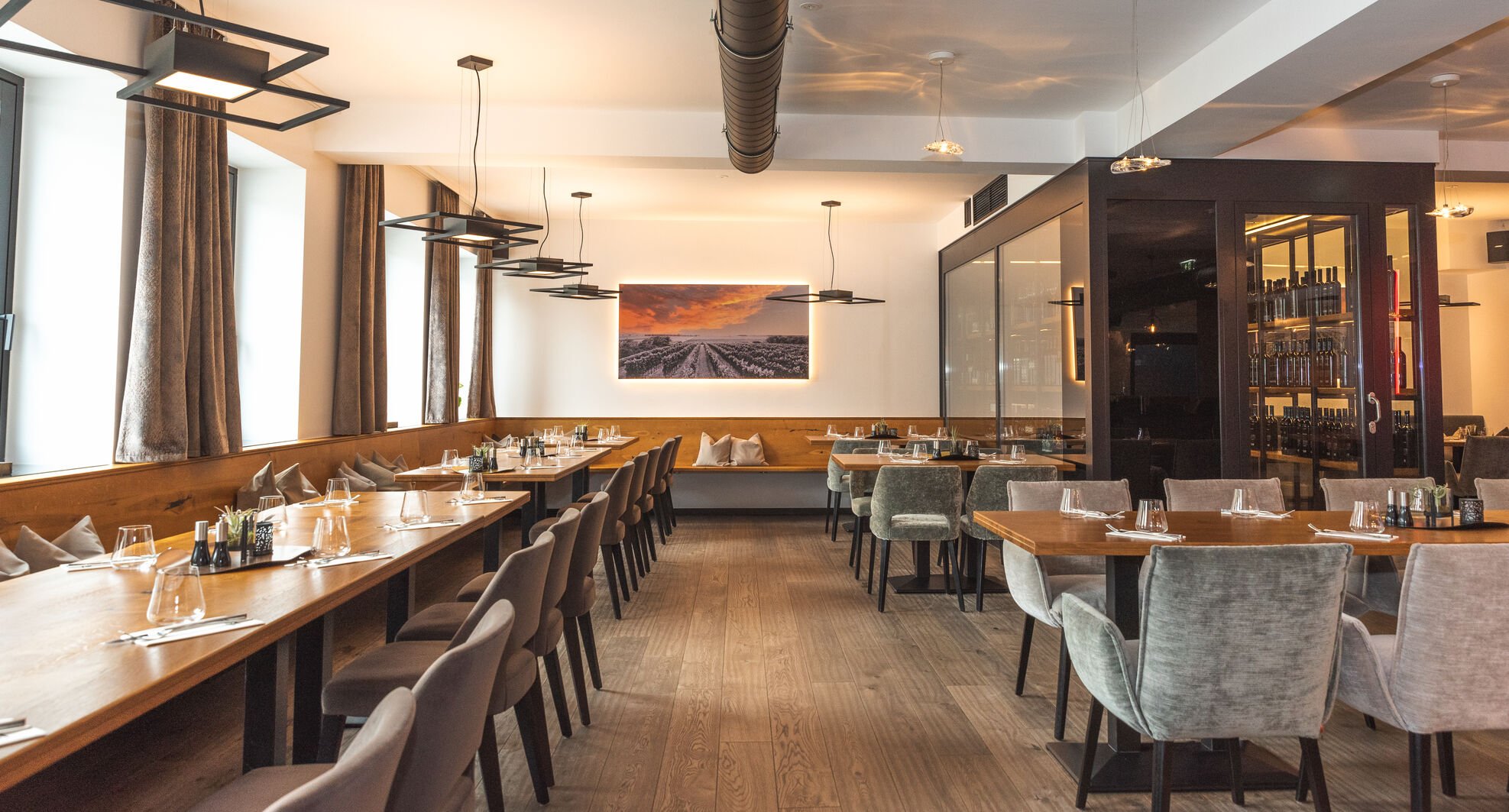
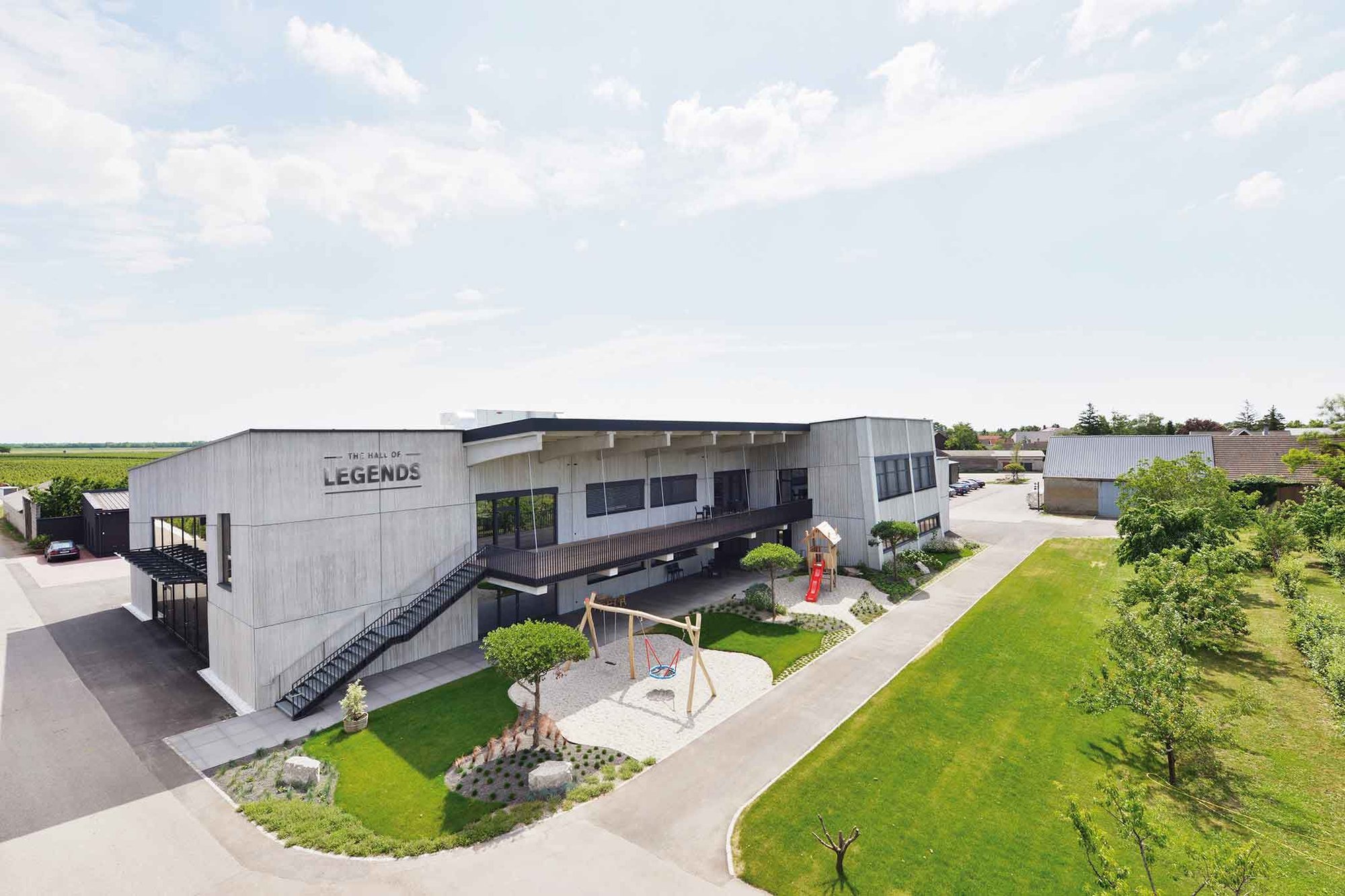
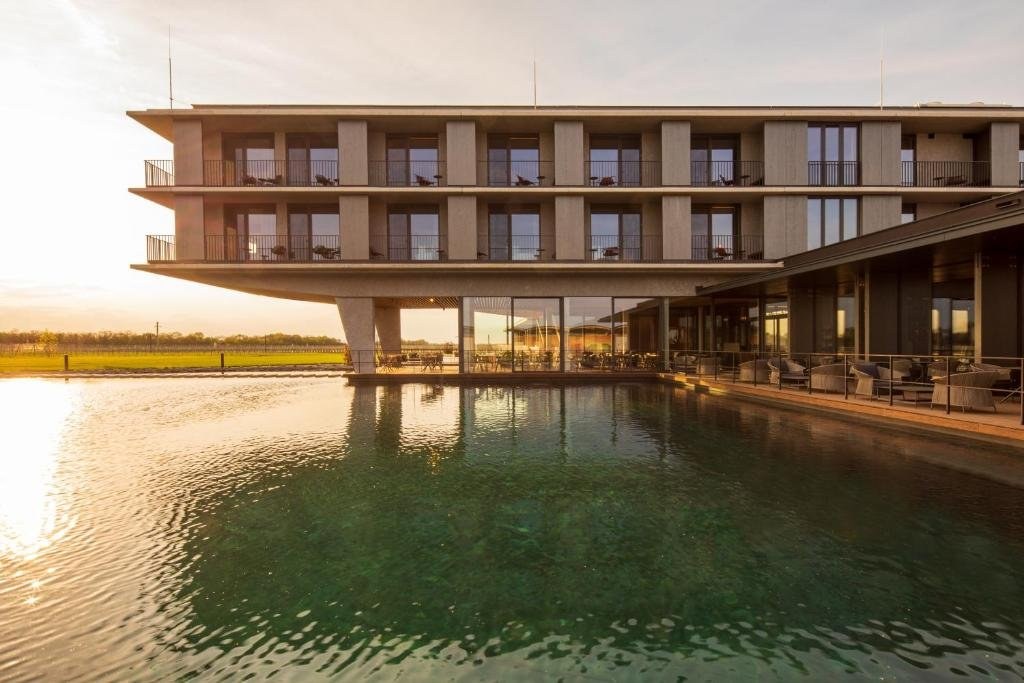
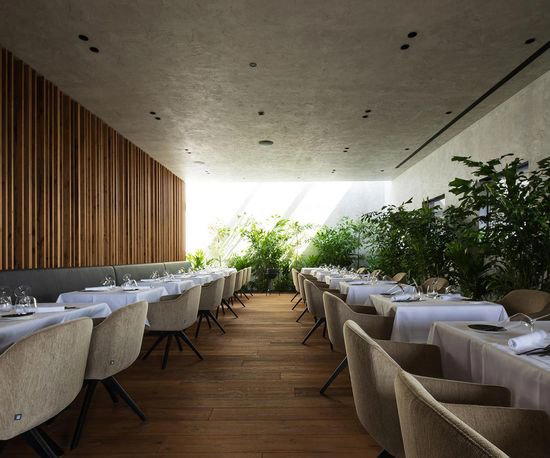
Scheiblhofer THE RESORT presents a quietly confident modernism that intentionally aligns with the flat Pannonian landscape. The architecture reads as functional and well-proportioned rather than ornamental, a cantilevered silhouette that answers the horizon. Inside, restraint governs the palette and furnishings: pendant lighting and low-slung seating keep sightlines open, and materials explicitly avoid the heavy maximalism of Alpine resorts. The overall effect is sophisticated and minimalist — a calm, design-forward resort that foregrounds composition and context over decoration and theatricality.
Best For
This is a stay for travelers who prize architecture, measured design and a lowland sense of place. It suits couples seeking a quiet romantic getaway, families after a restful weekend escape, and guests who want a wellness-oriented retreat without the Alpine spa theatre. The resort’s alignment with the wine-country, plain and lake landscape makes it a good pick for visitors who value slow, scenic surroundings and understated contemporary comfort rather than high-drama, old-world luxury.
Stay Tips
To make the most of Scheiblhofer, favor experiences that let the architecture and landscape speak: request accommodations and common areas that maximize sightlines toward the surrounding plain and lakes. Pack for relaxed, contemplative time outdoors — walks across flat, cultivated fields and reed-edged shallows are central to the locale. Embrace the hotel’s restrained aesthetic by planning low-key days that focus on the setting and design rather than a program of heavy activities. Reservations for peak weekends are prudent given the resort’s curated, destination appeal.
Venue details
Ambiance
Clean, efficient modern design with pendant lighting, low-slung furniture, and a peaceful, relaxing atmosphere praised for quiet stays.
Tags
Vibe
Best For
Experience
Amenities
View
Accessibility
About the Stay
- Rooms
- 118
- Check-in
- 14:00
- Check-out
- 11:00
- Property Style
- Modern Cantilevered Structure Integrated with the Landscape
- Design Style
- Clean Lines with Smart Details Like Pendant Lighting and Comfy Low Slung Furniture
Know before you go
Know Before You Go
- Getting there
- Resortplatz 1, 7163 Andau
Planning details
Location
Recognition and awards
Also consider
If you cannot book it
Try Taubenkobel first if the trip can stay in a countryside, food-focused lane. If the dates need city logistics instead, Grand Hotel River Park, a Luxury Collection Hotel, Bratislava is the practical alternative for a more urban stay.
Hotel context
How it compares in and around Andau
Scheiblhofer THE RESORT is the stronger choice for a resort-led Burgenland stay where the weekend is built around slowing down in Andau. Taubenkobel is the more natural cross-shop if the trip is driven by a food-and-country-house rhythm rather than a larger resort feel. Choose Scheiblhofer for a contained special-occasion hotel stay; choose Taubenkobel when the dining context is the main reason for going.
If city access matters, the Bratislava options are cleaner decisions. Grand Hotel River Park, a Luxury Collection Hotel, Bratislava is the safer business or polished city-hotel pick, while Marrol's Boutique Hotel suits travelers who want a smaller urban base. Roset Hotel & Residence and Arcadia Boutique Hotel are better for city convenience than wine-country downtime.
On booking difficulty, Scheiblhofer is the one to plan around first. The Bratislava hotels should generally work better as alternatives when timing is tighter or when the trip needs restaurants, meetings, and transport access close by. For ambiance, Andau is the quieter celebration choice; Bratislava is the practical urban choice.
Around this place
Discover more on Pearl
Unlock the full Scheiblhofer THE RESORT guide in Pearl, including awards, comparisons, FAQs, planning details, and nearby places.
Compare Scheiblhofer THE RESORT
| Venue | Location | Awards |
|---|---|---|
| Scheiblhofer THE RESORT | Andau | Michelin 1 Key 20252025 Michelin 1 Key |
| Taubenkobel | Schützen am Gebirge | Star Wine Lists 20262026 Relais Chateaux Hotels2025 Relais Chateaux Award |
| Grand Hotel River Park, a Luxury Collection Hotel, Bratislava | Bratislava | 2026 La Liste Top Hotels2025 Michelin Selected Hotels |
| Marrol's Boutique Hotel | Bratislava | No published awards |
| Roset Hotel & Residence | Bratislava | 2026 La Liste Top Hotels |
| Arcadia Boutique Hotel | Bratislava | No published awards |




How Scheiblhofer THE RESORT Andau compares with similar nearby venues.
FAQ
Frequently Asked Questions
When is the best time to book Scheiblhofer THE RESORT?
Book with enough lead time if the stay is tied to a date or occasion. Scheiblhofer THE RESORT has a Michelin 1 Key (2025); for availability patterns, pricing, or booking difficulty, confirm current conditions directly with the hotel.
How is the dining at Scheiblhofer THE RESORT?
If food is a major part of the trip, compare your plans with other dining in Andau or with Taubenkobel, and check Scheiblhofer THE RESORT's official channels for current restaurant information.
Is Scheiblhofer THE RESORT family-friendly?
Which room category is best at Scheiblhofer THE RESORT?
Choose based on your own priorities after checking the hotel's current room descriptions, especially if space, views, or access within the property will affect the stay.
How is the location of Scheiblhofer THE RESORT?
Scheiblhofer THE RESORT is in Andau. If you want an Andau stay, it is the relevant hotel to evaluate; if you want a different type of base, compare options such as Grand Hotel River Park, a Luxury Collection Hotel, Bratislava, Arcadia Boutique Hotel, Marrol's Boutique Hotel, or Roset Hotel & Residence.