
Hotel in 奈良市, Japan
ふふ奈良
150ptsHistoric-Quarter Ryokan Restraint
About ふふ奈良
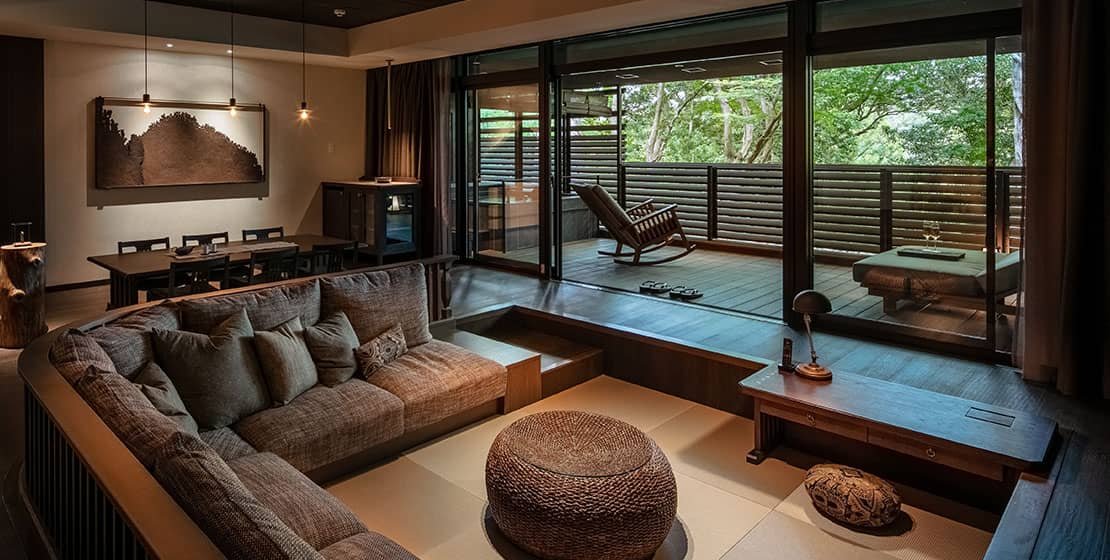
ふふ奈良 occupies a quiet address in Takabatake-cho, one of Nara's most historically layered residential neighbourhoods, placing guests within walking distance of Kasuga Grand Shrine and Nara Park. The ryokan format draws on the Fufu brand's approach to small-scale, design-conscious retreat properties found at sister locations across Japan. For travellers routing through the Kinki region, it represents a measured alternative to Kyoto's denser hotel market.
Where the City Ends and the Historic Quarter Begins
Takabatake-cho sits at the southern edge of Nara's tourist core, beyond the deer-filled grasslands of Nara Park and below the wooded approach to Kasuga Grand Shrine. The neighbourhood is one of the few areas in the city where prewar residential architecture has survived largely intact: low stone walls, old-growth camphor trees, and the particular quiet of a district that has not been retrofitted for foot traffic. ふふ奈良 is addressed at 高畑町1184-1, which places it firmly within this protected residential zone rather than in the commercial accommodation strip closer to Kintetsu Nara Station. The positioning is deliberate. Properties in this tier of Japanese small-luxury hospitality tend to select sites where the surroundings do the contextual work that a designed lobby might otherwise perform.
The Fufu brand has developed a consistent siting logic across its portfolio. Fufu Kawaguchiko places guests against the northern shore of Lake Kawaguchi with Fuji framed across the water. Fufu Nikko reads the cedar-lined approaches of the Nikko shrine complex as its immediate backdrop. At each location, the architecture is calibrated to reinforce rather than compete with what surrounds it. In Nara, the surrounding context is arguably the most historically saturated of the three: the city's central monuments date to the eighth century, when Nara served as Japan's imperial capital, and UNESCO protections apply across a significant portion of the surrounding area.
The Architecture of Restraint
The ryokan typology that ふふ奈良 operates within has its own deep design grammar. The traditional model — tatami rooms, engawa verandas, sliding shoji screens, and a garden that functions as an extension of the interior — developed over centuries as a response to the Japanese climate and to Buddhist-influenced aesthetics of ma, the active use of negative space. Contemporary small-luxury ryokan design in Japan has spent the past two decades working through what it means to update this grammar without dissolving it. The tension between historical form and modern comfort is most visible in the handling of bathing spaces: properties like Gora Kadan in Hakone and Asaba in Izu have each resolved this differently, with varying degrees of traditional material retention and contemporary fixture integration.
At the scale the Fufu properties operate, design decisions affect every guest simultaneously rather than being diluted across hundreds of rooms. The resulting aesthetic is legible at the level of a single stay in ways that large resort properties cannot replicate. Zaborin in Kutchan, Benesse House in Naoshima, and ENOWA Yufu in Yufu each demonstrate a version of this principle: when room counts are low and the property occupies architecturally significant or scenically protected land, the design argument is concentrated and readable. The small-format luxury ryokan in Japan now represents a distinct competitive tier, one that sits above large onsen resort properties and below full trophy-hotel developments like HOTEL THE MITSUI KYOTO or Bvlgari Hotel Tokyo in terms of physical footprint, while matching or exceeding them on spatial intimacy.
The Nara Context: What the City Offers That Kyoto Does Not
Nara receives a fraction of Kyoto's international hotel investment, which is partly a function of its scale (the city's central attractions are walkable in a single day for many visitors) and partly a consequence of accommodation infrastructure that historically skewed toward day-tripper volumes rather than overnight stays. That pattern has shifted, with a small number of design-led properties opening or repositioning to capture the segment of Japan travellers who want deeper access to the Kinki region's historical sites without the density of Kyoto's Higashiyama or Gion neighbourhoods.
The case for overnighting in Nara rather than commuting from Kyoto is strongest in the early morning and late evening, when the deer of Nara Park move through the paths around Todai-ji and Kasuga Shrine without competition from tour groups, and when the stone lanterns of the shrine approach are lit in a way that photographs cannot accurately convey. A property positioned in Takabatake-cho is within walking range of both experiences. For context on how similar access-to-heritage arguments play out at comparable properties elsewhere in Japan, Nishimuraya Honkan in Kinosaki-cho and Araya Totoan in Kaga both demonstrate the premium that attaches to ryokan properties embedded in historically significant townscapes rather than purpose-built resort zones.
Planning a Stay
ふふ奈良 fits most naturally into a Kinki region itinerary that anchors in Nara for one or two nights, with Kyoto and Osaka both accessible within an hour by rail. Kintetsu Nara Station connects directly to Osaka-Namba in approximately 40 minutes and to Kyoto in around 45 minutes, making the property logistically central for multi-city routing even though the immediate neighbourhood feels removed from transit infrastructure. Travellers comparing this category of property against the wider Japan small-luxury market should also consider Sekitei in Hatsukaichi, Bettei Otozure in Nagato, and Bettei Senjuan in Minakami as peer-set references for format, scale, and the ryokan-with-contemporary-design positioning. For travellers extending further, Amanemu in Mie and Atami Izusan Karaku in Atami represent the onsen resort end of the same broad spectrum. Our full 奈良市 restaurants guide covers dining options in the surrounding area for guests looking to supplement in-property kaiseki with neighbourhood-level exploration.
Frequently Asked Questions
- What's the vibe at ふふ奈良?
- The property sits in Takabatake-cho, a quiet residential neighbourhood bordering Nara Park and the Kasuga Shrine precincts, which sets a contemplative register that is closer to a retreat than a social hotel. The Fufu brand across its portfolio (see also Fufu Kawaguchiko and Fufu Nikko) positions its properties for paired or solo stays focused on landscape access and onsen bathing rather than lobby-culture socialising. Because specific awards, current pricing, and programming data are not confirmed in available records, prospective guests should verify current inclusions directly with the property.
- What's the leading suite at ふふ奈良?
- Specific suite categories, configurations, and pricing for ふふ奈良 are not available in confirmed data at this time. Within the broader Fufu brand and the small-format luxury ryokan tier it occupies, the premium room types at comparable properties typically feature private open-air baths, garden or natural-view orientations, and the largest tatami footprints in the house. For verified room details and current availability, direct inquiry with the property is the most reliable route. Peer-set reference points for this suite tier include Gora Kadan and Asaba.
- How does ふふ奈良 fit into the Fufu brand's approach to cultural destinations?
- The Fufu brand has developed a pattern of placing small-format ryokan properties at sites where the surrounding heritage or landscape context is the primary draw, with architecture and programming calibrated to give guests proximity to that context rather than competing with it. In Nara, that means a Takabatake-cho address within walking range of UNESCO-listed monuments dating to Japan's eighth-century imperial period, a level of historical density that the brand's other locations in Kawaguchiko and Nikko match in scenic terms but not in archaeological depth. Travellers for whom cultural access is the primary booking driver will find the Nara location the most historically layered of the three.
Related editorial
- Best Fine Dining Restaurants in ParisFrom three-Michelin-star icons to the next generation of Parisian chefs pushing boundaries, these are the restaurants that define fine dining in the world's culinary capital.
- Best Luxury Hotels in RomeFrom rooftop terraces overlooking ancient ruins to Michelin-starred hotel dining, these are the luxury hotels that make Rome unforgettable.
- Best Cocktail Bars in KyotoFrom sleek lounges to hidden speakeasies, Kyoto's cocktail scene blends Japanese precision with global influence in ways you won't find anywhere else.
Save or rate ふふ奈良 on Pearl
Keep this venue in your Pearl passport, rate it after you visit, and track it alongside every other place you collect.