
Hotel in 仙北市, Japan
角館山荘侘桜
150ptsForest-Set Wabi Retreat
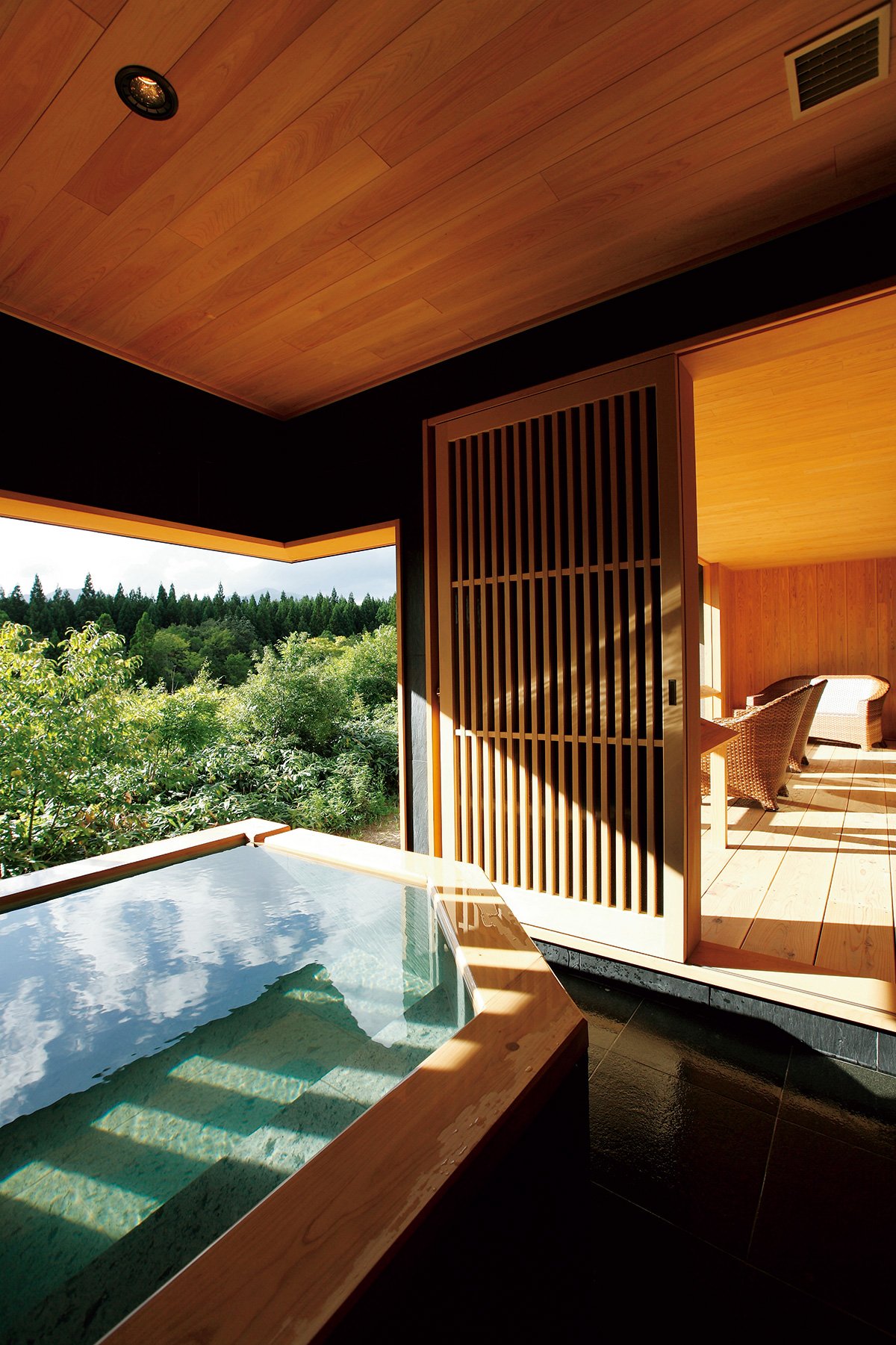
About 角館山荘侘桜
Kakunodate Sanso Wabizakura occupies a forested hillside in Senboku, Akita Prefecture, where the architecture and material language of a traditional Japanese inn frame the surrounding cedar landscape as deliberately as any interior element. The property sits in proximity to Kakunodate's celebrated samurai district, positioning it as one of the more considered ryokan addresses in the Tohoku region for travellers seeking spatial quietude over resort-scale amenity.
Timber, Silence, and the Architecture of Wabi in Akita's Interior
Tohoku's ryokan tradition has always prioritised the relationship between built form and natural setting over the kind of performative luxury that defines international resort brands. In Akita Prefecture's Senboku region, that tradition operates at a particular register: cedar forests, cold clear water from the Tama River system, and a spatial quietude that resists easy categorisation alongside the more marketed hot-spring corridors of western Japan. Amanemu in Mie and Gora Kadan in Hakone represent the southern pole of this ryokan conversation; Kakunodate Sanso Wabizakura belongs to a northern, more austere register where the building itself functions as an argument about restraint.
The property sits in the Nishiki district of Kakunodate, a town whose samurai quarter — with intact black-walled bukeyashiki estates and weeping cherry trees that draw significant seasonal attention — gives this corner of Akita an unusual historical density for a town of its scale. The inn's address places it at the edge of that historical fabric, at a forested elevation that keeps the built volume of the town at a deliberate remove.
The Architecture of Restraint
The concept embedded in the property's name is worth sitting with. Wabi, in the Japanese aesthetic tradition, describes a form of beauty found in imperfection, transience, and incompleteness , the quality of a weathered wooden beam, the irregular glaze on a tea bowl, the branch of a cherry tree reaching asymmetrically across a window. Sakura, the cherry blossom, carries the complementary weight of momentary beauty. Together, the name announces an architectural and atmospheric intention rather than a commercial pitch: this is a property conceived around a specific sensibility, not a broad hospitality offer.
Among Japan's most spatially considered small ryokan, the buildings that hold this philosophy most successfully tend to share certain physical characteristics: natural materials left to age visibly, interiors that treat the surrounding landscape as the primary decorative surface, and a deliberate ratio between enclosed space and openness. Properties like Zaborin in Kutchan and Asaba in Izu work within this tradition from very different geographic contexts, but the underlying spatial logic , building as frame rather than spectacle , connects them. Wabizakura operates within the same lineage, with Akita's cedar and cryptomeria forests providing both the material palette and the visual surround.
Japanese inn architecture at this tier typically organises accommodation around the engawa, the veranda-like transitional space between interior room and external garden, which functions as the primary mediation between guest and landscape. How that threshold is handled , the depth of the overhang, the quality of the shoji screen, the proportion of room width to garden view , determines whether a room reads as spatially generous or merely small. At properties operating at the upper end of Tohoku's ryokan category, the room count tends to be low and the room footprint generous relative to price, a structural difference from the high-occupancy resort model pursued at properties like Halekulani Okinawa or ANA InterContinental Beppu.
Kakunodate and the Broader Tohoku Context
Senboku as a travel destination rewards a specific kind of visitor. Lake Tazawa, the deepest lake in Japan at 423 metres, sits within the city boundary and provides a geographic anchor that most Tohoku destinations lack. The Kakunodate samurai district attracts the largest volume of visitors to the area, particularly during spring cherry blossom season when the approximately 150 weeping cherry trees along the bukeyashiki streetscape become the primary draw. That seasonal concentration creates a predictable demand curve: bookings in late April through early May require significant lead time, while the autumn foliage season in October and November offers comparative availability with arguably richer forest colour in the surrounding mountains.
The regional food culture in Akita Prefecture draws on a distinctive ingredient set: kiritanpo (grilled and skewered rice paste), Hinai-jidori chicken from northern Akita, hatahata (sailfin sandfish) from the Japan Sea coast, and sake produced from Akita Komachi rice in breweries that rank among Japan's more respected. Kaiseki at Akita ryokan of this tier works these regional ingredients into a structured seasonal progression rather than relying on the national prestige proteins , Wagyu, sea urchin, Kyoto-sourced vegetables , that dominate more southerly fine-dining ryokan menus. For travellers who have worked through the Kyoto and Hakone circuits, the Tohoku kaiseki tradition offers a meaningfully different ingredient and flavour vocabulary. Properties like Araya Totoan in Kaga and Nishimuraya Honkan in Kinosaki-cho represent the Hokuriku and San'in equivalents of this regional-ingredient commitment; Wabizakura pursues it from within Tohoku's own seasonal and agricultural logic.
Planning a Stay: Practical Considerations
Access to Senboku follows the Akita Shinkansen from Tokyo to Kakunodate Station, a journey of approximately three hours and twenty minutes. From Kakunodate, the property is reachable by taxi. Tohoku's ryokan category at this level typically operates on a room-inclusive or meal-inclusive pricing model, with dinner and breakfast integral to the stay rather than optional add-ons , a structural feature that distinguishes the ryokan format from international hotel pricing and should be factored into cost comparisons with properties like HOTEL THE MITSUI KYOTO or Bvlgari Hotel Tokyo where dining is separately priced. Visitors planning around cherry blossom season should note that Kakunodate's peak typically falls in late April, with considerable year-to-year variation depending on winter temperatures. Autumn colour in the surrounding cedar and maple forests runs through mid-October to early November and represents a less congested alternative. For the broader Senboku restaurant and accommodation picture, the EP Club city guide covers the regional context in more depth.
Frequently Asked Questions
Is Kakunodate Sanso Wabizakura more low-key or high-energy?
Decidedly low-key, in a way that is structural rather than incidental. The property's name and setting place it within a specifically Japanese aesthetic tradition that values stillness and material simplicity over programmatic activity. Unlike hot-spring resort destinations in western Japan with multiple dining venues, entertainment programming, and high guest volumes, the Senboku ryokan model tends toward a quiet immersion in the surrounding landscape. This places Wabizakura in the same general register as Bettei Senjuan in Minakami or Benesse House in Naoshima , properties where the absence of noise is itself the amenity.
What room should I choose at Kakunodate Sanso Wabizakura?
At ryokan in this category and location, the rooms oriented toward the forested hillside rather than any access road or service area consistently reward the extra attention during booking. In forest-edge properties across Tohoku and Hokuriku, rooms with a direct engawa connection to the garden or natural surround deliver the spatial experience the architecture is designed around. If the property offers a room tier with a private outdoor bath or rotenburo positioned to frame the cedar canopy, that configuration is typically the most architecturally coherent expression of what a wabi-aesthetic inn in this landscape is trying to achieve. Consult the property directly or through a specialist agent for current room configuration details.
How does Wabizakura's setting compare to other Akita ryokan, and what makes Kakunodate the right base for the Lake Tazawa area?
Kakunodate positions a guest within reach of two of Akita's most distinct geographic experiences: the samurai district itself, navigable on foot, and Lake Tazawa, accessible within approximately thirty minutes by car or regional rail. Ryokan based further north in Akita, closer to the Japan Sea coast, prioritise the hatahata fishing culture and sake-brewing towns; those in the Nyuto Onsen area prioritise deep mountain hot-spring immersion. Wabizakura's Kakunodate address offers a more historically layered context, combining architectural heritage, forest landscape, and lake access in a single base , a configuration less common in Tohoku's otherwise geographically dispersed ryokan offer. Properties like Fufu Nikko and Fufu Kawaguchiko offer analogous positioning at other historically significant Japanese sites.
Related editorial
- Best Fine Dining Restaurants in ParisFrom three-Michelin-star icons to the next generation of Parisian chefs pushing boundaries, these are the restaurants that define fine dining in the world's culinary capital.
- Best Luxury Hotels in RomeFrom rooftop terraces overlooking ancient ruins to Michelin-starred hotel dining, these are the luxury hotels that make Rome unforgettable.
- Best Cocktail Bars in KyotoFrom sleek lounges to hidden speakeasies, Kyoto's cocktail scene blends Japanese precision with global influence in ways you won't find anywhere else.
Save or rate 角館山荘侘桜 on Pearl
Keep this venue in your Pearl passport, rate it after you visit, and track it alongside every other place you collect.