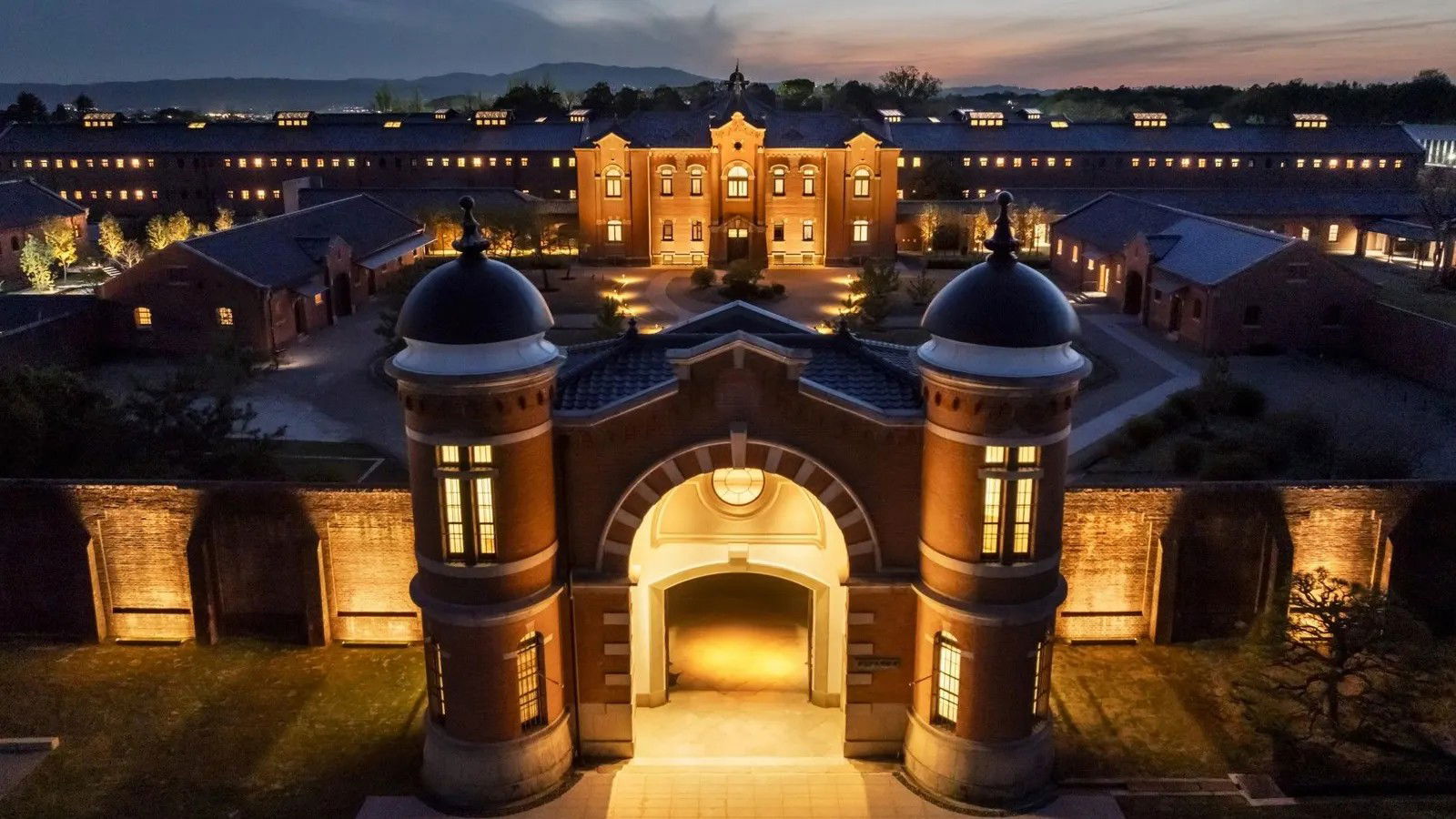
Hoshino Resorts opened HOSHINOYA Nara Prison on 25 June 2026, a 48-room luxury hotel inside the former Nara Prison, the only surviving intact structure among the Five Great Prisons of the Meiji era (1868-1912).
Worth booking if you care about adaptive reuse projects that preserve National Important Cultural Properties through tourism revenue, not if you want a conventional luxury hotel with spa suites and infinity pools.
At seven years in restoration and 25 acres of red-brick architecture completed in 1908 to Keijiro Yamashita's design, this is Japan's first luxury hotel inside a former prison and a test case for whether luxury hospitality can fund heritage preservation at scale.
Why HOSHINOYA Nara Prison Matters for Heritage Tourism
The former Nara Prison was completed in 1908 under architect Keijiro Yamashita's design, using the Haviland System, a radial layout where cell wings extend outward from a central observation station.
The Meiji government built five grand prisons as symbols of judicial modernisation; Nara's is the only one that survived demolition with its original structure intact. The building served as Nara Juvenile Prison from 1946 until closing in 2017, the same year it received National Important Cultural Property designation.
That designation created a preservation mandate but no funding mechanism, until Hoshino Resorts, working with the national government, developed adaptive reuse as a revenue model.
The project establishes financial viability for preserving at-risk Meiji-era structures through luxury hospitality. Japan holds thousands of heritage buildings that lack sustainable use cases; most face demolition when maintenance costs exceed municipal budgets.
HOSHINOYA Nara Prison demonstrates that adaptive reuse can generate the revenue needed to justify restoration while keeping the architecture accessible to the public. The 25-acre site includes the Nara Prison Museum by Hoshino Resorts, which sits alongside the hotel and examines the prison's layered history through curated exhibitions.
Hotel guests receive complimentary museum access during the day (9:00-17:00) and private access to select areas in early morning (6:00-8:30) and late evening (18:00-23:00), allowing quiet exploration outside public hours.
This model matters because it shifts preservation economics. Traditional heritage conservation relies on government grants or philanthropic funding, both finite and politically vulnerable. By embedding a 48-room hotel within the prison structure, Hoshino Resorts creates a self-sustaining revenue stream tied directly to the building's continued existence. The hotel's success or failure will influence whether other Japanese municipalities pursue similar adaptive reuse projects for heritage sites that currently sit vacant or underutilised.
Nara sits between Kyoto and Osaka in the Kansai region, known for ancient temples, free-roaming deer, and day-trip accessibility from both cities. Nara has had few luxury hotels compelling enough to anchor multi-night stays, most visitors arrive from Kyoto in the morning, tour Todai-ji Temple and Nara Park, then return by evening. HOSHINOYA Nara Prison gives travelers a reason to base themselves in Nara rather than treating it as a Kyoto satellite. That shift matters for regional tourism distribution: Kyoto's overtourism pressures ease when adjacent cities offer compelling accommodation anchors.
The Seven-Year Restoration: What Was Preserved
Hoshino Resorts collaborated with the national government and a team of experts over seven years to restore the site while maintaining its historical integrity. The red-brick exterior walls remain intact, as does the Haviland System layout, the radial cell wings that made the prison a model for modern Japanese correctional facilities. The restoration preserved the building's original character while meeting contemporary safety codes, structural reinforcement requirements, and hospitality infrastructure standards.
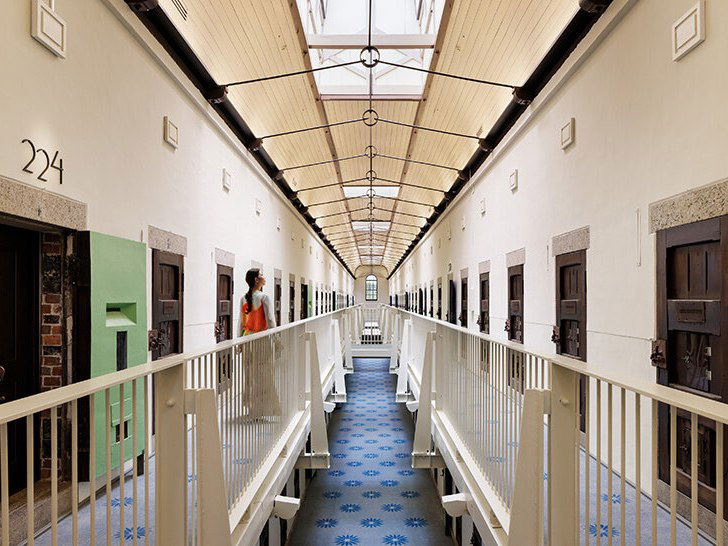
The challenge in adaptive reuse projects of this scale is balancing preservation with functionality. A 1908 prison lacks the plumbing, electrical, HVAC, and fire-suppression systems required for a luxury hotel. Installing those systems without compromising the structure's historical fabric requires surgical precision, threading modern infrastructure through walls and floors designated as culturally protected. The seven-year timeline reflects that complexity: each intervention required approval from preservation authorities to ensure compliance with the National Important Cultural Property designation.
The Haviland System layout, where cell wings radiate from a central station, remains the defining architectural feature. This radial design allowed a single guard to observe multiple cell blocks simultaneously, a 19th-century panopticon concept that shaped prison architecture worldwide. At HOSHINOYA Nara Prison, the layout now serves as wayfinding: guests move through the hotel by following the radial wings from the central lobby, with each wing housing a cluster of guest rooms converted from former cells.
The Nara Prison Museum by Hoshino Resorts occupies portions of the site not converted to hotel use, preserving areas that illustrate the building's correctional history. The museum examines the prison's role in Japan's modernisation, its transition to a juvenile rehabilitation centre in 1946, and its architectural significance within the Five Great Prisons framework. By keeping museum programming active on-site, the project maintains public access to the heritage narrative even as the hotel operates commercially within the same structure.
Inside the 48 Rooms: Cell Block to Guest Wing
Each of the 48 suites is constructed from several former prison cells, including areas that once held both solitary and shared quarters. The room count reflects the consolidation required to convert small cells into habitable guest rooms, a single suite may incorporate three or four original cells, with partition walls removed to create larger floor plans while retaining the exterior cell-block proportions and window placements.
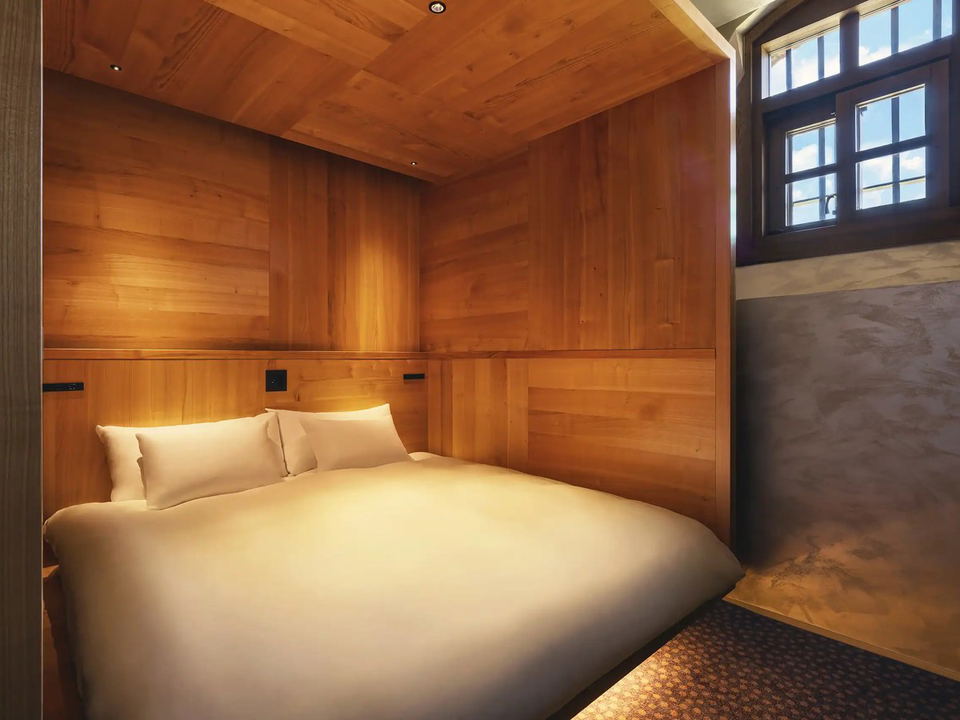
This consolidation approach preserves the building's external appearance and structural grid while allowing interior flexibility. From the courtyard or exterior perimeter, the red-brick facade and window rhythm remain unchanged, the building reads as a Meiji-era prison. Inside, the former cells now function as sleeping quarters, sitting areas, and bathrooms within each suite, with original architectural details like cell door frames and barred windows retained where structurally feasible.
The design challenge in prison-to-hotel conversions is managing the tension between historical authenticity and guest comfort. Retain too much of the original cell aesthetic and the space feels oppressive; strip away too much and the project loses its narrative anchor. HOSHINOYA Nara Prison preserves the spatial proportions and key architectural elements, the high ceilings, the narrow windows, the thick masonry walls, while introducing contemporary finishes and furnishings that soften the institutional severity.
The 48-room inventory is small by luxury hotel standards, which limits availability but also ensures the property operates at a scale appropriate to the building's heritage constraints. Larger room counts would require more aggressive structural interventions, potentially compromising the preservation mandate. By capping capacity at 48, Hoshino Resorts maintains a guest-to-space ratio that allows the architecture to remain the protagonist rather than the hospitality programming.
Guest access to the Nara Prison Museum adds depth to the stay. The exclusive early-morning (6:00-8:30) and late-evening (18:00-23:00) access windows let hotel guests explore the museum outside public hours, creating a private interpretive experience that contextualises the building's history before or after the daytime crowds arrive. This layered access model, public museum by day, private exploration by night, gives hotel guests a more intimate relationship with the site's narrative than day-visitors receive.
Booking Strategy and Practical Details
HOSHINOYA Nara Prison opened on 25 June 2026, with initial inventory released through Hoshino Resorts' direct booking channels. The 48-room capacity means availability will be limited, particularly during peak travel seasons when Kansai tourism surges. Nara's position between Kyoto and Osaka makes it accessible by train, under one hour from either city, which expands the potential guest base to anyone touring the Kansai region rather than only travelers committed to multi-night Nara stays.
The hotel's value proposition depends on what you prioritise. If architectural preservation and adaptive reuse matter more than conventional luxury amenities, HOSHINOYA Nara Prison delivers a stay you cannot replicate elsewhere in Japan. If you want a spa, a rooftop bar, or a Michelin-starred restaurant on-site, this is not the property. The hotel's appeal is the building itself, the chance to sleep inside a National Important Cultural Property that would otherwise remain closed to overnight visitors.
For travelers planning Kansai itineraries, HOSHINOYA Nara Prison functions as an anchor that justifies spending two or three nights in Nara rather than day-tripping from Kyoto. Pair the hotel stay with visits to Todai-ji Temple, Kasuga-taisha Shrine, and Nara Park, then use the early-morning and late-evening museum access to explore the prison's history when the site is quiet. The museum programming adds interpretive depth that elevates the stay beyond novelty, you are sleeping in a former prison and you are engaging with a century of Japanese judicial and architectural history.
The project's success will influence whether other Japanese municipalities pursue similar adaptive reuse strategies for heritage buildings. If HOSHINOYA Nara Prison proves financially sustainable, expect more prison-to-hotel, school-to-hotel, and factory-to-hotel conversions across Japan's aging infrastructure stock. If the model fails, heritage preservation will revert to grant-dependent funding and many at-risk structures will face demolition. For readers who care about architecture and cultural preservation, this is the pilot project to watch.
Hoshino Resorts operates multiple HOSHINOYA properties across Japan, each positioned as a luxury ryokan or boutique hotel with a distinct regional identity. HOSHINOYA Nara Prison extends that portfolio into adaptive reuse territory, testing whether the brand's hospitality model can succeed in a heritage context rather than a purpose-built structure. The seven-year restoration timeline and National Important Cultural Property constraints make this a higher-risk, higher-complexity project than a ground-up hotel build, which is precisely why the outcome matters for Japan's broader heritage preservation strategy.
Book HOSHINOYA Nara Prison if you want to support a preservation model that funds heritage conservation through tourism revenue, if you care about Meiji-era architecture, or if you are building a Kansai itinerary that needs a Nara anchor. Skip it if you prioritise conventional luxury amenities over architectural narrative, or if you prefer hotels where the building serves the guest experience rather than the guest experience serving the building's preservation. The property opens a new chapter for adaptive reuse in Japan, whether that chapter becomes a template or an outlier depends on how the next 24 months unfold.