
Bar in Zurich, Switzerland
Markthalle
100ptsSelf-Directed Market Format
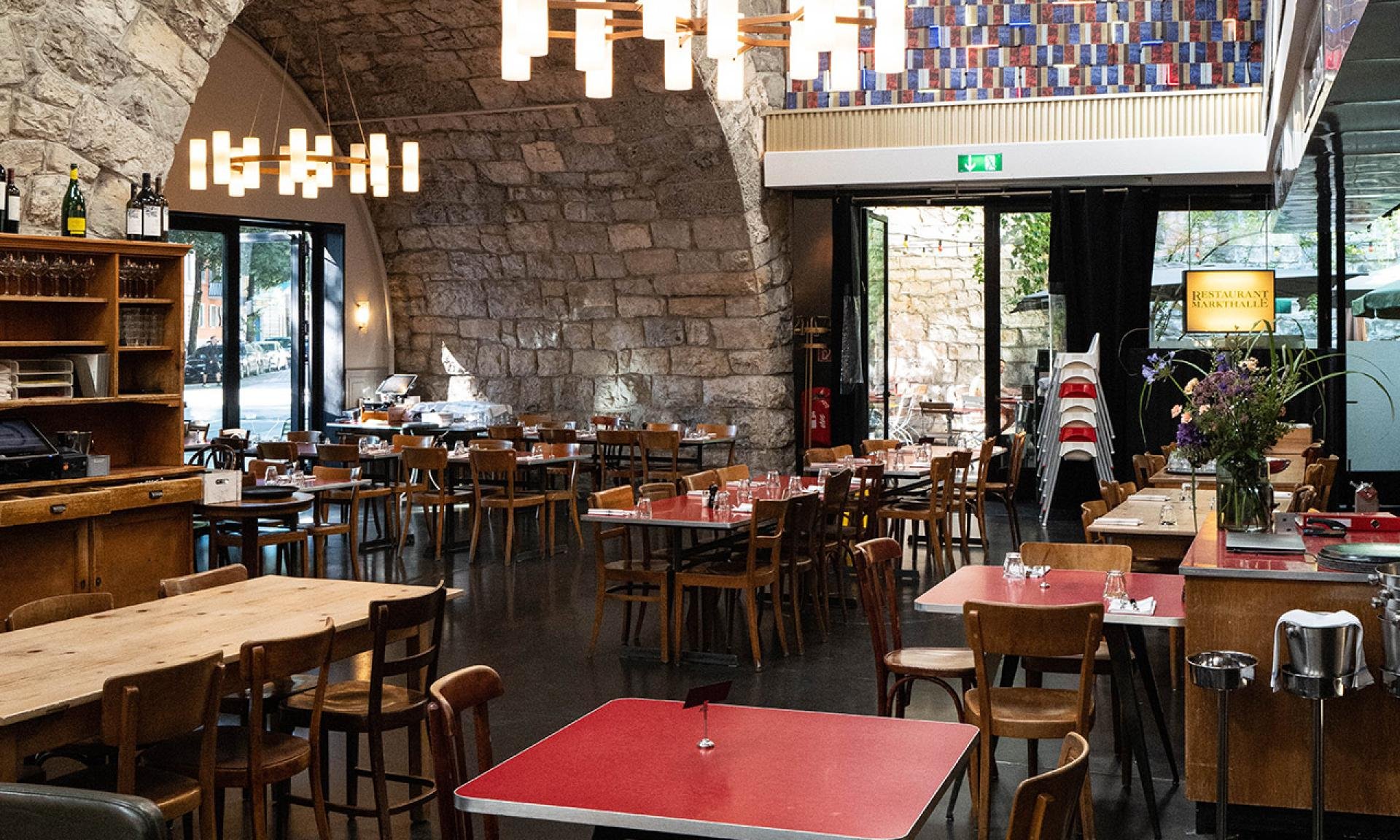
About Markthalle
Markthalle occupies a converted market hall on Limmatstrasse 231 in Zurich's District 5, the city's most restless neighbourhood for eating and drinking. The format follows the European market-hall tradition: multiple food and drink operators sharing a single roof, with the ritual of choosing, circulating, and returning setting the pace of the meal. It sits comfortably in the casual end of District 5's food scene, where informality is a feature rather than a compromise.
A Market Hall on Limmatstrasse
District 5 has spent the better part of two decades absorbing the energy that spills westward from Zurich's centre. The stretch of Limmatstrasse that runs through Zürich West and into the Gewerbeschule quarter hosts the kind of mixed-use food culture that many European cities talk about but fewer actually sustain: galleries beside repair shops, coffee roasters beside furniture studios, and market-format eating alongside neighbourhood bars. Markthalle, at Limmatstrasse 231, is a direct product of that environment. The building announces itself as a former market hall before you step inside, which is exactly what it should do. The architectural bones of post-industrial Zurich, high ceilings, wide floor plates, preserved structural detail, suit the market-hall format better than purpose-built restaurant spaces, and District 5 has more of those bones than any other part of the city.
The Ritual of the Market Meal
The defining feature of market-hall dining is that the meal has no fixed script. In a conventional restaurant, the ritual is inherited: you are seated, a menu arrives, courses follow in sequence, and the kitchen controls the pacing. In a market hall, the diner assumes more of that responsibility. You read the stalls before you commit. You decide whether to eat in sequence or to graze across several operators in a single visit. You may return twice to the same counter or cross the floor to compare options before ordering. This is not the absence of ritual; it is a different ritual, one that rewards attentiveness and penalises passivity.
That distinction matters in Zurich because the city's dominant dining culture has traditionally been formal and high-commitment: long tasting menus, structured service, meals that run to three hours by design. District 5 has been the primary site where an alternative has taken hold, and market halls like Markthalle represent the clearest expression of that alternative. The format is native to cities that have a strong tradition of public food markets, from Barcelona's Boqueria to Copenhagen's Torvehallerne, and what those formats share is an expectation that the meal is partly a social and spatial event, not only a culinary one.
District 5 and Its Peer Set
To place Markthalle correctly in Zurich's eating scene, it helps to understand what District 5 is and what it is not. It is not the fine-dining district; that sits closer to the lake and the Bahnhofstrasse corridor. It is not a tourist-facing restaurant row. District 5 operates as Zurich's most reliable address for the kind of eating that locals return to weekly rather than reserve months in advance. The neighbourhood's bars and restaurants, including 25hours Hotel Zürich Langstrasse and 25hours Hotel Zürich West, operate in that same register: designed for repeat use, comfortable with informality, and priced to sustain a regular rather than an occasional visitor.
Markthalle's peer set within District 5 includes the neighbourhood's independent bar culture, represented by venues like Bar 3000 and Bar am Wasser, as well as the mixed-format drinking and eating spots along Langstrasse and the western reaches of Limmatstrasse. Visitors who have spent time at 169 West will recognise the same District 5 logic: spaces built for staying rather than passing through, where the format supports extended visits and the social dimension of the space is as deliberate as the food offer.
Zurich's broader hospitality context is worth noting for readers arriving from other Swiss cities. The market-hall format is less common here than in Basel or Lausanne, where covered market spaces have longer institutional histories. Grand Hotel Les Trois Rois in Basel and Vieil Ouchy in Lausanne each anchor food and drink cultures that evolved differently from Zurich's, and the contrast is instructive: Markthalle is less a Swiss institution than a specifically Zurich District 5 one, born from the neighbourhood's particular trajectory rather than any national tradition.
How to Approach the Visit
Market halls function leading when the visitor understands their pace. Arriving at peak times on weekday evenings or weekend afternoons means more operators are active but also more competition for seating and counter space. The practical intelligence for Markthalle, as with market halls generally, is to arrive with time to walk the full space before ordering, to identify which operators have the shortest queue relative to the length of their offer, and to treat the first pass as reconnaissance rather than commitment. This is not a venue where arriving hungry and distracted serves you well.
For those making a wider evening of District 5, Markthalle fits logically into a sequence that begins with food at the market hall and continues into the neighbourhood's bar scene. The walk along Limmatstrasse connects easily to the drinking culture at Bar 3000 and the lakeside alternative at Bar am Wasser. Visitors arriving from further afield in Switzerland, from mountain resort contexts like Champagner Bar in Saas Fee or Jamming Corner in Unterseen, or from international destinations like Bar Leather Apron in Honolulu, will find District 5 a useful orientation point for understanding how Zurich eats when it is not performing for an audience.
For a fuller picture of where Markthalle sits relative to the rest of the city's food and drink, the EP Club Zurich restaurants guide maps the scene across neighbourhoods and formats. The Puregold Bar and Lounge in Glattpark represents the newer suburban hospitality development north of the city centre, a useful counterpoint to the established District 5 character that Markthalle represents.
Planning Your Visit
Markthalle is located at Limmatstrasse 231, 8005 Zürich, in the heart of District 5. Tram access from Zurich's main station is direct, with the Limmatplatz stop serving as the practical entry point for the neighbourhood. For specific hours, current operators, and any booking requirements for private or group visits, checking the venue directly is advisable, as market halls of this format typically update their programming seasonally. No dress code governs the space; District 5 sets its own register in that respect.
Frequently Asked Questions
What do regulars order at Markthalle?
Market halls by format encourage regulars to develop preferences across the operator mix rather than loyalty to a single dish. At venues in this format across Europe, the habit is to rotate between stalls, favouring the counter with the shortest queue on a given visit and treating the seasonal rotation of operators as a reason to return. Without confirmed dish-level data for Markthalle specifically, the most reliable guidance is to arrive without a fixed order in mind and let the current stall lineup direct the decision.
What is the standout thing about Markthalle?
In a Zurich dining scene that defaults toward structured, higher-commitment formats, the market hall's self-directed pacing is genuinely distinctive. District 5 has the densest concentration of casual-format venues in the city, and Markthalle's address on Limmatstrasse places it at the centre of that concentration. The combination of flexible entry, no mandatory booking, and a multi-operator format gives it a functional role in the neighbourhood that a single-kitchen restaurant cannot replicate.
Is Markthalle reservation-only?
Market halls in this format typically operate on a walk-in basis for individual visitors, with the open-floor seating model meaning that reservations are not the standard entry point. If the venue accommodates private group bookings, that would normally require direct contact with management. With no phone number or website confirmed in the current data, the practical recommendation is to visit in person during off-peak hours for the most direct information, or to check current listings via Zurich city guides before planning a large-group visit.
How does Markthalle fit into the broader District 5 food culture?
District 5 has developed as Zurich's primary address for informal, operator-diverse eating over the past two decades, and Markthalle represents the market-hall strand of that development. Unlike the neighbourhood's standalone restaurants and bars, which operate with fixed menus and defined service formats, a market hall aggregates multiple independent food operators under one roof, giving the neighbourhood a format it would otherwise lack. This makes it a structural complement to venues like Bar 3000 and 25hours Hotel Zürich West rather than a direct competitor to them.
Related editorial
- Best Fine Dining Restaurants in ParisFrom three-Michelin-star icons to the next generation of Parisian chefs pushing boundaries, these are the restaurants that define fine dining in the world's culinary capital.
- Best Luxury Hotels in RomeFrom rooftop terraces overlooking ancient ruins to Michelin-starred hotel dining, these are the luxury hotels that make Rome unforgettable.
- Best Cocktail Bars in KyotoFrom sleek lounges to hidden speakeasies, Kyoto's cocktail scene blends Japanese precision with global influence in ways you won't find anywhere else.
Save or rate Markthalle on Pearl
Keep this venue in your Pearl passport, rate it after you visit, and track it alongside every other place you collect.