
Bar in Whatcote, United Kingdom
The Royal Oak
125Pearl PointsFood-First Pub

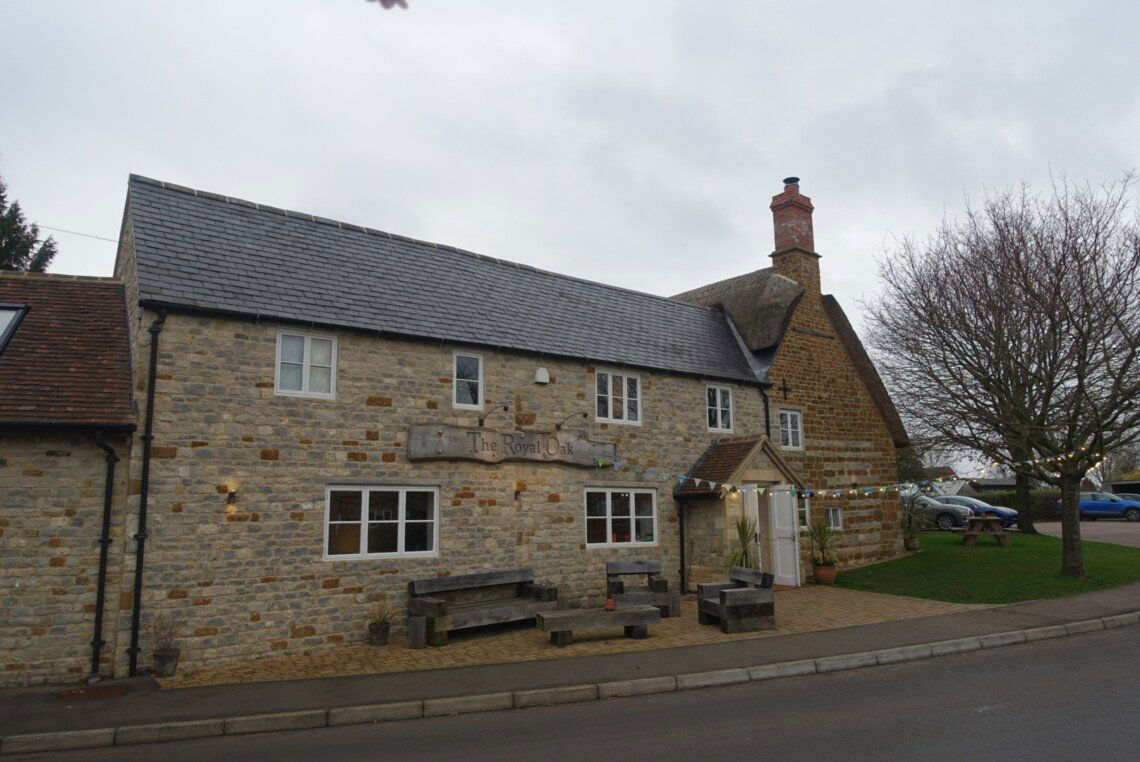
About The Royal Oak
Book The Royal Oak if you want a quieter Whatcote pub meal with Good Food Guide 2025 recognition behind it. It is a stronger fit for couples or small groups than for a wine-bar crawl; choose it for food-led country dining, not for a published deep by-the-glass program.
The clearest verified signal for The Royal Oak in Whatcote is its Good Food Guide 2025 recognition: The Good Food Guide lists The Royal Oak with a GFG Good entry. Treat it as a planned Whatcote booking rather than a venue to assume is open every day, because the verified opening hours are limited: closed Monday, Tuesday, and Sunday; open Wednesday 6–11 PM; and open Thursday to Saturday 12–3 PM and 6–11 PM.
Keep the decision practical. The verified details do not establish a named chef, cuisine, tasting-menu format, price point, seat count, drinks programme, take-out service, delivery service, or allergy policy. What is verified is simpler: The Royal Oak is in Whatcote, has smart-casual dress guidance, and carries Good Food Guide 2025 recognition. If those are the details that matter for your plans, it is a reasonable venue to shortlist; if you need a highly specific format or service detail, confirm directly before committing.
A Whatcote choice for planned meals
The Royal Oak is best assessed from the facts available rather than from assumptions about format or style. Its Good Food Guide 2025 listing gives diners a useful external reference point, while the opening pattern makes it a venue to plan around. Midweek availability is limited to Wednesday evening, and Thursday to Saturday include both lunch and dinner windows.
For a planned meal, the case depends on whether the verified profile fits the occasion: Whatcote location, smart-casual dress, limited weekly hours, and Good Food Guide recognition. For group bookings or special arrangements, the public facts here are not enough to guarantee the room setup, menu format, or service style, so those details should be checked with the venue before arrival.
How to decide before you commit
Use The Royal Oak as a Whatcote dining option with a confirmed Good Food Guide 2025 listing and a narrow weekly schedule. It belongs in broader planning from our full Whatcote restaurants guide. If you are comparing nearby or regional options, keep the comparison factual: The Bull Charlbury, The Duck on the Pond, The Halfway at Kineton, The Howard Arms, and The Shed are separate venues to weigh against The Royal Oak depending on your route, timing, and booking needs.
Frequently Asked Questions
What's the crowd like at The Royal Oak?
The verified information does not specify the crowd. What is confirmed is that The Royal Oak is in Whatcote, has Good Food Guide 2025 recognition, follows a smart-casual dress code, and opens on Wednesday evening plus Thursday to Saturday lunch and dinner.
Do I need a reservation at The Royal Oak?
The verified details do not state a reservation policy. Because the opening window is limited, Wed 6–11 PM; Thu 12–3 PM and 6–11 PM; Fri 12–3 PM and 6–11 PM; Sat 12–3 PM and 6–11 PM; closed Mon, Tue, and Sun, it is sensible to check availability before you go.
Is The Royal Oak good for a date?
It could suit a planned meal in Whatcote if the confirmed details match what you want: smart-casual dress, Good Food Guide 2025 recognition, and service on Wednesday evening plus Thursday to Saturday lunch and dinner. The available facts do not confirm the room style or atmosphere.
Does The Royal Oak have happy hour deals?
There is no verified information here about happy hour deals or drink promotions. The confirmed details cover location, dress code, Good Food Guide 2025 recognition, and opening hours.
Is the food good at The Royal Oak?
The strongest verified indication is its Good Food Guide 2025 listing, where The Royal Oak is recognised with a GFG Good entry. Specific dishes, cuisine, prices, and menu format are not verified here.
Location
The Royal Oak, Whatcote, Shipston-on-Stour CV36 5EF, United Kingdom
Whatcote, United Kingdom
Compare The Royal Oak
| Venue | Booking Difficulty |
|---|---|
| The Royal Oak | Easy |
| The Howard Arms | Unknown |
| The Duck on the Pond | Unknown |
| The Shed | Unknown |
| The Bull Charlbury | Unknown |
| The Halfway at Kineton | Unknown |
What to weigh when choosing between The Royal Oak and comparable nearby venues.
Also Consider
- The Howard Arms, Notable alternative
- The Duck on the Pond, Notable alternative
- The Shed, Notable alternative
- The Bull Charlbury, Notable alternative
- The Halfway at Kineton, Notable alternative
How it compares with nearby pub choices
The Howard Arms and The Duck on the Pond are the natural cross-shops if the priority is a classic country-pub feel with an easier fallback plan. The Royal Oak is the pick when external food recognition matters more than browsing a broader pub set; choose the others when location, availability, or a more casual stop is the deciding factor.
The Shed reads as the better alternative for a looser, less traditional outing, while The Bull Charlbury is the stronger cross-shop if the group wants a more design-conscious pub stay-and-eat feel. The Royal Oak is better framed as a quieter meal booking than an all-evening social hub.
The Halfway at Kineton is the practical backup when ease and flexibility matter. For value, the safest move is to compare menus and availability before committing: The Royal Oak has the stronger recognition signal, but the better choice for a given night may be whichever can offer the right table size at the right time.
Recognized By

Explore Whatcote
Save or rate The Royal Oak on Pearl
Keep this venue in your Pearl passport, rate it after you visit, and track it alongside every other place you collect.