
Bar in Washington DC, United States
Supra
100ptsQvevri-Anchored Georgian Table
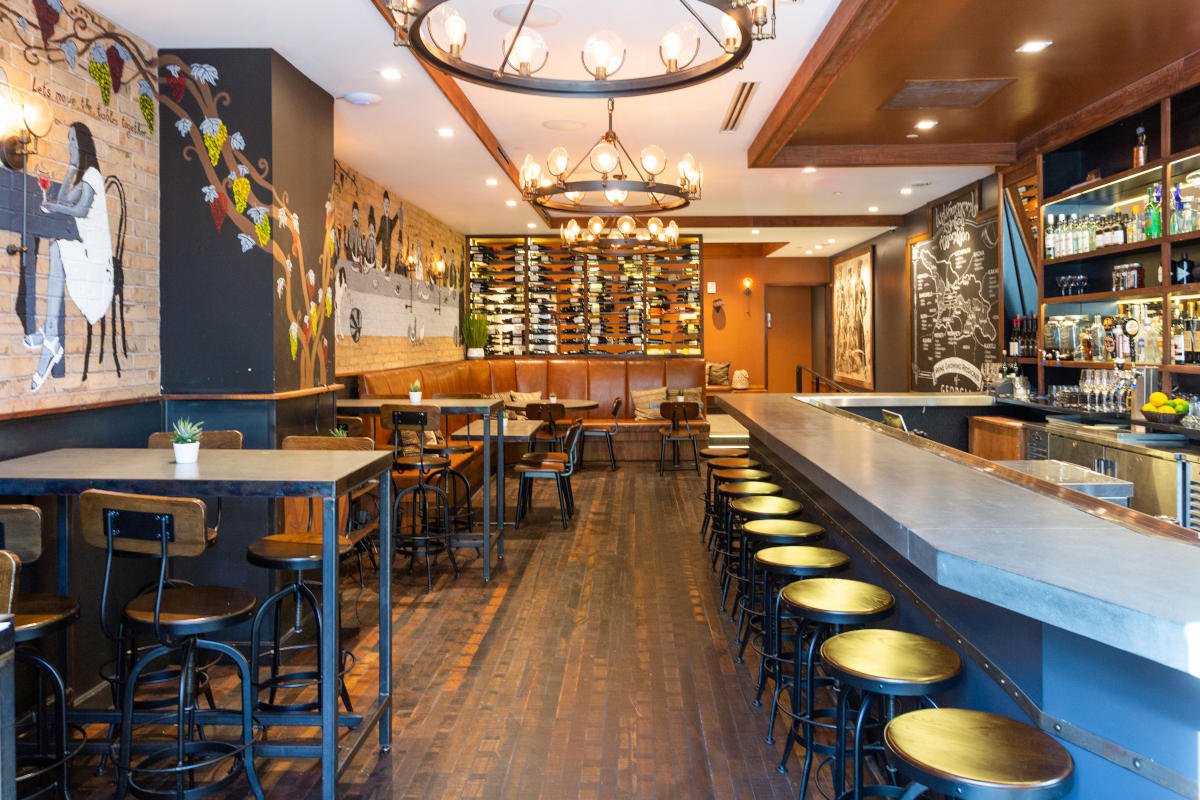
About Supra
Georgian cuisine occupies a small but serious niche in Washington, D.C., and Supra at 1205 11th St NW is the city's clearest expression of it. The restaurant brings the food traditions of the South Caucasus to a dining room that rewards curiosity about where ingredients originate and why geography shapes a plate. For a city that runs on international reference points, Supra is a useful calibration.
The South Caucasus at the Table
There is a particular kind of restaurant that functions less as a dining room and more as an argument about a cuisine that the city has underestimated. In Washington, D.C., Georgian food occupies exactly that position. The country sits at a crossroads of Persian, Ottoman, and Russian culinary traditions, producing a food culture that is neither fusion nor compromise but something that developed independently over centuries. At 1205 11th St NW, Supra makes that case in the Shaw neighbourhood, one of D.C.'s more food-serious corridors.
Shaw has shifted considerably over the past decade. The stretch of 11th Street now carries the density of a neighbourhood that takes dining seriously without the self-consciousness of Penn Quarter or the tourist traffic of Georgetown. For a restaurant committed to Georgian cuisine, the location places it among neighbours who are likely to seek it out rather than stumble upon it, which shapes the crowd and, in turn, the atmosphere.
What Georgian Sourcing Actually Means
The ingredient framework of Georgian cooking is one of the more distinctive in the broader European and West Asian tradition. Walnuts appear not as garnish but as structural elements in sauces and fillings. Fenugreek, marigold petals, and blue fenugreek (utskho suneli) give spice blends a profile that reads as unfamiliar to most American palates without being confrontational. Pomegranate and tamarind provide the acidity that other European traditions achieve through wine reductions or citrus. These are not interchangeable ingredients. The sourcing and preparation of each has specific regional logic tied to the agricultural zones of the Caucasus, from the Black Sea lowlands to the Kartli plateau.
When a restaurant commits to this cuisine in the United States, the sourcing question becomes consequential. Some ingredients can be grown domestically or sourced through specialty distributors; others require import. The gap between an approximated version of Georgian cooking and an accurate one often comes down to how seriously that sourcing question is handled. D.C.'s dining scene has, in recent years, developed a wider network of specialty importers serving the city's diplomatic and international resident communities, which creates infrastructure that restaurants like Supra can draw on.
The Room and the Experience
Georgian hospitality, known as tamada culture, organises social eating around the table in ways that differ from Western restaurant convention. The role of the toastmaster, the sequence of shared dishes, and the expectation that eating extends over time are all part of a tradition that places pressure on any restaurant attempting to translate it. A dining room designed for quick turns would contradict the premise. The physical environment at Supra, with its attention to communal formats, signals an understanding of that tension.
The wine dimension adds another layer. Georgia is broadly credited by ampelographers as one of the oldest wine cultures on record, with amber wines fermented in clay qvevri vessels constituting a practice that predates most European winemaking traditions by millennia. D.C.'s bar and wine scene has become increasingly receptive to natural and amber wines, which gives Supra a more receptive audience than it might have found a decade ago. Bars like Allegory and Silver Lyan have helped shift local palates toward less conventional fermentation profiles, and that shift benefits a restaurant whose wine list leans Georgian.
How Supra Fits the D.C. Restaurant Map
Washington's restaurant scene has historically been critiqued for skewing toward safe international reference points: French bistros, Japanese omakase, upscale American. That critique has softened as a more adventurous generation of restaurants has opened, but Georgian cuisine remains genuinely underrepresented across American cities. The handful of Georgian restaurants operating in New York, Chicago, and D.C. constitute a niche so narrow that cross-city comparison is more useful than local peer comparison.
Within D.C. specifically, Supra operates in a tier of restaurants that take a single culinary tradition seriously rather than blending influences for accessibility. This places it alongside specialist restaurants that require some degree of familiarity from the guest, or at least willingness to follow the kitchen's logic rather than impose their own. The cocktail culture surrounding the restaurant provides context: spots like Service Bar and 12 Stories have demonstrated that D.C. drinkers and diners are willing to engage with programmes that require a little more navigation.
Across other American cities, the bar and restaurant pairing that rewards exploratory guests has become a recurring model. Kumiko in Chicago, Jewel of the South in New Orleans, and Julep in Houston all run programmes where the specificity of the concept is a feature rather than a barrier. Supra reads similarly: the specificity of Georgian cuisine is exactly the point, not an obstacle to broader appeal. That model is also visible in cities like San Francisco, where ABV has built credibility through programme depth, and in New York, where Superbueno anchors a distinct culinary identity. Even internationally, venues like The Parlour in Frankfurt and Bar Leather Apron in Honolulu confirm that the specialist-format approach travels across geographies.
Know Before You Go
| Address | 1205 11th St NW, Washington, DC 20001 |
|---|---|
| Neighbourhood | Shaw |
| Cuisine | Georgian (South Caucasus) |
| Booking | Reservations recommended; contact venue directly |
| Further Reading | See our full Washington, D.C. restaurants guide for neighbourhood context and peer venues |
Frequently Asked Questions
What is the atmosphere like at Supra?
Shaw's dining corridor sets an expectation of intentional, neighbourhood-scale hospitality rather than destination spectacle. Supra's Georgian format aligns with that register: the room is built around a tradition of extended, shared-table eating rather than quick service. Without confirmed seating capacity or hours in our data, the practical specifics are leading confirmed directly with the venue before booking.
What is the must-try cocktail at Supra?
Georgian wine, particularly amber wine made in qvevri clay vessels, is the more argued choice than cocktails at a restaurant of this format. Georgia's wine tradition runs several thousand years deeper than most European wine regions, and a restaurant committed to that cuisine would typically maintain a list that reflects it. For a cocktail-specific programme in D.C., Allegory and Service Bar each run technically serious programmes worth visiting in the same evening.
What is the standout thing about Supra?
Georgian cuisine remains one of the least-represented culinary traditions in American cities given its depth and distinctiveness. In a D.C. restaurant market that has become more adventurous but still tilts toward familiar international formats, a kitchen that commits fully to South Caucasian ingredients and preparation methods occupies a position with few direct competitors. That specificity, rather than any single dish or award, is the clearest answer to the question.
Is Supra a good option for guests who want to understand Georgian wine alongside the food?
Georgian cuisine and Georgian wine are inseparable traditions, and a restaurant operating at Supra's level of culinary commitment would logically carry a wine list that reflects that pairing logic. Amber and skin-contact wines from Kakheti and Kartli are the natural counterpart to walnut-heavy sauces and spiced meat dishes. For guests approaching the cuisine for the first time, pairing wine by regional origin rather than varietal convention is the more useful framework. Confirm the current list directly with the restaurant before visiting.
More bars in Washington DC
- 12 Stories12 Stories sits on the 12th floor of 75 District Square SW in Washington, D.C.'s Southwest Waterfront, making it a strong pick for atmosphere and city views. Book it for dates or casual group outings where setting drives the decision. Wine and cocktail enthusiasts after program depth should pair it with a stop at Press Club or Service Bar.
- 301 Water St SE301 Water St SE earns its place on the Anacostia Waterfront as an easy-to-book, setting-driven bar in D.C.'s Navy Yard corridor. The waterfront position makes it a solid date-night or group drinks stop, especially at dusk on weekends. If a serious cocktail program is your priority, look elsewhere — but for atmosphere without the planning overhead, it delivers.
- 9:30 Club9:30 Club is Washington D.C.'s most reliable live music room, where a $25–$45 ticket plus a few drinks makes for a complete night out. Tickets sell fast on popular shows, so move quickly when a booking drops. If you've been once and liked it, the format holds: get there early, pick your spot, and let the room do the rest.
Related editorial
- Best Fine Dining Restaurants in ParisFrom three-Michelin-star icons to the next generation of Parisian chefs pushing boundaries, these are the restaurants that define fine dining in the world's culinary capital.
- Best Luxury Hotels in RomeFrom rooftop terraces overlooking ancient ruins to Michelin-starred hotel dining, these are the luxury hotels that make Rome unforgettable.
- Best Cocktail Bars in KyotoFrom sleek lounges to hidden speakeasies, Kyoto's cocktail scene blends Japanese precision with global influence in ways you won't find anywhere else.
Save or rate Supra on Pearl
Keep this venue in your Pearl passport, rate it after you visit, and track it alongside every other place you collect.