
Bar in Washington DC, United States
Rosewood Washington, D.C.
100ptsGeorgetown Occasion Stays
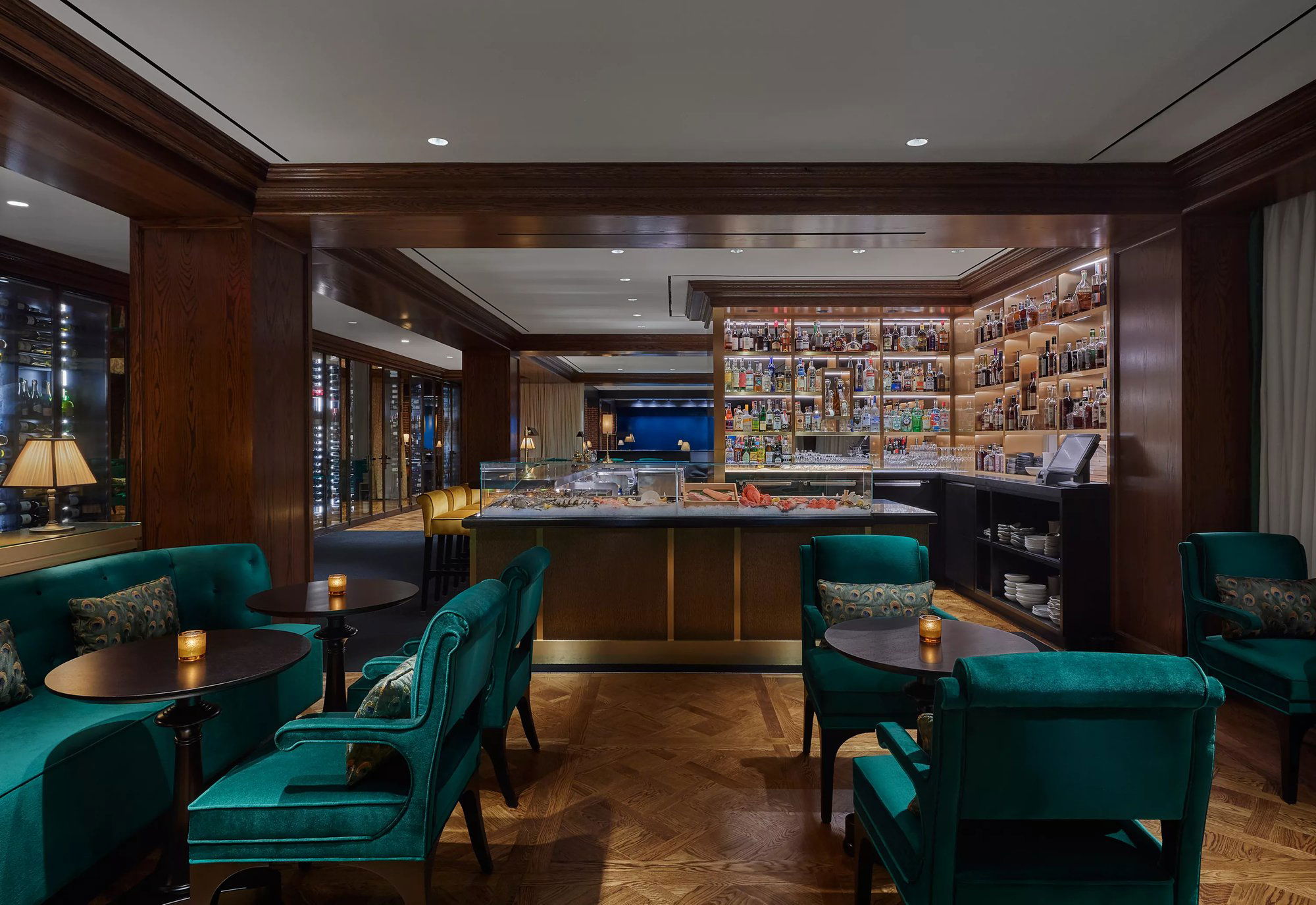
About Rosewood Washington, D.C.
Rosewood Washington, D.C. occupies Georgetown's most sought-after address on 31st Street NW, placing it inside the capital's small tier of design-led luxury hotels where scale is deliberately limited and neighbourhood character informs the guest experience. For milestone occasions in a city not short of grand gestures, it offers something rarer: residential calm within walking distance of both the waterfront and the capital's political core.
Georgetown as a Setting for Occasion Stays
Washington, D.C. splits its luxury hotel market along a familiar axis: large full-service properties clustered around Pennsylvania Avenue and K Street, built for the conference circuit and political adjacency, versus a smaller cohort of design-led hotels that prioritise neighbourhood immersion over lobby spectacle. Rosewood Washington, D.C., at 1050 31st Street NW in Georgetown, belongs firmly to the second category. The address matters. Georgetown is the city's oldest neighbourhood, a pre-planned grid of Federal-style townhouses and cobbled side streets that predates the capital's formal layout, and 31st Street sits close to the C&O Canal, where the transition from commercial waterfront to residential calm happens within a single block. For travellers arriving to mark a significant occasion — an anniversary, a milestone birthday, a post-achievement trip — the neighbourhood itself does a portion of the atmospheric work before the hotel's front door comes into view.
The Rosewood brand occupies a specific position in the international luxury tier: independently operated properties at low key counts, designed to read more like private residences than branded towers. That format, now found in cities from Hong Kong to São Paulo, was built in part around the premise that the hotel should feel site-specific rather than transferable. In Georgetown, where the dominant architectural language is brick, restraint, and historical proportion, that positioning has a clear local anchor.
The Occasion Economy in D.C. Dining and Hospitality
Washington has developed a more sophisticated occasion-dining culture over the past decade than its political-city reputation might suggest. The emergence of serious independent restaurants across Shaw, Navy Yard, and 14th Street, alongside the capital's consistently underrated cocktail scene, means that a special-occasion stay now has genuine programming options across multiple nights. The cocktail tier alone warrants attention: Allegory operates a narrative-driven format inside the Eaton Hotel, while Silver Lyan at the Riggs brings a European technical precision to the Penn Quarter. For drinks that lean into the city's neighbourhoods rather than its hotels, Service Bar on 14th Street has built a following around an approachable, high-quality well-cocktail program, and 12 Stories adds a rooftop dimension to the city's evening options. The point is that a Georgetown base does not confine guests to a single zip code , the Metro and rideshare infrastructure makes the broader dining and bar circuit genuinely accessible across a weekend.
For travellers benchmarking D.C.'s cocktail culture against peer cities, the reference points are useful. The technical ambition at Silver Lyan sits in the same register as Kumiko in Chicago or Bar Leather Apron in Honolulu , programs where the drink is the primary object of study. The neighbourhood-bar tradition that Service Bar represents has direct analogues in ABV in San Francisco and Jewel of the South in New Orleans. D.C.'s position in the national bar conversation has shifted from afterthought to active participant, and the city's better hotel programs now reflect that shift in how they curate guest recommendations. Guests who follow spirits-focused programs further afield might also look at Julep in Houston, Superbueno in New York City, or The Parlour in Frankfurt for international comparison.
What Georgetown Delivers That Downtown Cannot
The case for Georgetown as an occasion-stay base rests on texture rather than convenience. The neighbourhood's commercial strip on M Street and Wisconsin Avenue is busy by day, but 31st Street, a block west and running parallel to the canal, operates at a different register entirely. Morning walks along the towpath, dinner reservations at the handful of serious independent restaurants within a ten-minute radius, and the ability to return to a hotel that does not feel like a conference venue: these are the arguments for the address over a larger property near the Convention Center or the Mall. For occasions that benefit from a sense of removal from the city's more transactional spaces, the Georgetown location is the relevant differentiator.
D.C.'s luxury hotel market has expanded significantly since 2015, with new entrants across the premium tier. What distinguishes the Rosewood model within that competitive set is the emphasis on limited inventory and service depth over amenity breadth. Larger full-service properties in the capital compete on ballroom capacity, loyalty program integration, and proximity to federal institutions. The Rosewood's competitive logic runs in the opposite direction: fewer rooms, neighbourhood identity, and a guest profile that skews toward leisure and occasion rather than corporate travel. That positioning is more defensible than it sounds in a city where the political calendar drives significant mid-week corporate demand, leaving the weekend occasion market as a distinct and underserved tier.
Planning an Occasion Stay: Practical Notes
Georgetown sits in Washington's second quadrant northwest, accessible from Reagan National Airport via the George Washington Parkway in under 20 minutes under normal traffic conditions , a more direct approach than many central D.C. hotels, which face the complications of Mall-adjacent road closures during high-profile events. Dulles International connects to the neighbourhood via toll road in approximately 45 minutes. For guests arriving by train, Union Station sits across the city from Georgetown, and rideshare remains the most practical connection given the absence of direct Metro access to the neighbourhood itself , Georgetown is the only major D.C. neighbourhood without a Metro station, a historical planning decision that has, counterintuitively, preserved much of its residential character.
For full context on where Rosewood Washington, D.C. sits within the capital's broader hospitality and dining options, see our full Washington, D.C. restaurants guide.
Frequently Asked Questions
- What should I drink at Rosewood Washington, D.C.?
- The hotel's Georgetown address puts it within reach of several of the city's more considered drinking options. Silver Lyan at the Riggs Hotel carries the most technically rigorous program in the capital, operating in a similar register to the award-recognised bar programs of peer cities. Allegory at the Eaton Hotel offers a more theatrically framed experience, while Service Bar on 14th Street delivers high-quality drinks at a more accessible price point. Any of the three makes a credible pairing with a Georgetown-based occasion stay.
- What's the defining thing about Rosewood Washington, D.C.?
- The address is the primary differentiator. Georgetown is the only central D.C. neighbourhood with genuine pre-capital historical depth, and the 31st Street location places the hotel inside the quieter, residential eastern edge of the neighbourhood rather than on the busier commercial corridors. For occasion stays where atmosphere and neighbourhood texture matter as much as room quality, that specificity is the relevant distinction within the capital's competitive luxury hotel set.
- How hard is it to get in to Rosewood Washington, D.C.?
- Availability at low-key-count luxury properties in Washington typically tightens around Cherry Blossom season in late March and early April, congressional recess periods that drive leisure travel, and the major holiday weekends. Georgetown specifically sees high demand through the autumn months when the neighbourhood's tree canopy peaks. Booking two to three months ahead for a desired date in any of those windows is a reasonable working assumption. Direct booking via the Rosewood website generally offers the most current rate and availability visibility.
- Is Rosewood Washington, D.C. a good choice for a milestone anniversary in the capital?
- Georgetown's residential character and the Rosewood brand's deliberate emphasis on low key counts make it one of the more appropriate settings for an anniversary in a city dominated by larger, more corporate-facing hotels. The neighbourhood's walkable waterfront, concentration of serious independent restaurants within a short radius, and relative distance from the government-district energy all serve the occasion. The absence of a nearby Metro station is worth factoring into logistics planning, though rideshare access is direct from anywhere in the city.
More bars in Washington DC
- 12 Stories12 Stories sits on the 12th floor of 75 District Square SW in Washington, D.C.'s Southwest Waterfront, making it a strong pick for atmosphere and city views. Book it for dates or casual group outings where setting drives the decision. Wine and cocktail enthusiasts after program depth should pair it with a stop at Press Club or Service Bar.
- 301 Water St SE301 Water St SE earns its place on the Anacostia Waterfront as an easy-to-book, setting-driven bar in D.C.'s Navy Yard corridor. The waterfront position makes it a solid date-night or group drinks stop, especially at dusk on weekends. If a serious cocktail program is your priority, look elsewhere — but for atmosphere without the planning overhead, it delivers.
- 9:30 Club9:30 Club is Washington D.C.'s most reliable live music room, where a $25–$45 ticket plus a few drinks makes for a complete night out. Tickets sell fast on popular shows, so move quickly when a booking drops. If you've been once and liked it, the format holds: get there early, pick your spot, and let the room do the rest.
Related editorial
- Best Fine Dining Restaurants in ParisFrom three-Michelin-star icons to the next generation of Parisian chefs pushing boundaries, these are the restaurants that define fine dining in the world's culinary capital.
- Best Luxury Hotels in RomeFrom rooftop terraces overlooking ancient ruins to Michelin-starred hotel dining, these are the luxury hotels that make Rome unforgettable.
- Best Cocktail Bars in KyotoFrom sleek lounges to hidden speakeasies, Kyoto's cocktail scene blends Japanese precision with global influence in ways you won't find anywhere else.
Save or rate Rosewood Washington, D.C. on Pearl
Keep this venue in your Pearl passport, rate it after you visit, and track it alongside every other place you collect.