
Bar in Urban Honolulu, United States
The Myna Bird Tiki Bar
100ptsHard-Edge Tiki
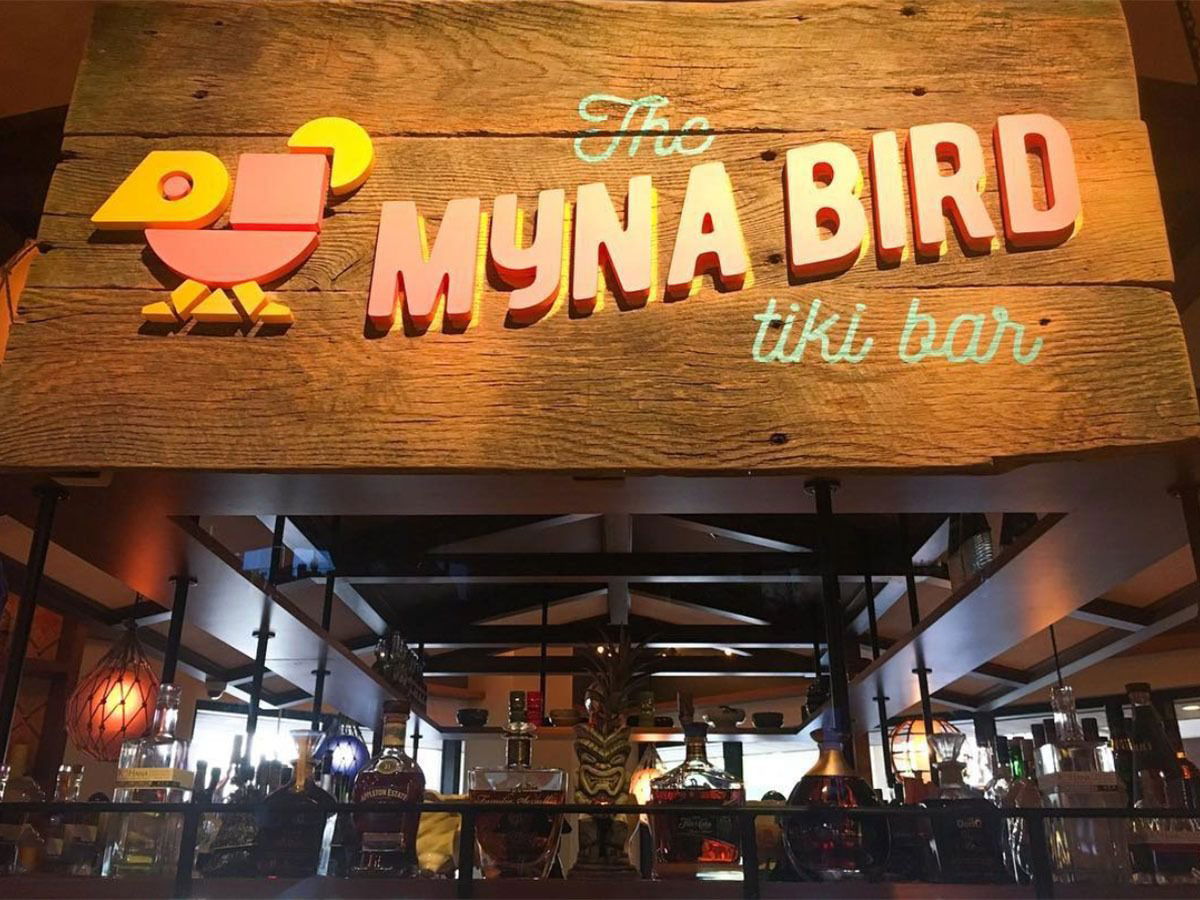
About The Myna Bird Tiki Bar
On Kalākaua Avenue in the heart of Waikiki, The Myna Bird Tiki Bar occupies a niche that Honolulu's bar scene has always needed: a tiki-format program that takes the genre seriously rather than treating it as poolside nostalgia. Positioned among the strip's more polished cocktail venues, it offers a reference point for how the tiki tradition looks when applied with discipline rather than novelty.
Where Waikiki's Tiki Tradition Gets a Harder Edge
Kalākaua Avenue moves at a particular pace after dark. The strip that runs through Waikiki carries decades of tourist infrastructure, beach-adjacent restaurants, and bars that have learned to compete on volume rather than precision. Into that environment, The Myna Bird Tiki Bar arrives at address 2330 Kalākaua Ave, third floor, as something the corridor does not produce in great numbers: a bar that uses the tiki format as a structural framework rather than a decorative shorthand. The name itself signals intent. The myna bird, a species that arrived in Hawaii from South Asia in the 1860s and became part of the island's sonic environment, is an apt emblem for a genre that was always a constructed mythology rather than an indigenous tradition.
Tiki, as a bar category, has undergone genuine critical reconsideration across the United States over the past decade. What began as Trader Vic and Donn Beach's post-Prohibition fantasy of Polynesia has split into two distinct camps: the nostalgia circuit, which leans on kitsch and frozen drinks, and a more technically serious cohort that treats rum, overproof agricole, and house-made syrups with the same rigor applied at any respected cocktail program. Bars like Bar Leather Apron in Honolulu have demonstrated that the city's drinkers will support menus built around precision and depth. The question the Myna Bird answers is whether that same appetite extends to a genre format that has historically struggled to shake its novelty image.
Menu Architecture: How the Format Reveals the Program
The most instructive thing about a tiki bar's menu is not which drinks appear on it but how it is organized. A program structured around occasion, with frozen coladas and punch bowls leading, is making one set of bets about its audience. A program structured around spirit provenance, rum categories, or progressive complexity is making a different set entirely. The menu architecture at The Myna Bird, positioned on Waikiki's most commercially dense stretch, faces the challenge of operating inside one of the world's most tourism-saturated drinking environments while maintaining a program that rewards the kind of attention that a guest at Kumiko in Chicago or Jewel of the South in New Orleans might bring to a cocktail list.
Tiki menus that function at a high level tend to use the genre's signature complexity, layers of citrus, spice, and sweetened spirit modifiers, as a vehicle for showcasing rum and its near-relations rather than as a mechanism for obscuring cheap base spirits. The leading programs sequence their lists from accessible to demanding, letting a guest move from a well-built mai tai through to something that requires explanation. That sequencing is itself an editorial act, a way of communicating what the bar values and who it is trying to serve simultaneously.
On Kalākaua, where proximity to Duke's Waikiki and Beachhouse at the Moana puts The Myna Bird in direct competition with bars that have deep local brand recognition, menu discipline becomes a differentiator. Those established venues trade on beach adjacency and social legacy. A newer, more technically oriented program has to compete on the quality and logic of what it pours.
The Tiki Bar in Its Honolulu Context
Honolulu presents a specific tension for tiki bars that mainland cities do not face. In San Francisco, a venue like ABV operates as a cocktail bar in a city with no particular mythological claim on the genre. In New York, Superbueno can treat tropical or Caribbean reference points as creative material precisely because they are imported. In Honolulu, a tiki bar sits in a city whose actual Pacific identity has been romanticized, simplified, and exported as product for over a century. That context puts pressure on the genre in ways that don't apply elsewhere. A program that reckons with that history honestly, rather than simply reproducing it, occupies a different critical position than one that does not.
The genre's founding texts, the recipes that Trader Vic codified in mid-century California, drew on rum traditions from Jamaica, Martinique, and Guyana with none of those regions' actual cultural specificity. Contemporary tiki programs that acknowledge those origins, that put single-origin agricole or Jamaican pot-still rum at the center of the list and explain why, are making an argument about the genre's future that is distinct from its past. Bars operating in Honolulu specifically have the most to gain from that argument, given the setting.
Outside Waikiki's main corridor, Honolulu's bar culture spans a wider range. 9th Ave Rock House and Andy's Sandwiches & Smoothies represent the city's more neighborhood-oriented drinking culture, the kind of places that attract regulars rather than visitors. The Myna Bird, at its Kalākaua address, occupies a different position in that ecosystem: it is squarely aimed at the visitor market while making a case for higher standards within that context. That is not an easy position to hold, and it is what gives the venue its particular interest as a subject. For further context on how these venues fit into the city's broader drinking geography, the full Urban Honolulu restaurants guide maps them in relation to neighborhoods and categories.
Planning Your Visit
The bar sits on the third floor of 2330 Kalākaua Ave, which places it above the street-level noise of Waikiki's main drag while keeping it within walking distance of the major beach hotels. That positioning matters practically: the entrance requires a short detour from the sidewalk, which tends to filter the crowd toward guests who are there by intention rather than by passing impulse. Waikiki's visitor traffic peaks in summer and around major holidays, and bars at this end of Kalākaua operate under that seasonal pressure. Visiting on a weeknight or arriving early in the evening generally produces a more workable environment than weekend prime time. Phone and website details were not available at time of publication; booking practices and current hours are leading confirmed through the venue directly or via the building's directory.
For drinkers moving between Honolulu's more technically focused cocktail programs, the Myna Bird sits in a peer set that includes venues oriented toward craft and menu depth rather than volume throughput. Programs like Julep in Houston and The Parlour in Frankfurt suggest that spirit-specific bar formats with a clear editorial point of view have found audiences in diverse markets. The tiki format, applied with equivalent seriousness in the middle of Waikiki, is testing whether that principle holds in one of the most demanding commercial bar environments in the Pacific.
Frequently Asked Questions
- What's the must-try cocktail at The Myna Bird Tiki Bar?
- Specific menu items are not confirmed in published sources available at time of writing, so naming a single drink would be speculative. What the tiki format reliably rewards, at any program operating at a high level, is ordering from the middle of the list rather than the obvious end points: the drinks that require the most explanation are usually the ones that reveal the most about the program's priorities and the quality of its base spirits.
- What's the defining thing about The Myna Bird Tiki Bar?
- Location and genre commitment together define its position in Honolulu's bar scene. Operating a tiki-format cocktail program on Kalākaua Avenue, within a commercial corridor that runs on tourist volume, while maintaining standards associated with serious cocktail culture, is a specific and demanding proposition. On a street where beach-brand legacy and social recognition drive most bar traffic, a technically oriented tiki program competes on the strength of its list rather than its history.
- How does The Myna Bird Tiki Bar differ from other tiki bars in Honolulu?
- Most tiki-branded venues in Waikiki lean on the genre's mid-century aesthetic as a primary selling point, with drinks built around familiarity and occasion rather than spirit depth. A program situated in the same geography but structured around rum provenance and cocktail architecture occupies a distinct tier within that category. For drinkers who approach tiki as a legitimate cocktail format rather than a theme, the distinction matters more than it might appear from the outside.
Related editorial
- Best Fine Dining Restaurants in ParisFrom three-Michelin-star icons to the next generation of Parisian chefs pushing boundaries, these are the restaurants that define fine dining in the world's culinary capital.
- Best Luxury Hotels in RomeFrom rooftop terraces overlooking ancient ruins to Michelin-starred hotel dining, these are the luxury hotels that make Rome unforgettable.
- Best Cocktail Bars in KyotoFrom sleek lounges to hidden speakeasies, Kyoto's cocktail scene blends Japanese precision with global influence in ways you won't find anywhere else.
Save or rate The Myna Bird Tiki Bar on Pearl
Keep this venue in your Pearl passport, rate it after you visit, and track it alongside every other place you collect.