
Bar in Urban Honolulu, United States
Sushi Izakaya Gaku
100ptsRaw Fish, Bar Programme
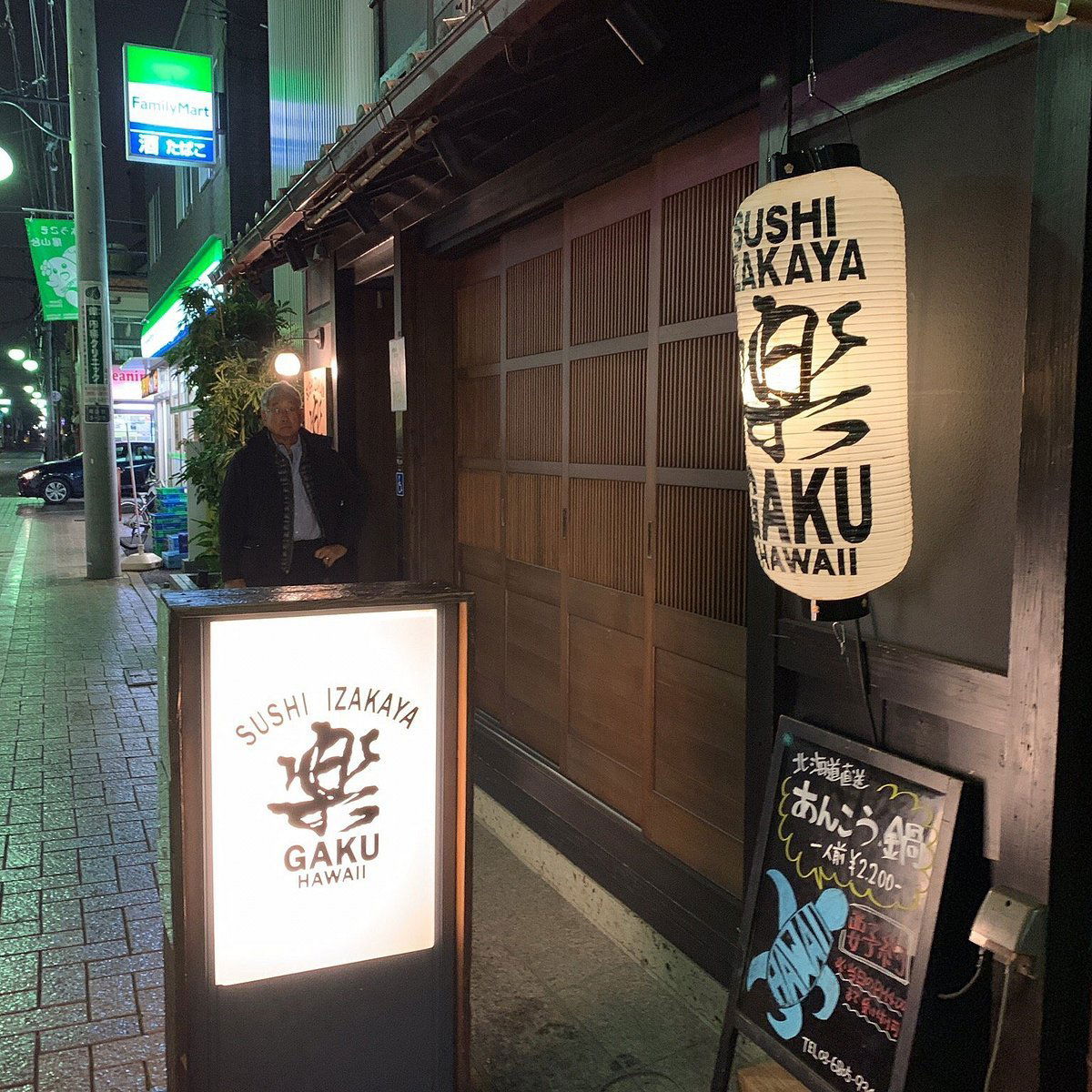
About Sushi Izakaya Gaku
On South King Street, away from Waikiki's resort corridor, Sushi Izakaya Gaku occupies the practical middle ground between a serious sushi counter and a drinking-focused izakaya. The format positions it inside Honolulu's growing neighbourhood dining scene, where the pairing of bar-driven drinks and raw fish small plates has become a distinct category of its own.
South King Street and the Izakaya Format
Honolulu's most interesting dining has been migrating away from the resort strip for years. The stretch of South King Street where Sushi Izakaya Gaku sits at 1329 S King St belongs to a neighbourhood-level eating culture that is more concerned with regulars than room rates. This is not a Waikiki proposition. It is a local one, and the distinction shapes almost every decision the kitchen and bar make.
The izakaya format, borrowed from Japan's working tradition of small plates and unhurried drinking, has taken hold across Honolulu more deliberately than in most American cities. Hawaii's large Japanese-American community has kept that tradition technically honest rather than decoratively approximate. In cities like Chicago, venues such as Kumiko have built reputations around a similar discipline of pairing precise food programmes with considered bar lists. In Honolulu, the local version tends to be less minimalist and more direct, grounded in the same supply chains that feed the city's serious sushi counters.
What Sushi Izakaya Gaku represents is the category where those two traditions converge: the sushi counter's rigour with fish, and the izakaya's logic of building a drinks list that actually earns the food alongside it. On South King Street, that combination reads as a neighbourhood essential rather than a destination exercise.
The Pairing Logic: How Drinks and Raw Fish Work Together Here
The izakaya format lives or dies on whether the bar programme and the food programme are genuinely in conversation. At the more transactional end of the Honolulu sushi-bar market, drinks are an afterthought appended to a fish-forward menu. The izakaya approach inverts that: the drinks list is a structural element, and the food is selected partly for how it performs alongside sake, shochu, Japanese whisky, or cold beer.
This matters practically. Raw fish preparations vary considerably in fat content, texture, and intensity. Leaner cuts work differently against a dry junmai than against a fruity nigori. A cold Sapporo draft cuts through richer fried small plates in a way that a heavy cocktail does not. These are not abstract pairing principles; they are the working grammar of the izakaya kitchen, and a venue on South King Street operating in this tradition is expected to understand them at that level.
The drinks programmes at serious izakaya-format venues in the United States have become more technically ambitious over the past decade. In San Francisco, ABV demonstrated how a bar-led food programme could hold its own as a dining destination. In New York, Superbueno showed that small-plate formats paired with specific drinks categories could define a venue's identity more precisely than cuisine type alone. The Honolulu market, shaped by proximity to Japan and a genuinely knowledgeable local diner, expects a similar level of coherence.
Honolulu's Neighbourhood Eating Scene in Context
Understanding where Sushi Izakaya Gaku sits requires a quick map of how Honolulu's dining has stratified. At one end, Waikiki's resort corridor supports high-price omakase counters and hotel dining rooms oriented toward tourists and expense accounts. At the other end, the city's neighbourhood eating culture, concentrated in areas like Kaimuki, Chinatown, and the S King Street corridor, runs on different assumptions: local regulars, reasonable price points, and cooking that treats Hawaii's Japanese culinary heritage as a living practice rather than a marketing angle.
Within Honolulu, Bar Leather Apron represents the cocktail-forward end of the city's serious drinking culture. The resort strip offers its own register: Beachhouse at the Moana and Duke's Waikiki serve a different audience with different expectations. 9th Ave Rock House and Andy's Sandwiches and Smoothies represent the more casual end of neighbourhood eating. Sushi Izakaya Gaku occupies a tier between those poles: substantive enough to reward attention, priced for the local market, and focused on a pairing format that presupposes an engaged diner rather than a first-time visitor.
For a wider orientation across the city's dining and drinking, the EP Club Urban Honolulu guide maps the full range of options across categories and neighbourhoods.
Comparisons That Sharpen the Picture
The sushi-izakaya hybrid format occupies a specific niche in American dining that rewards comparison. In New Orleans, Jewel of the South has built its reputation on the discipline of treating bar food as a genuine extension of the cocktail programme rather than a concession to hungry drinkers. In Houston, Julep applies a similar logic to a Southern drinks tradition. In Frankfurt, The Parlour demonstrates how a European city can build a technically serious small-plate and drinks pairing programme. In each case, the venue's credibility depends on the bar and kitchen operating with a shared vocabulary.
On South King Street, Sushi Izakaya Gaku enters that conversation from a position of genuine geographical advantage. Honolulu's fish supply, drawing on Pacific waters with direct access to species that mainland venues pay a premium to source, gives the kitchen raw material that the bar programme has to work hard to match. That tension, fish quality pushing upward while the drinks list works to keep pace, is what makes the format interesting in this city specifically.
Planning Your Visit
Sushi Izakaya Gaku is at 1329 S King St, Honolulu, HI 96814, in the South King Street neighbourhood rather than the Waikiki resort zone. The address places it within reach of local transport and is more comfortably accessed by car or rideshare from central Honolulu. Given the format and the neighbourhood context, the venue is leading suited to an evening visit with time to move through the menu at pace rather than rush through a fixed booking. Current operating hours, booking availability, and pricing are leading confirmed directly, as the venue's current digital presence is limited. Walk-in availability at izakaya-format venues in Honolulu varies significantly by night of week, with weekend evenings typically requiring more planning than early-week visits.
Frequently Asked Questions
- What drink is Sushi Izakaya Gaku famous for?
- The venue operates within Honolulu's izakaya tradition, where sake and Japanese beer are the expected anchors of the drinks list. Izakaya programmes of this type typically organise their selections around what performs alongside raw fish preparations and small plates, so sake in its dry junmai or aged koshu styles tends to carry the most culinary weight. Specific bottle selections should be confirmed on arrival, as programmes at neighbourhood-level izakaya in Honolulu shift with availability.
- What should I know about Sushi Izakaya Gaku before I go?
- South King Street operates on neighbourhood rhythms rather than tourist schedules, so the atmosphere and pace differ noticeably from Waikiki's resort dining. The format suits diners who want to move through several small plates and drinks over an extended sitting rather than those looking for a single fixed-price tasting format. Current pricing, hours, and booking details are not published through a verified digital channel, so confirming these directly before visiting is the practical approach. Honolulu's izakaya category tends to represent solid value relative to the city's resort-tier options.
- Can I walk in to Sushi Izakaya Gaku?
- Walk-in availability is a reasonable expectation at a neighbourhood izakaya on South King Street, particularly on weekday evenings, but the venue's current booking policy is not confirmed through a published digital source. Honolulu's stronger nights for neighbourhood dining typically run Thursday through Saturday, when demand at the better-regarded local spots tightens. Contacting the venue directly before visiting is the advisable approach if a specific evening matters.
- Is Sushi Izakaya Gaku suitable for a solo diner?
- The izakaya counter format is historically among the most solo-diner-friendly structures in Japanese-influenced dining, where a single seat at the bar allows direct interaction with the kitchen's output and natural conversation with staff. On South King Street, that format fits Honolulu's neighbourhood eating culture, where solo dining carries none of the awkwardness it can in larger, table-service-focused rooms. A solo visit also allows for a more targeted progression through the drinks and food pairing, which is the format's central proposition.
Related editorial
- Best Fine Dining Restaurants in ParisFrom three-Michelin-star icons to the next generation of Parisian chefs pushing boundaries, these are the restaurants that define fine dining in the world's culinary capital.
- Best Luxury Hotels in RomeFrom rooftop terraces overlooking ancient ruins to Michelin-starred hotel dining, these are the luxury hotels that make Rome unforgettable.
- Best Cocktail Bars in KyotoFrom sleek lounges to hidden speakeasies, Kyoto's cocktail scene blends Japanese precision with global influence in ways you won't find anywhere else.
Save or rate Sushi Izakaya Gaku on Pearl
Keep this venue in your Pearl passport, rate it after you visit, and track it alongside every other place you collect.