
Bar in Ulysses, United States
Glenwood Pines
100ptsLakeshore Counter Format
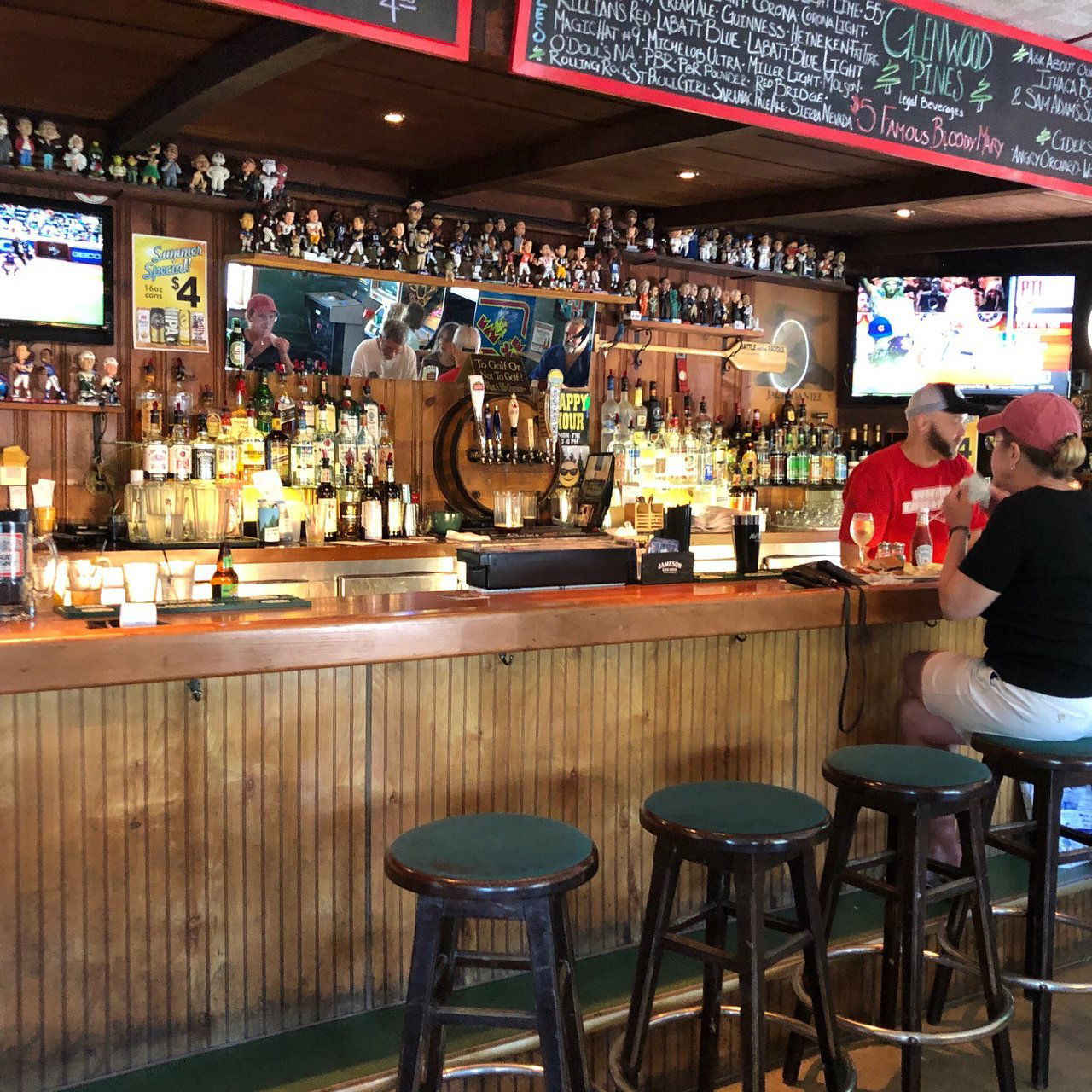
About Glenwood Pines
Glenwood Pines sits along Taughannock Boulevard on the western shore of Cayuga Lake, occupying a position in the Ithaca-area bar and dining scene that rewards those willing to look beyond the city's downtown corridor. The venue draws on the Finger Lakes' reputation for serious drinking culture, placing it within a regional context where craft and locality carry real weight.
Where Cayuga Lake Meets the Counter
The western shore of Cayuga Lake has a particular quality in the early evening: the light drops flat across the water, the temperature shifts before the rest of the region catches up, and the roadside establishments along Taughannock Boulevard take on a different character than their downtown Ithaca counterparts. Glenwood Pines, at 1213 Taughannock Blvd, sits inside that atmosphere. It is not a venue that announces itself with the visual language of a cocktail-forward destination, which is partly why regulars treat it with the quiet loyalty that upstate New York drinkers reserve for places they feel they have earned. For those arriving from the city, the address places you roughly between Taughannock Falls State Park and the Cornell waterfront — a stretch of road that runs at its own pace, indifferent to trends cycling through New York City bars.
The Finger Lakes as a Drinking Region
To understand what a bar like Glenwood Pines represents, it helps to understand what the Finger Lakes has become as a drinking and hospitality region over the past decade. The area built its international reputation on wine — Riesling above all, drawn from the mineral-heavy shale soils around Seneca and Cayuga , but that wine-first identity has quietly expanded. Craft brewing arrived in force, cider production grew serious, and the cocktail culture in Ithaca specifically developed a local character that draws on regional spirits and produce rather than defaulting to the same sourced-from-everywhere playbook that homogenizes bar programs in larger markets. In this context, a bar on the Cayuga lakeshore is not a compromise from the city; it is a specific kind of destination, one that sits inside a broader regional story about what quality drinking looks like when it is rooted in place.
That regional story has national parallels. American cocktail culture has spent the better part of fifteen years moving away from theatre and toward substance , from smoke machines and hidden doors toward programs where technique, sourcing, and the logic of the menu do the work. Bars like Kumiko in Chicago, Bar Leather Apron in Honolulu, and Jewel of the South in New Orleans have each, in their own markets, demonstrated that serious craft does not require a metropolitan address. What it requires is a point of view and the discipline to execute it consistently. The Finger Lakes has produced enough serious food and drink producers , and a visitor base educated enough by wine-trail tourism to recognise quality , to support that kind of ambition at the regional level.
The Cocktail Programme in Context
Regional bar programs that work tend to share a structural logic: they do not try to replicate what a flagship Manhattan or Chicago bar does, and they do not retreat into lowest-common-denominator crowd-pleasing. Instead, they identify what their location gives them , local spirits, seasonal produce, proximity to a specific agricultural tradition , and build around that. The Finger Lakes offers distillers and bartenders access to fruit-forward agricultural production, winter-grown grains, and a wine culture that has normalised the idea of terroir as a quality signal. A thoughtful cocktail program in this region has genuine raw material to work with.
Nationally recognised programs have demonstrated how regional identity can anchor a drink menu without turning it into a novelty. Julep in Houston built its program around Southern whiskey tradition with editorial discipline. ABV in San Francisco operates at the intersection of serious technique and neighbourhood accessibility. Bitter and Twisted in Phoenix made a point of regional specificity in a market not previously associated with cocktail ambition. In each case, the bar's identity is inseparable from its location. Glenwood Pines occupies a comparable position at the Cayuga Lake end of the Finger Lakes corridor, where the proximity to the water and to the agricultural production that defines this stretch of New York state creates the conditions for a program with genuine local grounding.
What the Lakeshore Format Delivers
Venues on working lakeshores in the northeastern United States occupy a format category that has no precise urban equivalent. They are not resort bars, which serve a captive audience and tend toward convenience over quality. They are not destination cocktail bars in the urban sense, which draw on density and foot traffic. They are something closer to what the British call a proper pub or what the French mean by a restaurant de pays: an establishment whose value is inseparable from its physical location and whose regulars return because the place fits the landscape it sits in. The leading versions of this format, whether in the Adirondacks, coastal Maine, or the Finger Lakes, manage to hold both audiences , the local who comes weekly and the visitor who arrived after a wine-trail afternoon , without flattening the experience for either.
Bars that achieve this balance in smaller American markets often fly below the recognition systems that reward urban programs. Allegory in Washington D.C., Superbueno in New York City, and Canon in Seattle each hold positions inside their respective city's cocktail conversation, with the visibility that comes from operating in markets where critics and awards bodies are paying attention. Regional venues like Glenwood Pines operate in a different information environment, where word-of-mouth among returning visitors and local knowledge carries more weight than formal recognition. That is not a limitation; it is a different kind of credibility.
For the practical logistics: Taughannock Boulevard runs along the western lakeshore and requires a car from downtown Ithaca , there is no meaningful public transit option for this stretch of road. The drive from the Ithaca Commons takes roughly ten to fifteen minutes depending on traffic at the Cayuga Street corridor. Given the lakeshore setting, evening arrivals before sunset make the most of the approach. Check current hours directly with the venue before visiting, as seasonal adjustments on this corridor are common and the surrounding area has limited alternatives if hours have shifted.
For broader context on where Glenwood Pines fits within the region's eating and drinking options, see our full Ulysses restaurants guide. For those building a longer bar itinerary across the US, Bar Kaiju in Miami and The Parlour in Frankfurt represent the range of formats that serious drinkers are currently tracking internationally.
Frequently Asked Questions
- Is Glenwood Pines more low-key or high-energy?
- Glenwood Pines fits the lakeshore format that defines the Taughannock Boulevard corridor , lower energy than downtown Ithaca's bar strip, with an atmosphere shaped more by the setting than by programming. It draws a mix of locals and Cayuga Lake visitors, which tends to produce a room that is convivial rather than high-volume. Price positioning and the absence of awards recognition place it squarely in the accessible, neighbourhood-facing tier rather than the high-end destination category occupied by nationally recognised programs like Kumiko or Allegory.
- What cocktail do people recommend at Glenwood Pines?
- Specific menu details and signature drinks are not available in our current database for this venue, and we do not fabricate drink descriptions. What the Finger Lakes context suggests is that any program at this address has access to strong regional raw material , local spirits production has grown considerably in the Cayuga Lake area, and a bar at this location would be well-placed to work with it. For verified cocktail recommendations, contact the venue directly or consult recent visitor reviews on current platforms.
- Is Glenwood Pines a good stop during a Finger Lakes wine trail visit?
- The Taughannock Boulevard address places Glenwood Pines on a natural routing between the Cayuga Lake wine trail's northern and southern clusters, making it a logical stop for visitors already driving the western lakeshore. The Finger Lakes wine trail draws an audience that is engaged with local production across categories , wine, cider, spirits , which creates a natural fit with a bar in this location. Arriving by car is effectively necessary from the wine trail, so designated driver planning applies. Specific hours and seasonal availability should be confirmed directly before building an itinerary around the stop.
Related editorial
- Best Fine Dining Restaurants in ParisFrom three-Michelin-star icons to the next generation of Parisian chefs pushing boundaries, these are the restaurants that define fine dining in the world's culinary capital.
- Best Luxury Hotels in RomeFrom rooftop terraces overlooking ancient ruins to Michelin-starred hotel dining, these are the luxury hotels that make Rome unforgettable.
- Best Cocktail Bars in KyotoFrom sleek lounges to hidden speakeasies, Kyoto's cocktail scene blends Japanese precision with global influence in ways you won't find anywhere else.
Save or rate Glenwood Pines on Pearl
Keep this venue in your Pearl passport, rate it after you visit, and track it alongside every other place you collect.