
Bar in Tokyo, Japan
TWO ROOMS
100ptsWestern-Format Aoyama Elevation
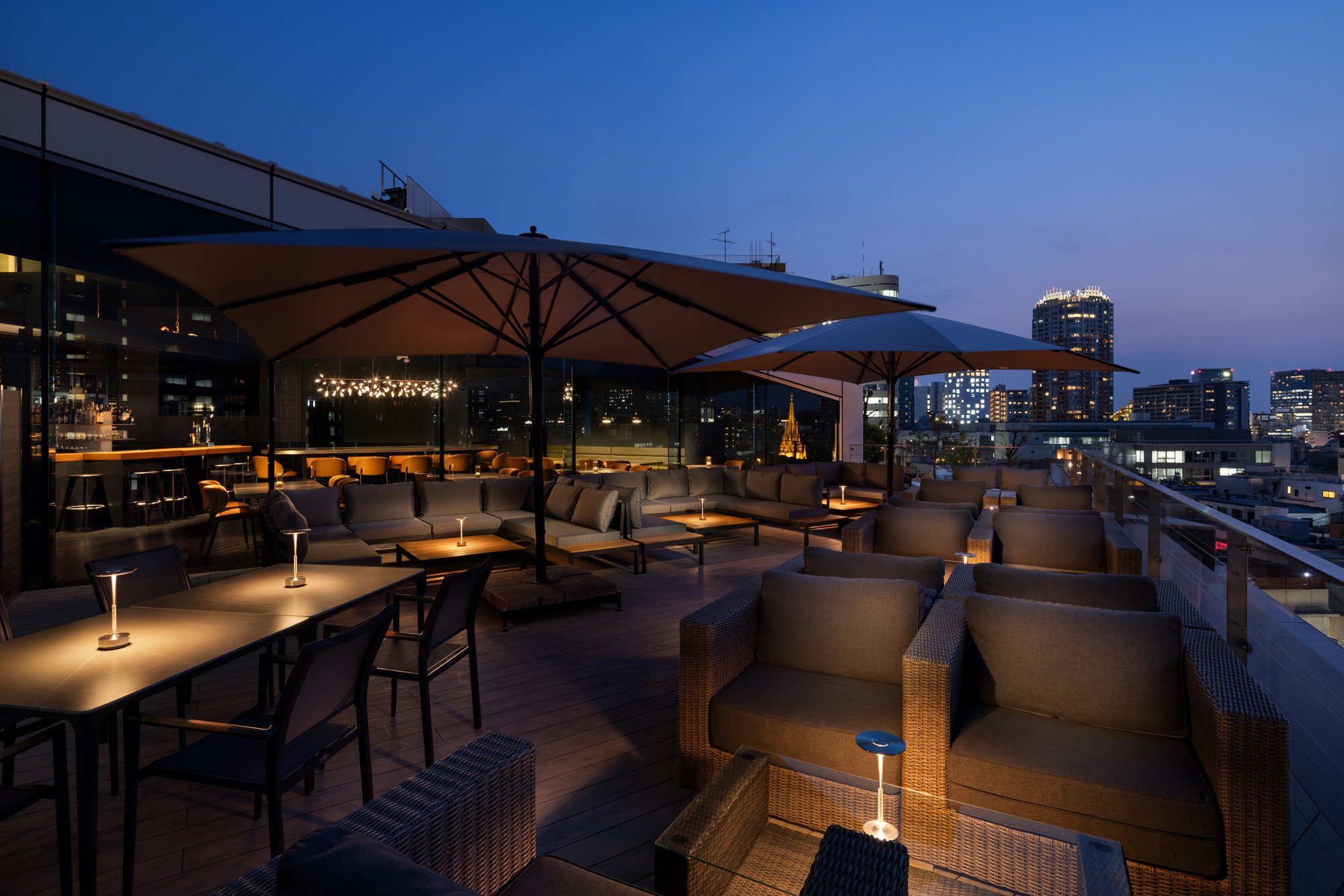
About TWO ROOMS
TWO ROOMS occupies the fifth floor of a Kita-Aoyama building in Minato, positioning itself within Tokyo's Western-influenced all-day dining tier rather than the more rigid omakase or kaiseki formats that dominate premium dining in the city. The address places it at the intersection of Aoyama's fashion-forward street culture and a more international restaurant sensibility, making it a reference point for visitors tracking Tokyo's hybrid dining scene.
Aoyama's Vertical Dining Tier
Tokyo's Minato ward has developed a distinct dining register that sits between the structured formality of Ginza and the neighbourhood casualness of Shimokitazawa. In Kita-Aoyama, restaurants occupy upper floors of low-rise commercial buildings, using elevation as both a physical and conceptual signal: you arrive by lift, the street noise drops away, and the room presents itself as a deliberate destination rather than a passing option. TWO ROOMS, on the fifth floor of a building at 3 Chome-11-7, operates within this vertical dining logic. The approach to the space sets expectations before any menu arrives.
This format has become increasingly legible to Tokyo's international dining community. Properties in Aoyama and neighbouring Minami-Aoyama have refined the fifth-floor-restaurant model across multiple genres, from members' club dining rooms to open-reservation Western kitchens. The common thread is a separation from street-level Tokyo that allows the interior to define its own atmosphere, independent of neighbourhood foot traffic. TWO ROOMS draws on that context.
How the Menu Architecture Speaks
The way a restaurant structures its menu communicates its underlying logic more reliably than any press description. In Tokyo's Western-influenced dining segment, menus tend to fall into one of two camps: the coursed format that mirrors kaiseki's sequential discipline, or the open, à la carte structure that invites the guest to build their own pace and proportion. The latter carries a particular cultural charge in a city where dining conventions are otherwise highly codified.
An à la carte architecture at this address signals confidence in individual dishes over narrative progression. It implies a kitchen that can defend each plate on its own terms rather than relying on cumulative momentum. For the guest, it also means decisions carry more weight: there is no tasting menu to default to, no chef's sequence to follow passively. The room rewards those who have done some reconnaissance, or who are willing to ask questions of the floor staff. In a city where service teams are almost uniformly well-briefed, the latter option is rarely a risk.
The positioning of TWO ROOMS within Aoyama's dining tier also reflects a broader shift in how Tokyo accommodates non-Japanese formats. Through the 2010s, the city's premium Western dining was concentrated in hotel properties, where imported concepts could trade on the hotel's existing reputation. The independent restaurant in a commercial building, serving Western food at premium pricing, became more viable as Tokyo's dining public grew more accustomed to evaluating cuisine across multiple frameworks simultaneously. TWO ROOMS sits within that evolution.
The Aoyama Address in Context
Kita-Aoyama's food and drink character is shaped by its proximity to Omotesando, one of Tokyo's primary retail corridors for international luxury brands. The customer base that moves through this area during the day is disproportionately design-aware and internationally mobile, and the restaurants that have taken root here tend to reflect that. The area runs parallel to the drinking culture concentrated further north in Shinjuku, where bars like Bar Benfiddich have built international reputations around highly specific craft approaches, and to the Ginza corridor, where Bar High Five and Bar Orchard Ginza set the standard for classical Japanese bartending.
TWO ROOMS occupies a different register from those bar-led destinations. Where Ginza bar culture is defined by restraint, precision, and the studied minimalism of the Japanese bartending tradition, the Aoyama dining scene that TWO ROOMS belongs to is more outward-facing. It acknowledges Tokyo's appetite for international reference points while remaining rooted in the city's exacting service standards.
For visitors building a broader Tokyo itinerary, the Aoyama placement matters logistically. The address is walkable from Omotesando station on the Tokyo Metro Ginza, Hanzomon, and Chiyoda lines, placing it within easy reach of the city centre without requiring transfers. Those extending their Japan trip beyond Tokyo will find comparable ambition in different formats at Bar Nayuta in Osaka, Bee's Knees in Kyoto, and Lamp Bar in Nara, each of which represents the specialist-bar tier in their respective cities. Further afield in Kyushu, Yakoboku in Kumamoto extends the conversation about Japan's broader craft drinking culture. For those travelling beyond Japan, Bar Leather Apron in Honolulu carries a comparable level of Japanese bartending influence in a Pacific context.
Where TWO ROOMS Sits in Tokyo's Dining Competition
Tokyo's full-service Western restaurant tier has contracted and sharpened over the past decade. Properties that once competed on novelty now compete on consistency, and the venues that have endured tend to have a clear identity: a defined kitchen approach, a room that justifies its price point independently of the food, and a service culture that matches Tokyo's high baseline. The competitive set for a fifth-floor Aoyama restaurant includes hotel dining rooms in Minami-Aoyama and Shibuya, and a cluster of independently operated Western kitchens that have built regulars from the area's professional and creative communities.
Against this field, the address and format of TWO ROOMS positions it as a room for people who already know Tokyo reasonably well. It is not an obvious first-night destination for the arriving visitor looking for orientation, in the way that a Ginza sushi counter or a Shibuya rooftop might function. It rewards prior familiarity with the neighbourhood and some appetite for a dining experience that operates outside the most heavily documented Tokyo dining circuits.
Visitors wanting a broader view of where TWO ROOMS sits within the city's dining patterns should consult our full Tokyo restaurants guide, which maps the premium dining tier across neighbourhoods and formats. Additional context on Tokyo's drinking culture is available through profiles of Bar Libre, which operates in a different segment of the city's bar scene. For Osaka drinking options that complement a Tokyo trip, anchovy butter in Osaka Shi and Kyoto Tower Sando in Kyoto round out the Kansai picture.
Planning a Visit
TWO ROOMS is located at 3 Chome-11-7 Kita-Aoyama, Minato City, Tokyo, on the fifth floor. Omotesando station provides the most direct Metro access. Given the address sits within a commercial building rather than a hotel, advance checking of current opening hours and reservation policy through the venue directly is advisable before visiting, as independently operated restaurant schedules in Tokyo can shift with the season.
Frequently Asked Questions
- What is TWO ROOMS known for?
- TWO ROOMS is identified with the Western-influenced dining tier in Kita-Aoyama, Minato, one of Tokyo's more internationally oriented restaurant neighbourhoods. Its fifth-floor position in a commercial building on one of Aoyama's primary streets places it within a dining format that has grown more prominent in Tokyo as the city's appetite for independent Western restaurants has expanded beyond hotel dining rooms. Specific pricing and awards data are not confirmed in available records.
- What's the leading thing to order at TWO ROOMS?
- Without confirmed menu data, specific dish recommendations cannot be made with accuracy. As a general principle for restaurants in this Aoyama tier, the kitchen's approach to protein-centred main courses tends to reflect the most direct statement of a Western-influenced kitchen's identity. Consulting the floor team on arrival is the most reliable method for directing a meal at a restaurant of this format in Tokyo.
- Is TWO ROOMS suitable for a business dinner in Tokyo?
- Restaurants occupying upper-floor positions in Aoyama's commercial buildings have become a recognised format for professional dining in Tokyo, offering separation from street-level noise and a room that functions independently of the surrounding neighbourhood. TWO ROOMS at 3 Chome-11-7 Kita-Aoyama sits within that category by address and format, making it a plausible choice for the kind of business entertainment common to Minato's professional community. Confirming private dining availability and reservation lead times directly with the venue is recommended before planning a corporate booking.
More bars in Tokyo
- 8bit Cafe8bit Cafe in Shinjuku is Tokyo's retro gaming bar — a fun, low-pressure stop that works best as an early-evening warm-up rather than a serious cocktail destination. Walk-ins are easy and the crowd is casual and young. Go for the atmosphere, not the bar program, and plan to move on to somewhere like Bar Benfiddich for the serious drinking.
- A10A10 is a basement bar in Ebisu West, Shibuya — a neighbourhood that signals a drinks-serious crowd over a nightlife-first one. Booking difficulty is low, making it accessible for first-timers, but confirm capacity and hours directly before visiting. Best suited to small groups of two to four looking for a considered, low-noise drinking environment in one of Tokyo's more relaxed upscale pockets.
- Ahiru StoreAhiru Store is a relaxed neighbourhood wine bar in Tomigaya, Shibuya, suited to unhurried evenings and easy to book when busier Tokyo bars are full. The atmosphere stays calm and conversational, making it a practical choice for explorers who want a quieter, more residential side of Tokyo's drinking scene rather than a polished Ginza experience.
Related editorial
- Best Fine Dining Restaurants in ParisFrom three-Michelin-star icons to the next generation of Parisian chefs pushing boundaries, these are the restaurants that define fine dining in the world's culinary capital.
- Best Luxury Hotels in RomeFrom rooftop terraces overlooking ancient ruins to Michelin-starred hotel dining, these are the luxury hotels that make Rome unforgettable.
- Best Cocktail Bars in KyotoFrom sleek lounges to hidden speakeasies, Kyoto's cocktail scene blends Japanese precision with global influence in ways you won't find anywhere else.
Save or rate TWO ROOMS on Pearl
Keep this venue in your Pearl passport, rate it after you visit, and track it alongside every other place you collect.