
Bar in Tokyo, Japan
The Oak Door
100ptsWestern Grill, Tokyo Precision
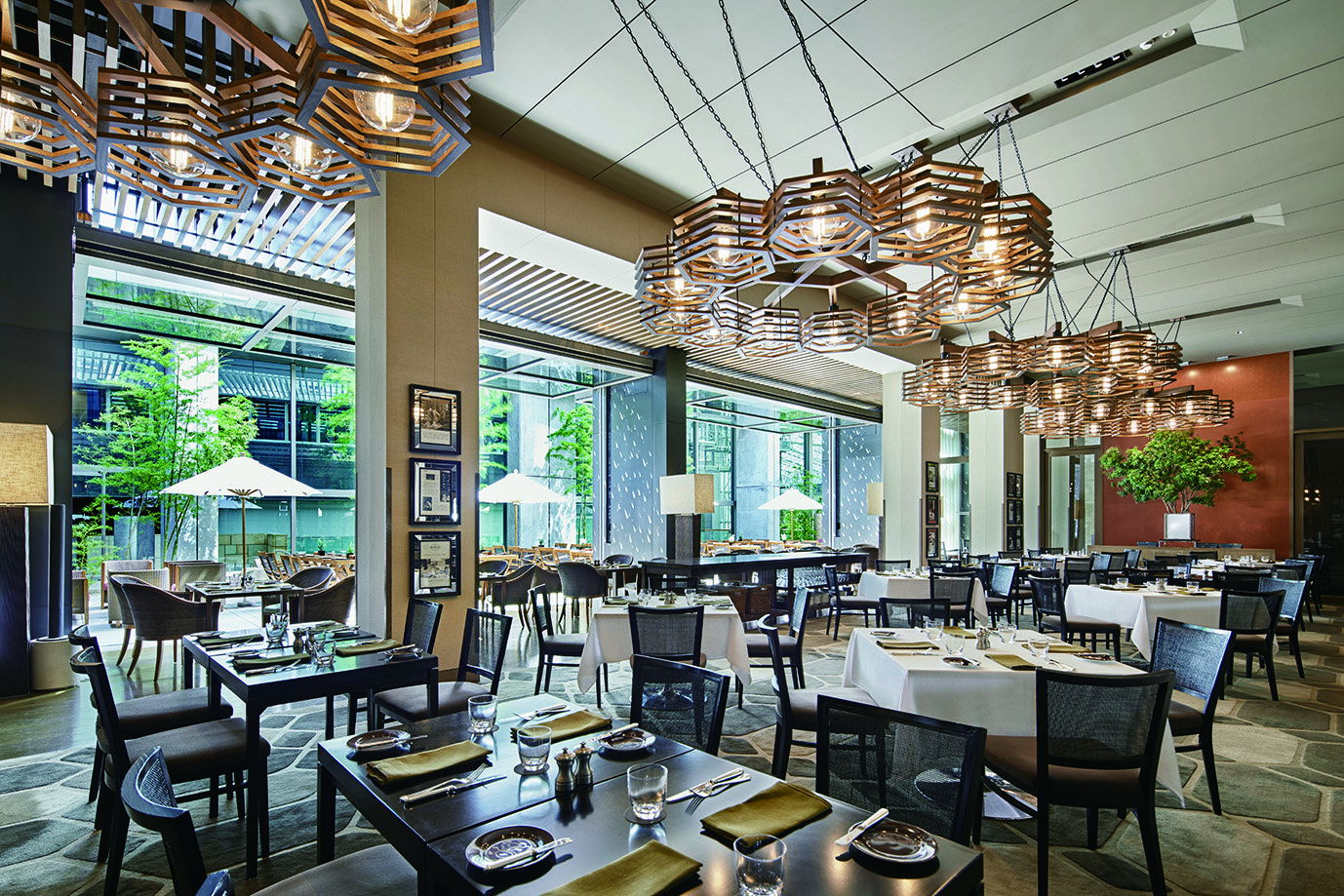
About The Oak Door
On the sixth floor of the Grand Hyatt Tokyo in Roppongi, The Oak Door operates as one of the city's established Western grill addresses, drawing a mix of hotel guests, Roppongi regulars, and carnivore-focused diners. The room's dark wood and open kitchen set a tone that reads more New York steakhouse than Tokyo minimalism, which remains a deliberate and steady point of difference in a city of refined Japanese formats.
The Roppongi Grill and What It Means in Tokyo
Tokyo's premium restaurant scene has long been defined by its precision formats: the austere kaiseki counter, the eight-seat omakase room, the ramen shop where a single bowl absorbs a chef's entire professional focus. Against that backdrop, the Western grill occupies a distinctive, somewhat counterintuitive position. It doesn't apologize for its scale, its noise, or its appetite. The Oak Door, on the sixth floor of the Grand Hyatt Tokyo in Roppongi, has held that position for long enough that it now reads less like an import and more like a fixture of the neighbourhood's hospitality character.
Roppongi's dining identity has always been more international than most Tokyo districts. Its proximity to embassies, foreign business communities, and the concentrated arts infrastructure around Roppongi Hills gives it an appetite for formats that wouldn't find the same footing in Ginza or Nihonbashi. A full-service Western steakhouse with an open kitchen, a broad wine program, and a room designed around communal energy fits here in a way that it might not a few stops east on the Hibiya Line. For visitors arriving from the quieter, more codified dining rituals of other Tokyo neighbourhoods, the Oak Door's room can feel like a deliberate exhale.
The Ritual of the Western Grill in a Japanese City
What makes a Western grill interesting to observe in Tokyo is how the dining ritual translates, adapts, and occasionally resists the conventions of its host city. Japanese hospitality culture (omotenashi, broadly speaking) emphasises anticipation of needs, minimal friction, and a service cadence calibrated to the guest rather than the kitchen. The leading Western grill operations in the city absorb those values and layer them over a format that, in its original American or European context, often runs louder and less attentively.
The pacing of a meal at a grill house in Tokyo tends to be more deliberate than its Western equivalents. Side dishes arrive with care. Steaks are rested properly. The check doesn't appear until it's requested. These aren't trivial details: they represent the quiet recalibration that happens when an imported format is run inside a culture with higher baseline service expectations. Whether that recalibration succeeds depends on the kitchen and floor staff on any given night, which is the honest answer for any restaurant of this type at this price tier.
The open kitchen format, which the Oak Door employs, carries its own ritual logic. The grill is visible, the fire is real, and the theatre of a large protein being carved at a station gives the room an energy that a closed kitchen cannot replicate. In Tokyo's context, where so much of the drama of a meal happens invisibly, or is reserved for omakase formats where the chef faces the guest directly across a counter, an open Western grill offers a different kind of transparency: loud, physical, and unapologetically about the cooking process rather than the chef's interior monologue.
Roppongi's Hotel Dining Tier
Hotel restaurants in Tokyo sit in an interesting competitive position. The city's independent restaurant scene is strong enough that a hotel address can actually work against a venue in the minds of locals, who associate hotel dining with tourist pricing and compromised kitchens. The properties that overcome that perception do so through consistent execution and a room that functions as a credible destination in its own right, not merely a convenience for guests who don't want to leave the building.
The Grand Hyatt Tokyo's Roppongi location places the Oak Door inside one of the district's most trafficked luxury hotel clusters. Roppongi Hills, directly adjacent, draws substantial foot traffic from both local and international visitors, which gives the hotel's restaurants a broader potential audience than properties in quieter residential districts. For the Oak Door specifically, that audience profile skews toward guests comfortable with an international format and a full Western meal structure: cocktails, starters, a primary protein, sides, dessert, wine by the bottle.
For readers building a broader Tokyo drinking itinerary alongside dinner, Roppongi and its surrounding neighbourhoods connect to a strong bar circuit. Bar Benfiddich in Shinjuku and Bar High Five in Ginza represent the city's most technically precise cocktail work. Closer in spirit to a post-dinner drink, Bar Libre and Bar Orchard Ginza offer contrasting styles within the city's bar culture. For broader context on the Tokyo dining and drinking scene, our full Tokyo restaurants guide maps the city by neighbourhood and format.
Readers planning trips through Japan's other cities will find strong bar programming in most of the major stops. Bar Nayuta in Osaka, Bee's Knees in Kyoto, and Lamp Bar in Nara each represent distinct regional approaches to the craft bar format. Further afield, Yakoboku in Kumamoto, anchovy butter in Osaka, and Kyoto Tower Sando extend the map into formats that reward curiosity. And for those whose Japan trip connects to a Pacific routing, Bar Leather Apron in Honolulu sits at the serious end of Hawaii's bar scene.
Know Before You Go
| Location | 6F Grand Hyatt Tokyo, 6-10-3 Roppongi, Minato-ku, Tokyo |
|---|---|
| Neighbourhood | Roppongi, with direct access via Roppongi Hills complex |
| Format | Western grill with open kitchen; suited to full-table dinner format |
| Booking | Reservations recommended, particularly for weekend service; hotel concierge can assist in-house guests |
| Dress Code | Smart casual is standard for Roppongi's hotel dining tier; no database confirmation of specific policy |
| Nearest Transit | Roppongi Station (Hibiya Line / Oedo Line), approximately five minutes on foot |
Frequently Asked Questions
What's the leading thing to order at The Oak Door?
The Oak Door's format centres on grilled proteins, so the menu's primary architecture is around cuts of beef and other grilled mains. No specific dish data is confirmed in our venue record, so we won't invent tasting notes or seasonal specials. What the open-kitchen grill format signals, in general terms, is that the fire-cooked primary dish is the structural point of the meal: choose your cut first and build the rest of the table around it.
Why do people go to The Oak Door?
The Oak Door occupies a specific gap in Tokyo's dining map: a full-service Western grill at the luxury hotel tier in Roppongi, a district whose international character makes it a natural fit for that format. Diners who have spent a week working through Tokyo's Japanese restaurant formats often find a large-format grill dinner a useful counterpoint. The room's energy, noise level, and focus on a single dominant protein make it a different kind of evening from the kaiseki or omakase meal.
How far ahead should I plan for The Oak Door?
As a hotel restaurant with a Roppongi address, demand patterns will vary by season and week. Tokyo's peak travel periods (cherry blossom in late March to April, autumn foliage in November) tighten availability across the city's popular restaurants. Booking a week or more ahead for weekend evenings is sensible practice at this tier. Hotel guests can coordinate through the Grand Hyatt's concierge, which typically has better visibility on same-week availability than online booking channels.
Who tends to like The Oak Door most?
The format appeals most to guests who want a full Western dinner structure in a city where that format is outnumbered by Japanese-style service. Business travellers, hotel guests seeking a reliable dinner without the navigation required for Tokyo's independent restaurant scene, and diners who want a loud, social room rather than a quiet counter experience all fit the audience profile. It is not positioned for those seeking a specifically Japanese dining ritual.
Does The Oak Door suit solo diners, or is it better for groups?
Western grill formats in Tokyo's hotel tier are engineered for table dining, and the side-dish structure of a classic steakhouse is designed for sharing across two to four covers. Solo diners are typically accommodated, particularly at the bar or counter positions that most hotel grill rooms maintain, but the format rewards groups who can work through the full table format: a shared starter, individual mains, communal sides. Roppongi's dining culture also skews toward social, multi-person occasions, which shapes the energy of the room on busy evenings.
More bars in Tokyo
- 8bit Cafe8bit Cafe in Shinjuku is Tokyo's retro gaming bar — a fun, low-pressure stop that works best as an early-evening warm-up rather than a serious cocktail destination. Walk-ins are easy and the crowd is casual and young. Go for the atmosphere, not the bar program, and plan to move on to somewhere like Bar Benfiddich for the serious drinking.
- A10A10 is a basement bar in Ebisu West, Shibuya — a neighbourhood that signals a drinks-serious crowd over a nightlife-first one. Booking difficulty is low, making it accessible for first-timers, but confirm capacity and hours directly before visiting. Best suited to small groups of two to four looking for a considered, low-noise drinking environment in one of Tokyo's more relaxed upscale pockets.
- Ahiru StoreAhiru Store is a relaxed neighbourhood wine bar in Tomigaya, Shibuya, suited to unhurried evenings and easy to book when busier Tokyo bars are full. The atmosphere stays calm and conversational, making it a practical choice for explorers who want a quieter, more residential side of Tokyo's drinking scene rather than a polished Ginza experience.
Related editorial
- Best Fine Dining Restaurants in ParisFrom three-Michelin-star icons to the next generation of Parisian chefs pushing boundaries, these are the restaurants that define fine dining in the world's culinary capital.
- Best Luxury Hotels in RomeFrom rooftop terraces overlooking ancient ruins to Michelin-starred hotel dining, these are the luxury hotels that make Rome unforgettable.
- Best Cocktail Bars in KyotoFrom sleek lounges to hidden speakeasies, Kyoto's cocktail scene blends Japanese precision with global influence in ways you won't find anywhere else.
Save or rate The Oak Door on Pearl
Keep this venue in your Pearl passport, rate it after you visit, and track it alongside every other place you collect.