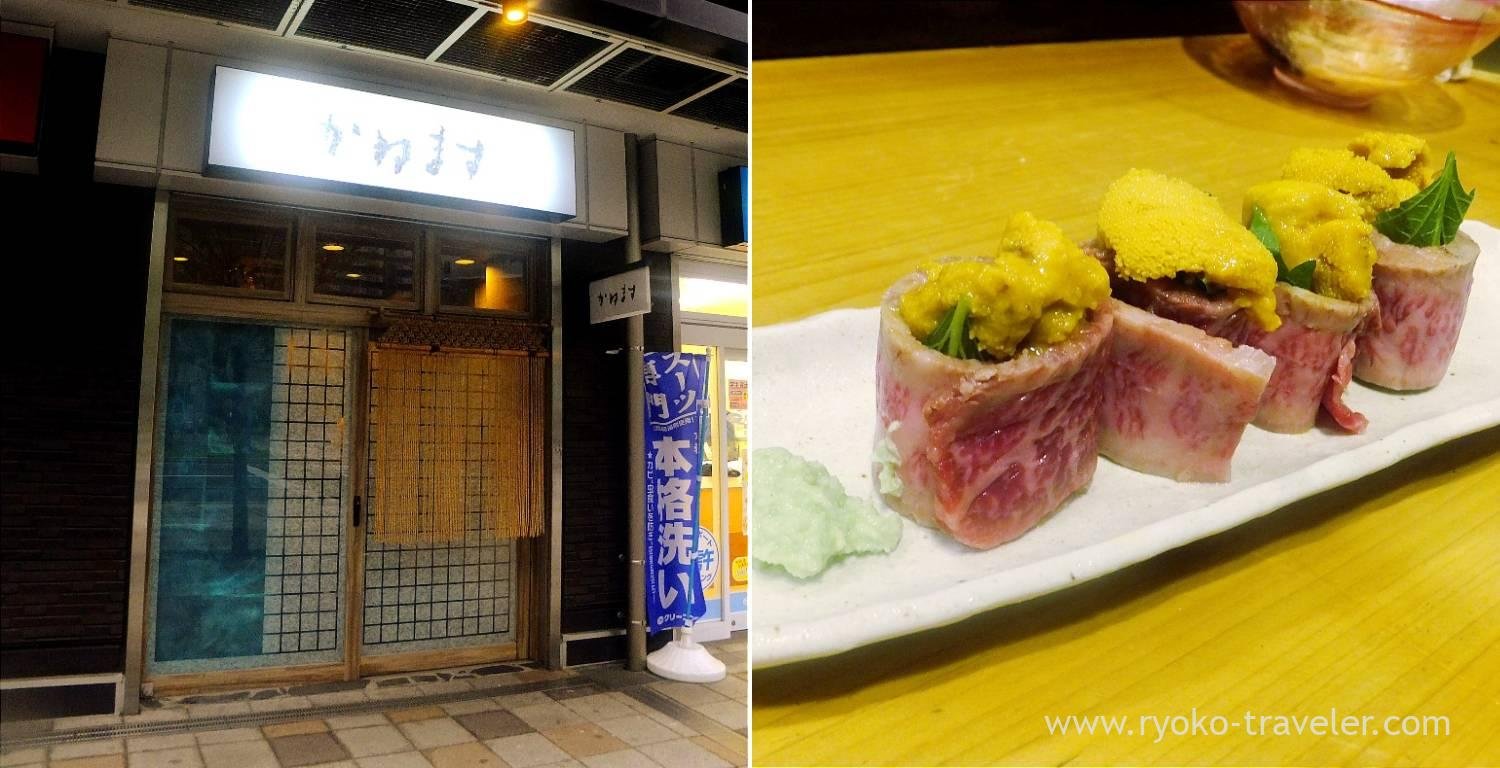
Bar in Tokyo, Japan
Kanemasu
100ptsResidential Counter Culture

About Kanemasu
Kanemasu occupies the ground floor of a residential tower in Kachidoki, a corner of Chuo City that sits at a remove from Ginza's bar circuit and Shinjuku's after-hours density. Where Tokyo's most-discussed bars compete on technical programs and press recognition, Kanemasu operates on a different register: neighbourhood permanence, regular-driven atmosphere, and the kind of unhurried hospitality that doesn't require a reservation hotline to signal its value.
Kachidoki's Quiet Bar Circuit
Tokyo's bar culture is frequently narrated through its most celebrated addresses: the Michelin-listed counters of Ginza, the whisky-forward rooms of Shinjuku, the craft-focused programmes that attract international competition judges. That story is accurate but partial. Alongside those high-visibility venues runs a parallel network of neighbourhood bars, embedded in residential precincts, sustained by local custom, and largely invisible to the weekend tourist itinerary. Kachidoki, a reclaimed-land district on the eastern edge of Chuo City, belongs to that second category. The area is primarily residential — high-rise apartments, a tram line, the Sumida River at its back — and its bars reflect that character. They are places where proximity matters more than prestige, and where returning the same week is more common than making a first visit.
Kanemasu sits at street level in the Kachidoki View Tower, a residential block at 1-8-1 Kachidoki. The address places it squarely in the neighbourhood rather than at the edge of it, and the ground-floor position means it reads as part of the building's civic life rather than as a destination destination. In a city where bar geography is often a shorthand for ambition and peer-set positioning, Kachidoki is a deliberate step away from that circuit.
What a Neighbourhood Bar Signals in Tokyo
The concept of the neighbourhood bar in Tokyo carries specific weight. Japan's hospitality culture produces a category of bar that Western cities rarely replicate with the same consistency: small-format rooms, often fewer than twenty seats, where the owner-operator is the entire front-of-house, the menu is curated rather than expansive, and the experience is shaped by who comes back rather than who comes first. These are not training-ground venues on the way to something more recognised. Many are endpoints in themselves, operating for decades on the strength of a stable regular base.
What distinguishes this format from, say, the precision cocktail bars of Ginza or the theatrical whisky rooms that appear in international rankings like Bar Benfiddich and Bar High Five is the social architecture. At Bar Orchard Ginza or Bar Libre, the room is organised around the craft , the bartender's technique, the drink's construction, the performance of knowing. At a neighbourhood bar in Kachidoki, the room is organised around the regulars. The bartender knows the order before it's placed. The conversation picks up where it left off. The drink is good, but the point is the return.
The Kachidoki Approach to Atmosphere
Approaching Kanemasu from Kachidoki Station , a short tram ride from Tsukiji on the Toei Arakawa line , the street-level setting is immediately readable. The area lacks the compressed density of central Tokyo bar districts, and the residential tower context means the bar's entrance competes with apartment lobbies rather than neon and foot traffic. That quietness is not incidental. It filters the crowd before anyone sits down.
Inside, the physical environment of a ground-floor residential-building bar in Tokyo typically runs to compact dimensions, a counter format that places the operator and the guest in close proximity, and lighting calibrated to conversation rather than to the documentation of drinks. The experience is less about spectacle and more about settlement , the feeling of having arrived somewhere that expects you back. This is the atmosphere that sustains neighbourhood venues through decades in a city where restaurant and bar turnover is otherwise high.
Positioning Against Tokyo's Broader Bar Circuit
Tokyo's most internationally discussed bars cluster in a handful of areas: Ginza for its formal whisky and spirit programmes, Shinjuku for its density and after-midnight accessibility, Shibuya and Daikanyama for younger, design-led formats. Kachidoki does not compete with any of those clusters directly. A visitor who makes the trip from central Tokyo is not substituting Kanemasu for a night in Ginza; they are choosing a different category of experience.
Across Japan, the neighbourhood bar tradition finds strong expression in cities outside Tokyo as well. Bar Nayuta in Osaka and Bee's Knees in Kyoto operate with comparable community-facing orientations, while Lamp Bar in Nara and Yakoboku in Kumamoto demonstrate how the format persists in smaller cities with even less tourist traffic. The through-line is consistency of presence rather than headlines. For visitors curious how that tradition manifests across different urban contexts, anchovy butter in Osaka Shi and Kyoto Tower Sando in Kyoto Shi offer further reference points, as does Bar Leather Apron in Honolulu for how the Japanese small-bar ethos translates to other Pacific contexts.
Planning a Visit
Kanemasu is accessible via the Toei Oedo Line to Kachidoki Station, placing it roughly twenty minutes from central Ginza by transit. The residential tower address at 1-8-1 Kachidoki, Chuo City, puts it at street level and easy to locate on foot from the station. Because published contact details and booking information are not available through the usual channels, the most reliable approach is to arrive in person during likely evening operating hours, which for this category of Tokyo neighbourhood bar typically run from early evening through midnight. Walk-in culture is the norm at venues of this scale and neighbourhood orientation. Dress code expectations in Kachidoki's residential bar scene are informal by Tokyo standards; the room rewards presence over presentation. For a fuller picture of where Kanemasu sits within Tokyo's drinking culture, the EP Club Tokyo guide maps the city's bar circuit across neighbourhoods and price tiers.
Frequently Asked Questions
- What drink is Kanemasu famous for?
- Specific menu details and signature serves for Kanemasu are not available in the public record. What can be said with confidence is that neighbourhood bars of this type in Chuo City tend to operate with carefully curated spirits selections and a preference for classic preparation over theatrics , credibility built through consistency rather than through a single headline drink. Bars in the same Tokyo neighbourhood tier as Kanemasu, including recognised counters like Bar High Five, have historically built their reputations on whisky and spirit-forward serves rather than elaborate cocktail formats.
- What's the defining thing about Kanemasu?
- The defining quality of Kanemasu is its position within Kachidoki's residential fabric rather than within Tokyo's competitive bar-award circuit. In a city where many of the most-discussed bars , particularly in Ginza and Shinjuku , are organised around technical programmes and international recognition, Kanemasu operates on neighbourhood terms: sustained by returning local custom, positioned in a residential tower rather than a commercial strip, and without the booking infrastructure that signals destination-category ambition. That orientation is itself a form of editorial stance.
- Is Kanemasu reservation-only?
- No published reservation system, website, or phone contact is available for Kanemasu through public channels. In the context of Tokyo's neighbourhood bar tradition, that absence is consistent with venues that operate primarily for local regulars rather than for advance-booked visitors. Walk-in visits during evening hours are the appropriate approach. For comparison, bars at the recognition tier of Bar Benfiddich do require advance booking; Kanemasu's positioning suggests a less formal entry system.
- How does Kanemasu fit into Kachidoki's local identity compared with Tokyo's central bar districts?
- Kachidoki is a residential precinct on reclaimed land in Chuo City, separated from the Ginza bar circuit by roughly two kilometres and a significant shift in atmosphere. Where Ginza bars are organised around ceremony and craft visibility, Kachidoki's bar scene , with Kanemasu as a ground-floor example , reflects the rhythms of apartment-district life: earlier start times, familiar faces, and a social logic built around proximity rather than destination. For anyone cross-referencing Tokyo's bar geography, the EP Club Tokyo guide provides neighbourhood-level mapping across the city's drinking circuit.
More bars in Tokyo
- 8bit Cafe8bit Cafe in Shinjuku is Tokyo's retro gaming bar — a fun, low-pressure stop that works best as an early-evening warm-up rather than a serious cocktail destination. Walk-ins are easy and the crowd is casual and young. Go for the atmosphere, not the bar program, and plan to move on to somewhere like Bar Benfiddich for the serious drinking.
- A10A10 is a basement bar in Ebisu West, Shibuya — a neighbourhood that signals a drinks-serious crowd over a nightlife-first one. Booking difficulty is low, making it accessible for first-timers, but confirm capacity and hours directly before visiting. Best suited to small groups of two to four looking for a considered, low-noise drinking environment in one of Tokyo's more relaxed upscale pockets.
- Ahiru StoreAhiru Store is a relaxed neighbourhood wine bar in Tomigaya, Shibuya, suited to unhurried evenings and easy to book when busier Tokyo bars are full. The atmosphere stays calm and conversational, making it a practical choice for explorers who want a quieter, more residential side of Tokyo's drinking scene rather than a polished Ginza experience.
Related editorial
- Best Fine Dining Restaurants in ParisFrom three-Michelin-star icons to the next generation of Parisian chefs pushing boundaries, these are the restaurants that define fine dining in the world's culinary capital.
- Best Luxury Hotels in RomeFrom rooftop terraces overlooking ancient ruins to Michelin-starred hotel dining, these are the luxury hotels that make Rome unforgettable.
- Best Cocktail Bars in KyotoFrom sleek lounges to hidden speakeasies, Kyoto's cocktail scene blends Japanese precision with global influence in ways you won't find anywhere else.
Save or rate Kanemasu on Pearl
Keep this venue in your Pearl passport, rate it after you visit, and track it alongside every other place you collect.