
Bar in St Louis, United States
Brasserie by Niche
100ptsFrench Canon, St. Louis Table
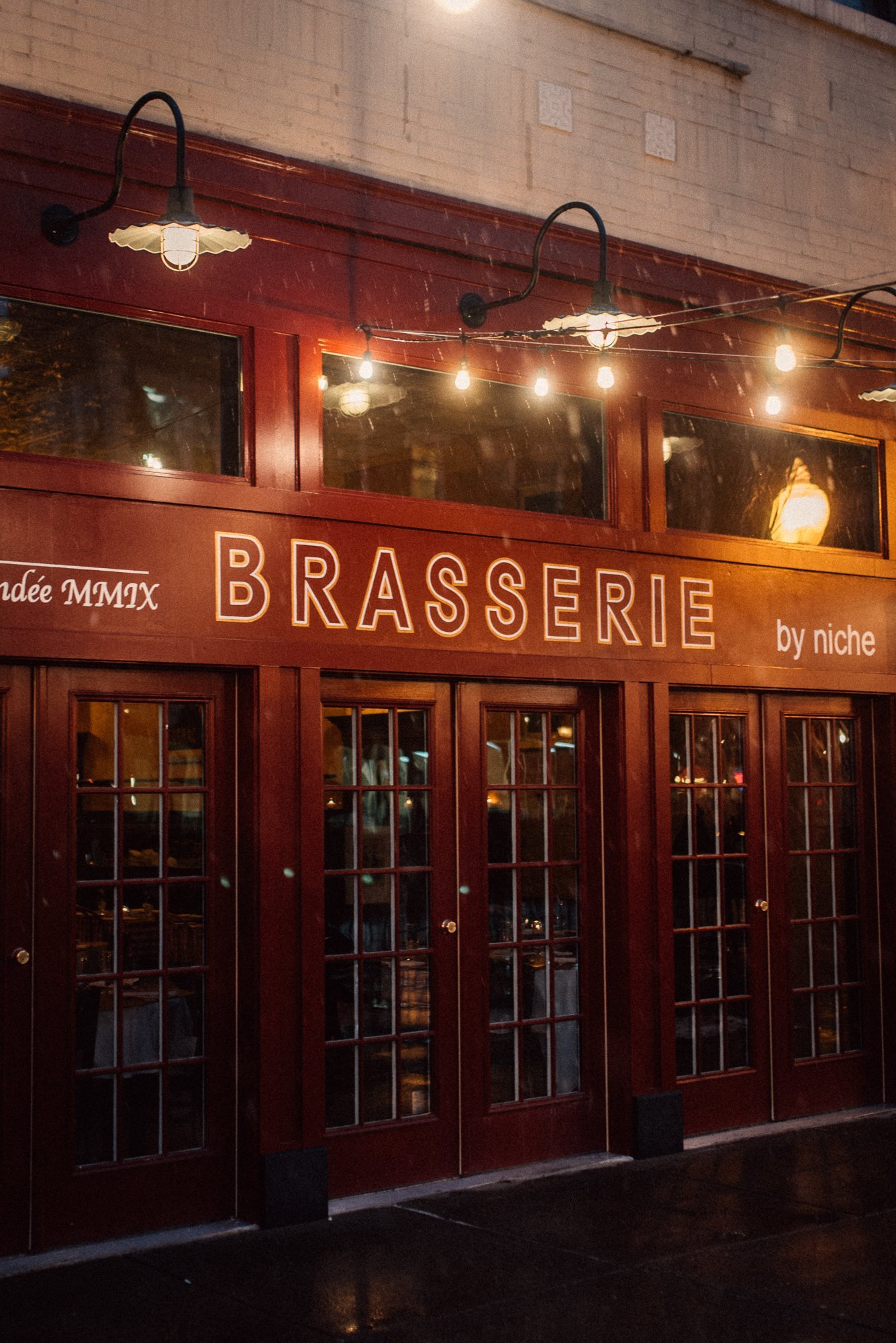
About Brasserie by Niche
On Laclede Avenue in St. Louis's Central West End, Brasserie by Niche sits within the Niche Food Group's constellation of dining rooms, offering the more relaxed, daily-table counterpart to the group's higher-end formats. The kitchen applies French brasserie conventions to a Midwestern context, making it a dependable address for the kind of unhurried, wine-forward meal that the neighbourhood pulls off well.
The Room Before the Meal Starts
There is a particular kind of St. Louis dining room that takes its cues from European brasserie tradition without trying to replicate it wholesale. Brasserie by Niche, at 4580 Laclede Avenue in the Central West End, belongs to that category. The address sits in one of the city's most consistently walkable dining corridors, where the proximity of independent restaurants, wine bars, and craft breweries like 4 Hands Brewing Company creates a neighbourhood where the pre-dinner drink and the post-dinner walk carry equal weight to the meal itself. Walking in, the expectation is of something unhurried: a room designed for a second glass, a long main, a dessert reconsidered then ordered.
That pacing is the point. French brasserie culture, at its most functional, is not about occasion dining. It is about the habitual table, the dependable menu, the waiter who does not rush you through a turn. Brasserie by Niche operates within that tradition, positioned as the more accessible, more regularly visited arm of the Niche Food Group, a St. Louis operation with several distinct formats across the city. Where the group's other concepts ask more of the diner in terms of commitment and price, the brasserie format asks mainly that you show up with time.
How the Meal Moves
The dining ritual at a well-run brasserie has a logic that distinguishes it from both casual and fine-dining formats. The entry is often something cold and briny, a small thing to hold attention while the table settles. The progression moves through a French-inflected middle section, proteins cooked with confidence rather than complexity, sauces that are classical in construction. The finish tends toward comfort: something chocolate, something creamy, a digestif the table did not plan on ordering.
Across the American brasserie category, the leading executions hold the tension between accessibility and kitchen seriousness. The menu does not challenge the diner, but it asks the kitchen to demonstrate competence on every plate. A poorly made steak frites or an oversalted onion soup exposes the format immediately. At Brasserie by Niche, the French brasserie template is applied within a Midwestern hospitality context, which tends to read as warmer in service tempo and slightly more generous in portion logic than the original European model. That combination is not uncommon in the American Midwest, but it is harder to sustain than it sounds. Niche Food Group's track record in St. Louis gives the brasserie format a credible operational floor to work from.
The wine list at a brasserie of this type carries particular responsibility. French regions should anchor it: Burgundy by the glass for the table that wants to drink well without committing to a bottle, Alsace for the guest who orders the charcuterie board, something from the Loire for the fish. The broader craft beverage culture of the Central West End means that beer and aperitif-led drinking are also valid entry points. Spots like 2nd Shift Brewing and the Angad Arts Hotel nearby illustrate how varied the pre-dinner drinking options are in this part of the city, which means the brasserie's own bar program needs to hold its own for guests who arrive early and want to linger.
Where It Sits in the St. Louis Dining Picture
St. Louis has spent the past decade building a more coherent restaurant identity, moving beyond its deep Italian-American roots in areas like the Hill, represented by places such as Cunetto House of Pasta, toward a broader range of European and contemporary American formats. The Central West End and its surrounding neighbourhoods are where that expansion has been most visible. Vicia, operating in a contemporary vegetable-forward register, and the Niche Food Group's own portfolio represent the more ambitious end of that shift.
Brasserie by Niche occupies a specific tier within that picture: it is the format that serves the neighbourhood on a Wednesday night, not just on anniversaries. That positioning is, in its own way, harder to maintain than a destination-only tasting menu room. The kitchen cannot rely on the occasion doing emotional work for the guest. The meal has to earn the evening on its own terms, plate by plate.
For visitors to St. Louis with limited evenings, the brasserie format at this address provides a practical anchor. The Central West End is an area where a walk before or after dinner makes geographic sense, the street-level density of the neighbourhood rewarding an unhurried approach. Views from spots like the 360 Rooftop Bar offer a different read on the city's footprint for those who want to bookend the evening with a drink at height.
The American Brasserie in Context
The French brasserie format has been adopted, adapted, and occasionally misread across American cities for several decades. At its least successful, the interpretation retains the visual language, the bentwood chairs and the zinc bar, while abandoning the kitchen discipline that makes the format worthwhile. At its most successful, the translation preserves the pacing logic and the menu architecture while adjusting seasoning and portion to local preference.
In that sense, Brasserie by Niche is part of a wider conversation happening at good brasserie-format rooms across American cities. Operations like Kumiko in Chicago, which approaches the European drinking-room tradition from a Japanese spirits angle, or the hospitality seriousness of Jewel of the South in New Orleans, show how American venues are taking the slow-meal, convivial-room template and reinterpreting it through local sensibility. Internationally, something like The Parlour in Frankfurt pursues a comparable blend of European form and contemporary execution. The comparison is not direct, but the impulse is related: build a room where the format serves the guest's pace, not the other way around.
For readers building a broader trip around serious drinking and bar culture, the EP Club listings for Bar Leather Apron in Honolulu, Julep in Houston, ABV in San Francisco, and Superbueno in New York City provide useful comparative reference points for how the relaxed, beverage-serious dining room is being done across the country.
Planning the Visit
Brasserie by Niche sits at 4580 Laclede Avenue, in the Central West End, a neighbourhood that is walkable from several hotel clusters and accessible by rideshare from most of St. Louis's central districts. The brasserie format generally accommodates walk-ins better than tasting-menu formats, though weekend evenings in a room with this neighbourhood standing are leading approached with a reservation confirmed in advance. The meal rewards a pace of around two hours: that is enough time for a proper three-course progression without rushing the wine. For a broader orientation to what St. Louis has to offer across restaurant formats and price tiers, the full St. Louis restaurants guide maps the city's dining character in more detail.
Frequently Asked Questions
What do regulars order at Brasserie by Niche?
The brasserie format the kitchen works within points toward the French canon: steak frites, classic preparations of duck, and seafood starters are the structural anchors of this type of menu. Regulars at rooms operating in this tradition tend to return for the dependable mid-list items rather than the specials, trusting that the kitchen's core execution stays consistent across visits. The wine-by-the-glass program, aligned with French regions, is a reliable starting point for the table that wants to drink well without committing to a full bottle selection.
What is the standout quality of Brasserie by Niche in St. Louis?
In a city where the most talked-about restaurant moments tend to cluster around special-occasion formats, Brasserie by Niche addresses a different kind of need: the well-executed neighbourhood dining room that works on an ordinary evening. The Niche Food Group's presence in the St. Louis market gives the brasserie format a credible operational foundation, and the Central West End location places it within the most walkable, drinking-friendly stretch of the city's restaurant corridor. The price positioning, accessible relative to the group's more ambitious formats, makes it a practical weekly address rather than a once-a-season destination.
How does Brasserie by Niche relate to the wider Niche Food Group, and why does that matter for first-time visitors to St. Louis?
The Niche Food Group is one of St. Louis's most recognised multi-concept restaurant operations, and Brasserie by Niche functions as the group's more approachable, higher-frequency format within that portfolio. For first-time visitors to the city, that context matters: the brasserie offers a lower-commitment entry point into the group's kitchen standards and hospitality approach, without requiring the advance planning or price outlay of the group's more formal concepts. It is a useful first meal in St. Louis for travellers who want to calibrate the city's dining register before committing to a longer evening at a higher price tier.
Related editorial
- Best Fine Dining Restaurants in ParisFrom three-Michelin-star icons to the next generation of Parisian chefs pushing boundaries, these are the restaurants that define fine dining in the world's culinary capital.
- Best Luxury Hotels in RomeFrom rooftop terraces overlooking ancient ruins to Michelin-starred hotel dining, these are the luxury hotels that make Rome unforgettable.
- Best Cocktail Bars in KyotoFrom sleek lounges to hidden speakeasies, Kyoto's cocktail scene blends Japanese precision with global influence in ways you won't find anywhere else.
Save or rate Brasserie by Niche on Pearl
Keep this venue in your Pearl passport, rate it after you visit, and track it alongside every other place you collect.