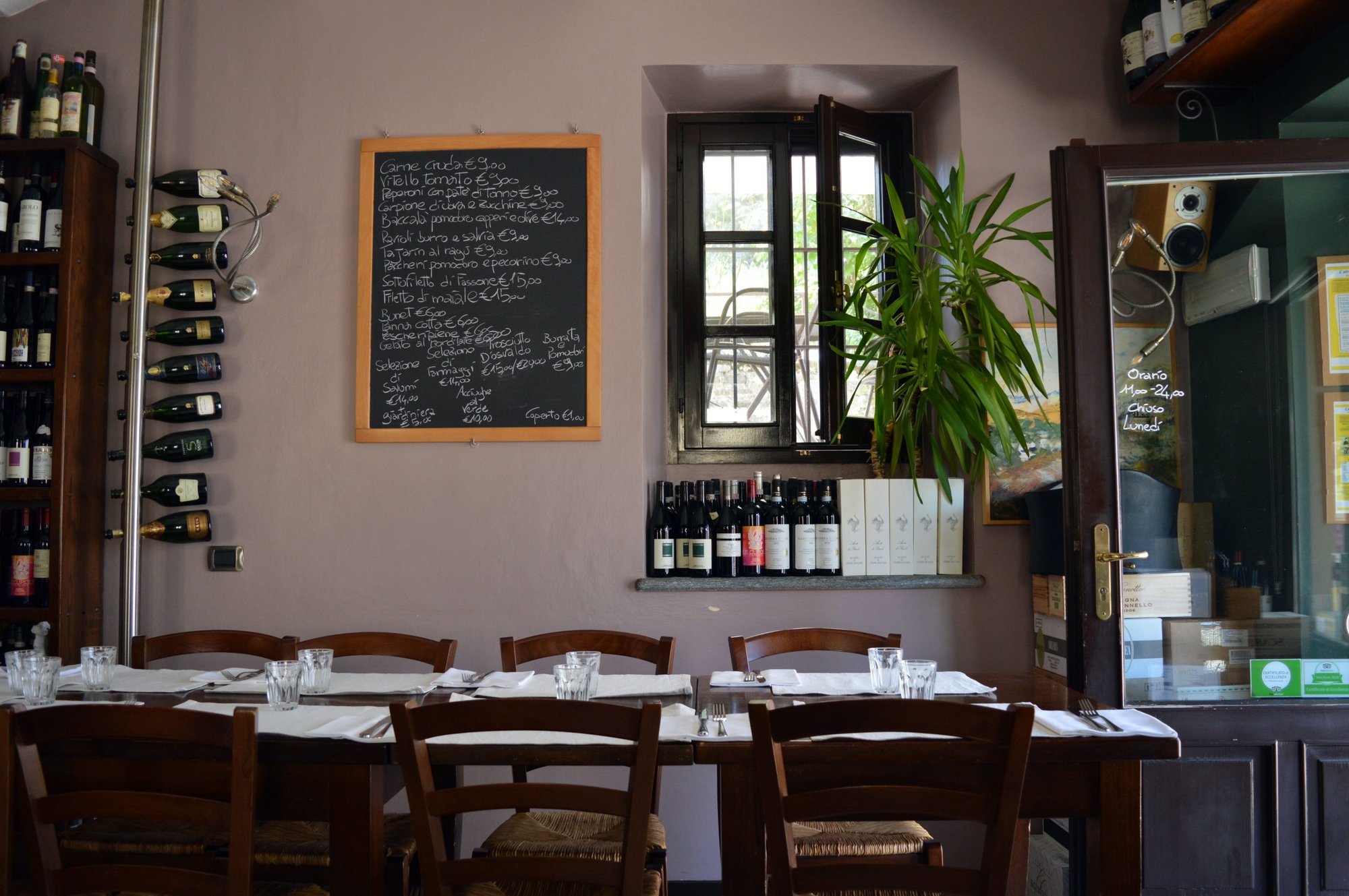
Bar in Serralunga d'Alba, Italy
Vinoteca Centro Storico
100ptsProducer-Circuit Vinoteca

About Vinoteca Centro Storico
Below the medieval walls of Serralunga d'Alba's castle, Vinoteca Centro Storico draws wine producers and village regulars alike into a compact, unhurried space where Barolo is the operating logic, not the occasion. This is where the Langhe drinks — quietly, knowledgeably, and without ceremony. A useful first stop for anyone arriving in the region with serious intentions toward Nebbiolo.
Drinking Barolo Where It's Made
The village of Serralunga d'Alba sits at the southern edge of the Barolo production zone, its castle visible from most of the surrounding vineyards. Wine tourism in the Langhe has expanded considerably over the past decade, bringing with it a class of wine bars that perform rusticity while charging urban prices. Vinoteca Centro Storico operates differently. Positioned on Via Roma, immediately below the castle, it occupies the kind of small, unaffected space that exists because local wine producers need somewhere to drink after work — not because a concept has been assembled for visiting collectors.
That distinction matters. In the world's most prestigious wine regions, the bars and enoteca that producers actually frequent tend to look unremarkable from the outside and carry unremarkable signage. What they carry instead is depth: a wine selection chosen by people who know every producer by name, and an atmosphere shaped by decades of the same conversations about vintages, harvest yields, and which slopes performed leading in a given year. Vinoteca Centro Storico has earned that reputation among Barolo's inner circle, which is the most credible signal any small wine bar in this part of Piedmont can carry. See our full Serralunga d'Alba restaurants guide for additional context on where the village sits relative to the region's other eating and drinking options.
The Wine Programme as Editorial Statement
In a region where the wine is unambiguously the point, the selection at a vinoteca functions the way a cocktail programme does at a serious bar: it encodes a philosophy, signals a peer group, and makes implicit arguments about quality and value. The Barolo production zone divides broadly between the clay-heavy soils of the western communes, which tend toward rounder, earlier-drinking wines, and the Helvetian limestone-dominated soils of the eastern communes — Serralunga, Castiglione Falletto, Monforte , which produce wines of greater structural severity and longevity. A vinoteca in Serralunga, surrounded by some of the zone's most demanding terroir, is positioned to offer pours from producers whose work rarely reaches import markets in meaningful volume.
This kind of by-the-glass access to small-production Nebbiolo is the equivalent of what serious cocktail bars like Drink Kong in Rome or 1930 in Milan offer through technique and rare spirits: a chance to taste something you cannot easily replicate elsewhere, in a setting calibrated for attention rather than distraction. The format at Vinoteca Centro Storico is similarly stripped of excess. Small space, focused offer, no performance. Across Italy, the enoteca tradition operates on this logic , from Enoteca Historical Faccioli in Bologna to Al Covino in Venice, the rooms are small, the wine lists are specific, and the implicit expectation is that you know what you're asking for or you're willing to learn from someone who does.
The Atmosphere Below the Castle
Serralunga d'Alba is a compact village. Its medieval centro storico can be walked end to end in a few minutes, and the castle at its apex is one of the most intact fourteenth-century fortifications in Piedmont. The physical setting of Vinoteca Centro Storico , below the castle, on the main village street , places it at the geographic and social centre of a community whose entire economic identity is built around the wines produced on the slopes surrounding it. The atmosphere inside reflects that rootedness. This is a cozy space in the Italian sense: genuinely small, without the engineered intimacy of a designed bar, with tables close enough that conversations between strangers are a natural consequence of the room's dimensions.
The character of such spaces is shaped as much by who drinks there as by what is poured. Wine producers drinking in their own village after a day in the cellar or vineyard set a different tone than the tourist-facing wine bars of, say, central Alba or the more theatrical environments found at destination wine experiences in Napa or Burgundy. The regulars at Vinoteca Centro Storico are people who have spent the day making the very wines on the list. That context changes what conversation at the bar sounds like, and for a visitor with a genuine interest in Barolo, the density of ambient knowledge in a room that size is not something any formal tasting experience can replicate.
For comparison, consider the atmosphere at places like L'Antiquario in Naples or Gucci Giardino in Florence, where the rooms are deliberately composed and the clientele curated by design. Vinoteca Centro Storico's version of curation happens organically, through geography and reputation rather than through interior architecture or booking policy.
Where This Sits in the Langhe's Drinking Map
The Barolo zone now supports a range of wine-focused stops at different points on the spectrum between accessibility and depth. The larger enoteca operations in La Morra and Barolo town handle high visitor volumes and maintain broad, commercially navigable selections. At the other end, small producers increasingly receive visitors by appointment for private tastings. Vinoteca Centro Storico occupies a middle position: public and walk-in, but oriented toward a local rather than tourist clientele, which means the experience rewards those who arrive with some prior knowledge of what Serralunga's producers are doing.
For anyone building a Langhe itinerary around serious wine engagement rather than scenery, the sequence matters. Arriving at a producer appointment with a morning's worth of conversation from a village vinoteca already in context produces a different kind of visit than arriving cold. In that sense, places like this function as the informal briefing rooms of a wine region. The equivalent in other European wine contexts might be a standing wine bar in a village in the northern Rhône or a small cave à vins in a Burgundy village , spaces that exist primarily because the wine is made there, and the people making it need somewhere to drink it.
Visitors coming from elsewhere in Italy will recognise the format from experiences at places like Bistrot Torrefazione Samambaia in Turin, though the focus here is entirely on wine rather than coffee culture. Those arriving from further afield , perhaps after stops at Fauno Bar in Sorrento, Lost & Found in Nicosia, or Cascate del Mulino in Manciano, or even farther afield at Bar Leather Apron in Honolulu , will find the Serralunga enoteca format a significant departure from cocktail-programme culture, and a useful corrective: wine served with the minimum of mediation between the glass and the land it came from.
Planning Your Visit
Serralunga d'Alba is most practically reached by car from Alba, roughly 12 kilometres to the northwest. The village has limited accommodation, making it more commonly visited as a half-day stop within a broader Langhe itinerary based in Alba, La Morra, or one of the larger agriturismo operations in the hills. Vinoteca Centro Storico is located at Via Roma 6, directly on the village's central street below the castle. Given its size and local orientation, visitors should treat the space accordingly: arrive without large groups, without urgency, and with at least a working knowledge of Barolo's communes. The wine list will reward that preparation. Specific hours and booking details are leading confirmed locally, as this type of village enoteca typically does not maintain a public website or online reservation system.
Frequently Asked Questions
What's the vibe at Vinoteca Centro Storico?
Small, unhurried, and shaped by a regular clientele of local wine producers. The atmosphere is less wine-bar-as-experience and more village-social-institution , which, in a production zone as serious as Serralunga d'Alba, means conversations at the counter tend toward the genuinely technical. Visitors are welcome but the space doesn't perform for them.
What's the signature drink at Vinoteca Centro Storico?
The offering is built around Barolo and the broader Piedmontese wine canon. Given the vinoteca's reputation among local producers, the by-the-glass selection almost certainly draws from small-production Nebbiolo that rarely appears on export markets. The wine is the programme; there is no cocktail list competing for attention.
What's the standout thing about Vinoteca Centro Storico?
Its standing among wine producers and Serralunga villagers rather than wine tourists. That reputation, earned rather than marketed, distinguishes it from the region's more visitor-oriented wine stops. In a zone that produces some of Italy's most collectible red wines, a space that local producers choose as their own drinking spot carries a specific kind of authority.
Is Vinoteca Centro Storico reservation-only?
Based on available information, the vinoteca operates as a walk-in space rather than a reservation-driven one. Given its size and local character, a phone call ahead during peak harvest season (October) would be sensible, though the venue does not appear to maintain a public website or online booking facility. Visiting outside high summer and harvest periods typically reduces pressure on small spaces of this kind.
Which Barolo villages are within easy reach of Vinoteca Centro Storico?
Serralunga d'Alba sits in the eastern part of the Barolo production zone, close to Castiglione Falletto and Monforte d'Alba , all three communes associated with the zone's more structured, age-worthy style of Nebbiolo. La Morra and Barolo town, which produce wines from heavier clay soils and tend toward earlier accessibility, are reachable within fifteen minutes by car. For visitors exploring the full range of Barolo's terroir contrasts, using Serralunga as an anchor and driving the zone's ridgeline roads is the most efficient way to map those stylistic differences against the landscape that produces them.
Recognized By
Similar venues by awards
Related editorial
- Best Fine Dining Restaurants in ParisFrom three-Michelin-star icons to the next generation of Parisian chefs pushing boundaries, these are the restaurants that define fine dining in the world's culinary capital.
- Best Luxury Hotels in RomeFrom rooftop terraces overlooking ancient ruins to Michelin-starred hotel dining, these are the luxury hotels that make Rome unforgettable.
- Best Cocktail Bars in KyotoFrom sleek lounges to hidden speakeasies, Kyoto's cocktail scene blends Japanese precision with global influence in ways you won't find anywhere else.
Save or rate Vinoteca Centro Storico on Pearl
Keep this venue in your Pearl passport, rate it after you visit, and track it alongside every other place you collect.