
Bar in Rome, Italy
Urbana 47
100ptsPaired Bar-Kitchen Format
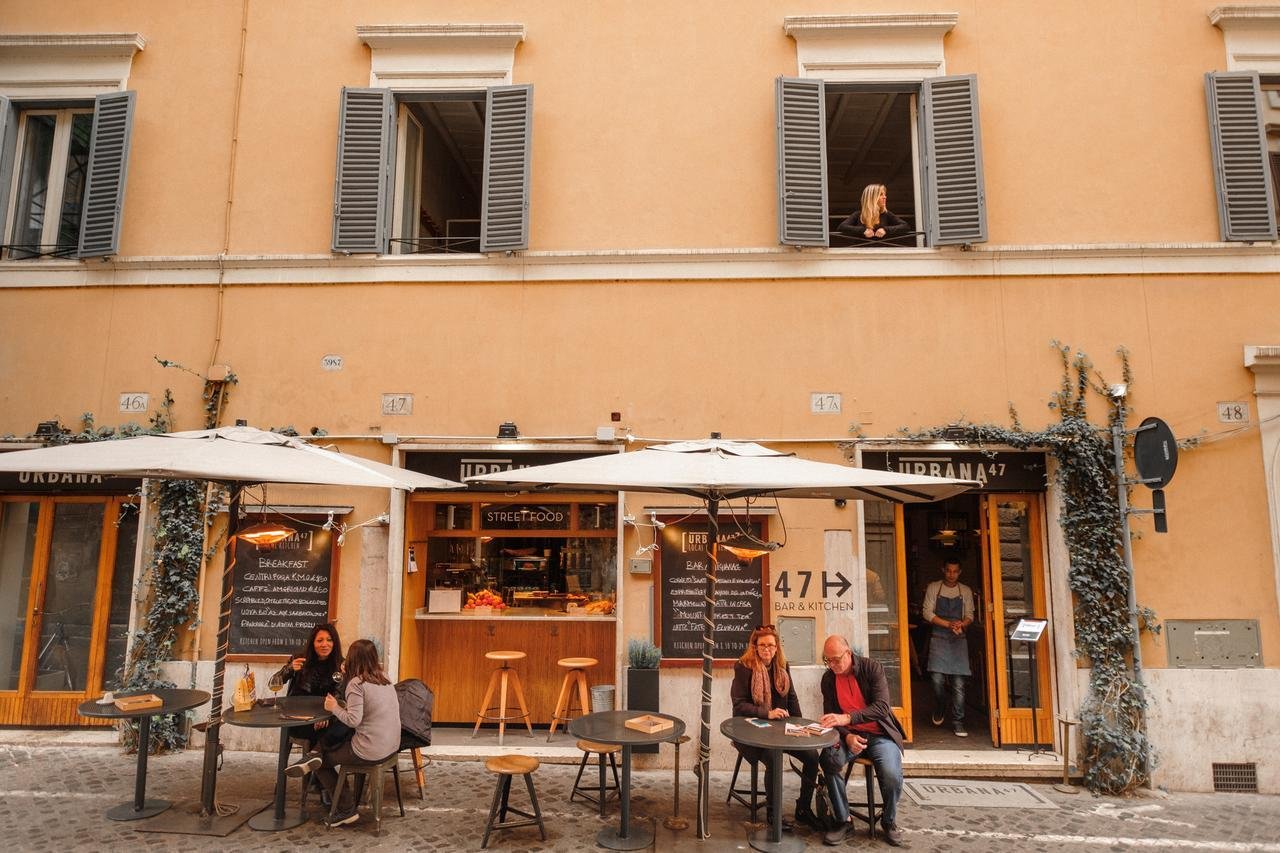
About Urbana 47
On a narrow street in the Monti neighbourhood, Urbana 47 occupies a particular position in Rome's bar scene: a space where the food programme and the drinks list are designed to work together rather than operate in parallel. The address on Via Urbana places it within easy reach of the Colosseum and the neighbourhood's cluster of independent wine bars and cocktail rooms.
The Monti Address and What It Signals
Via Urbana runs through one of Rome's most consistently interesting drinking neighbourhoods. Monti sits between the Colosseum and the Esquiline hill, and its streets hold an unusually dense concentration of independent bars, wine shops, and small restaurants that have operated largely outside the tourist circuit. The neighbourhood's identity is built on that independence: smaller rooms, proprietor-driven programmes, and menus that reflect a considered point of view rather than broad-market appeal. Urbana 47 sits within that context at number 47 on the street that gives the venue its name, and its approach to the relationship between food and drink reflects the area's general sensibility.
Rome's bar scene has changed considerably over the past decade. The city was slower than Milan or Florence to develop a technically serious cocktail culture, but that gap has closed. Venues like Drink Kong brought a high-production approach to the Pigneto neighbourhood, while Jerry Thomas Speakeasy built its reputation around classic technique and a booking model that filters for serious drinkers. In Trastevere, Freni e Frizioni occupies a different register entirely, with an aperitivo format that prioritises volume and energy over depth. Urbana 47's Monti location places it in a quieter tier of that ecosystem, where the format is more intimate and the food component is taken seriously enough to function as a genuine counterpart to the drinks rather than an afterthought.
The Food and Drink Programme as a Paired System
The bar food model in Rome has historically operated at two speeds: the traditional aperitivo spread, where small plates arrive automatically with your drink, and the more recent shift toward curated small-plates programmes designed to work alongside wine or cocktails. The better venues in the second category treat the kitchen and the bar as a single programme rather than two separate departments that happen to share a building.
In practice, this means the food at a place like Urbana 47 is built around the same considerations that shape the drinks: balance, acidity, weight, and the logic of what works alongside alcohol rather than in opposition to it. Italian bar food has particular structural advantages here. Cured meats, aged cheeses, preserved vegetables, and bread-based preparations all carry the salt and fat content that makes them functional pairings with both wine and spirits-based drinks. The Italian tradition of eating while drinking is older than cocktail culture itself, and venues that understand this don't need to invent a pairing philosophy from scratch — they need to execute a well-established one with enough precision to distinguish themselves.
The Monti neighbourhood's character pushes in the same direction. The area has a higher concentration of natural wine bars and independent enotecas than most Roman neighbourhoods, which means the local audience is accustomed to thinking about food and drink together. That context shapes what works commercially and what the room expects.
Positioning Within Rome's Bar Tier
Rome's cocktail and wine bar scene now covers a wide enough range that categorisation matters. At one end, venues built around theatrical formats and high-profile competition placements — the approach that defines Boeme and parts of the Drink Kong programme , compete for a different audience than neighbourhood bars with strong food programmes and lower ambient energy. Urbana 47 operates in the latter category, which is neither a lesser position nor a less demanding one. Consistency across both the food and drinks components over multiple services is harder to sustain than a single high-concept format, and the Monti audience, which includes a significant proportion of Romans rather than tourists, is a more critical one.
Across Italy, the bars that have built the most durable reputations tend to sit in exactly this middle tier. Al Covino in Venice operates on similar logic: a focused wine and food programme in a small room, with no particular interest in spectacle. Enoteca Historical Faccioli in Bologna takes an even more traditional position, anchored in natural wine with food as a structural companion. L'Antiquario in Naples belongs to a more cocktail-forward version of the same category. What connects them is the premise that the food and the drink are designed to be experienced together.
Further afield, the same logic applies at Gucci Giardino in Florence, though in a considerably more formal register, and at 1930 in Milan, where the pairing approach is structured around a tasting format. Lost and Found in Nicosia and Bar Leather Apron in Honolulu demonstrate that the pairing-focused bar format has no particular geographic limits, though the Italian version benefits from a food tradition that was already built around drink compatibility long before modern cocktail culture arrived.
Planning a Visit
Via Urbana is a short walk from the Cavour metro station on Line B, which makes Urbana 47 direct to reach from most parts of the city centre. The Monti neighbourhood is leading experienced on foot; the streets around Via Urbana hold enough other bars, wine shops, and small restaurants to justify an evening spent in the area rather than a single-stop visit. As with most Rome bars of this type, the practical details , current hours, booking requirements, and pricing , are leading confirmed directly with the venue before arrival, as smaller independent operations tend to adjust these seasonally. For a broader view of what Rome's eating and drinking scene offers across neighbourhoods, the EP Club Rome guide covers the city's key venues and areas in detail.
Frequently Asked Questions
- What should I expect atmosphere-wise at Urbana 47?
- Urbana 47 operates within the Monti neighbourhood's established character: smaller rooms, independent programming, and an audience that skews toward Romans rather than tourists passing through. The bar sits in the quieter, more intimate tier of Rome's drinking scene rather than the high-energy or theatrically formatted end. Comparable venues in other Italian cities include Al Covino in Venice and Enoteca Historical Faccioli in Bologna, both of which share the same format logic: food and drink treated as a paired programme in a low-volume room.
- What's the signature drink at Urbana 47?
- Specific menu details for Urbana 47 are not available in verified form at the time of writing, and the drinks programme should be confirmed directly with the venue. What the address and neighbourhood context suggest is a programme oriented toward wine and aperitivo-adjacent cocktails rather than high-production spirit-forward formats. Monti's bar culture has historically favoured natural wine and Italian vermouth-based drinks over the international competition-circuit style that defines venues in other Roman neighbourhoods.
- Is Urbana 47 a good option for an evening that combines drinks and a light dinner?
- The bar food and drinks pairing model that Urbana 47 operates within is well-suited to exactly that format. In the Italian bar tradition, small plates of cured meat, cheese, and kitchen-prepared bites are designed to accompany drinks across an extended sitting rather than function as a starter before a main course elsewhere. Via Urbana's proximity to the Cavour metro stop and the density of other independent venues in the Monti neighbourhood also makes it a practical anchor for a longer evening in the area.
Related editorial
- Best Fine Dining Restaurants in ParisFrom three-Michelin-star icons to the next generation of Parisian chefs pushing boundaries, these are the restaurants that define fine dining in the world's culinary capital.
- Best Luxury Hotels in RomeFrom rooftop terraces overlooking ancient ruins to Michelin-starred hotel dining, these are the luxury hotels that make Rome unforgettable.
- Best Cocktail Bars in KyotoFrom sleek lounges to hidden speakeasies, Kyoto's cocktail scene blends Japanese precision with global influence in ways you won't find anywhere else.
Save or rate Urbana 47 on Pearl
Keep this venue in your Pearl passport, rate it after you visit, and track it alongside every other place you collect.