
Bar in Rome, Italy
Rimessa Roscioli
100ptsGarage-Cellar Wine Education
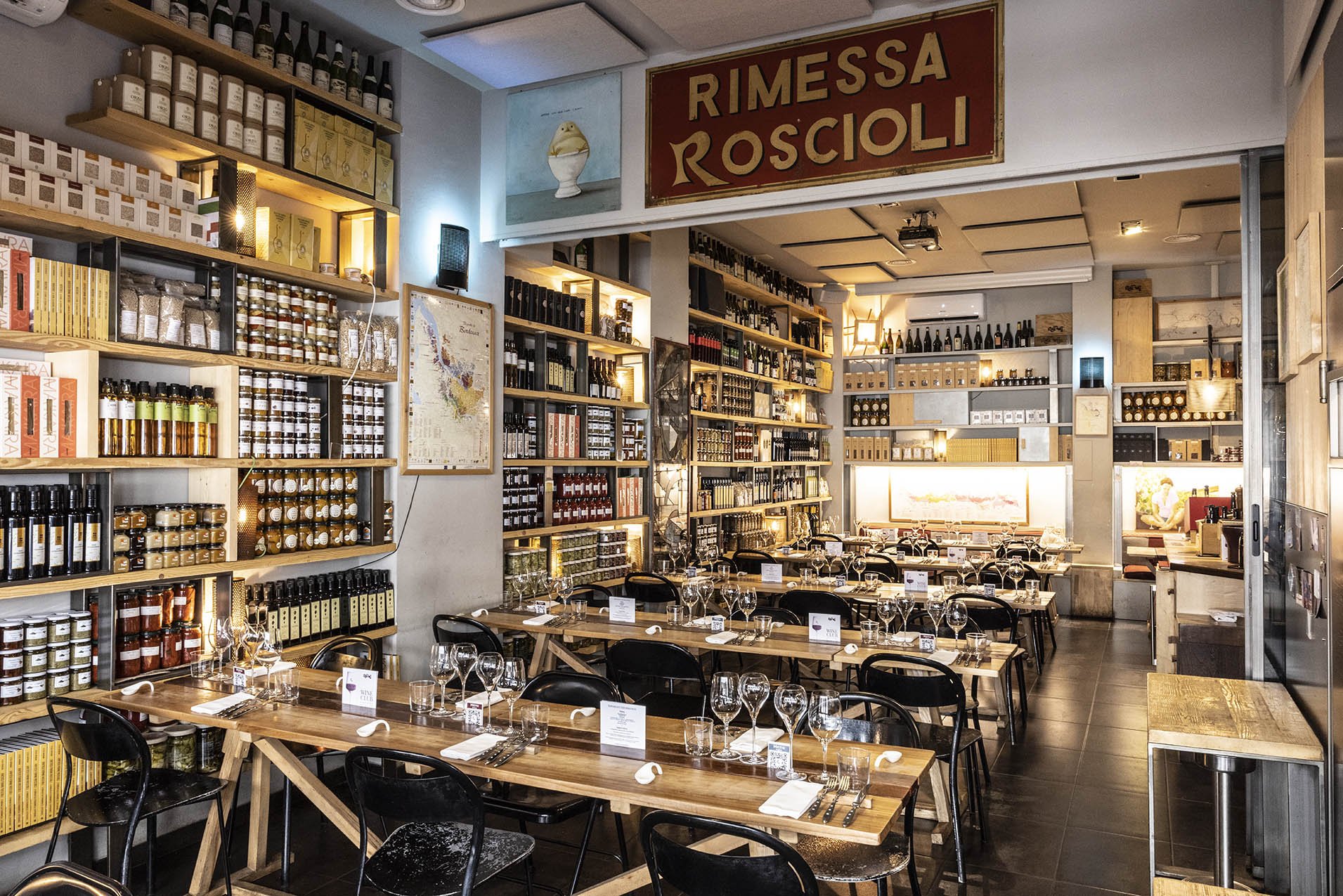
About Rimessa Roscioli
Rimessa Roscioli occupies a converted garage on Via del Conservatorio, operating as Rome's most serious wine bar within the broader Roscioli family network. Where the adjacent deli-restaurant draws tourists, Rimessa functions as a working classroom and evening wine destination, positioning it closer to specialist enoteca culture than to the city's cocktail bar circuit.
A Garage Becomes a Reference Point
There is a specific category of Roman drinking destination that resists easy classification: not a restaurant with a wine list, not a cocktail bar with Italian aperitivo trappings, but a place where wine is both the curriculum and the occasion. Rimessa Roscioli, on Via del Conservatorio 58 in the Regola neighbourhood, operates in that category. The address is worth noting: Regola sits immediately south of Campo de' Fiori, close enough to the tourist circuit to be findable, far enough from it to remain, in practice, a locals-and-specialists room.
The physical starting point matters here. Rimessa is Italian for garage or carriage house, and the space retains the proportions of its former function: broad, low-ceilinged, with the kind of volume that turns a full room into a genuine atmospheric event. Approaching from Via del Conservatorio, there is no marquee signage competing for attention. The entrance reads as understated by design, which in Rome tends to signal confidence rather than obscurity.
The Roscioli Network and Where Rimessa Fits
Understanding Rimessa requires placing it inside the wider Roscioli operation, which is one of Rome's more coherent food-and-wine businesses: the bakery on Via dei Chiavari, the deli-restaurant on Via dei Giubbonari a few hundred metres away, and Rimessa as the dedicated wine and education arm. In a city where similar-sounding names often indicate franchise dilution, the Roscioli model works the other way: each address has a distinct function, and Rimessa's is specifically wine-centred programming.
That distinction matters when positioning Rimessa against Rome's broader drinking options. The city's cocktail bar scene has grown considerably in the past decade. Drink Kong operates a technically driven, internationally referenced program in Pigneto. Jerry Thomas Speakeasy anchors Rome's historic commitment to speakeasy theatre near the Pantheon. Freni e Frizioni runs one of the city's highest-volume aperitivo operations out of a converted garage in Trastevere, and Boeme has established itself in the natural wine conversation. Rimessa doesn't compete directly with any of them. Its peer set is the specialist enoteca, and it prices and programmes accordingly.
From Wine Bar to Wine School: The Evolution
What makes Rimessa editorially interesting is not simply what it is now, but the direction it has taken. Italian wine bars have historically operated on a simple premise: a serious list, capable staff, small plates to anchor the evening. Rimessa has kept that structure but added a layer that changes its identity: formal wine education events and tasting sessions, often structured around specific Italian regions, producers, or varietals, run alongside regular evening service.
This pivot toward the educational format places Rimessa inside a broader shift visible across premium wine destinations in Europe. The most forward-looking enotecas are no longer content to be passive intermediaries between bottle and glass. In Bologna, Enoteca Historical Faccioli has built its identity around natural wine curation with similar intellectual seriousness. In Venice, Al Covino represents the bacaro tradition held to a tighter editorial standard. Rimessa's approach in Rome is more structured than either: the tasting events are ticketed, often require advance booking, and function as standalone experiences rather than incidental programming around the bar.
For visitors, that creates a practical fork in the road. Rimessa as an evening wine bar is accessible, if busy, on most nights. Rimessa as a tasting event requires planning, typically several weeks out for popular sessions. Arriving without a booking for a structured event and expecting to participate is not a realistic strategy in the current format.
The Wine Program and What It Signals
The list at Rimessa draws heavily on Italian producers, with depth in regions that receive less international attention than Barolo or Brunello: Campania, Abruzzo, Friuli, the volcanic wines of Etna and the Aeolian Islands. This emphasis on lesser-profiled Italian wine reflects a broader curatorial argument: that the country's diversity remains underexplored even by visitors who consider themselves wine-literate. It is a position that aligns Rimessa with the natural and artisan wine conversation without being ideologically constrained by it.
By comparison, Rome's cocktail-forward venues are exploring different territory. The clarified and technically manipulated drink formats gaining traction at programs like 1930 in Milan or the ingredient-precise approach at Gucci Giardino in Florence represent one direction Italian drinking culture is travelling. Rimessa's counter-argument is that Italian wine, properly contextualized, is the more complex and historically grounded subject. Both positions have merit; they serve different evenings and different appetites.
For those exploring wine culture beyond Italy's borders, the comparison extends further: L'Antiquario in Naples blends heritage cocktail formats with southern Italian identity in a way that shares Rimessa's commitment to local specificity. Lost & Found in Nicosia and Bar Leather Apron in Honolulu show that the serious drinking-with-context model has adherents well outside Europe.
Planning a Visit
Via del Conservatorio 58 places Rimessa within a short walk of Campo de' Fiori and the broader centro storico. For evening wine bar visits, arriving early in the week or before peak dinner hours reduces pressure on seating. For tasting events, the Roscioli website is the primary booking channel, and popular sessions in the Italian wine calendar (harvest-adjacent months, end-of-year) tend to fill several weeks in advance. The food offering is designed to support the wine program: small plates and selections from the Roscioli supply chain, calibrated to accompany rather than overshadow the glass.
For a complete view of where Rimessa sits within Rome's broader drinking and dining options, see our full Rome restaurants guide.
Frequently Asked Questions
- What is Rimessa Roscioli known for?
- Rimessa Roscioli is known as the wine-focused arm of the Roscioli family operation in Rome, functioning as both a serious enoteca and an educational venue for structured wine tastings. It sits in the specialist tier of Rome's drinking scene, closer to the dedicated Italian wine bar tradition than to the city's cocktail culture, and draws a clientele that ranges from local wine professionals to informed international visitors. Its address in the Regola neighbourhood, near Campo de' Fiori, keeps it accessible without placing it in the highest-traffic tourist zone.
- What cocktail do people recommend at Rimessa Roscioli?
- Rimessa Roscioli is primarily a wine destination, not a cocktail bar, and the program is built around Italian bottles rather than mixed drinks. Guests looking for cocktail-forward experiences in Rome are better directed to Drink Kong or Jerry Thomas Speakeasy. At Rimessa, the recommended order is a glass selected with staff guidance from the Italian regional list, particularly from producers in Campania or Sicily's volcanic zones, which form a consistent strength of the cellar's editorial focus.
- Do they take walk-ins at Rimessa Roscioli?
- Walk-ins for general wine bar service are possible at Rimessa Roscioli, though availability varies by night and season, with the centro storico location drawing consistent demand from both locals and visitors. Structured tasting events operate on a separate ticketed booking system and do not accommodate walk-in participation. If visiting Rome during a busy period, checking the Roscioli booking channels in advance is the more reliable approach, particularly for any event-format evening.
- How does Rimessa Roscioli's tasting event format compare to a standard enoteca visit?
- A standard enoteca visit at Rimessa follows the familiar Italian model: seated wine service, knowledgeable staff, small plates from the Roscioli supply chain. The tasting events are a distinct format, ticketed separately and structured around a specific Italian region, varietal, or producer theme, with guided commentary running through multiple pours. The event format is closer to a professional wine education session than a casual evening out, which is precisely what distinguishes Rimessa from the majority of Rome's enotecas and places it in a specialist tier within the city's wine scene.
Related editorial
- Best Fine Dining Restaurants in ParisFrom three-Michelin-star icons to the next generation of Parisian chefs pushing boundaries, these are the restaurants that define fine dining in the world's culinary capital.
- Best Luxury Hotels in RomeFrom rooftop terraces overlooking ancient ruins to Michelin-starred hotel dining, these are the luxury hotels that make Rome unforgettable.
- Best Cocktail Bars in KyotoFrom sleek lounges to hidden speakeasies, Kyoto's cocktail scene blends Japanese precision with global influence in ways you won't find anywhere else.
Save or rate Rimessa Roscioli on Pearl
Keep this venue in your Pearl passport, rate it after you visit, and track it alongside every other place you collect.