
Bar in Rome, Italy
Baccano
100ptsAll-Day Roman Brasserie
About Baccano
Positioned steps from the Trevi Fountain, Baccano occupies a space that Rome's bar scene uses as a reference point for all-day drinking formats: aperitivo flows into dinner, dinner into late cocktails, without a hard stop. The interior trades in the kind of deliberate visual density that Manhattan brasseries and Parisian grands cafés have long mastered, transplanted to a stretch of central Rome that earns its foot traffic.
A Room Built for the Long Evening
There is a particular category of bar-restaurant that European cities do better than almost anywhere else: the all-day room that functions equally well at noon, at seven in the evening, and at midnight, shifting register without changing address. In Rome, that format is rarer than the city's reputation for leisurely dining might suggest. Most trattorias close between lunch and dinner; most cocktail bars don't open until the aperitivo hour. Baccano, on Via delle Muratte just a short walk from the Trevi Fountain, operates across that full arc, and its interior is designed accordingly.
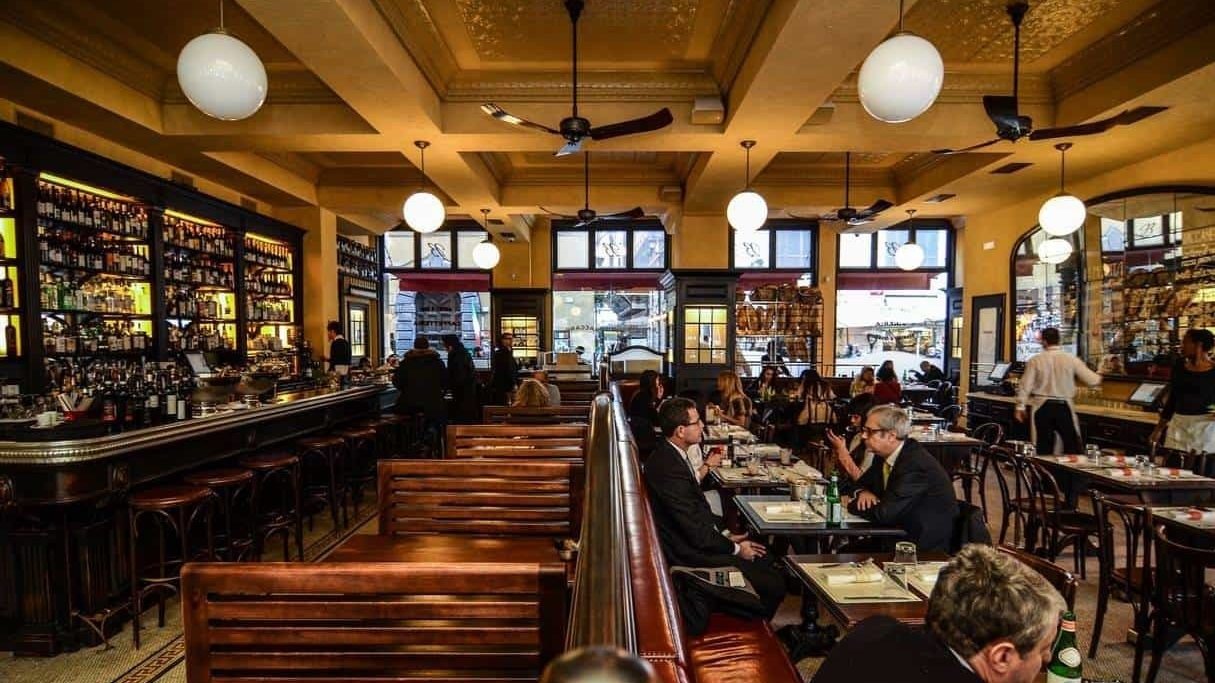
The space draws from the visual grammar of the grand American brasserie crossed with Italian Liberty-era excess: dark wood, mirrored panels, leather banquettes, globe lighting, and enough decorative layering to reward a second or third look. This is not the stripped-back aesthetic that defines much of Rome's newer bar programming, where concrete surfaces and neon signage signal credibility. Baccano's design argument is the opposite: that density of material, when handled with restraint, produces warmth rather than noise. It is the kind of room that photograph well but functions better in person, where the acoustic softening of upholstery and the amber of the lighting do the work that minimalist spaces cannot.
Where Baccano Sits in Rome's Bar Conversation
Rome's cocktail bar scene has developed a clear internal hierarchy over the past decade. At one end, technically focused programs like Drink Kong and Jerry Thomas Speakeasy have built international reputations on original technique and low-volume formats. At the other, neighbourhood aperitivo anchors like Freni e Frizioni in Trastevere serve volume and accessibility over precision. Baccano occupies a third position: the high-traffic, high-design brasserie format that prioritises experience breadth over category depth.
That positioning is not a compromise; it is a deliberate choice with its own logic. A room this close to the Trevi Fountain does not need to compete with destination cocktail bars for the same customer. Its competition is the tourist-facing trattoria and the hotel bar, and against those it wins on atmosphere and format flexibility. For anyone comparing it directly to Boeme or the more specialist programs, the calculus is different: Baccano is where you take someone who wants a full evening in one place, not where you go to benchmark a specific technique.
Across Italy, this brasserie-cocktail hybrid has proven durable in cities with strong tourist economies. Gucci Giardino in Florence operates in a comparable register, combining food, cocktails, and designed space for an audience that wants coherent luxury across a full visit. L'Antiquario in Naples takes a more intimate version of the same idea. What distinguishes the Roman model is the proximity to landmark infrastructure: a bar near the Trevi Fountain absorbs tourist footfall at a scale that shapes what it needs to be.
The Space as Programme
Baccano's interior architecture does most of the programming work. The banquette layout means that a table for two and a table for eight can coexist without either feeling like an afterthought. The bar counter is a genuine focal point, not a service station tacked onto a dining room, which gives solo drinkers and cocktail-first visitors a natural home. The lighting shifts perceptibly across the day, moving from the brighter, lunch-service register toward the warmer amber of aperitivo and dinner hours without the theatrical dimming that some venues use as a signal to spend more.
For a venue in Rome's historic centre, the decision to invest in this level of material finish carries risk: maintenance costs are high, and the aesthetic has a clear expiration date if not refreshed. But it also communicates permanence in a neighbourhood where pop-up concepts and hastily renovated tourist traps cycle through quickly. The design says, in effect, that this address intends to be here in ten years, which is itself a form of trust signal in a market saturated with short-term operators.
Drinking Well at Baccano
The cocktail list at a brasserie-format bar like this one tends to prioritise accessibility and throughput over the kind of experimental programming you find at Rome's dedicated cocktail venues. That is not a criticism: a room that needs to serve aperitivo to a hundred covers before dinner cannot run a tasting-menu-length spirits list with twenty-minute build times. The model that works here is classic structure, executed cleanly, with enough seasonal and local gesture to avoid feeling generic.
Italian bars in this format have historically leaned on the Negroni and its variations as an anchor, and Rome is no exception. The Spritz remains the high-volume aperitivo vehicle across the city, but venues with a stronger cocktail identity tend to use the Negroni family to signal where they sit on the quality spectrum. For visitors who want to move further along the bar program, Amaro-based builds and vermouth-forward structures give a specifically Italian reading of the classic cocktail format, without requiring the investment in single-product education that a specialist venue demands.
Planning a Visit
Via delle Muratte 23 puts Baccano within walking distance of the Trevi Fountain, the Pantheon corridor, and the Via Veneto hotel strip, which means it is genuinely accessible from most central Rome accommodation without requiring transport. The proximity to the Fontana di Trevi also means the surrounding streets are among the most foot-trafficked in the city, particularly between 6pm and 10pm in spring and summer. Arriving at aperitivo hour (6pm to 7:30pm) on a weekend without a reservation carries real wait risk; booking ahead for dinner service is the direct way to secure a specific table type. The banquette seats fill before the bar stools, so early arrival works in favour of drinkers who prefer the counter.
For visitors building a wider Rome bar itinerary, Baccano works well as an opening act: aperitivo here, then a later stop at one of the more technically focused programs in the Pigneto or Testaccio areas. Rome's geography means bar-hopping is less linear than in cities with dense cocktail districts, but the Pantheon-Trevi corridor and Trastevere between them cover a reasonable range of formats. See our full Rome restaurants guide for broader context on how the city's drinking and dining scenes connect.
For comparison beyond Rome, the brasserie-bar format Baccano represents appears in other EP Club-tracked cities: 1930 in Milan takes a more theatrical approach to the same all-day premise; Al Covino in Venice compresses the concept into a smaller, wine-forward room; and Bar Leather Apron in Honolulu shows how the design-led cocktail bar translates into a Pacific market with different cultural anchors. The Enoteca Historical Faccioli in Bologna and Lost & Found in Nicosia represent the more specialist end of the Italian and Eastern Mediterranean spectrum that Baccano deliberately steps back from.
Frequently Asked Questions
- What is the signature drink at Baccano?
- Baccano's drink program sits within the Italian cocktail tradition, where Negroni variations and Amaro-based builds tend to anchor the list at brasserie-format bars of this type. The aperitivo hour draws a broad range of classic structures executed for volume and consistency, with vermouth-forward builds reflecting the Rome market's Italian spirits orientation. For venue-specific menu details, checking directly with the bar before visiting gives the most current picture.
- What is Baccano leading at?
- Among Rome's central bar addresses, Baccano performs most clearly as a full-evening venue: aperitivo through dinner and into late drinks, without requiring a venue change. Its location near the Trevi Fountain and its brasserie-scale room make it one of the few spots in the historic centre where a large group can occupy a table across multiple hours without the format breaking down. It does not compete with Rome's specialist cocktail programs on technical depth, but for breadth and design quality relative to the tourist-facing alternatives in the same neighbourhood, it holds a clear position.
- Is Baccano in Rome suitable for a solo visit, or does it work better for groups?
- The room's layout actively supports solo visitors: the bar counter at Baccano is a genuine focal point with its own social register, separate from the dining floor. In Rome's historic centre, solo drinkers at a well-designed counter are less exposed than at table-service-only venues, and the all-day format means there is no awkward threshold between lunch service and evening crowds. For groups, the banquette configuration handles larger parties more comfortably than most specialist cocktail bars in the city.
Related editorial
- Best Fine Dining Restaurants in ParisFrom three-Michelin-star icons to the next generation of Parisian chefs pushing boundaries, these are the restaurants that define fine dining in the world's culinary capital.
- Best Luxury Hotels in RomeFrom rooftop terraces overlooking ancient ruins to Michelin-starred hotel dining, these are the luxury hotels that make Rome unforgettable.
- Best Cocktail Bars in KyotoFrom sleek lounges to hidden speakeasies, Kyoto's cocktail scene blends Japanese precision with global influence in ways you won't find anywhere else.
Save or rate Baccano on Pearl
Keep this venue in your Pearl passport, rate it after you visit, and track it alongside every other place you collect.