The Pour House Music Hall & Record Shop
Fayetteville Street, Raleigh
Bar in Raleigh, United States
 Book with Pearl
Why go
The Pour House Music Hall & Record Shop is worth choosing when the night is about live music, records, and a casual downtown Raleigh plan. It is less convincing as a cocktail-first or special-occasion bar; for quieter drinks, compare The Green Light, Watts & Ward, or The Hippo Wine Bar & Shop before committing.
About The Pour House Music Hall & Record Shop
For a Raleigh night out, The Pour House Music Hall & Record Shop is easiest to understand as a music hall and record shop with casual dress and posted afternoon and evening hours on Tuesday through Sunday. Plan around the format rather than dinner, pricing, reservations, or a specific drinks program.
Set expectations accordingly. This is a better fit when the night is built around music and record browsing than when the priority is a fully documented dinner, a special-occasion price point, or a specific drinks program. If you are comparing it with other Raleigh options such as The Green Light or Watts & Ward, use the hours, casual dress, and the music-hall/record-shop identity as the basis for the decision.
Choose it for records and a music-hall setting
The draw is the hybrid identity in the name: music hall plus record shop. That makes the venue useful for readers who want an activity built into the evening rather than a stop chosen only for a listed menu or a documented bar program.
That matters for planning. If the decision depends on a known dinner format, a confirmed wine list, or a clearly priced special-occasion experience, compare other Raleigh options such as The Hippo Wine Bar & Shop or Brewery Bhavana - Downtown based on their own current details.
How to use it in a Raleigh night out
Use this as the anchor when the group wants a casual music-hall and record-shop stop in Raleigh. It is less useful as the only plan for guests who need a seated meal, published pricing, or reservation details. For wider planning, compare nearby options in Pearl's Raleigh bars guide, then pair the night with Pearl's Raleigh restaurants guide if dinner needs to carry more of the occasion.
Planning details
- Location
- 224 S Blount St, Raleigh, NC 27601
- Website
- thepourhousemusichall.com
- Phone
- +1 919 821 1120
The take
The Take
The Vibe
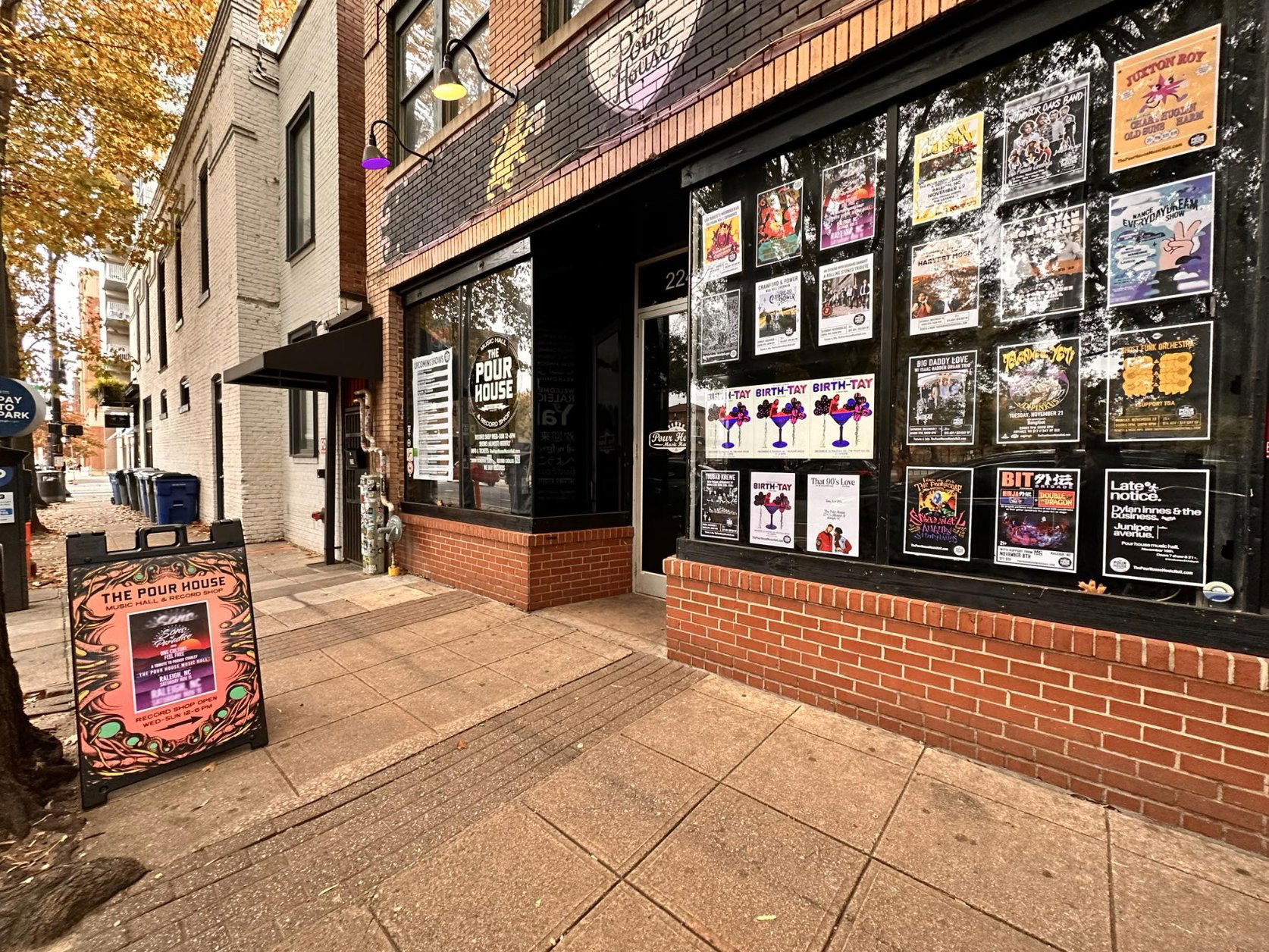
The Pour House Music Hall & Record Shop reads like a purpose-built node of independent music culture: a modest storefront record shop that feeds directly into a live room. The writing emphasizes a neighborhood of lower buildings and uncurated signage, so the venue feels unpolished by design rather than neglect. That combination—vinyl bins as a lobby and a DIY-oriented performance space—creates an atmosphere that privileges artist credibility, catalogue depth, and an audience that values listening. It’s intimate without trying to be boutique, and its personality emerges from the relationship between retail and performance more than from decor.
Best For
This venue is best for people who come to shows with intent: fans who like discovering records before a set, friends heading out for a local gig, and small groups who want a focused listening experience rather than a generic night out. Programming skews toward independent and credible artists, so it’s a good pick for those who follow scene artists or want to catch emerging talent in a compact room. Because the record shop functions as part of the entry sequence, it also suits vinyl collectors who enjoy browsing before a performance.
Ordering Tips
Plan to arrive early to make the most of what the venue offers: browse the record bins and merch before doors fully fill, since the shop serves as the pre-show gathering point and helps filter the audience. Buy tickets or merch at the shop if that option is available, and check the show lineup in advance so you know the set times and any door policies. Expect a focused, music-first crowd and a straightforward, no-frills service approach—supporting artists and the community (through merch and ticket purchases) is the clearest way to engage.
Venue details
Ambiance
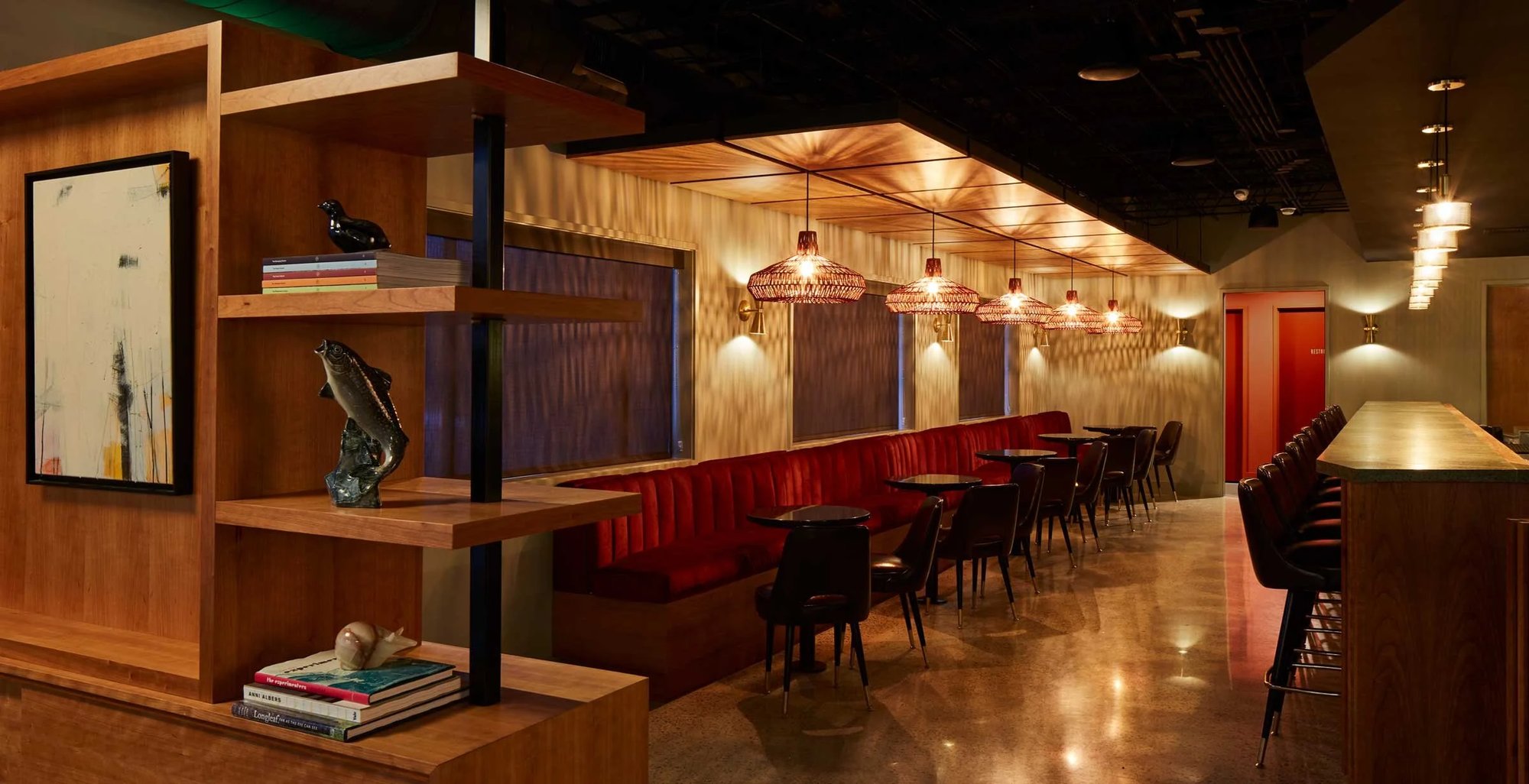
Energetic live music atmosphere with a nostalgic, music-centric vibe from the record shop and concert hall.
Tags
Vibe
Best For
Experience
Format
At the Bar
- Bar Category
- Pub
- Late Night
- Closes by Midnight
- Music
- Eclectic Mix of Local and National Bands Across Genres
- Live Music
- Yes
Signature Pours
Ginger & Mint Infused Bourbon
Know before you go
Know Before You Go
- Getting there
- 224 S Blount St, Raleigh, NC 27601
Planning details
Location
Also consider
Also Consider
- The Hippo Wine Bar & Shop, Notable alternative
- Brewery Bhavana - Downtown, Notable alternative
- Watts & Ward, Notable alternative
- The Green Light, Notable alternative
- The Raleigh Times, Notable alternative
Bar context
How it compares in Raleigh
The Pour House Music Hall & Record Shop is the activity-led pick in this group: choose it when music and record browsing matter more than cocktail depth. The Hippo Wine Bar & Shop is the cleaner cross-shop for wine-focused drinking, while Brewery Bhavana - Downtown makes more sense when the night needs a broader downtown plan.
For ambiance, Watts & Ward and The Green Light are stronger choices for a date where conversation and room feel matter. The Pour House is easier to justify for casual groups because the format gives people something to gather around, but it is not the obvious pick for a polished celebration drink.
The Raleigh Times is the safer fallback when the group wants a familiar downtown bar stop without centering the night on a show. Pick The Pour House when programming is the point; pick one of the cocktail- or wine-led peers when drinks are carrying the decision.
Explore Raleigh
Around this place
Discover more on Pearl
Unlock the full The Pour House Music Hall & Record Shop guide in Pearl, including awards, comparisons, FAQs, planning details, and nearby places.
Compare The Pour House Music Hall & Record Shop
| Venue | Location | Awards |
|---|---|---|
| The Pour House Music Hall & Record Shop | Raleigh | No published awards |
| The Hippo Wine Bar & Shop | Raleigh | No published awards |
| Brewery Bhavana - Downtown | Raleigh | No published awards |
| Watts & Ward | Raleigh | No published awards |
| The Green Light | Raleigh | No published awards |
| The Raleigh Times | Raleigh | No published awards |
How The Pour House Raleigh compares with similar nearby venues.
FAQ
Frequently Asked Questions
What's the best time to go to The Pour House Music Hall & Record Shop?
Use the posted evening hours if you are planning a night out in Raleigh. The venue is open Tue–Thu from 7 PM–12 AM, Fri–Sat from 8 PM–12 AM, and Sun from 7–11 PM, with additional afternoon hours Tue–Sun from 12–6 PM.
Is The Pour House Music Hall & Record Shop open late?
Yes. In Raleigh, its posted evening hours run Tue–Thu until 12 AM and Fri–Sat until 12 AM, with Sunday ending at 11 PM and Monday closed.
Does The Pour House Music Hall & Record Shop have happy hour deals?
Do not plan around happy hour drink specials here. Use the casual dress, Raleigh location, and posted hours when deciding whether it fits the night.
Is the food good at The Pour House Music Hall & Record Shop?
Do not treat this as a food-first stop. If dinner matters, pair another Raleigh spot before or after, then use The Pour House Music Hall & Record Shop for its music-hall and record-shop format.
Is The Pour House Music Hall & Record Shop good for a date?
It can be, if the date works better with a casual activity than a quiet table. The format is music hall and record shop in Raleigh; for food, pricing, reservations, or a specific drinks program, plan separately.