
Bar in Raleigh, United States
Taverna Agora
100ptsCommunal Taverna Rhythm
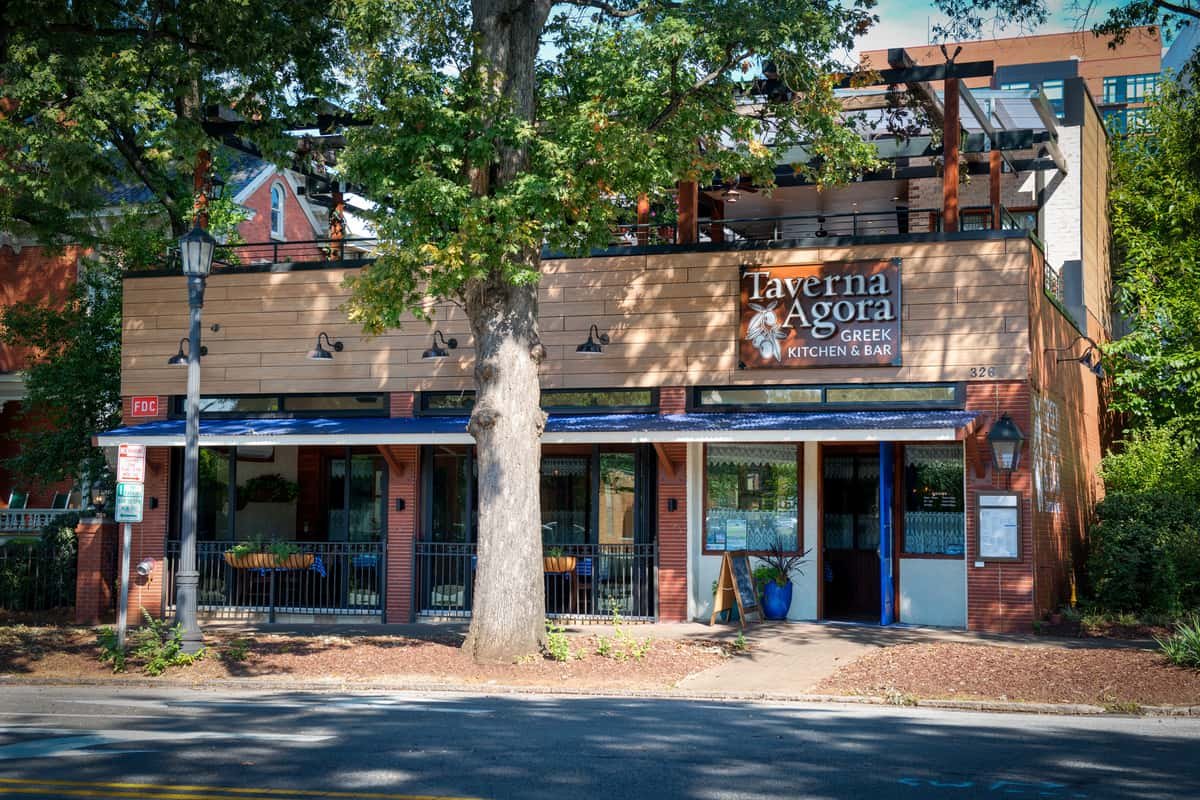
About Taverna Agora
A Greek-inflected taverna on Hillsborough Street, Taverna Agora occupies a stretch of Raleigh that has cycled through more dining concepts than most American mid-size cities manage in a generation. Against a field of pan-Mediterranean bars and casual tapas formats, it anchors itself to a more specific tradition — the communal, wine-forward Greek table — and positions that specificity as its distinguishing quality in a city that has grown increasingly capable of sustaining it.
Hillsborough Street and the Case for Specificity
Raleigh's Hillsborough Street corridor has spent the better part of two decades reshaping itself. What was once a strip oriented almost entirely around NC State's student population has, through successive waves of development and demographic shift, become a street that supports genuinely ambitious hospitality. Taverna Agora sits at 326 Hillsborough St, and understanding what it offers means understanding where it sits inside that longer arc of change.
The Greek taverna format is one of the more durable dining templates in the Mediterranean world, built around extended table time, shared plates, and wine chosen to accompany conversation rather than perform on its own. In most American cities, that tradition gets diluted into a broadly "Mediterranean" concept the moment operators sense that specificity might limit audience size. Raleigh's growing confidence as a dining city — documented across successive years of food press attention and the arrival of more format-driven concepts — has created the conditions in which a more specifically Greek identity can hold its ground.
What the Taverna Format Demands
The taverna model succeeds or fails on rhythm. It is not a quick-service format, and it does not reward venues that treat it as one. The communal table dynamic that defines the Greek eating tradition places pressure on pacing, on portion architecture, and on the relationship between food and drink in a way that distinguishes a serious execution from a theme-restaurant approximation. Across American cities, a small number of venues have built credible Greek-forward programs , and the ones that last tend to treat the wine list and the mezze selection as genuinely integrated, not as separate departments that happen to share a room.
For context on what serious beverage programming looks like at this tier, venues like Kumiko in Chicago and Bar Leather Apron in Honolulu demonstrate how drink-forward identity can anchor an entire hospitality experience without the food side becoming secondary. The Greek taverna tradition operates on a similar logic: the bottle on the table and the plates arriving in waves are designed to reinforce each other.
Raleigh's Mediterranean Peer Set
Within Raleigh, Taverna Agora competes inside a field of Mediterranean-adjacent concepts that have multiplied as the city's dining infrastructure matured. Venues like Vinos Finos Tapas and Wine Bar have established that wine-led, small-plate formats can build sustained audiences in this market. That trajectory matters for Taverna Agora: it suggests a local dining public that has, over time, become comfortable with the pacing and ordering logic that Greek-style eating requires.
The comparison set also includes Raleigh bars and casual dining formats that occupy different points on the price and formality spectrum. Angus Barn, long established as a reference point for occasion dining in the city, and newer entrants like 10th and Terrace and Ajisai collectively reflect how broad the Raleigh hospitality field has become. 13 Tacos and Taps occupies a more casual register on the same street, which gives a useful sense of the range Hillsborough now supports. Against that breadth, a format as specific as the Greek taverna reads less as a niche risk and more as a deliberate positioning choice.
The Evolution Question
Every restaurant on a street like Hillsborough faces a version of the same pressure: the neighborhood changes, the audience shifts, and the concept that opened is rarely identical to the concept operating five years later. The taverna format carries its own internal logic for handling that evolution. Because it is built around a repertoire rather than a single chef's tasting menu, it can absorb menu adjustments, seasonal edits, and shifts in pricing strategy without losing its structural identity. The mezze tradition is inherently modular in a way that, say, a fixed prix-fixe format is not.
That modularity matters in a city like Raleigh, which has attracted a significant influx of residents from larger coastal markets over the past decade. Diners who arrived with reference points from New York, Washington, or Atlanta bring expectations formed by more established restaurant scenes. A taverna that has sharpened its execution over time , tightening the wine list, refining the spread of hot and cold mezze, calibrating portion scale for sharing rather than individual plating , is better positioned against those expectations than one that opened and stayed static.
The parallel holds in other markets. Jewel of the South in New Orleans and Julep in Houston both demonstrate how a clearly defined identity, refined rather than abandoned as the market around them changed, translates into durable audience loyalty. Superbueno in New York City offers a similar case study in specificity sustained through a competitive environment. ABV in San Francisco and The Parlour in Frankfurt on the Main round out a picture of how format discipline, rather than constant reinvention, tends to produce the more lasting results.
Practical Considerations
Taverna Agora's address at 326 Hillsborough St places it within walking distance of NC State's campus and the broader Hillsborough corridor, which means foot traffic patterns shift noticeably by day of week and time of year. Academic-calendar rhythms affect most Hillsborough businesses, and the taverna format, which rewards longer table occupancy, benefits from the slower mid-week evenings that a campus-adjacent location produces. For anyone planning a visit, mid-week tends to offer more unhurried service than peak weekend nights, when the street's overall volume compresses reservation windows across multiple venues simultaneously. Current hours, booking availability, and any updates to the format are leading confirmed directly with the venue before visiting. Our full Raleigh restaurants guide provides broader context on the city's dining geography and how different neighborhoods compare.
Frequently Asked Questions
- How would you describe the overall feel of Taverna Agora?
- The taverna format , shared plates, extended table time, wine chosen for the table rather than the occasion , sets the register. On Hillsborough Street, which has moved substantially upmarket over the past decade, Taverna Agora occupies a position that is more specifically Mediterranean than the broadly casual concepts that dominate the strip, without crossing into formal occasion-dining territory. The feel is closer to a considered neighborhood restaurant than a destination dining event.
- What is Taverna Agora known for?
- Its identity is built around the Greek taverna tradition: communal, wine-forward, mezze-structured. In a Raleigh dining scene that has grown considerably more format-aware over the past several years, that specificity is its primary point of distinction against peers that default to broader Mediterranean or tapas-adjacent positioning.
- What's the signature drink at Taverna Agora?
- The venue's Greek-inflected identity suggests a wine list oriented toward Greek and Eastern Mediterranean producers , a relatively underrepresented category across the Raleigh market , though confirmed current list details should be verified directly with the venue. Greek varietals like Assyrtiko, Xinomavro, and Agiorgitiko have become more accessible in the American market over the past decade, and taverna-format venues tend to anchor their drink programs around those regional traditions.
- Should I book Taverna Agora in advance?
- Hillsborough Street's overall demand on weekend evenings compresses availability across multiple venues simultaneously, and the taverna format's longer average table time means turnover is slower than at quick-service concepts. Booking ahead , particularly for Friday and Saturday evenings , is the practical approach. Contact the venue directly for current reservation procedures, as online booking details are not confirmed in our records.
- How does Taverna Agora fit into Raleigh's broader Greek and Mediterranean dining scene?
- Greek-specific concepts remain a relatively small segment of Raleigh's restaurant mix, which tilts heavily toward American, Southern, and broadly Italian formats. Taverna Agora's commitment to a distinctly Greek taverna structure , rather than a generalized Mediterranean identity , gives it a different competitive position than wine bars and tapas venues that draw from the same broader tradition. For diners building a picture of where the city's dining scene has reached, it represents a marker of how specific Raleigh's hospitality offer has become capable of being.
More bars in Raleigh
- 10th and Terrace10th and Terrace is a rooftop bar on the tenth floor of a downtown Raleigh building, best suited to groups looking for a skyline setting over a destination drinks program. Booking is easy and walk-ins are generally feasible. Go for the view and the group-friendly format; for serious cocktails, Raleigh has stronger options.
- 13 Tacos and Taps13 Tacos and Taps is a low-key north Raleigh neighborhood spot built around a simple format: tacos and a tap list, with a casual room that suits regulars more than destination diners. Booking is easy and walk-ins are generally available. Go if you want a reliable, unpretentious local option without the production of a downtown night out.
Related editorial
- Best Fine Dining Restaurants in ParisFrom three-Michelin-star icons to the next generation of Parisian chefs pushing boundaries, these are the restaurants that define fine dining in the world's culinary capital.
- Best Luxury Hotels in RomeFrom rooftop terraces overlooking ancient ruins to Michelin-starred hotel dining, these are the luxury hotels that make Rome unforgettable.
- Best Cocktail Bars in KyotoFrom sleek lounges to hidden speakeasies, Kyoto's cocktail scene blends Japanese precision with global influence in ways you won't find anywhere else.
Save or rate Taverna Agora on Pearl
Keep this venue in your Pearl passport, rate it after you visit, and track it alongside every other place you collect.