
Bar in Paris, France
Point Éphémère
100ptsCanal-Side Multi-Format Programming
About Point Éphémère
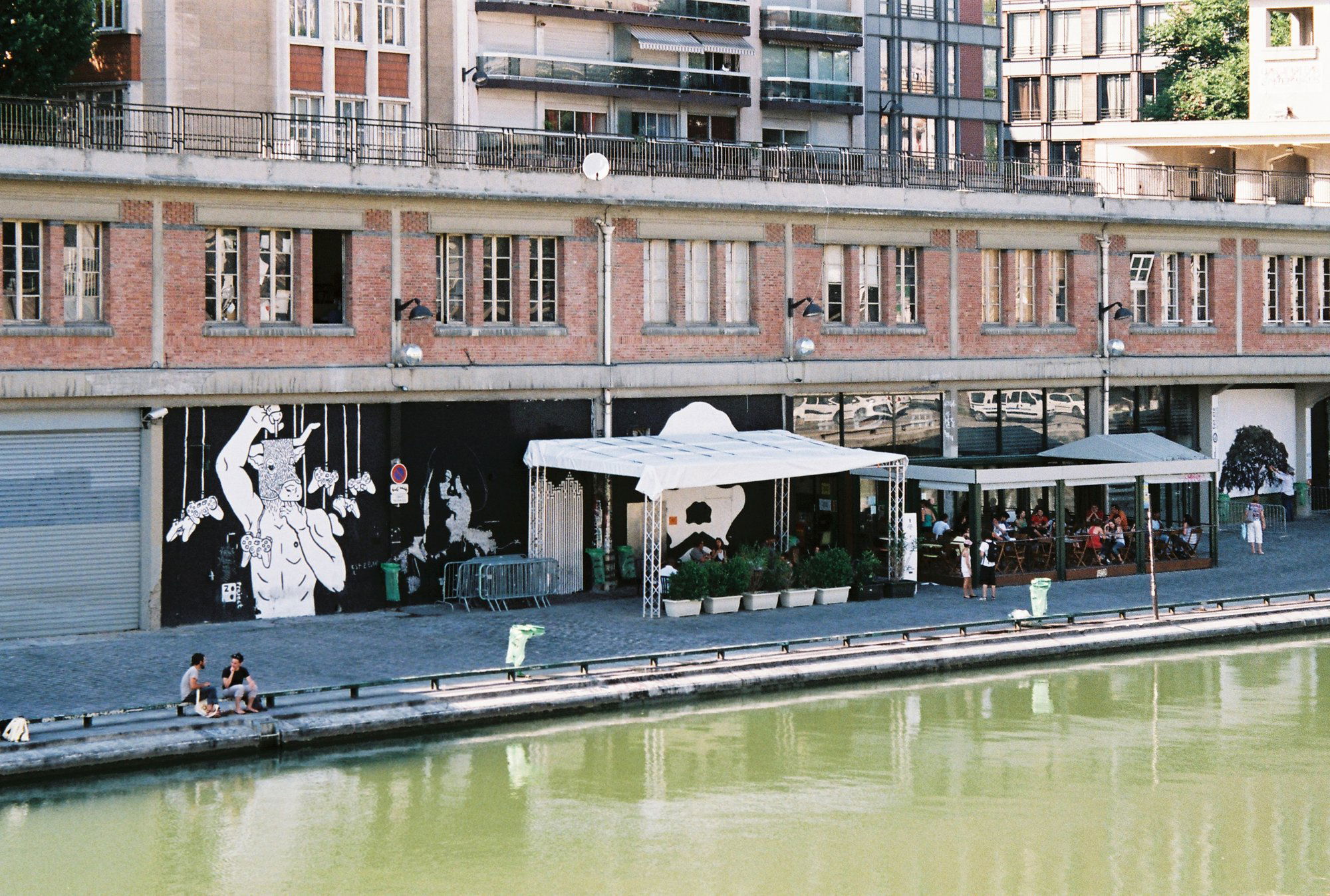
Point Éphémère occupies a converted industrial space on the Canal Saint-Martin at 200 Quai de Valmy, operating as one of Paris's most enduring arts-and-music venues in the 10th arrondissement. The programming runs from live concerts and DJ sets to exhibitions and a canal-facing bar, drawing a crowd that treats the space as a genuine cultural hub rather than a drinking stop.
Canal Saint-Martin's Cultural Anchor
The 10th arrondissement's Canal Saint-Martin corridor has undergone a slow but decisive shift over the past two decades. What began as a stretch of light industrial buildings and working-class cafés has become one of Paris's most legible examples of cultural infrastructure taking root in post-industrial space. Point Éphémère, at 200 Quai de Valmy, sits at the upstream end of that corridor, in a building that previously served industrial storage functions before being repurposed as a venue for live music, visual art, and residency programming. The conversion preserved the raw architectural bones — exposed structure, generous ceiling height, direct canal access — and the result is a space that reads as earned rather than designed-to-feel-authentic.
Approaching from the Jaurès end of the canal on a warm evening, the queue on the quai tells you more than any listing could. This is not a room that markets itself as underground while selling cocktails at luxury-bar prices. The crowd skews young, international by Parisian standards, and present specifically for the programming rather than the postcode. That distinction matters when you're trying to read what a venue actually is versus what it says it is.
What the Format Reveals
Point Éphémère operates as a multi-format arts centre, and understanding how the space is structured explains why it functions differently from venues that graft a concert room onto an existing bar. The ground floor opens onto the canal terrace and contains the bar operation, which runs independently of ticketed events happening in the basement and upper-floor performance spaces. This means the bar has its own rhythm and its own crowd on nights when the programming upstairs draws a different audience.
That separation is architecturally and operationally deliberate. In many Paris venues that combine bar service with live events, the two functions compete , sound bleeds between rooms, service slows when doors open, and the bar becomes a holding area rather than a destination. Point Éphémère's layout avoids most of those tensions by treating the bar floor and the event spaces as genuinely distinct zones. The canal terrace extends that logic further outward: on dry evenings, the waterside tables function as a third register entirely, quieter than either interior space.
Compared to the polished cocktail programs at venues like Danico or the theatrical scale of Buddha Bar, Point Éphémère's bar operation is deliberately unpretentious. The menu runs to beer, wine, and direct mixed drinks at accessible prices , a structural choice that keeps the space available to the demographic that actually sustains its cultural programming rather than pricing them toward the door. In a Paris bar scene that has moved aggressively toward high-technique cocktail formats, as demonstrated by venues like Candelaria or Bar Nouveau, this restraint reads as a position rather than a gap.
Programming as the Real Menu
The editorial angle most useful for understanding Point Éphémère is not the drink list but the programming calendar, which functions as the venue's actual menu. Electronic music, indie rock, jazz-adjacent improvisation, and hip-hop share the schedule across a week , not because the venue lacks identity but because the curatorial logic is oriented around independent and emerging artists rather than genre gatekeeping. Residency programs for visual artists run alongside the music calendar, and the gallery spaces update independently of the event schedule, giving the building a reason to visit on afternoons when nothing is programmed downstairs.
This model is more common in Berlin or Amsterdam than in Paris, where arts-centre funding structures and licensing constraints have historically pushed venues toward either pure nightlife or pure cultural programming. Point Éphémère occupies a third category: subsidised enough to maintain a residency program, commercially viable enough to sustain a nightly bar operation, and editorially coherent enough that the two sides reinforce each other rather than operating in tension. Among comparable hybrid venues in France, you might look to La Maison M. in Lyon or the programming culture at Au Brasseur in Strasbourg for regional parallels, but the canal-side infrastructure and density of Paris's 10th gives Point Éphémère a specific urban weight those venues don't share.
Seasonal Timing and When to Go
The canal terrace is the variable that most affects how a visit lands. From late April through September, the quai-side seating becomes a genuine gathering point on evenings when the light off the water holds until well past nine. The experience of sitting with a beer on the canal at that hour, with programming audible from inside, is specific to Paris in a way that indoor-only venues can't replicate. Winter visits shift the logic: the interior is warm and the programming calendar often thickens, with more ambitious events scheduled for months when outdoor competition for the audience drops. Checking the events calendar before any visit is not optional , the venue experience changes materially depending on what is programmed, and arriving on a quiet Tuesday when nothing is scheduled gives you a fraction of what a sold-out Saturday offers.
For context on how Paris's bar and venue culture compares at a national level, our full Paris restaurants and bars guide maps the broader scene. Those researching bar culture across French cities might also find value in comparing with Coté Vin in Toulouse, Bar Casa Bordeaux, or Le Café de la Fontaine in La Turbie to understand how venue formats shift outside the capital. Further afield, Papa Doble in Montpellier and Bar Leather Apron in Honolulu illustrate how different cities structure their premium bar tiers.
Know Before You Go
- Address: 200 Quai de Valmy, 75010 Paris, France
- Getting there: Métro Jaurès (lines 2, 5, 7b) or Louis Blanc (lines 7, 7b); the venue is a short walk along the canal from either stop
- Booking: Bar access is walk-in; ticketed events require advance purchase through the venue's programming calendar , check the schedule before visiting
- Leading season: Canal terrace is at its most useful from late April through September; winter programming is often denser and worth the trade-off
- Price tier: Bar prices are among the more accessible in central Paris; ticketed events vary by programming
- Dress code: None; the crowd is casual across all formats
Frequently Asked Questions
- What's the main draw of Point Éphémère?
- The combination of live music programming, a canal-side terrace, and accessible bar prices makes Point Éphémère function as a cultural anchor rather than a drinking destination. In a city where arts venues and nightlife tend to operate in separate tiers, the hybrid model here , where the bar sustains the programming and the programming sustains the crowd , is the operative draw. There are no Michelin-tier awards or celebrity associations attached to it; the appeal is structural.
- What's the must-try cocktail at Point Éphémère?
- Point Éphémère's bar program is not oriented around a signature cocktail in the way that venues like Candelaria or Danico build their identity around specific drinks. The menu runs to beer, wine, and direct mixed formats at prices that reflect the venue's cultural-centre model. If you're visiting specifically for cocktail technique, this is not the room , but that's beside the point of what the venue is.
- Do I need a reservation for Point Éphémère?
- If you're visiting for the bar or terrace only, walk-in access applies. If you're attending a ticketed event in the performance spaces, advance booking through the programming calendar is required and often necessary , popular shows sell out. Checking the schedule before you go determines which logic applies to your visit.
- What's Point Éphémère a good pick for?
- It works for evenings where the priority is atmosphere and live programming over food or high-technique drink service. The canal setting and mixed crowd make it a reasonable choice for visitors who want a specific Paris neighbourhood experience that doesn't feel staged for tourism, and the price point makes it accessible without requiring a planning commitment.
- How does Point Éphémère's residency program work, and can visitors engage with the gallery spaces outside of event nights?
- Point Éphémère hosts visual artists through a residency structure that operates on a separate calendar from the music and event programming. The gallery spaces are accessible independently of ticketed events, meaning afternoon visits outside the evening schedule are a legitimate option. For those interested in Paris's arts-centre model rather than its nightlife, visiting on a non-event day gives you direct access to the exhibition program without the concert-night crowd , a meaningful distinction that the venue's dual identity makes possible.
Related editorial
- Best Fine Dining Restaurants in ParisFrom three-Michelin-star icons to the next generation of Parisian chefs pushing boundaries, these are the restaurants that define fine dining in the world's culinary capital.
- Best Luxury Hotels in RomeFrom rooftop terraces overlooking ancient ruins to Michelin-starred hotel dining, these are the luxury hotels that make Rome unforgettable.
- Best Cocktail Bars in KyotoFrom sleek lounges to hidden speakeasies, Kyoto's cocktail scene blends Japanese precision with global influence in ways you won't find anywhere else.
Save or rate Point Éphémère on Pearl
Keep this venue in your Pearl passport, rate it after you visit, and track it alongside every other place you collect.