
Bar in Paris, France
Monsieur Bleu
100ptsSeine-Front Brasserie Classicism
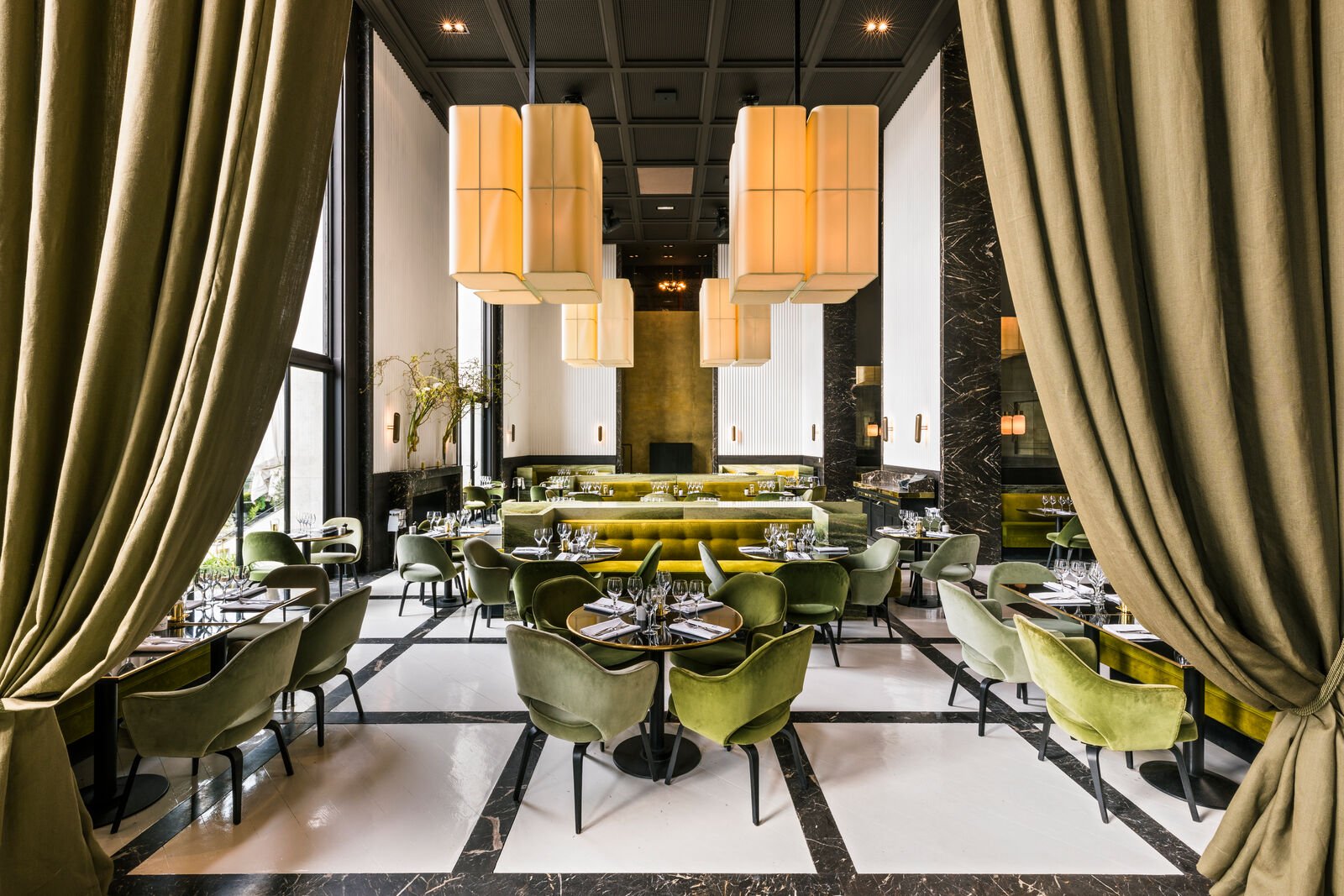
About Monsieur Bleu
Set inside the Palais de Tokyo on the banks of the Seine, Monsieur Bleu occupies one of the 16th arrondissement's most architecturally charged addresses. The crowd that fills its terrace and art deco-inflected dining room tends to return not for novelty but for consistency: a reliable French brasserie register, a setting that earns its place on the river, and a room that rewards those who already know it.
A Room That Does the Work Before the Food Arrives
The Palais de Tokyo is one of Paris's most loaded addresses: a 1937 neoclassical exhibition hall on the Avenue de New York that has cycled through cultural lives without ever losing its monumental character. Arriving from the Trocadéro side, the building presents a colonnade that frames the Seine and, across it, the Eiffel Tower at a distance that feels precisely calibrated. Monsieur Bleu occupies the ground floor of this building and spills onto a terrace that, on warm evenings, becomes one of the more sought-after outdoor dining positions in the 16th arrondissement. The interior pulls from a 1930s Parisian vocabulary, with curved banquettes, brass fixtures, and high ceilings that absorb noise without producing silence. It is a room designed for extended stays, and that is exactly how its regulars use it.
The Logic of the Return Visit
Paris has no shortage of restaurants that attract a first visit on the strength of their address. Fewer manage to convert that initial visit into a pattern. The distinction usually comes down to consistency: whether the kitchen delivers the same register on a Tuesday in February as it does on a terrace evening in June. At Monsieur Bleu, the returning clientele tends to be drawn from the neighbourhood's professional and cultural class, the kind of crowd that moves between the nearby Musée d'Art Moderne, the Palais de Tokyo's exhibition spaces, and the brasserie itself as part of a single afternoon's itinerary. For them, the menu operates less as a list of options than as a set of known quantities.
That dynamic shapes how the restaurant functions in practice. The terrace facing the Seine books earliest, particularly for weekend lunch and early summer evenings. Those who know the room tend to request specific positions inside, where the sightlines across the dining room and through to the river-facing glass are longest. The kitchen works a French brasserie register with some contemporary detailing, occupying the middle ground between a formal Parisian restaurant and a relaxed café. That positioning makes it legible across occasions, which is part of why the same faces reappear across different contexts: business lunch, pre-exhibition dinner, late drinks at the bar.
Where Monsieur Bleu Sits in the 16th's Dining Picture
The 16th arrondissement's dining scene is less discussed than those of the 11th or the Marais, but it supports a coherent tier of restaurants oriented toward a local clientele with high expectations and limited appetite for trend-chasing. Monsieur Bleu operates in a bracket defined by setting and reliability rather than by the kind of culinary ambition that attracts Michelin attention. It is not competing with the tasting-menu counters of the city's haute cuisine tier; it is competing with other all-day brasseries that can deliver a credible French lunch, a strong wine list, and a room worth sitting in. On those terms, the Seine-facing terrace alone repositions it above most peers in the immediate neighbourhood.
For visitors who are building a broader picture of Paris drinking and dining, the city's cocktail scene offers parallel options worth considering. On the more technical end, Danico and Candelaria represent the precision-focused bar format that has defined Paris's cocktail evolution over the past decade. For high-volume atmosphere with a different visual register, Buddha Bar operates at a scale that Monsieur Bleu does not attempt. Bar Nouveau sits closer to Monsieur Bleu's own register: architectural setting, French inflection, crowd that leans toward the culturally engaged. Across France, those planning wider itineraries can find similar address-driven dining at Bar Casa Bordeaux in Bordeaux, La Maison M. in Lyon, and Coté vin in Toulouse. For reference points further afield, Papa Doble in Montpellier, Au Brasseur in Strasbourg, and Le Café de la Fontaine in La Turbie each occupy distinct regional positions worth knowing. Internationally, Bar Leather Apron in Honolulu demonstrates how a technically serious bar can build a loyal local following in an unlikely setting, a dynamic Monsieur Bleu replicates through different means in Paris.
Planning a Visit
The restaurant sits at the Palais de Tokyo, 20 Avenue de New York, in the 16th arrondissement, a short walk from the Iéna metro station. The terrace positions facing the Seine are the ones regulars move quickest to secure, particularly for weekend lunch service and Thursday through Saturday evenings in spring and early summer. Those approaching from the museum side of the building will find the entrance integrated into the Palais de Tokyo's cultural complex, which means the surrounding programme of exhibitions and events often structures the timing of a visit. The bar is accessible outside core dining hours and draws a steady crowd from the cultural institution's evening openings. For those building a broader Paris itinerary, the full Paris restaurants guide places Monsieur Bleu within the wider pattern of the city's dining scene by arrondissement and format.
Frequently Asked Questions
What's the leading thing to order at Monsieur Bleu?
The kitchen operates a French brasserie register, which means the most reliable choices tend to be the dishes that brasserie cooking does well by design: proteins cooked simply, sauces built on classical foundations, and vegetables treated as supporting architecture rather than afterthoughts. Regulars tend to return to the same two or three items across seasons, which is itself a signal about which parts of the menu the kitchen has locked in. The wine list follows the same logic: French in orientation, priced in the middle range for a Paris restaurant of this type, with enough depth to reward those who ask rather than default to the obvious selections.
What's the defining thing about Monsieur Bleu?
Combination of address and format is difficult to replicate in Paris at this price point. A brasserie-register restaurant with a Seine-facing terrace inside one of the city's major cultural institutions, operating across lunch, dinner, and bar hours, covering multiple occasions without formal dining prices, describes a fairly narrow category. That positioning, rather than any single dish or critical award, explains both the loyal clientele and the difficulty of securing a terrace table at short notice. It is the kind of place that functions differently for a first-time visitor than it does for someone on their fourth or fifth visit, with the return visits consistently outperforming the first.
Is Monsieur Bleu suitable for a meal before or after visiting the Palais de Tokyo exhibitions?
Restaurant's physical integration into the Palais de Tokyo makes it a natural anchor for a cultural afternoon in the 16th arrondissement. The Palais de Tokyo operates late hours on certain exhibition evenings, and the bar at Monsieur Bleu tends to absorb that post-opening crowd. For a pre-exhibition lunch, the kitchen's brasserie format and accessible timing make it one of the more direct options in the immediate area. The combination of a serious museum and a restaurant that doesn't require advance planning weeks out is rarer in Paris than the city's reputation might suggest.
Related editorial
- Best Fine Dining Restaurants in ParisFrom three-Michelin-star icons to the next generation of Parisian chefs pushing boundaries, these are the restaurants that define fine dining in the world's culinary capital.
- Best Luxury Hotels in RomeFrom rooftop terraces overlooking ancient ruins to Michelin-starred hotel dining, these are the luxury hotels that make Rome unforgettable.
- Best Cocktail Bars in KyotoFrom sleek lounges to hidden speakeasies, Kyoto's cocktail scene blends Japanese precision with global influence in ways you won't find anywhere else.
Save or rate Monsieur Bleu on Pearl
Keep this venue in your Pearl passport, rate it after you visit, and track it alongside every other place you collect.