
Bar in Paris, France
LAVINIA
100ptsGrand-Format Wine Retail

About LAVINIA
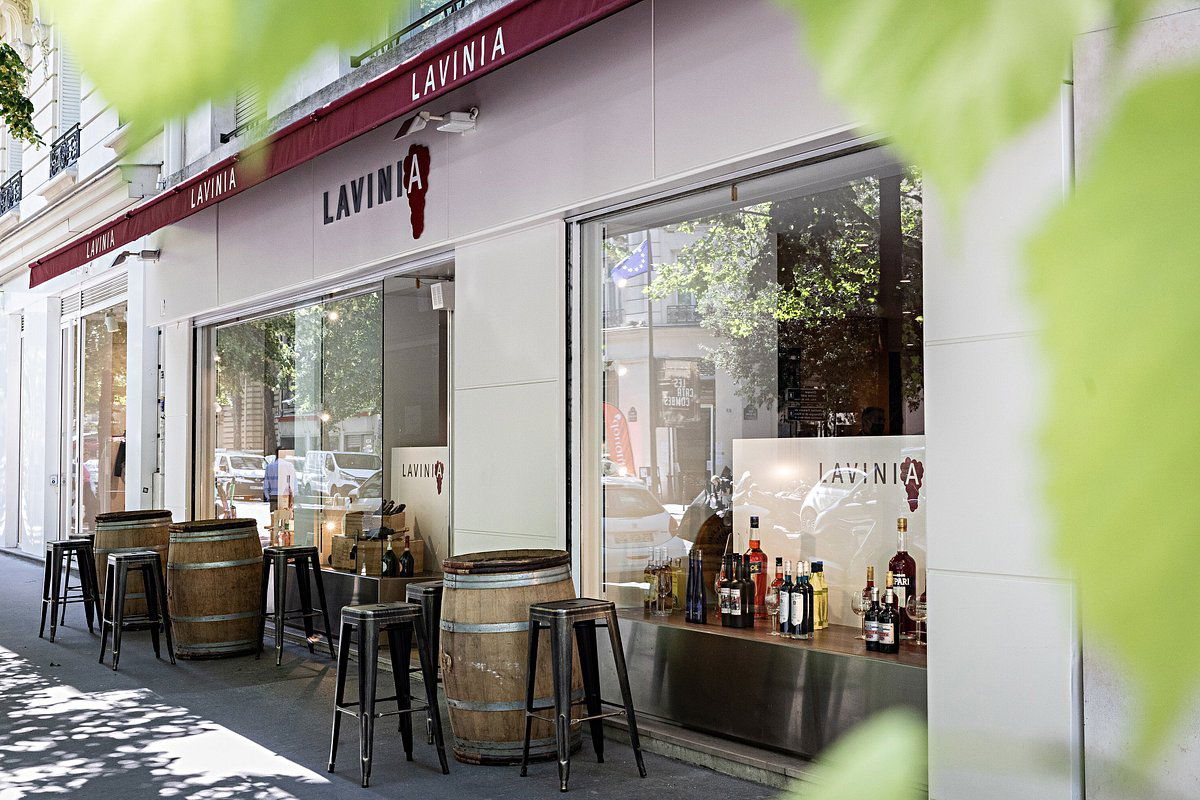
One of Paris's most comprehensive wine retail destinations, Lavinia occupies a handsome address on Avenue Victor Hugo in the 16th arrondissement, a short walk from the Arc de Triomphe. The shop moved from its original Madeleine location to this quieter, residential quarter, bringing with it one of the capital's broadest selections of bottles across regions, price points, and styles.
Avenue Victor Hugo and the Art of Serious Wine Retail
The 16th arrondissement has long been associated with a particular kind of Parisian seriousness: understated wealth, grand Haussmann facades, and institutions that have no need to announce themselves loudly. Avenue Victor Hugo fits that pattern. Walking toward number 22, you pass the kind of neighbourhood that functions more as a city-within-a-city than a tourist quarter, the Arc de Triomphe visible at the end of the avenue, the street itself lined with boulangeries and pharmacies that have served the same families for decades. The setting matters for understanding what Lavinia is and what it is not.
This is not a cave with a curated dozen labels and a chalkboard of natural wine suggestions. Lavinia operates at a different register entirely, maintaining one of the most comprehensive wine selections in the capital across an address that, since its move from the Madeleine, has settled into the character of its new arrondissement rather than fighting it.
Why Wine Retail at This Scale Matters in Paris
Paris has always had a complicated relationship with wine retail. The city sits at the centre of the French wine trade without being a producing region itself, which means the leading Parisian wine shops function as serious aggregators: pulling bottles from Burgundy, Bordeaux, the Rhône, Alsace, Champagne, and increasingly from international appellations, then presenting them to a public that ranges from casual browsers to collectors with specific appellations and vintages in mind.
The Madeleine district, where Lavinia originally operated, was a natural home for that kind of enterprise. The 8th and 9th arrondissements have traditionally concentrated the city's premium food retail, from the grands magasins to specialist merchants. The move to the 16th represents a different proposition: a destination shop serving a residential clientele that takes wine seriously at the household level, not just as a transaction on the way to dinner.
That shift in audience shapes the experience. In the Victor Hugo quartier, Lavinia sits alongside other providers of everyday quality rather than tourist-facing luxury. The selection, by all available accounts, has not narrowed in the transition. What Paris's broader wine retail scene demonstrates is that the most durable shops are those that can serve the collector and the curious amateur simultaneously, without condescension in either direction. Lavinia's reputation rests on doing precisely that.
The Cultural Weight of French Wine Selection
Understanding what a shop like Lavinia represents requires some grounding in how France organises its relationship to wine. The appellation system, now over a century old in its modern form, creates a geography of quality that French consumers internalise from an early age. A Parisian wine merchant is not simply stocking shelves but curating a map of French agricultural and cultural identity, from grand cru Burgundy to a Jura ouillé that might represent a winemaker's decade of work on a single hectare.
The leading Paris wine retailers position themselves as navigators of that complexity, offering enough depth in each region to serve knowledgeable buyers while maintaining enough breadth to function as a reliable one-stop source. The international dimension adds another layer: French consumers have increasingly engaged with wines from Spain, Italy, Georgia, and the New World, and the shops that have kept pace with that shift command a larger share of the serious retail market.
Lavinia's long-standing reputation in this category, across its years at the Madeleine and now at Victor Hugo, places it in the tier of retailers where buying decisions are made on selection quality and staff knowledge rather than proximity or convenience. For visitors to Paris, that positioning matters: this is a shop worth a specific journey, not an incidental stop.
The Victor Hugo Quarter: Practical Geography
The 16th arrondissement's reputation for insularity is somewhat overstated. Avenue Victor Hugo is one of the six avenues that radiate from the Place Victor Hugo, itself a short walk from Charles de Gaulle-Étoile, which connects directly to lines 1, 2, and 6 of the metro as well as the RER A. In practical terms, Lavinia's current address is straightforwardly accessible from central Paris, arguably more so than the Madeleine location for travellers arriving from the west or southwest of the city.
The neighbourhood also rewards a longer visit. The 16th's quieter streets between Victor Hugo and the Trocadéro contain some of the city's better independent restaurants, operating without the tourist-facing pressure of the 1st or 8th. Anyone building a half-day around a visit to Lavinia could reasonably pair it with lunch in the quarter before continuing toward the Trocadéro gardens.
For those building a fuller picture of Paris's drinking and hospitality culture, the city's bar scene offers useful counterpoints to the wine-retail world. Danico and Candelaria represent the cocktail-focused end of Parisian drinking, while Buddha Bar and Bar Nouveau operate in a different register altogether. Outside Paris, France's wine bar tradition continues in cities like Lyon, where La Maison M. holds its own, and Bordeaux, where Bar Casa Bordeaux anchors a different kind of regional wine culture. In Toulouse, Coté vin takes a similarly serious approach to the glass, and Strasbourg's Au Brasseur adds an Alsatian dimension to the picture. Further afield, Papa Doble in Montpellier and Le Café de la Fontaine in La Turbie each reflect how France's drinking culture shifts from city to coast. For completeness, Bar Leather Apron in Honolulu demonstrates how far French wine fluency has travelled globally. Our full Paris restaurants guide covers the broader picture for those planning a longer stay.
Planning Your Visit
| Detail | Lavinia (Victor Hugo) | Typical Paris Cave | Department Store Cave (e.g. Le Bon Marché) |
|---|---|---|---|
| Selection breadth | One of the capital's most comprehensive | Curated, usually 200-500 references | Broad, commercially oriented |
| Location | 16th arr., near Arc de Triomphe | Varies by arrondissement | 7th (Le Bon Marché) / 8th (Galeries Lafayette) |
| Primary audience | Collectors, serious amateurs, residents | Local neighbourhood buyers | General shoppers, tourists |
| International range | Significant, alongside French | Usually France-focused | Moderate, brand-led |
| Metro access | Charles de Gaulle-Étoile (lines 1, 2, 6) | Varies | Varies |
Frequently Asked Questions
What is the signature drink at Lavinia?
Lavinia is a wine retail shop rather than a bar or restaurant, so the concept of a signature drink applies differently here. The reputation that has followed the shop from its Madeleine address to the Victor Hugo quartier rests on the breadth of its wine selection across French appellations and international producers. Visitors with specific regional interests, whether Burgundy, Champagne, Rhône, or further afield, will find the depth of stock a more reliable measure of the shop's identity than any single bottle. The selection functions as the signature: comprehensive, spanning price points, and weighted toward serious buyers without excluding those at an earlier stage of their wine knowledge.
What should I know about Lavinia before I go?
The most important context is geographic and conceptual. Lavinia moved from the Madeleine to 22 Avenue Victor Hugo in the 16th arrondissement, meaning its current location suits those approaching from the Arc de Triomphe side of the city or connecting via Charles de Gaulle-Étoile. It is a destination purchase rather than an impulse stop: the selection rewards time spent, and arriving with some sense of what region or style you are looking for will make the visit more productive. Specific price range, hours, and booking details are not confirmed in current public data, so contacting the shop directly before a special-purpose visit is advisable. This is a retail operation, not a tasting room or restaurant, so expectations should be calibrated accordingly.
Recognized By

Similar venues by awards
Related editorial
- Best Fine Dining Restaurants in ParisFrom three-Michelin-star icons to the next generation of Parisian chefs pushing boundaries, these are the restaurants that define fine dining in the world's culinary capital.
- Best Luxury Hotels in RomeFrom rooftop terraces overlooking ancient ruins to Michelin-starred hotel dining, these are the luxury hotels that make Rome unforgettable.
- Best Cocktail Bars in KyotoFrom sleek lounges to hidden speakeasies, Kyoto's cocktail scene blends Japanese precision with global influence in ways you won't find anywhere else.
Save or rate LAVINIA on Pearl
Keep this venue in your Pearl passport, rate it after you visit, and track it alongside every other place you collect.