
Bar in Paris, France
Freddy
100ptsLeft Bank Natural Pour
About Freddy
On Rue de Seine in the 6th arrondissement, Freddy occupies a stretch of Saint-Germain-des-Prés where wine bars and neighbourhood bistros have coexisted for decades. The address places it within easy reach of Paris's Left Bank drinking circuit, where the conversation around ethical sourcing and low-intervention producers has been shifting the way Parisians think about what's in the glass.
Rue de Seine and the New Left Bank Drinking Standard
The 6th arrondissement has never been short of places to drink well, but the stretch of Rue de Seine running south from the Seine toward the Luxembourg quarter has developed a specific character over the past several years. Wine bars here tend to skew toward producers who can explain their farming practices in a sentence, and the clientele has adjusted its expectations accordingly. Freddy, at number 54, sits inside that current rather than beside it.
Saint-Germain-des-Prés as a drinking neighbourhood is older and more layered than its tourist-facing cafés suggest. The area built its reputation on literary and intellectual exchange, and the bars that have survived gentrification tend to be the ones with a point of view. In the current iteration of that tradition, the point of view is increasingly about provenance: where the wine comes from, how the grapes were grown, and what the producer's relationship to the land actually looks like in practice.
The Room and What It Signals
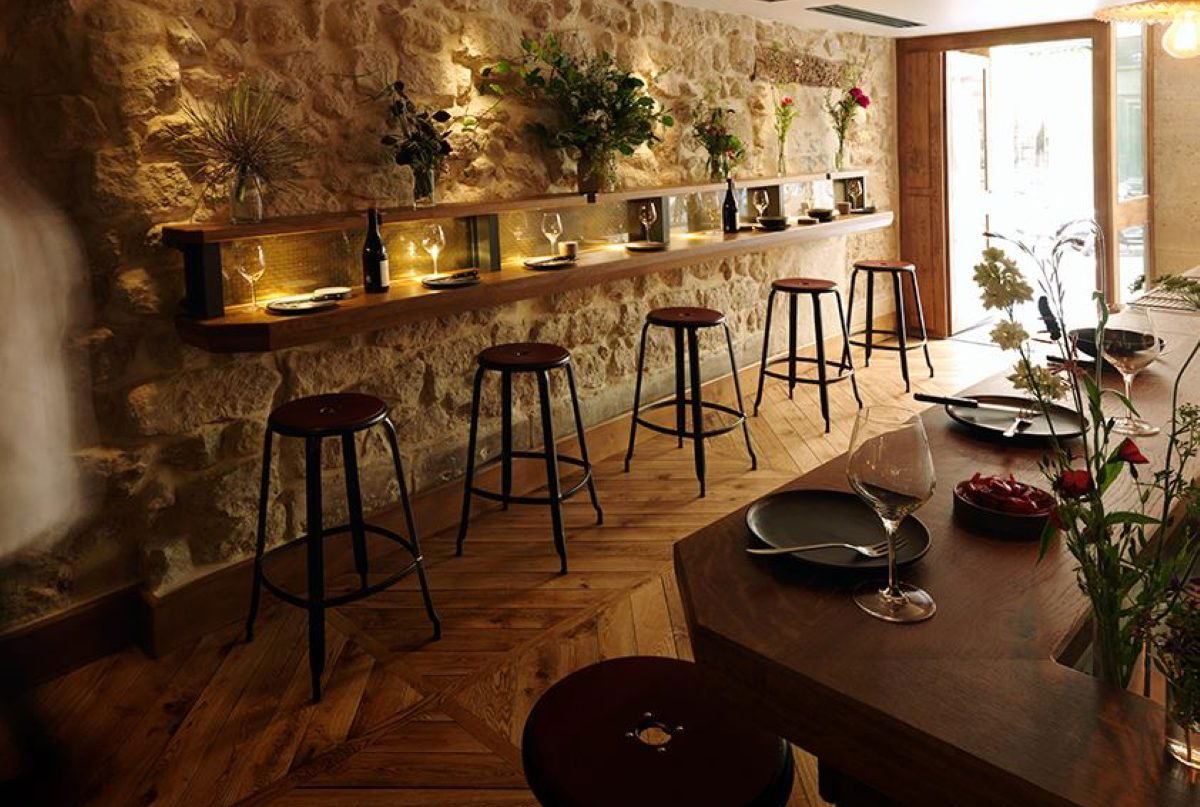
Approaching from the direction of the Pont Neuf, Rue de Seine narrows as it moves south, and the shop fronts shift from galleries to food and drink. The physical environment at this address follows a grammar common to Left Bank bars that came of age after the natural wine movement took hold in Paris: compact, low-lit, surfaces that show their age without performing it. These are spaces designed to hold conversation rather than stage it.
That format, small rooms with a short list and a clear sourcing philosophy, has become its own genre in Paris. Candelaria in the Marais built a version of it around mezcal and taqueria culture. Danico on Rue Richer applies a similar compression to cocktail technique. The through-line across these places is a rejection of volume and spectacle in favour of depth and legibility. Freddy's position on Rue de Seine places it in a neighbourhood where that posture reads as local rather than calculated.
Sustainability as Operational Logic, Not Marketing Position
Paris's natural wine scene predates the broader European conversation about sustainability in hospitality, and in certain Left Bank bars the sourcing ethics are structural rather than decorative. The question worth asking of any wine bar in this city is not whether it stocks natural or biodynamic producers, but how that commitment shows up in the glass and on the list. A bar on Rue de Seine in 2024 that doesn't engage with low-intervention producers is the exception, not the rule.
What distinguishes the more serious operations from the trend-adjacent ones is consistency across the list, not just a few showcase bottles. Producers who farm without synthetic inputs, vinify with minimal additions, and bottle without heavy filtration tend to appear across multiple regions and price points on lists that mean it. The waste dimension matters too: short lists reduce the risk of open-bottle spoilage, which is both an economic and an environmental argument for the format.
This is a model that smaller bars across France have been adopting with varying degrees of rigor. Papa Doble in Montpellier operates within a similar low-intervention framework in the south. Coté Vin in Toulouse and La Maison M. in Lyon both navigate comparable territory in their respective cities, with lists that prioritise grower relationships over range. In Paris, the concentration of such venues in the 6th and neighbouring arrondissements reflects how thoroughly the Left Bank has absorbed the natural wine ethic into its neighbourhood identity.
What to Drink and How to Think About the List
On a Rue de Seine bar list with any serious sourcing logic, the Loire and Jura tend to anchor the by-the-glass options. Both regions produce the kind of low-intervention wines that travel well in a small-bar format: the Loire for its Chenin and Cabernet Franc producers who have been farming organically for decades, Jura for its oxidative whites and Trousseau reds that reward the kind of slow conversation these rooms are built for.
The approach to drinking well here is to ask what's open rather than what's on the list. In a compact operation, the staff's relationship with the producers they stock tends to be direct, and the recommendations tend to be specific rather than generic. That directness is one of the qualities that separates a neighbourhood bar with genuine sourcing commitments from a larger venue where the list is assembled by a buying committee.
For context on how Paris's bar scene compares across formats, Buddha Bar and Bar Nouveau operate at a different scale and with different programming logic. The comparison is useful because it clarifies what Freddy is not: it is not a destination bar built around volume, spectacle, or a headline cocktail program. It belongs to a more compressed register where the sourcing is the story.
Planning Your Visit
Rue de Seine is walkable from both Saint-Germain-des-Prés metro (Line 4) and Odéon (Lines 4 and 10), placing it within a short walk of the Left Bank's broader restaurant and bar circuit. The neighbourhood rewards a sequenced evening: a glass on Rue de Seine before or after dinner at one of the surrounding bistros is a more natural rhythm than treating any single address here as a destination in isolation.
Contact and booking details for Freddy are not currently listed in the EP Club database; the most reliable approach is to arrive without a reservation during off-peak hours, which in this neighbourhood typically means before 8pm on weeknights. Bars at this address and format tend not to operate a formal reservation system, and the capacity of the room makes walk-in access a reasonable expectation outside Friday and Saturday evenings.
For a fuller picture of where this address fits within the city's drinking and dining geography, see our full Paris restaurants guide. For comparison points elsewhere in France, Au Brasseur in Strasbourg, Bar Casa Bordeaux, and Le Café de la Fontaine in La Turbie each represent distinct regional takes on the neighbourhood bar format. And for an international reference point on how the small-bar-with-a-point-of-view model translates across cultures, Bar Leather Apron in Honolulu is one of the more instructive comparisons outside Europe.
Frequently Asked Questions
- What should I expect atmosphere-wise at Freddy?
- The Rue de Seine address places Freddy in a Left Bank stretch that has developed around compact, low-key wine bars with sourcing credibility rather than large-format venues. Expect a room built for conversation: modest in scale, low-lit, and oriented toward the glass rather than the event. It sits in the same neighbourhood register as the natural wine bars that have reshaped the 6th arrondissement's drinking identity over the past decade.
- What should I drink at Freddy?
- In a Left Bank bar with a sourcing-led list, the Loire and Jura tend to be the most reliable anchors for by-the-glass options, with producers who farm organically and vinify with minimal intervention. Ask what's currently open: in a bar of this format and scale, the staff's familiarity with the list is usually direct, and a specific recommendation will serve you better than working from a printed menu alone.
- What's the main draw of Freddy?
- The address on Rue de Seine positions Freddy within one of Paris's most concentrated stretches of independent wine bars, where the sourcing conversation is embedded in the neighbourhood culture rather than imported as a concept. For visitors oriented toward the Left Bank's food and drink scene, it represents a version of Paris bar culture that is less about spectacle and more about what's in the glass and where it came from.
- How far ahead should I plan for Freddy?
- No formal booking information is currently available in the EP Club database for Freddy. Based on the bar's format and neighbourhood norms, walk-in access is the standard approach, with the leading availability on weeknights before 8pm. Friday and Saturday evenings on Rue de Seine tend to fill quickly across the street's bars, so earlier arrival is advisable if your schedule is fixed.
- Does Freddy suit visitors who are new to natural wine?
- Rue de Seine wine bars in Paris's 6th arrondissement have historically served a mix of neighbourhood regulars and visitors with varying levels of wine knowledge, and the format at addresses like Freddy tends to be more conversational than prescriptive. If you're new to low-intervention producers, the leading entry point is to describe what you usually drink and let the staff work from there: in bars of this type across Paris, that approach typically produces a more useful recommendation than consulting a list independently.
Related editorial
- Best Fine Dining Restaurants in ParisFrom three-Michelin-star icons to the next generation of Parisian chefs pushing boundaries, these are the restaurants that define fine dining in the world's culinary capital.
- Best Luxury Hotels in RomeFrom rooftop terraces overlooking ancient ruins to Michelin-starred hotel dining, these are the luxury hotels that make Rome unforgettable.
- Best Cocktail Bars in KyotoFrom sleek lounges to hidden speakeasies, Kyoto's cocktail scene blends Japanese precision with global influence in ways you won't find anywhere else.
Save or rate Freddy on Pearl
Keep this venue in your Pearl passport, rate it after you visit, and track it alongside every other place you collect.