
Bar in Paris, France
Cadence Paris
100ptsSpirits-Forward Editorial Drinking
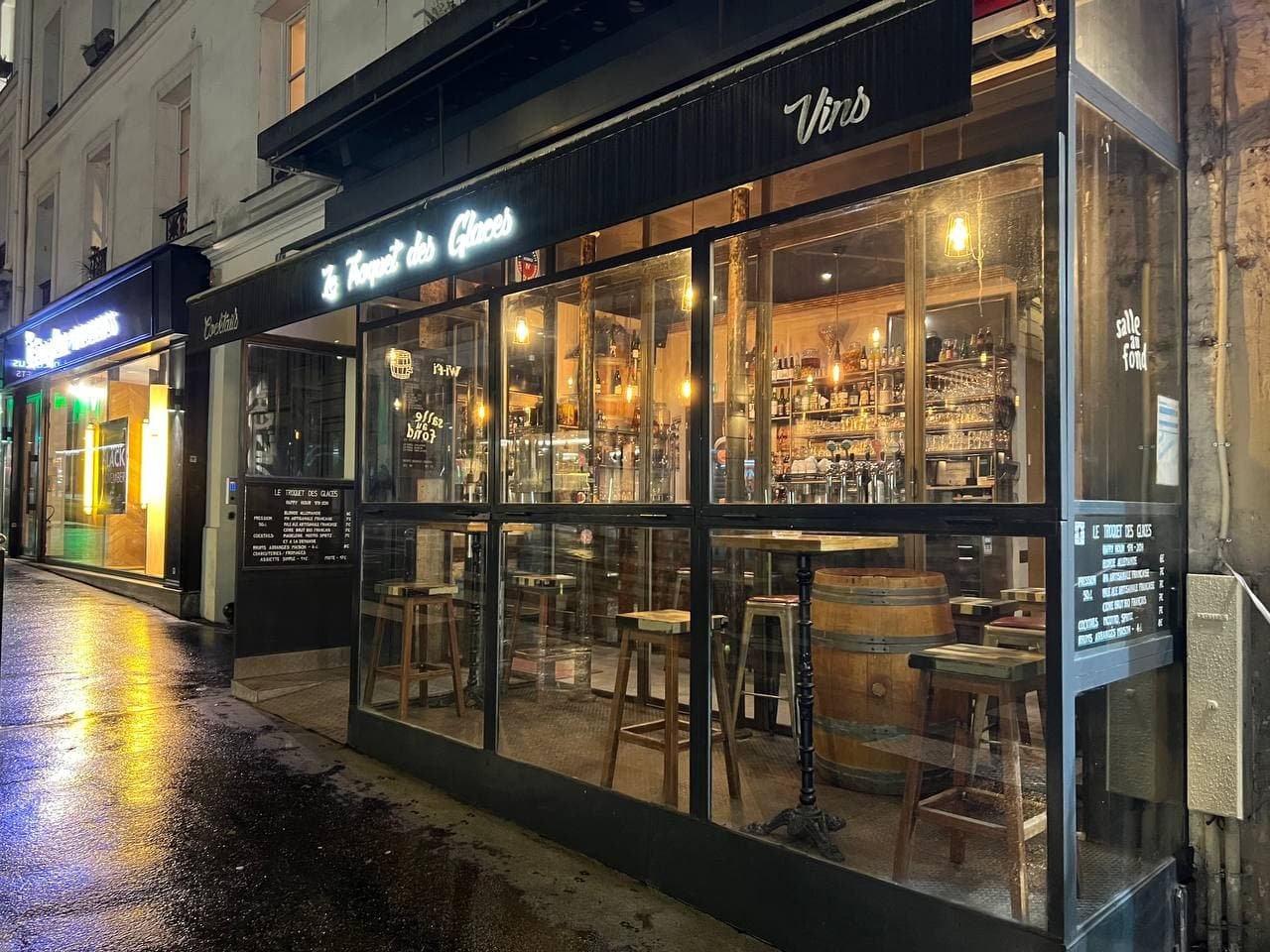
About Cadence Paris
Cadence Paris sits on Avenue Parmentier in the 11th arrondissement, one of the neighbourhoods that has defined Paris's shift toward serious, low-pretension drinking. The bar's address places it within a dense cluster of ambitious independent venues, where back-bar depth and pour discipline matter more than room size or door policy. For spirits-focused visitors, it represents the 11th at its most considered.
The 11th's Drinking Culture, Framed Through Spirits
Avenue Parmentier runs through a stretch of the 11th arrondissement that has, over the past decade, accumulated more serious drinking rooms per block than almost any comparable strip in Paris. The neighbourhood's evolution tracks a broader Parisian shift: away from the grand café as social anchor and toward smaller, program-led bars where the back bar tells you more about a venue's ambitions than the room does. Cadence Paris, at number 117, occupies this context. Its address is not incidental — the 11th's density of independent operators creates both the competition and the clientele that makes specialist curation viable.
Paris's bar scene has increasingly split between two modes. The first is the high-design cocktail room, where atmosphere and brand partnerships drive the experience; venues like Buddha Bar operate at scale, with spectacle as a primary draw. The second is the program-led format, where a focused spirits selection and a disciplined pour approach create a different kind of authority. Cadence belongs to the latter register, and the 11th is the right neighbourhood for it: less tourist-facing than the Marais or Saint-Germain, with a local clientele that returns based on what's in the glass.
The Back Bar as Editorial Statement
In Paris's most considered drinking rooms, the back bar functions less as inventory and more as a point of view. What a bar stocks — and, more revealingly, what it doesn't stock , signals its position within the wider scene. The shift toward specialist curation has been visible across Paris's independent bar circuit over recent years, with venues moving away from comprehensive spirits lists toward deeper, more selective ranges in specific categories. Danico, in the 2nd arrondissement, built its reputation partly on a back bar treated as a working library rather than a display. Cadence applies a comparable logic in a more easterly, less hotel-adjacent setting.
Spirits collection depth in this context means more than volume. It means range within categories: the difference between stocking three single malts and stocking twenty, with enough geographic and distillery spread to support a serious conversation. It means rare or allocated bottles that aren't available at every operator in the city. And it means the staff knowledge to navigate that selection with a guest rather than simply listing options. The 11th's bar culture, at its more ambitious end, supports all three , the neighbourhood's regulars have a baseline familiarity with spirits that rewards rather than intimidates a deep collection.
For visitors arriving from elsewhere in France, the comparison is instructive. Bars like Papa Doble in Montpellier and La Maison M. in Lyon operate serious spirits programs in their respective cities, but Paris , and the 11th specifically , benefits from a supply chain and import network that makes allocated and rare bottles more accessible. What appears on a Parisian back bar at this tier reflects both curatorial intent and procurement reach.
Placing Cadence in the Paris Bar Conversation
The Paris cocktail circuit that matters most to spirits-focused visitors is concentrated in a handful of neighbourhoods, and the 11th punches above its profile relative to tourist-facing areas. Candelaria, on Rue de Saintonge in the Marais, helped establish the city's appetite for serious agave-led programming and the back-room bar format. Bar Nouveau represents a different strand of the scene, with a format that rewards repeat visits. These venues define a competitive peer set within which Cadence's position on Avenue Parmentier reads as deliberate: geographically removed from the most visible cluster, but close enough to the 11th's own axis of independent drinking rooms to benefit from walk-in traffic that already understands what a program-led bar looks like.
The distinction between the 11th's bar culture and, say, the 8th or 16th is partly about price and partly about priority. In the more touristic and hotel-adjacent arrondissements, spirits selection is often secondary to room design and service theatrics. In the 11th, operators who have survived the last several years of increased competition have generally done so by developing a genuine point of difference in the glass. That natural selection has produced a neighbourhood cohort where quality of curation is the baseline expectation, not the differentiator.
Format and Approach
Most durable bars in Paris's independent circuit share a structural characteristic: they are legible. A visitor who understands the format , what the bar does, at what price register, and for what kind of drinker , is more likely to become a regular than one who arrives with mismatched expectations. The 11th's leading operators tend toward clarity: a defined spirits focus, a service style that matches the formality of the room, and a menu structure that gives a new guest enough direction without over-explaining. Cadence's position on Avenue Parmentier places it within this tradition rather than outside it.
Across France, the bars that have built durable reputations in secondary cities, including Au Brasseur in Strasbourg, Bar Casa Bordeaux, and Coté vin in Toulouse, share a similar quality: they have identified a specific audience and built a program around what that audience actually wants to drink, rather than what a generic spirits list suggests they should. Cadence operates in a city with a larger and more varied audience, but the underlying discipline is comparable. Even international references like Bar Leather Apron in Honolulu and Le Café de la Fontaine in La Turbie demonstrate that the program-led bar format travels across very different markets , what distinguishes it is always the consistency of intent.
Know Before You Go
Address: 117 Avenue Parmentier, 75011 Paris, France
Arrondissement: 11th , Oberkampf/Parmentier axis, well-served by Metro lines 3 and 5 (Parmentier stop)
Leading for: Spirits-focused visitors, back-bar exploration, evenings in the 11th's independent bar circuit
Booking: Contact details not listed; walk-in access is typical for this format and neighbourhood
Further reading: See our full Paris restaurants and bars guide for broader 11th arrondissement coverage
Frequently Asked Questions
- What should I drink at Cadence Paris?
- The bar's orientation toward spirits curation suggests that the more interesting orders are likely to be spirit-forward: a well-chosen single malt, a considered mezcal or aged rum, or a classic cocktail built from a specific bottle rather than a generic category pour. In bars of this type, asking the bartender what's new or allocated on the back bar tends to produce better results than ordering from memory.
- What's the main draw of Cadence Paris?
- The primary draw is the spirits selection and the program-led approach that distinguishes this tier of Paris bar from higher-volume, design-led venues. The 11th arrondissement address also matters: it places Cadence within a genuine neighbourhood bar circuit rather than a tourist corridor, which shapes both the clientele and the atmosphere. Specific awards or price positioning are not confirmed in our current data.
- How hard is it to get in to Cadence Paris?
- Walk-in access is the standard format for independent bars at this level in the 11th arrondissement, and the neighbourhood's bar circuit is less capacity-constrained than some of the more prominent rooms in the Marais or Saint-Germain. No booking hotline or reservation platform is listed in our current data, which is consistent with a drop-in format. Arriving before 9pm on weekends reduces any wait.
- When does Cadence Paris make the most sense to choose?
- If the priority is a considered, unhurried session focused on what's on the back bar rather than a high-energy social room, Cadence fits the brief. It makes most sense when paired with dinner in the 11th , the neighbourhood has enough serious kitchens that a pre- or post-dinner drink at a spirits-focused bar is a natural sequence. Visitors who are already working through Paris's independent bar circuit will find the Avenue Parmentier location an efficient addition.
- Is Cadence Paris suitable for whisky or rare spirits enthusiasts visiting from outside France?
- Bars operating at this level in the 11th arrondissement typically stock a more international and allocated range than their size might suggest, benefiting from Paris's import access and the spending patterns of a spirits-literate local clientele. For visitors whose primary interest is rare or category-specific bottles rather than cocktail theatrics, the program-led format of this type of venue is the right frame. Paris's position as a European spirits hub means the back bar at operators like Cadence can include bottles that wouldn't appear in equivalent-sized venues in other French cities.
Related editorial
- Best Fine Dining Restaurants in ParisFrom three-Michelin-star icons to the next generation of Parisian chefs pushing boundaries, these are the restaurants that define fine dining in the world's culinary capital.
- Best Luxury Hotels in RomeFrom rooftop terraces overlooking ancient ruins to Michelin-starred hotel dining, these are the luxury hotels that make Rome unforgettable.
- Best Cocktail Bars in KyotoFrom sleek lounges to hidden speakeasies, Kyoto's cocktail scene blends Japanese precision with global influence in ways you won't find anywhere else.
Save or rate Cadence Paris on Pearl
Keep this venue in your Pearl passport, rate it after you visit, and track it alongside every other place you collect.