
Bar in Orlando, United States
DOMU
100ptsSourcing-Led Ramen Counter
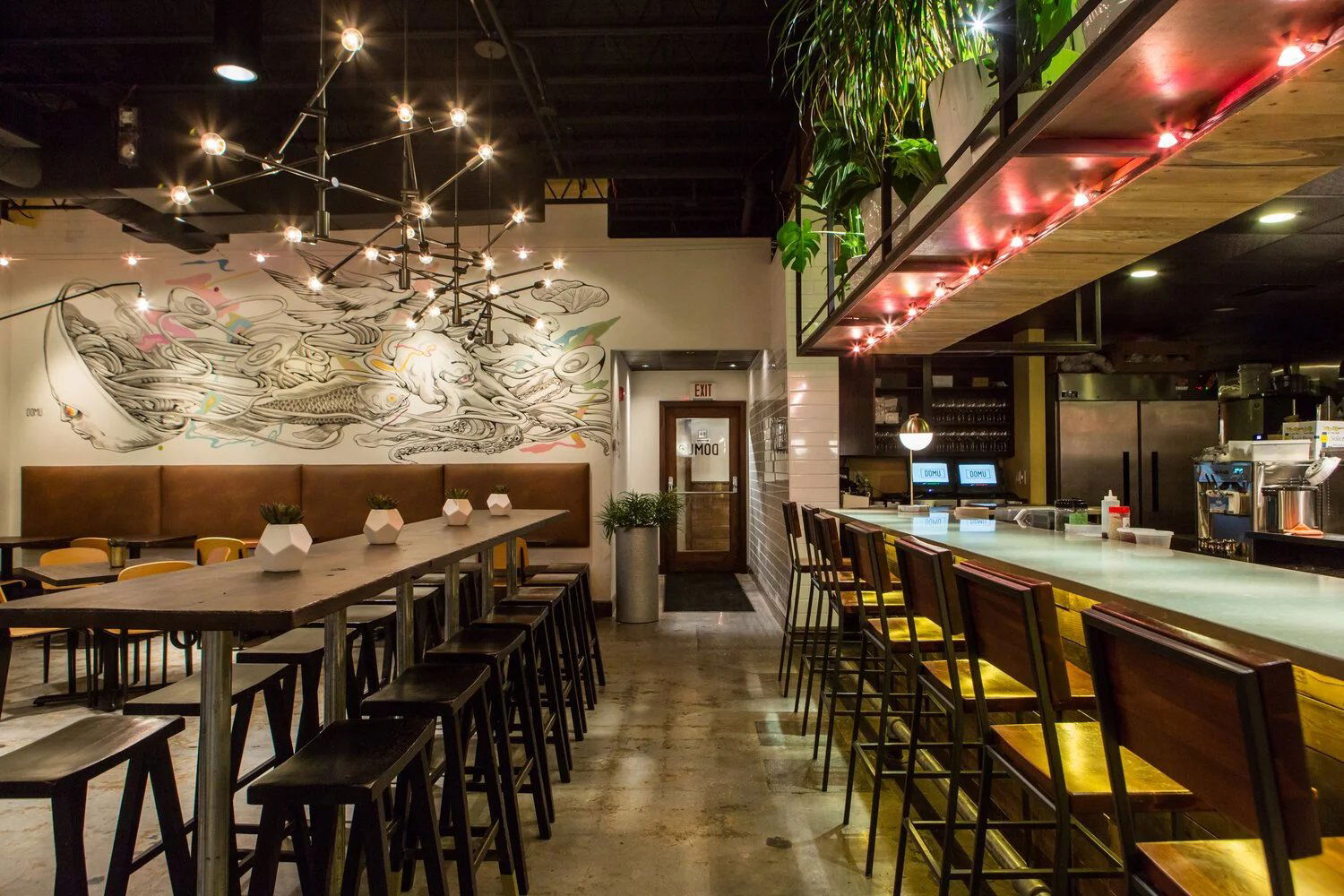
About DOMU
DOMU sits inside East End Market, Orlando's producer-focused food hall on Corrine Drive, and channels Japanese comfort food through a Floridian lens. The ramen and izakaya-style small plates draw a consistent crowd in a neighbourhood that rewards those willing to step off the resort corridor. For Orlando dining that connects ingredient sourcing to a specific place and community, DOMU earns repeated visits.
East End Market and the Logic of Place-Based Eating
There is a particular kind of food hall that functions as a curatorial statement rather than a convenience play. East End Market on Corrine Drive in Orlando's Audubon Park neighbourhood is that kind of operation. The building was conceived as a home for local producers, small-batch vendors, and chef-driven concepts, and the address carries a specific gravitational pull for Orlando residents who follow where the city's serious food energy actually concentrates. DOMU arrived in that context and has remained one of the anchor reasons to make the trip to 3201 Corrine Drive.
The physical approach matters here. East End Market reads more like a neighbourhood warehouse conversion than a theme-park-adjacent dining destination, which is precisely the point. The surrounding Audubon Park corridor has developed its own identity around independent food and drink concepts, sitting in deliberate contrast to the resort corridor that defines much of Orlando's international reputation. For visitors eating their way through the city, this pocket of the city offers something the I-Drive strip does not: evidence that Orlando has a local dining culture with its own logic and loyalty. Our full Orlando restaurants guide maps the broader pattern, but DOMU represents one of its sharper data points.
Ramen as a Sourcing Argument
Across American cities, ramen has sorted itself into two clear tiers. The first is the high-volume bowl-mill category, optimised for throughput and social media reach. The second is a smaller cohort of operations that treat the format as a genuine ingredient-sourcing exercise, where broth depth reflects time and quality of protein, tare construction reflects culinary intent, and toppings are chosen with some reference to provenance. DOMU occupies the second position within Orlando's ramen options, which is a smaller and more considered peer set than the city's raw number of noodle shops might suggest.
The logic of East End Market reinforces this positioning. Operating inside a building that houses local producers and artisan vendors creates an ambient expectation around ingredient origin. The broader market format — with its emphasis on Florida-sourced goods — sets a frame that bowl-focused concepts operating in strip-mall settings simply do not have to engage with. Whether that proximity to producer culture translates directly into supply relationships is a venue-specific detail, but the context is not incidental. Ramen programs that share square footage with Florida farms and specialty food makers are implicitly in conversation with sourcing questions in a way that standalone fast-casual operations are not.
That sourcing conversation matters for Orlando specifically. Florida's agricultural output is substantial and varied, with citrus, tropical produce, and seafood all available at quality levels that reward chefs willing to work with local supply chains. The gap between what Florida produces and what ends up in most Orlando restaurant kitchens has historically been wide. Concepts that close that gap, even partially, occupy a distinct and still relatively uncrowded position in the city's dining ecosystem.
The Izakaya Format and Its Orlando Context
Beyond ramen, DOMU operates with an izakaya sensibility, meaning the menu extends into small plates and shareable formats that reward a longer table rather than a transactional in-and-out visit. This format has significant traction in cities like New York, Chicago, and San Francisco, where bars and restaurants built around Japanese drinking-and-eating culture have developed sophisticated followings. In Orlando, that tradition is thinner, which gives concepts like DOMU more room to define the category locally.
The izakaya format also changes the drinks calculus. Unlike tasting-menu-centric operations where wine pairings dominate, izakaya dining is genuinely agnostic between beer, sake, shochu, and cocktails. That flexibility allows a broader range of beverage programs than the format might initially suggest. For reference on what high-craft cocktail programs look like in the broader American context, programs at Kumiko in Chicago, Jewel of the South in New Orleans, and Julep in Houston each represent distinct regional takes on craft-forward drink lists. Closer to the Pacific, Bar Leather Apron in Honolulu provides a useful benchmark for Japanese-inflected cocktail thinking in an American context. DOMU operates in a different price and volume tier from those programs, but the izakaya format at least creates the structural space for a drinks list that earns attention rather than merely fulfilling a functional role.
Within Orlando itself, the bar and drink scene clusters in a few distinct modes. Venues like Aero Rooftop Bar and Lounge and 6274 Hollywood Wy occupy the hotel-adjacent and event-format end of the market. More neighbourhood-rooted options such as Alfies HiFi reflect the independent bar culture that has developed in the city's residential corridors. DOMU's position inside East End Market places it closer to that independent register, even though its food program anchors it in a different competitive set than a dedicated bar operation. For Indian food and drink pairing in a similarly neighbourhood-oriented setting, Aashirwad Indian Food and Bar operates in a comparable local-first mode. The broader national craft bar context can be tracked through programs at Superbueno in New York City, ABV in San Francisco, and The Parlour in Frankfurt.
Planning a Visit: What to Know Before You Go
East End Market operates as a communal food hall rather than a conventional restaurant building, which means the visit has a different rhythm than a reservation-driven dining room. DOMU draws consistent foot traffic from the Audubon Park neighbourhood and from Orlando diners who track the city's independent food scene, so arriving early in service, particularly on weekends, is a reasonable hedge against long waits. The address at Suite 100, 3201 Corrine Drive, is direct to reach by car and sits in a walkable part of the Corrine Drive corridor with adjacent parking. Given the venue's food-hall format and neighbourhood positioning, the atmosphere skews casual and communal rather than high-formality, which suits the izakaya and ramen format well.
Specific booking method, current hours, and pricing are not confirmed in our database at time of publication. Verifying directly through East End Market's current listings before visiting is advisable, particularly for group visits or off-peak timing. The broader context, however, is consistent: DOMU occupies a specific and earned position in Orlando's independent dining scene, grounded in a food-hall ethos that takes ingredient origin seriously.
Frequently Asked Questions
- Is DOMU more low-key or high-energy?
- DOMU occupies the low-key end of the Orlando dining register. Its East End Market setting in the residential Audubon Park neighbourhood draws a local crowd rather than a tourist-facing one, and the food-hall format creates a casual, communal atmosphere rather than a high-energy nightlife environment. The izakaya format rewards a relaxed, extended table rather than a quick transactional visit.
- What cocktail do people recommend at DOMU?
- DOMU's izakaya format structurally supports a drinks list built around sake, shochu, beer, and cocktails, but specific current menu details are not confirmed in our database. The format creates space for Japanese-influenced cocktails to complement the food program, and that pairing logic is where the drinks list tends to earn attention. Checking current menu listings directly is advisable before visiting with a specific drink in mind.
- What is DOMU leading at?
- DOMU's ramen program is the clearest point of differentiation within Orlando's dining scene. Operating inside East End Market situates the concept within a producer-conscious environment that separates it from the city's higher-volume noodle options. The izakaya-style small plates extend the argument for a longer table and a drinks pairing approach.
- How hard is it to get in to DOMU?
- DOMU operates within a food-hall format rather than a traditional reservation-based dining room, which means access is generally walk-in dependent. Peak periods, particularly weekend evenings, attract consistent demand from the Audubon Park local base and from Orlando diners tracking the independent food scene. Arriving early in service is the practical hedge. Specific booking details are not confirmed in our database; checking East End Market's current information directly is the reliable approach.
- Does DOMU's location inside East End Market mean it shares sourcing relationships with other vendors in the building?
- East End Market was specifically designed to house local producers and artisan food vendors alongside chef-driven restaurant concepts, which creates an unusual structural proximity between restaurant kitchens and ingredient suppliers. Whether DOMU maintains formal supply relationships with fellow market tenants is a venue-specific detail not confirmed in our current database, but the shared-building model is a meaningful context point. In American food-hall development broadly, co-location with producers is one of the few format elements that genuinely influences sourcing habits rather than merely signaling them. For the full picture of Orlando's independent food scene, see our Orlando restaurants and bars guide.
More bars in Orlando
- 6274 Hollywood Wy6274 Hollywood Wy is a low-key, walk-in-friendly venue on Orlando's Hollywood Way corridor, suited to first-timers who want a casual neighborhood stop without the booking overhead of busier I-Drive spots. Verified details on food, pricing, and hours are limited, so confirm current information before making it a dedicated trip. Easy to access, easy to book.
- Aero Rooftop Bar & LoungeAero Rooftop Bar & Lounge puts you above Orange Avenue with one of downtown Orlando's more reliable skyline views. It's the right call for a date night or group celebration when visual setting matters more than a deep cocktail program. Time your visit for a weekday sunset to get the full effect without the weekend crowd.
Related editorial
- Best Fine Dining Restaurants in ParisFrom three-Michelin-star icons to the next generation of Parisian chefs pushing boundaries, these are the restaurants that define fine dining in the world's culinary capital.
- Best Luxury Hotels in RomeFrom rooftop terraces overlooking ancient ruins to Michelin-starred hotel dining, these are the luxury hotels that make Rome unforgettable.
- Best Cocktail Bars in KyotoFrom sleek lounges to hidden speakeasies, Kyoto's cocktail scene blends Japanese precision with global influence in ways you won't find anywhere else.
Save or rate DOMU on Pearl
Keep this venue in your Pearl passport, rate it after you visit, and track it alongside every other place you collect.