
Bar in Newark, United States
Fornos of Spain
100ptsIronbound Iberian Anchor
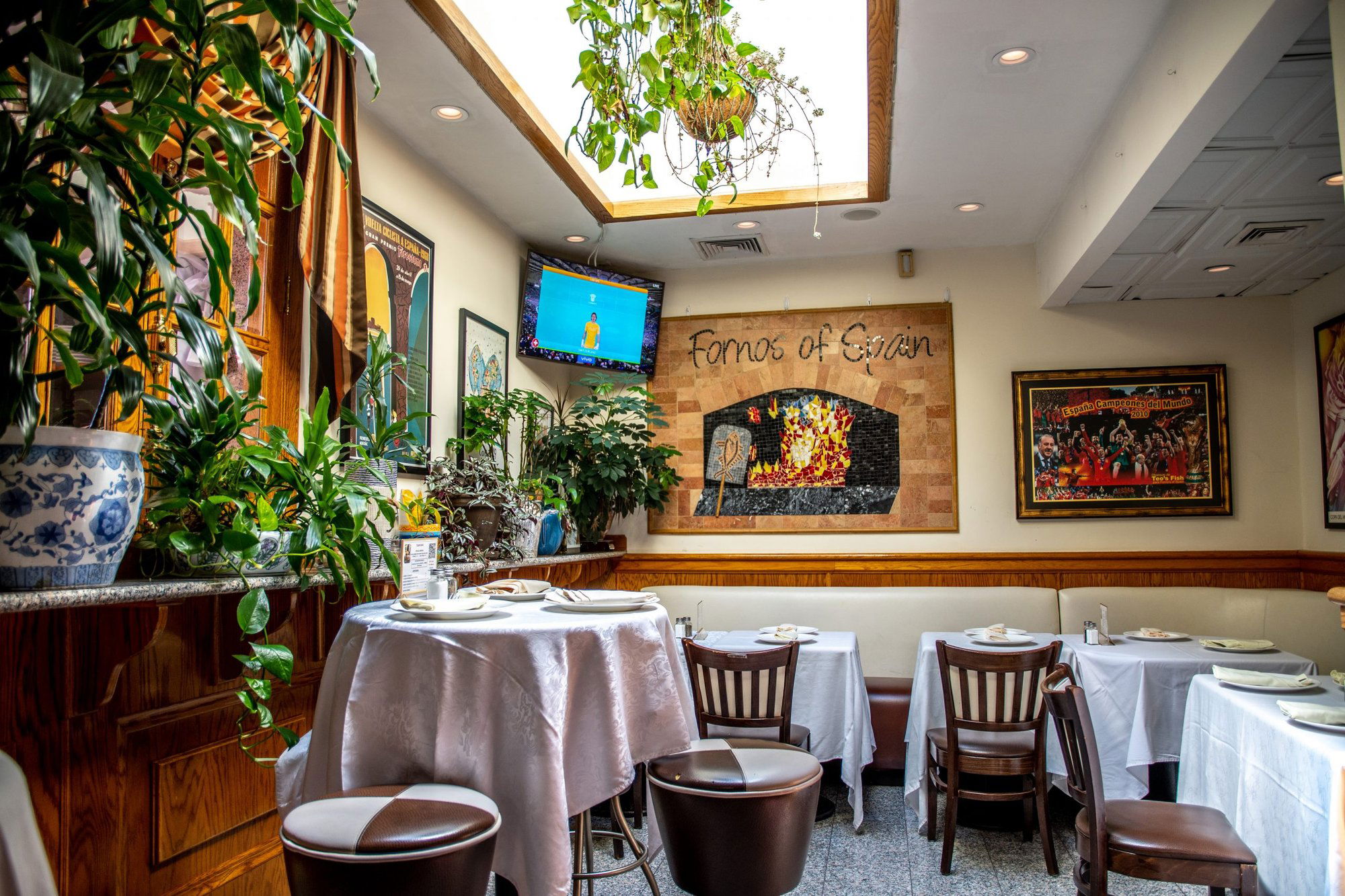
About Fornos of Spain
On Ferry Street in Newark's Ironbound district, Fornos of Spain occupies a position that few Portuguese and Spanish-leaning establishments in New Jersey can match: a long-running anchor in a neighbourhood that built its dining identity around Iberian cooking. The room carries the weight of that history, and the bar program sits at the centre of the experience rather than at its edge.
Ferry Street and the Iberian Corridor
The Ironbound district runs along Ferry Street like a compressed anthology of Iberian cooking in America. Portuguese tascas, Spanish tapas counters, and hybrid spots serving both traditions occupy a stretch of Newark that has functioned as an immigrant dining corridor since the mid-twentieth century. The neighbourhood draws from a residential Portuguese-American community that has maintained its culinary specificity through decades of national dining trends that barely touched it. Within that context, Fornos of Spain at 47 Ferry St occupies a position shaped less by trend-chasing than by durability: it is a restaurant that the street returns to rather than one that arrived to capitalise on the street's reputation.
For visitors approaching from outside Newark, the Ironbound operates as a distinct dining destination, accessible from Penn Station and framed by a density of Iberian options that makes comparison-shopping almost inevitable. Adega Grill and Casa d'Paco anchor different registers of the same tradition along the same corridor, while Consigliere and Hobby's Delicatessen & Restaurant reflect the neighbourhood's wider appetite for long-standing, community-embedded formats. Fornos belongs in that company. See our full Newark restaurants guide for the broader picture.
The Bar as the Room's Centre of Gravity
In Spanish restaurants of Fornos's generation, the bar was never a waiting area. It was the room within the room: a place where regulars posted up for a copa de vino and a pincho before the dining room filled, and where the person behind the bar was expected to hold the social temperature of the entire space. That tradition of bar hospitality, rooted in the structure of a Spanish casa de comidas, means the bartender carries a different weight here than in a contemporary cocktail venue. The role is less about technical spectacle and more about continuity, memory, and the kind of pacing that makes a two-hour meal feel natural rather than managed.
Across American cocktail culture, the bartender-as-craftsperson model has increasingly dominated the conversation. Venues like Kumiko in Chicago and Bar Leather Apron in Honolulu have built their identities around technical precision and a defined, disciplined drink philosophy. Jewel of the South in New Orleans and Julep in Houston draw from regional American tradition with the same kind of intentionality. ABV in San Francisco and Superbueno in New York City operate within contemporary formats where the program itself is a statement. The Parlour in Frankfurt demonstrates how far European bar culture has moved toward the craft model as well.
Fornos operates from a different tradition entirely. The hospitality philosophy here traces to a Spanish model where the bar is integrated into the dining experience rather than positioned as a separate destination. A glass of Rioja or a cold beer ordered at the bar is not a preamble to the real experience; it is the real experience, continuous with the meal that follows.
What the Cuisine Represents in This Setting
Spanish cooking in New Jersey's Ironbound has always sat in a specific relationship with its Portuguese counterpart. The two cuisines share structural DNA, particularly around seafood preparations, rice dishes, and the use of olive oil as a foundational fat, but they diverge sharply in flavour register and technique. Spanish kitchens lean toward paprika, saffron, and cured pork products in ways that mark the difference clearly. Fornos carries that Spanish identity on a street that is predominantly Portuguese in character, which places it in a distinct position within the neighbourhood's overall offering.
The kind of cooking associated with the name, traditional Spanish regional dishes with a casa de comidas sensibility, tends to reward the kind of ordering that spans the table rather than anchors it to a single dish. Sharing formats, whether or not they are formally structured as such, align with how this style of cooking was designed to be eaten. A meal that moves through several plates, supported by the right glass poured at the right moment by someone who has read the table correctly, is the format Fornos has built its reputation on.
Planning a Visit
The Ironbound district is most efficiently reached via Newark Penn Station, which connects to New York's Penn Station in under twenty minutes on NJ Transit. From the station, Ferry Street is within walking distance, and the concentration of Iberian restaurants means a meal at Fornos can be paired with a walk through the neighbourhood to understand the full competitive context. For visitors travelling from Manhattan specifically, the Ironbound operates as a cross-river alternative to the city's higher-priced Spanish dining options, with a neighbourhood character that no midtown or downtown Spanish restaurant can replicate.
Given the absence of current booking, hours, or pricing information in the public record, confirming details directly with the venue before visiting is advisable. The neighbourhood's dining rhythm tends toward lunch through dinner service, with weekends drawing a larger mix of local families and out-of-neighbourhood visitors.
Frequently Asked Questions
- What should I try at Fornos of Spain?
- Fornos operates within the Spanish casa de comidas tradition, where the strength of the kitchen shows across a range of dishes rather than a single signature. Spanish-influenced seafood preparations, rice dishes, and cured meat boards are the structural pillars of this cooking style. Without a publicly confirmed current menu, the most reliable approach is to ask the bar staff when you arrive: the person behind the counter in a room like this typically knows the day's strongest options better than any printed list.
- What is the main draw of Fornos of Spain?
- The draw is its position as a long-running Spanish restaurant on Newark's Ferry Street, a corridor that functions as one of the most concentrated Iberian dining destinations on the East Coast. Within that competitive set, Fornos offers a traditional hospitality format, bar-centred and dining-integrated, that separates it from newer, more concept-driven entrants. For visitors coming from New York, it represents a Newark-specific experience that the city's own Spanish restaurants, at considerably higher price points, cannot replicate in terms of neighbourhood context.
- Do they take walk-ins at Fornos of Spain?
- No confirmed booking policy is available in the current public record. In the Ironbound, walk-in culture is common among long-established restaurants, particularly at the bar, but weekend evenings tend to draw fuller rooms across the entire corridor. If visiting on a Friday or Saturday, arriving earlier in service, or calling ahead when contact details become available, is the lower-risk approach.
- What is the leading use case for Fornos of Spain?
- Fornos suits visitors who want to eat within a functioning neighbourhood dining tradition rather than a curated restaurant experience. It works leading as a main dinner destination on a Newark visit, ideally combined with a walk along Ferry Street to take in the full Ironbound context. For groups interested in Spanish cooking specifically, it offers a point of comparison with the corridor's predominantly Portuguese options, making the culinary distinctions between the two traditions legible in a single evening.
- Is Fornos of Spain one of Newark's oldest Spanish restaurants?
- Fornos of Spain is among the longest-established Spanish-named restaurants on Ferry Street, operating in a corridor where institutional longevity is itself a form of credibility. The Ironbound's dining identity was built on restaurants that survived generational shifts in the neighbourhood, and venues with that kind of tenure carry a neighbourhood trust that newer openings have not yet earned. For visitors interested in the historical arc of Spanish cooking in the American Northeast, Fornos represents a reference point on that timeline, situated in a community that has sustained Iberian culinary traditions with less dilution than most comparable American urban contexts.
Related editorial
- Best Fine Dining Restaurants in ParisFrom three-Michelin-star icons to the next generation of Parisian chefs pushing boundaries, these are the restaurants that define fine dining in the world's culinary capital.
- Best Luxury Hotels in RomeFrom rooftop terraces overlooking ancient ruins to Michelin-starred hotel dining, these are the luxury hotels that make Rome unforgettable.
- Best Cocktail Bars in KyotoFrom sleek lounges to hidden speakeasies, Kyoto's cocktail scene blends Japanese precision with global influence in ways you won't find anywhere else.
Save or rate Fornos of Spain on Pearl
Keep this venue in your Pearl passport, rate it after you visit, and track it alongside every other place you collect.