
Bar in New York City, United States
Shuko
100ptsCounter-Driven Omakase
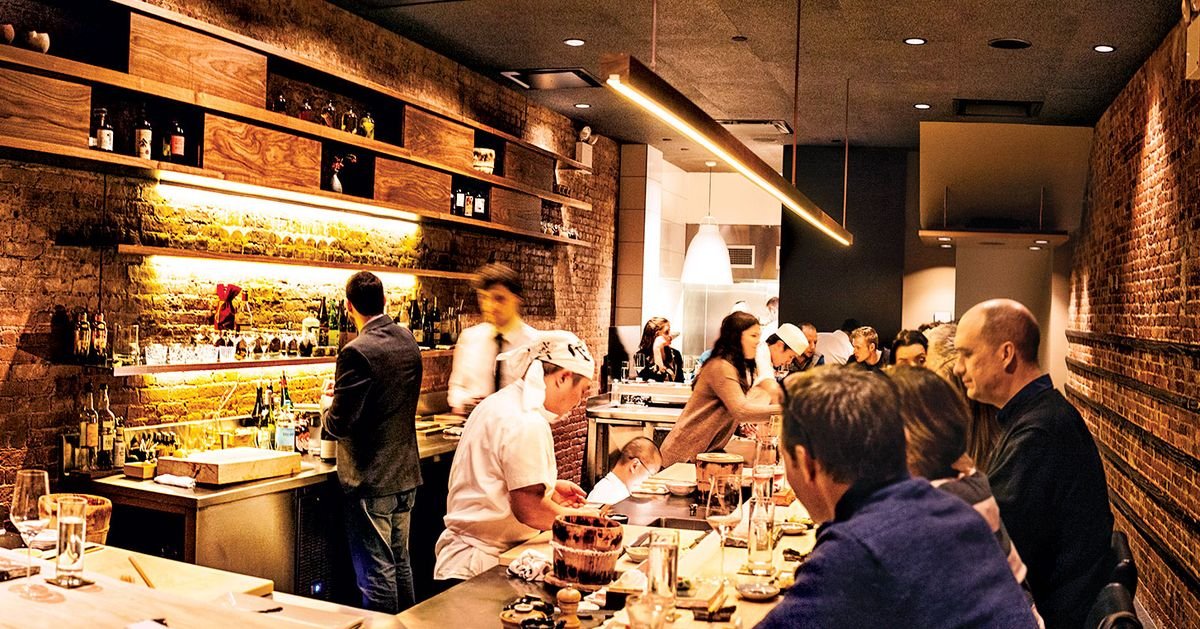
About Shuko
Shuko operates at the serious end of New York's omakase tier, drawing on Japanese counter tradition in a format that prioritises restraint and precision over spectacle. Located in the East Village at 47 E 12th Street, it occupies a niche where sourcing discipline and minimal-waste kitchen practice define the offer as much as any single dish. For the reader tracking where New York's Japanese fine dining is heading, Shuko is a reference point worth understanding.
Where New York's Omakase Tier Has Landed
The evolution of Japanese counter dining in New York tracks a clear arc: from novelty format to mainstream, and now to a stratified tier where a handful of addresses compete on sourcing rigour, kitchen discipline, and what might loosely be called philosophical coherence. Shuko, at 47 E 12th Street in the East Village, arrived as that stratification was accelerating. It entered a city that already had a formed appetite for omakase, which meant it could skip the explanatory phase and move directly into the conversation about what serious Japanese counter dining should look like in Manhattan.
That conversation, in New York as in Tokyo, increasingly centres on the ethics of the kitchen as much as the execution on the plate. Waste reduction, responsible sourcing, and the treatment of fish stocks are no longer peripheral concerns for high-end Japanese restaurants — they are, for a certain tier of operation, central to the argument the kitchen is making. Shuko sits within that current.
The East Village as a Context
The East Village has historically hosted Japanese dining at both ends of the spectrum: late-night ramen counters and quiet, serious omakase rooms share the same postcodes. That coexistence is part of what makes the neighbourhood useful for a restaurant trying to occupy the upper tier without the visual remove of Midtown or the financial district. Proximity to the street-level energy of the neighbourhood means a different kind of diner ends up at the counter — typically younger, more food-literate, and more attentive to where ingredients come from than the expense-account crowd that fills some uptown rooms.
The address on E 12th Street places Shuko close to a cluster of independently run food and drink operations that have shaped the neighbourhood's current character. For drinks before or after, the city's cocktail scene offers several credible options in the broader area. Amor y Amargo runs a bitters-focused, low-ABV program that rewards the kind of attention Shuko's diners tend to bring to a meal. Attaboy NYC, a few minutes away in the Lower East Side, has sustained a reputation for technically precise cocktails without a fixed menu , a format that shares some DNA with the counter omakase model. Angel's Share, the East Village Japanese bar that pre-dates the current wave of Japanese-influenced drinking in the city, remains a useful point of comparison for how Japanese hospitality codes translate into a New York context.
The Sustainability Argument in Japanese Fine Dining
Japanese cuisine, at its formal end, has always carried an implicit sustainability logic: respect for the ingredient, minimal intervention, use of the whole fish. But in the past decade, that implicit logic has become explicit at a number of serious counters globally. The conversation includes questions about bluefin provenance, the sourcing of uni, and the sourcing of domestic versus imported product. A kitchen working at this level in 2024 is expected to have thought through these questions, not just in terms of quality, but in terms of what the sourcing choice signals about the restaurant's relationship with its supply chain.
New York's serious Japanese kitchens have responded to this in different ways. Some have leaned into domestic sourcing , East Coast fish, American-farmed rice , as both an ethical and a differentiation strategy. Others have maintained the primacy of Japanese-sourced product while applying stricter selection criteria. What distinguishes the more considered operators is not the choice between these approaches, but the consistency with which the choice is applied and communicated. A counter that can tell a diner exactly where the fish came from, how it was handled, and why that matters is making a different kind of argument than one that simply presents the product as premium.
This is the frame through which Shuko is worth reading. The kitchen's position within this conversation connects it to a broader set of operators working across American cities who are rethinking what premium Japanese dining can mean in a Western context. Kumiko in Chicago, for instance, applies a similarly rigorous sourcing logic to its Japanese-influenced drinks program, while Bar Leather Apron in Honolulu positions itself within a local-first ethos that resonates with the same concerns. These are not restaurants and bars pursuing the same format, but they are part of the same broader move toward accountability in premium hospitality.
Reading the Counter: What to Order and What to Expect
Omakase, by definition, removes the ordering decision from the diner. The kitchen sequences the meal, and the diner's role is to pay attention. At Shuko, as at any serious counter operating in this format, the sequencing reflects the kitchen's priorities: which fish is at peak, which preparations reward the most careful attention, and where in the meal the diner's palate is leading positioned to receive the most demanding ingredient.
For diners coming from the New York cocktail world, the transition to a Japanese counter requires a certain recalibration of expectations. The pacing is slower, the sensory register is quieter, and the rewards are cumulative rather than immediate. If you are eating at Shuko in the colder months, the seasonal logic of Japanese cuisine tends to favour richer, more unctuous preparations , cured fish, aged product, warmer accompaniments. Summer brings leaner, cleaner lines. Both directions are worth experiencing if the opportunity arises. For drinks that match the register of the meal, Superbueno offers a different but comparably considered approach to flavour precision a short distance away.
Diners planning a wider tour of the city's serious dining and drinking scene can cross-reference Shuko against the fuller context in our New York City restaurants guide.
Placing Shuko in the National Conversation
The serious Japanese counter format has spread well beyond New York. Chicago, Los Angeles, San Francisco, and Honolulu all have operators working in the same register, and the quality gap between cities has narrowed considerably in the past five years. What New York retains is density: the number of credible options within a small geographic radius means the city's diners are among the most informed in the country about what distinguishes one counter from another. That informed audience raises the bar for every operator, including Shuko.
Comparable drinks operations in other American cities show a similar dynamic at work. Jewel of the South in New Orleans, Julep in Houston, ABV in San Francisco, and Allegory in Washington, D.C. are each operating in cities where the audience has become more demanding over the past decade. The pattern repeats across hospitality categories: as local knowledge rises, so does the specificity of what operators need to offer to hold a position in the serious tier. The Parlour in Frankfurt on the Main demonstrates that this dynamic is not limited to American cities , the informed-diner effect is reshaping premium hospitality on multiple continents.
For Shuko, operating in the most concentrated market in the country, that pressure is a daily reality. The counter format that the restaurant works within offers no structural padding , every seat is close to the kitchen, every decision is visible, and the diner's experience is shaped by nothing except what the kitchen puts in front of them. That exposure is, in the leading cases, what makes the format worth the commitment.
Planning Your Visit
Shuko is located at 47 E 12th Street, New York, NY 10003, in the East Village. The omakase counter format means booking well in advance is the standard expectation for this tier of dining in New York. Check the restaurant's current booking channels directly, as availability and format details are subject to change.
Quick reference: 47 E 12th St, New York, NY 10003 , omakase counter format , East Village, Manhattan.
Frequently Asked Questions
What is the atmosphere like at Shuko?
Counter dining in New York's serious omakase tier tends toward quiet focus rather than ambient noise. The format positions diners close to the kitchen's work, which rewards attention and creates a register closer to a chef's table than a conventional restaurant dining room. Those drawn to the New York awards circuit and the city's more considered Japanese rooms , rather than the broader sushi-restaurant category , will find the atmosphere calibrated to that audience.
What should I try at Shuko?
The omakase format means the kitchen decides the sequence, which is itself the point. The counter tradition Shuko operates within, with roots in Japanese cuisine's formal sushi disciplines, prioritises fish at peak condition, seasonal logic, and preparations that reward rather than overwhelm the ingredient. Trust the sequence , that is the correct approach at any counter operating in this format, regardless of what is being served on a given night.
How does Shuko fit into New York's broader Japanese dining scene, and what distinguishes it from a standard sushi restaurant?
New York supports a wide range of Japanese dining, from neighbourhood sushi bars to highly competitive omakase rooms that occupy a distinct tier in terms of sourcing rigour, format discipline, and price. Shuko operates in the latter category, where the counter format, the chef-led sequence, and the emphasis on ingredient provenance separate it from the broader sushi-restaurant category. For diners familiar with the city's serious Japanese counters, the relevant peer set is the small number of New York rooms applying comparable discipline , not the general population of sushi restaurants in Manhattan.
More bars in New York City
- (SUB)MERCER(SUB)MERCER occupies a basement address on Mercer Street in SoHo, positioning it as a deliberate destination rather than a drop-in. The subterranean format tends to keep ambient noise lower than street-level alternatives, making it a reasonable call for groups of four or more. Book ahead for weekends and confirm group capacity directly with the venue.
- 1 OR 81 OR 8 on DeKalb Avenue is a low-key Fort Greene bar that works best for two people on a weeknight when the room is quiet enough for conversation. Walk-ins are easy, no advance planning required. If a specialist cocktail program is your priority, Attaboy or Amor y Amargo offer more defined experiences — but for a neighbourhood drink without the fuss, this delivers.
- 230 Fifth Rooftop Bar230 Fifth is the easiest rooftop bar in Midtown to walk into, and the Empire State Building views justify the trip. The crowd skews groups and tourists, and the drinks are solid rather than craft-focused. Go early on a weekday for the best version of the experience; after 9 PM on weekends it tips firmly into party-group territory.
- 4 Charles Prime Rib4 Charles Prime Rib is a compact, reservation-required West Village dining room built around a focused prime rib format. It works well for dates and pairs but is too small for groups of four or more. Booking is easy relative to Manhattan peers, and the narrow menu signals a kitchen that executes one thing consistently well.
- 44 & X Hell's KitchenA low-key Hell's Kitchen neighborhood bar-restaurant that earns its place for easy weeknight dates and pre-theatre dinners. Booking is simple, the room is intimate enough for conversation, and there's no dress pressure. Not a cocktail destination, but a reliable, pressure-free option in Midtown West when you want comfort over spectacle.
- 58-22 Myrtle Ave58-22 Myrtle Ave is a low-key Ridgewood neighborhood spot that rewards return visits more than first impressions. Easy to get into, with no reservation headaches, it suits regulars looking for an unpretentious room rather than a structured cocktail program. If a strong drinks list or kitchen ambition matters to you, look to Attaboy or Amor y Amargo instead.
Related editorial
- Best Fine Dining Restaurants in ParisFrom three-Michelin-star icons to the next generation of Parisian chefs pushing boundaries, these are the restaurants that define fine dining in the world's culinary capital.
- Best Luxury Hotels in RomeFrom rooftop terraces overlooking ancient ruins to Michelin-starred hotel dining, these are the luxury hotels that make Rome unforgettable.
- Best Cocktail Bars in KyotoFrom sleek lounges to hidden speakeasies, Kyoto's cocktail scene blends Japanese precision with global influence in ways you won't find anywhere else.
Save or rate Shuko on Pearl
Keep this venue in your Pearl passport, rate it after you visit, and track it alongside every other place you collect.