
Bar in New York City, United States
Pylos
100ptsGreek Regional Table
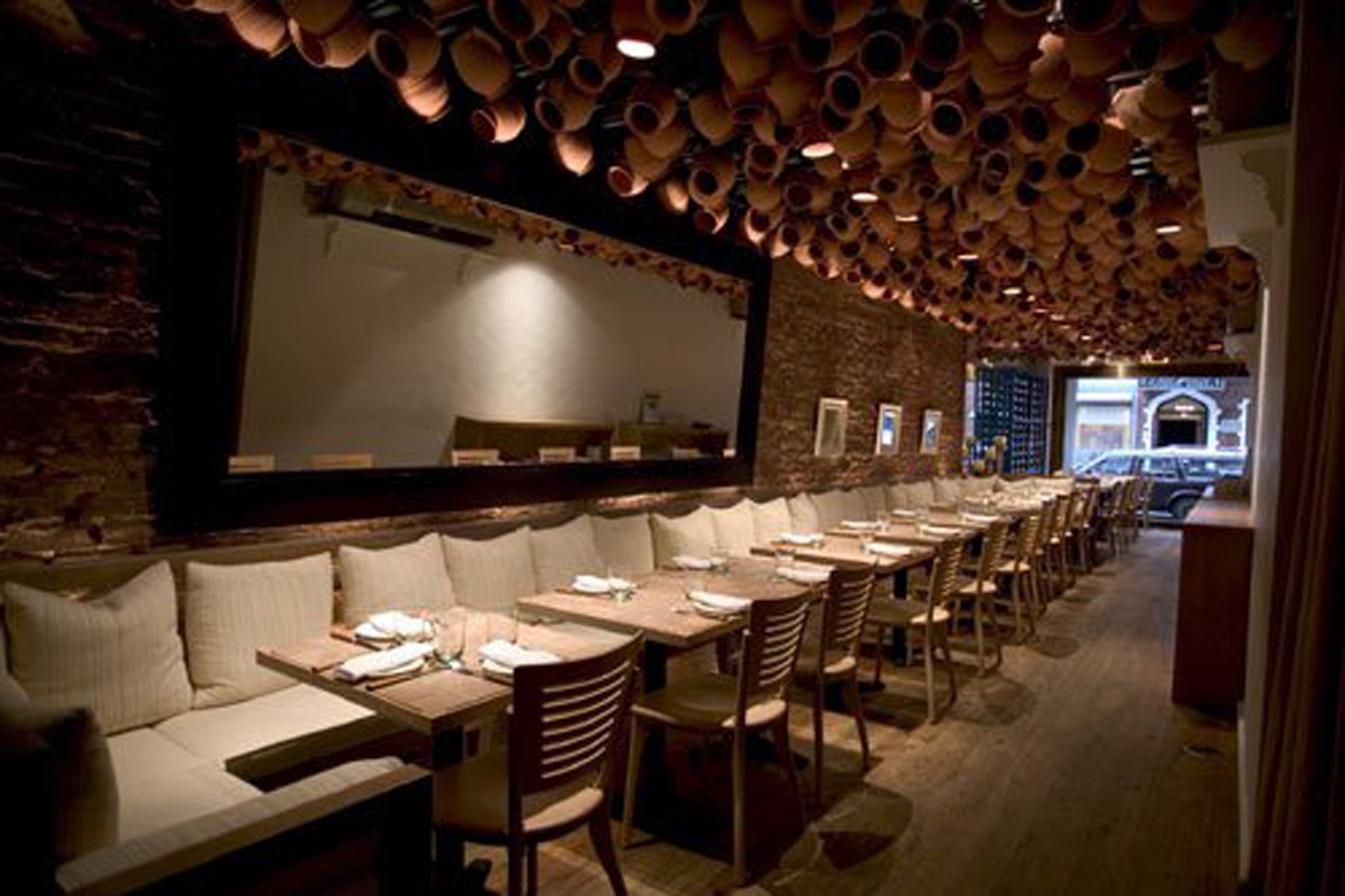
About Pylos
A Greek restaurant on East 7th Street in the East Village, Pylos has occupied its corner of the neighborhood long enough to become part of the area's culinary fabric. The menu draws on regional Greek cooking traditions, structured to move through familiar categories in ways that reward close reading. For East Village dining, it sits in a bracket defined by heritage and repeat-visitor loyalty rather than rotating hype.
Greek Cooking in the East Village: How a Menu Tells the Story
The East Village has cycled through enough restaurant generations to make longevity itself an editorial statement. On East 7th Street, Pylos has held its address long enough to outlast several waves of neighborhood reinvention, which places it in a distinct category among Manhattan Greek restaurants: one built on accumulated local trust rather than opening-season momentum. For a cuisine that struggles to find serious representation in New York between the extremes of diner-style taverna and high-concept Hellenic tasting menus, that position matters.
Greek cuisine in New York has historically sorted into two tiers with very little in between. The lower register covers family-run spots where the menu doubles as a geography lesson in Aegean standards, and the upper register is thin and occasionally unconvincing. Pylos has occupied the middle ground where regional cooking receives genuine attention, the kind of positioning that draws repeat visitors rather than first-night occasion seekers. That audience, which tends to know what it's comparing a dish against, is the more demanding one to satisfy.
What the Menu Architecture Signals
Reading a menu as a document reveals more about a restaurant's identity than any single dish can. At Pylos, the structure follows a logic recognizable to anyone familiar with how Greek meals actually unfold in their home context: the table fills incrementally, cold preparations arrive before hot, and the progression builds toward protein without rushing through the early stages. This is not the Greek menu as compressed diner shortcut; it is one designed to reward the kind of unhurried eating that meze culture assumes.
The appetizer section carries particular weight in this framing. In Greek cooking, the cold meze course is where a kitchen's sourcing and technique are most exposed, because there is no heat to mask indifferent ingredients. Spreads, cured preparations, and vegetable dishes stand or fall on product quality and seasoning calibration. A menu that devotes serious real estate to this section, as Pylos does, signals confidence in those fundamentals rather than reliance on the main course to compensate.
Main preparations move into grilled fish and braised meat territory, categories where Greek regional cooking has developed some of its deepest traditions. Whole fish preparations, in particular, reflect a cooking vocabulary that dates back centuries along the Aegean and Ionian coasts, and restaurants that handle them well are working within a culinary lineage that deserves to be named as such. The wine list, aligned with Greek producers, functions as an extension of that regionalist argument: pairing the food with Greek bottles, rather than defaulting to familiar international selections, is itself an editorial choice about what kind of restaurant this intends to be.
East 7th Street and the East Village's Restaurant Cohort
Positioning Pylos requires understanding the block-by-block specificity of the East Village, which is not a uniform dining zone. The area east of Second Avenue and south of 10th Street has developed a restaurant character distinct from the bar-heavy stretches closer to the L train stops: more neighborhood-residential, less transient, more likely to produce the kind of regulars who sustain a kitchen through market shifts. East 7th Street in particular sits in a stretch where restaurants with genuine staying power have historically clustered.
The East Village's bar scene provides a natural context for before or after a meal at Pylos. For cocktails that reflect technical seriousness, Amor y Amargo maintains one of the most focused bitter-spirits programs in the city, just a short walk from this stretch of the neighborhood. Attaboy NYC operates without a printed menu, building drinks to order on the lower end of Orchard Street, while Angel's Share in the East Village has maintained its reputation for Japanese-influenced cocktail precision across multiple bar generations. For something Spanish in register, Superbueno brings a different energy to the area's options. These bars collectively define a neighborhood drinking culture with more range and depth than most Manhattan precincts.
Beyond the immediate East Village, New York's cocktail geography extends across boroughs and price tiers. Menus structured around a specific point of view, like those at Kumiko in Chicago or Allegory in Washington, D.C., demonstrate how a bar program can be used to tell a story about cuisine and culture in the same way a restaurant menu does. Jewel of the South in New Orleans, Julep in Houston, and ABV in San Francisco each reflect how regional bar culture in the United States has developed its own serious vocabulary. Even further afield, Bar Leather Apron in Honolulu and The Parlour in Frankfurt on the Main illustrate how the discipline of structured bar programs has spread well beyond its original urban centers. For anyone building a fuller picture of New York City's dining and drinking options, our full New York City restaurants guide covers the range.
Planning a Visit: How Pylos Compares Logistically
The East Village Greek restaurant tier is small enough that comparison is relatively direct. The table below positions Pylos against two nearby restaurants in overlapping cuisine or price registers, based on general category knowledge rather than real-time booking data.
| Venue | Cuisine Register | Neighborhood | Booking Approach | Typical Wait |
|---|---|---|---|---|
| Pylos | Regional Greek | East Village | Reservation recommended | Moderate |
| The Long Island Bar | American tavern | Cobble Hill, Brooklyn | Walk-in or reservation | Variable |
| Dirty French | French-American brasserie | Lower East Side | Reservation recommended | Low to moderate |
Address: 128 E 7th St, New York, NY 10009. For current hours, availability, and reservations, verify directly with the venue before visiting, as operational details change seasonally and are not always reflected in third-party listings.
Frequently Asked Questions
What's the leading thing to order at Pylos?
The cold meze section is where a kitchen rooted in Greek regional tradition shows its hand most clearly, so starting there rather than moving straight to mains will give you the most honest read on the kitchen. Spreads and vegetable preparations made with quality ingredients are the baseline test for any serious Greek kitchen, and a menu confident enough to lead with them is inviting that comparison. Once at the main course stage, fish preparations reflect the Aegean cooking lineage that defines this cuisine at its most historically grounded.
What's the standout thing about Pylos?
In a New York market where Greek cuisine rarely occupies the serious middle ground between casual taverna and high-concept novelty, Pylos has maintained a position defined by regional cooking integrity over an extended period. That consistency, in a neighborhood that has turned over most of its restaurant stock multiple times, represents a form of editorial credibility that opening-year hype rarely produces. The Greek wine list reinforces the argument: bottles chosen to complement the food's regional logic rather than to satisfy international expectations.
Do they take walk-ins at Pylos?
Pylos does not publish a real-time reservations policy, so walk-in availability will depend on the day and time. In the East Village generally, weekend evenings at established restaurants with local followings trend toward full bookings, particularly from 7 p.m. onward. If you are planning a specific evening, contacting the restaurant directly or booking through an available reservation channel ahead of time is the lower-risk approach. Off-peak times on weeknights offer more flexibility across the neighborhood.
What's Pylos a strong choice for?
Pylos suits the kind of dinner where the meal itself is the agenda rather than a backdrop to an occasion: a table of two or four who want to eat through a meze-structured progression without the compressed pacing that higher-turnover East Village spots tend to impose. It also works for anyone specifically looking for Greek wine access in a restaurant context, which is a narrower category than it should be in New York. For groups who have already covered the city's French-American and Italian mainstream, it represents a cuisine tradition worth serious attention on its own terms.
Is Pylos known for its wine program?
Greek wine has undergone significant critical reappraisal in the past two decades, with indigenous varietals like Assyrtiko from Santorini and Xinomavro from Macedonia now appearing on serious lists well beyond the Greek-restaurant category. A restaurant that maintains a Greek-focused wine list is making a specific argument about pairing and regional coherence, one that holds up against any comparable cuisine-forward wine program in the city. For diners whose wine knowledge stops at more familiar European appellations, a Greek-focused list at a restaurant of Pylos' register offers a useful entry point into that tradition.
More bars in New York City
- (SUB)MERCER(SUB)MERCER occupies a basement address on Mercer Street in SoHo, positioning it as a deliberate destination rather than a drop-in. The subterranean format tends to keep ambient noise lower than street-level alternatives, making it a reasonable call for groups of four or more. Book ahead for weekends and confirm group capacity directly with the venue.
- 1 OR 81 OR 8 on DeKalb Avenue is a low-key Fort Greene bar that works best for two people on a weeknight when the room is quiet enough for conversation. Walk-ins are easy, no advance planning required. If a specialist cocktail program is your priority, Attaboy or Amor y Amargo offer more defined experiences — but for a neighbourhood drink without the fuss, this delivers.
- 230 Fifth Rooftop Bar230 Fifth is the easiest rooftop bar in Midtown to walk into, and the Empire State Building views justify the trip. The crowd skews groups and tourists, and the drinks are solid rather than craft-focused. Go early on a weekday for the best version of the experience; after 9 PM on weekends it tips firmly into party-group territory.
- 4 Charles Prime Rib4 Charles Prime Rib is a compact, reservation-required West Village dining room built around a focused prime rib format. It works well for dates and pairs but is too small for groups of four or more. Booking is easy relative to Manhattan peers, and the narrow menu signals a kitchen that executes one thing consistently well.
- 44 & X Hell's KitchenA low-key Hell's Kitchen neighborhood bar-restaurant that earns its place for easy weeknight dates and pre-theatre dinners. Booking is simple, the room is intimate enough for conversation, and there's no dress pressure. Not a cocktail destination, but a reliable, pressure-free option in Midtown West when you want comfort over spectacle.
- 58-22 Myrtle Ave58-22 Myrtle Ave is a low-key Ridgewood neighborhood spot that rewards return visits more than first impressions. Easy to get into, with no reservation headaches, it suits regulars looking for an unpretentious room rather than a structured cocktail program. If a strong drinks list or kitchen ambition matters to you, look to Attaboy or Amor y Amargo instead.
Related editorial
- Best Fine Dining Restaurants in ParisFrom three-Michelin-star icons to the next generation of Parisian chefs pushing boundaries, these are the restaurants that define fine dining in the world's culinary capital.
- Best Luxury Hotels in RomeFrom rooftop terraces overlooking ancient ruins to Michelin-starred hotel dining, these are the luxury hotels that make Rome unforgettable.
- Best Cocktail Bars in KyotoFrom sleek lounges to hidden speakeasies, Kyoto's cocktail scene blends Japanese precision with global influence in ways you won't find anywhere else.
Save or rate Pylos on Pearl
Keep this venue in your Pearl passport, rate it after you visit, and track it alongside every other place you collect.